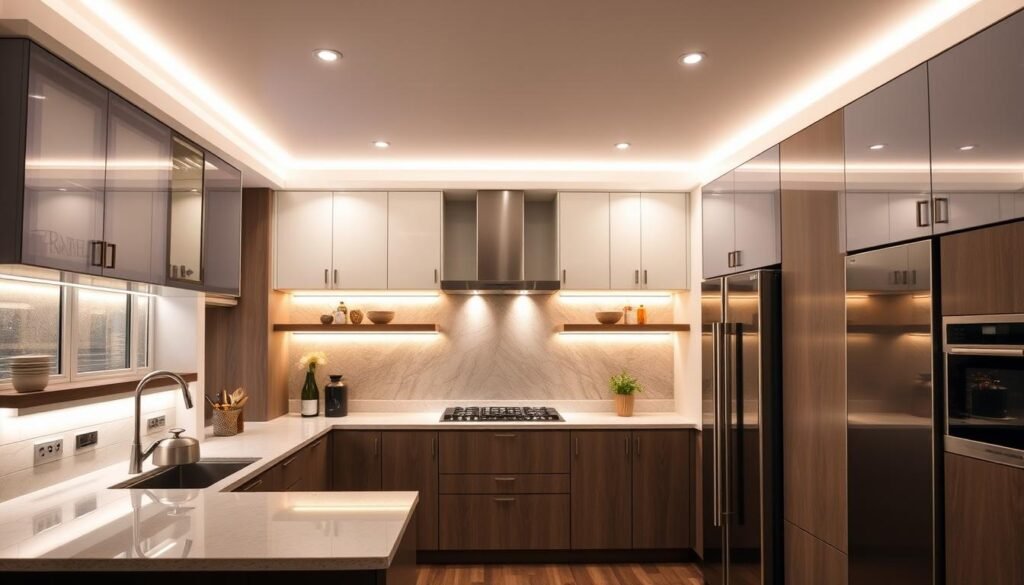
Under Cabinet Lighting: Transform Your Kitchen with LED Solutions
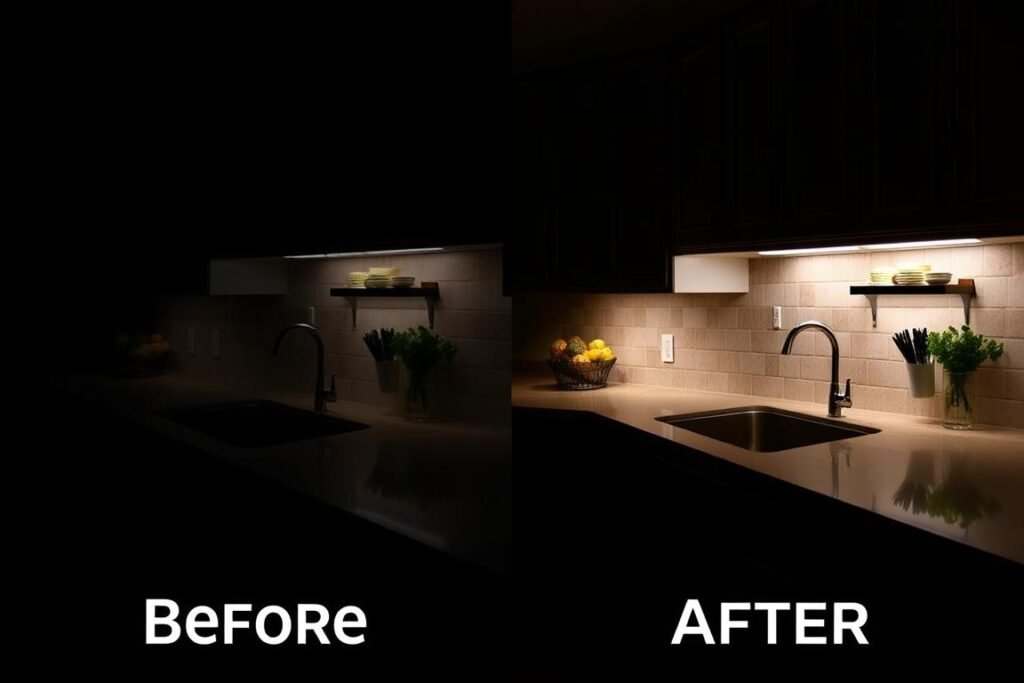
Your kitchen deserves better lighting. Dark countertops make meal prep dangerous. Shadows hide food debris. Poor visibility turns cooking into a chore.
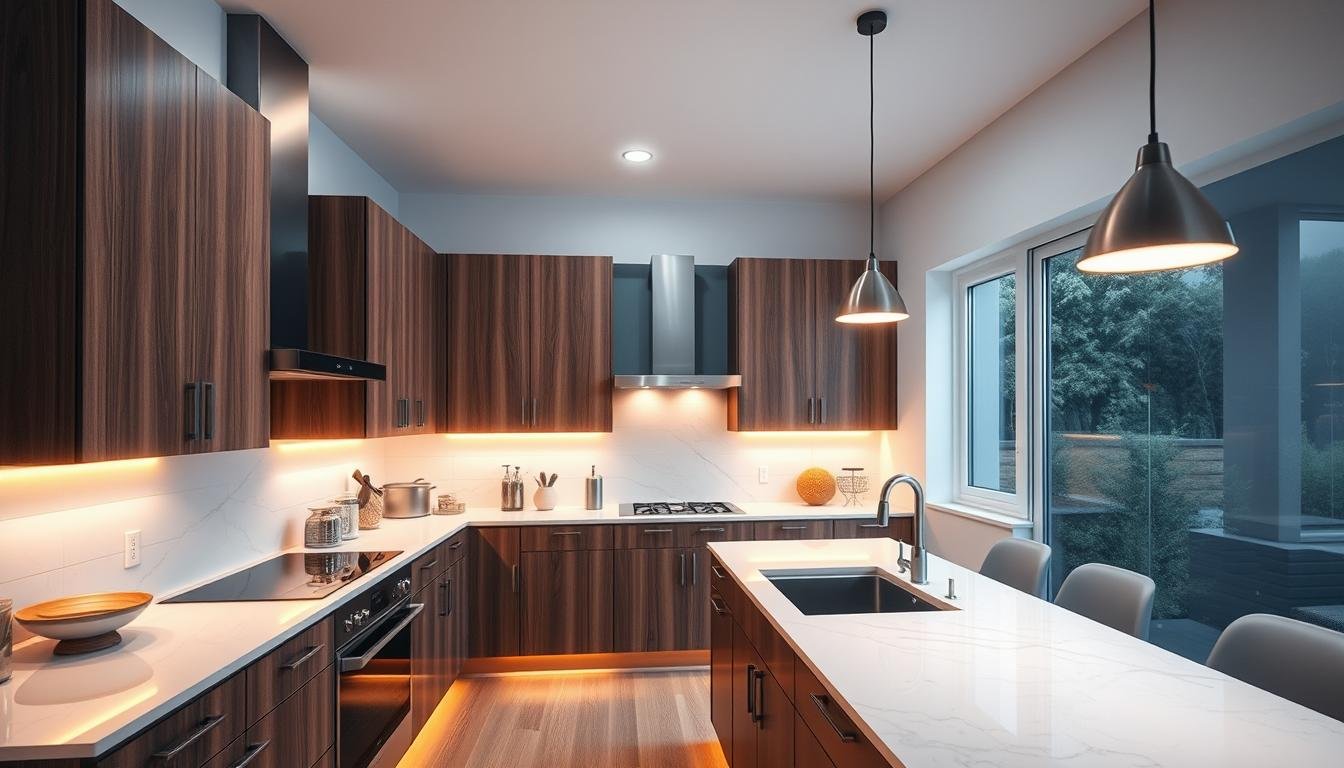
Under cabinet lighting solves these problems instantly. LED cabinet lights brighten work surfaces. They eliminate shadows under cabinets. Your kitchen becomes safer and more functional.
Modern LED technology makes installation simple. You don’t need an electrician for most systems. Plug-in options work right out of the box. Battery-powered lights go anywhere without wiring.
This guide covers everything you need to know. You’ll learn about LED strips, puck lights, and light bars. We’ll explore installation methods and color options. By the end, you’ll know exactly which cabinet lighting fits your kitchen.
Why LED Cabinet Lighting Makes a Difference
LED cabinet light fixtures transform how you use your kitchen. Task lighting targets specific work areas. You see ingredients clearly while chopping vegetables. Reading recipes becomes easier with proper illumination.
Energy efficiency saves money every month. LED lights use 75% less power than old fluorescent tubes. They last up to 50,000 hours. That’s over 20 years of normal use.
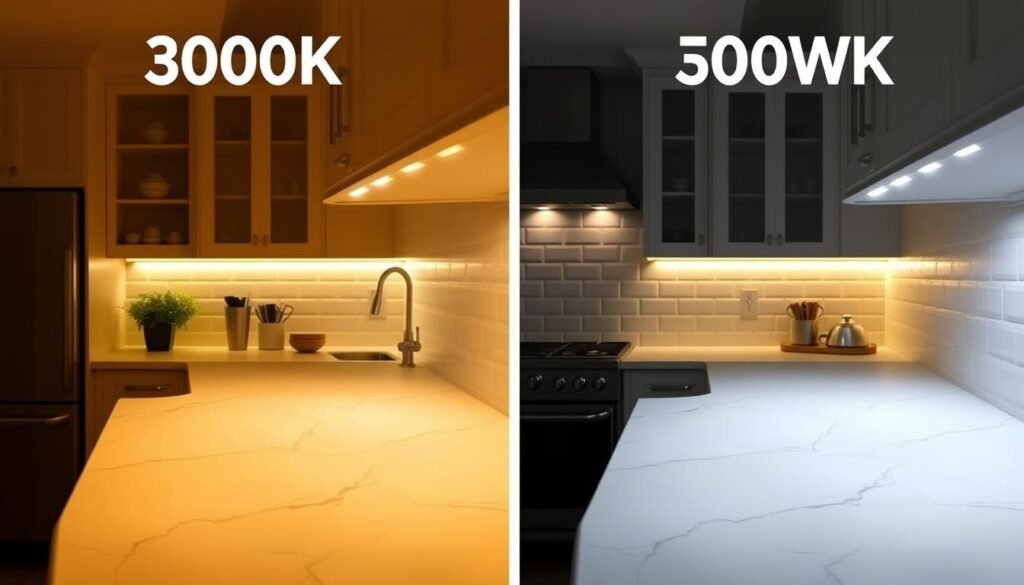
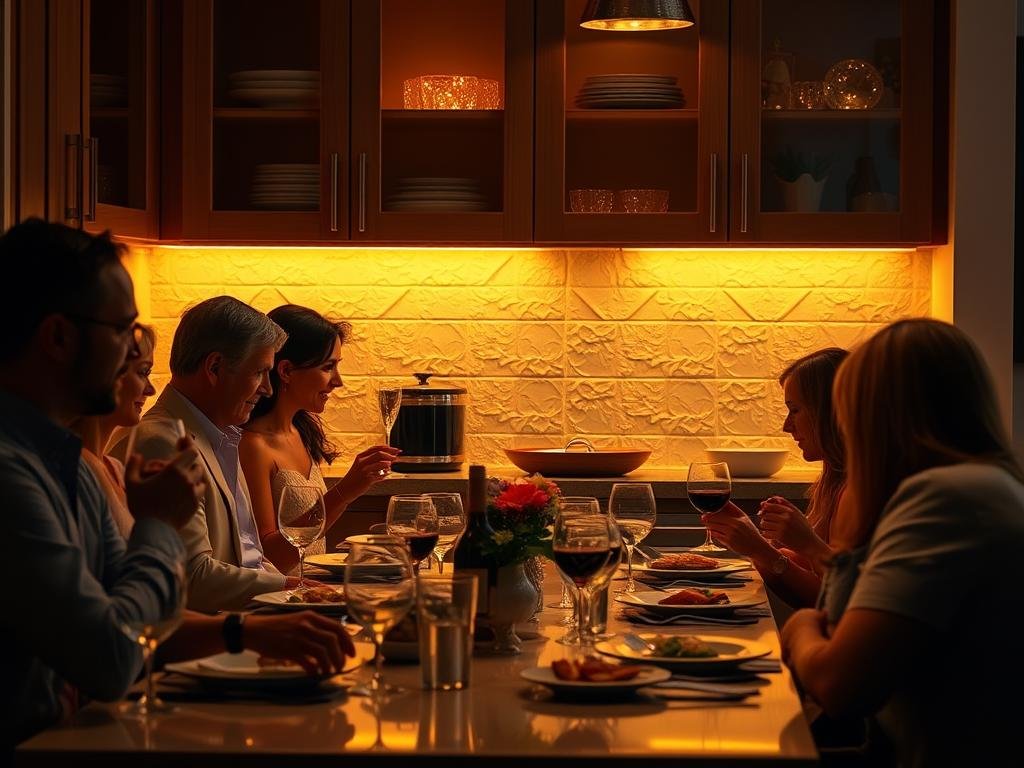
The right lighting creates ambiance too. Warm white creates cozy atmospheres for entertaining. Cool white mimics daylight for accurate food prep. Some LED cabinet systems offer color-changing options for mood lighting.
LED Strip Lights: Flexible and Continuous Illumination
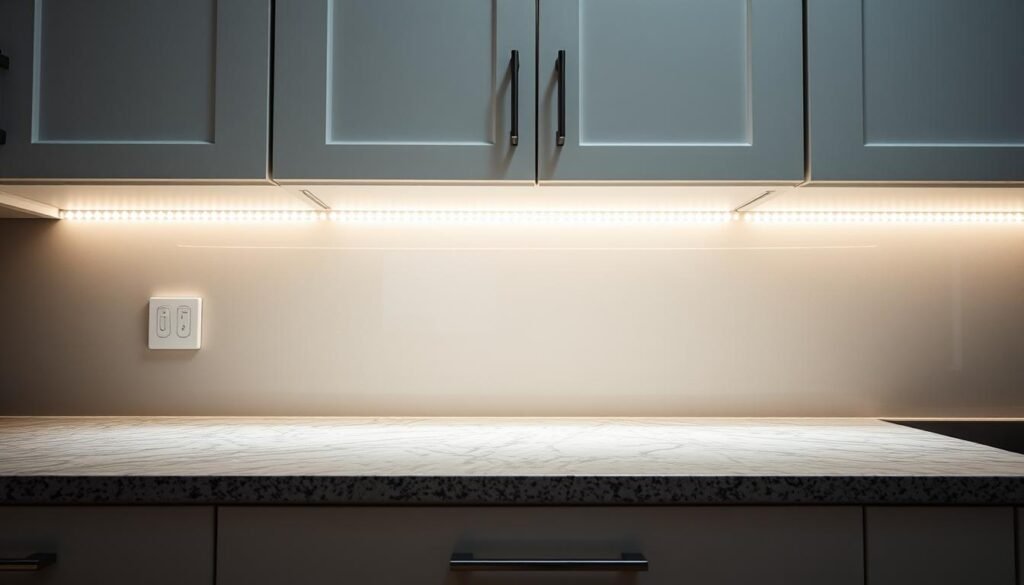
LED strip lights provide the most versatile under cabinet lighting solution. These thin, flexible strips contain dozens of small LED bulbs. They mount easily with adhesive backing.
Strip lights create uniform illumination across entire counter lengths. No dark spots appear between fixtures. The continuous light makes food prep easier and safer.
Most LED strips come in standard lengths. Common sizes include 12, 18, 24, and 36 inches. You can connect multiple strips together using extension cables. This lets you light cabinets of any length.
Types of LED Strip Lights
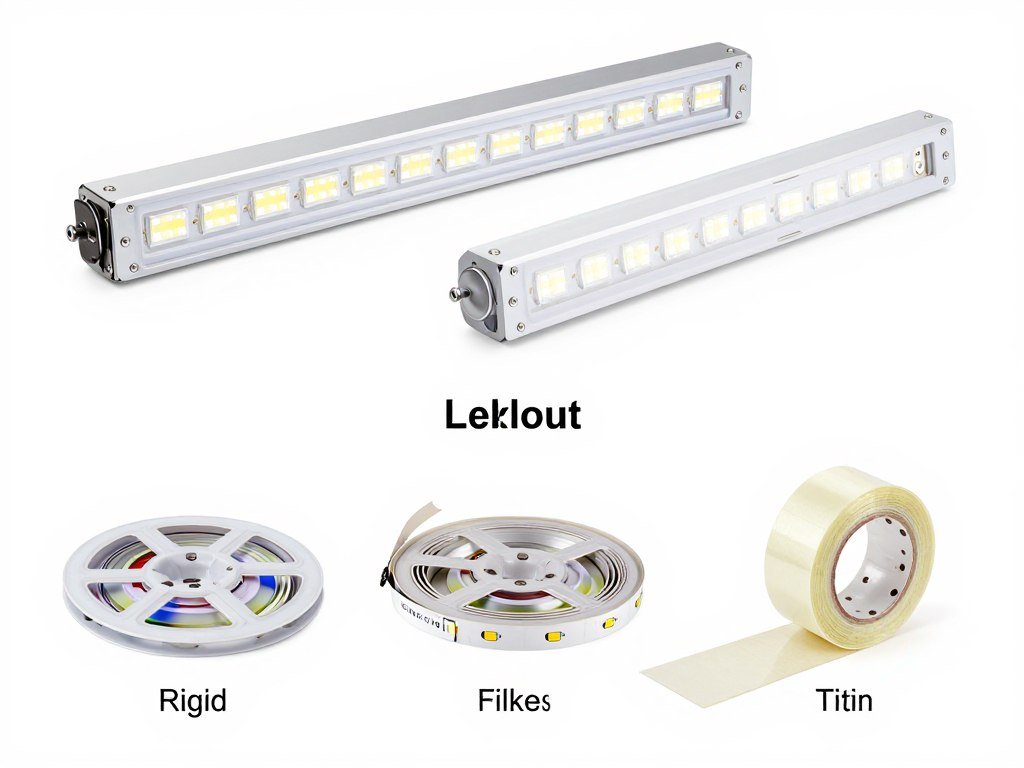
Rigid LED light bars offer durability and focused beams. The aluminum housing protects LED chips while dissipating heat. These bars work well in high-traffic kitchens where accidental bumps happen.
Flexible LED tape strips bend around corners and curves. The thin profile fits in tight spaces. You can cut these strips to exact lengths at designated cut marks.
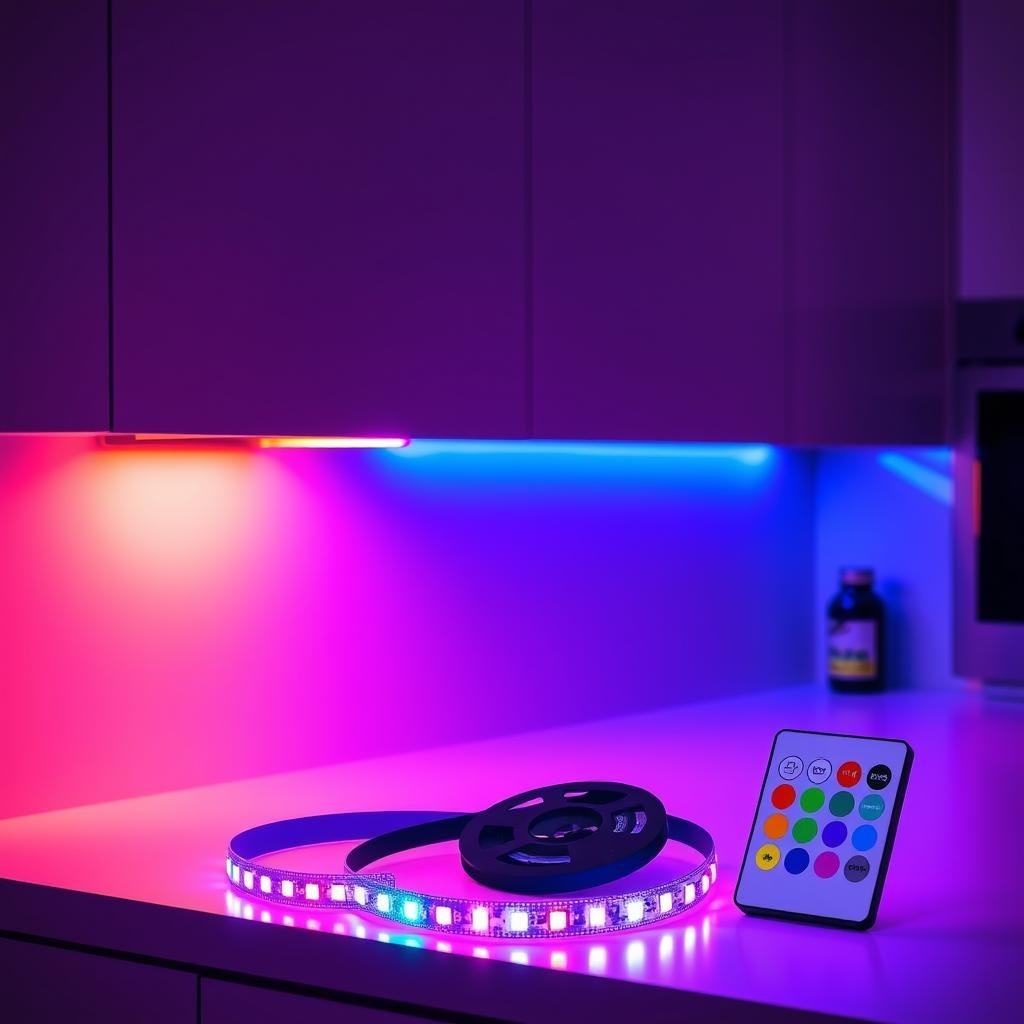
RGB color-changing strips add entertainment value. These strips cycle through millions of colors via remote control. They create accent lighting for parties and special occasions.
Installation Considerations
Measure cabinet lengths accurately before ordering strips
Clean mounting surfaces with alcohol to ensure adhesive bonds properly
Plan power supply locations near electrical outlets
Use aluminum channels to protect strips and improve light diffusion
Connect strips to dimmers for adjustable brightness levels
Test lights before final installation to verify proper operation
Warm White Strips
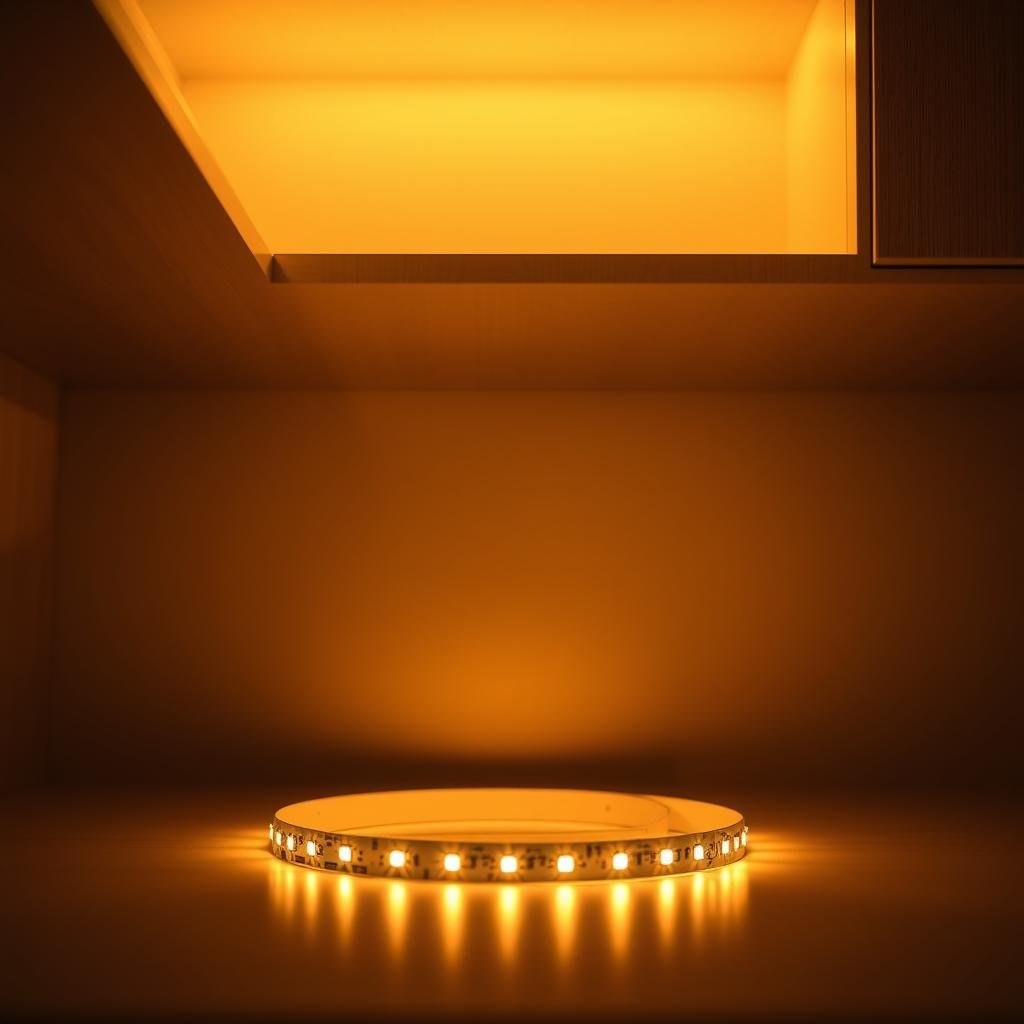
Perfect for creating cozy kitchen atmospheres. The 2700-3000K color temperature mimics traditional incandescent bulbs. Best for entertaining and ambient lighting.
Cool White Strips
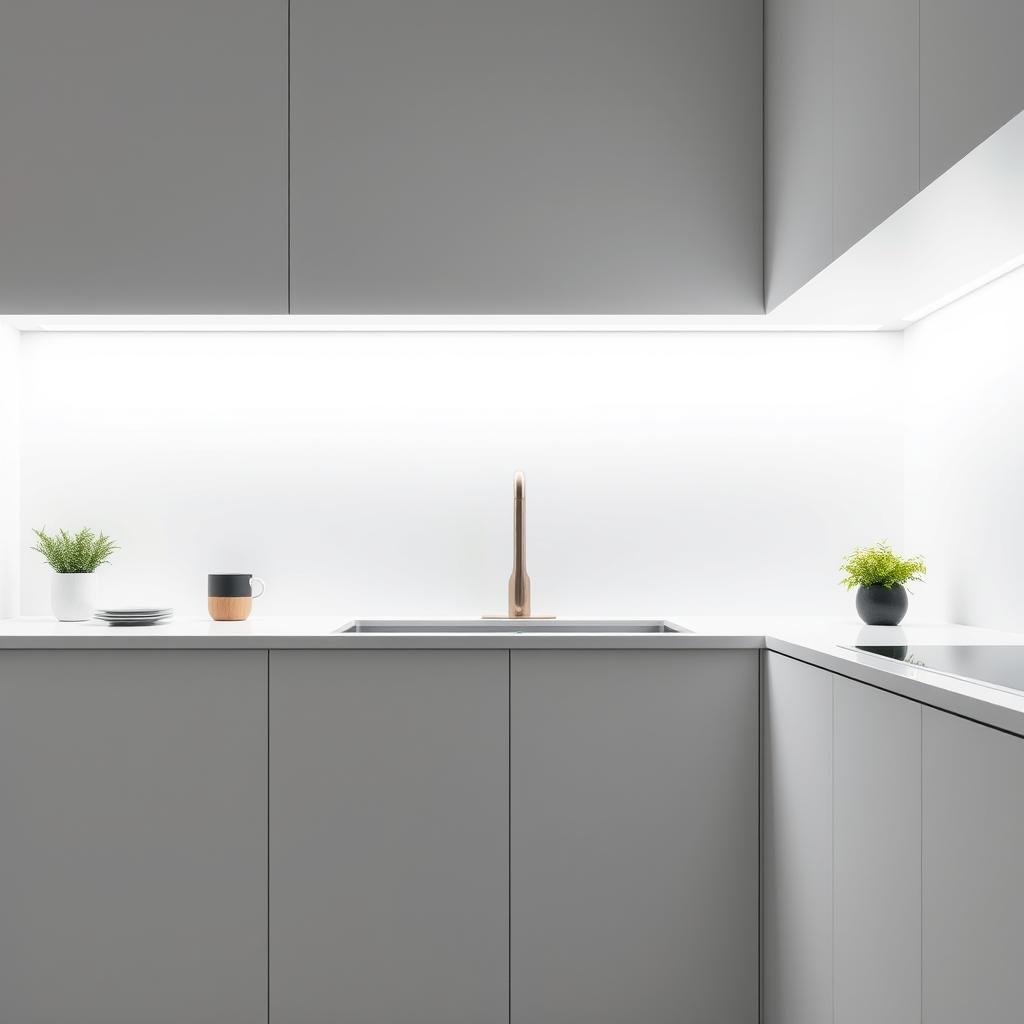
Ideal for task lighting and food preparation. The 4000-5000K color temperature provides daylight-like clarity. Colors appear accurate under this lighting.
Color-Changing Strips
Offers unlimited color options for accent lighting. Change colors via remote or smartphone app. Great for holidays, parties, and mood lighting.
LED Puck Lights: Compact and Focused Lighting
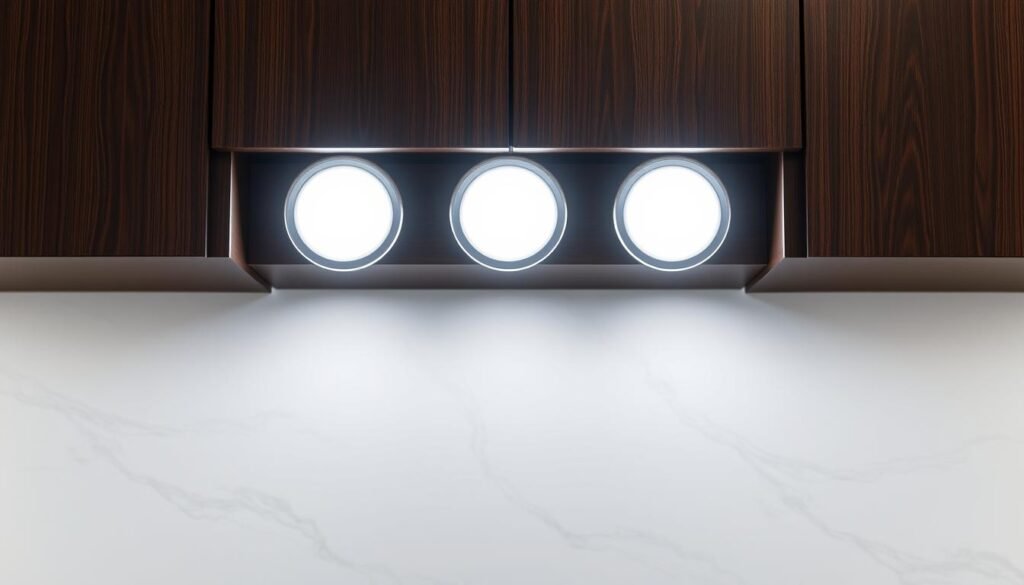
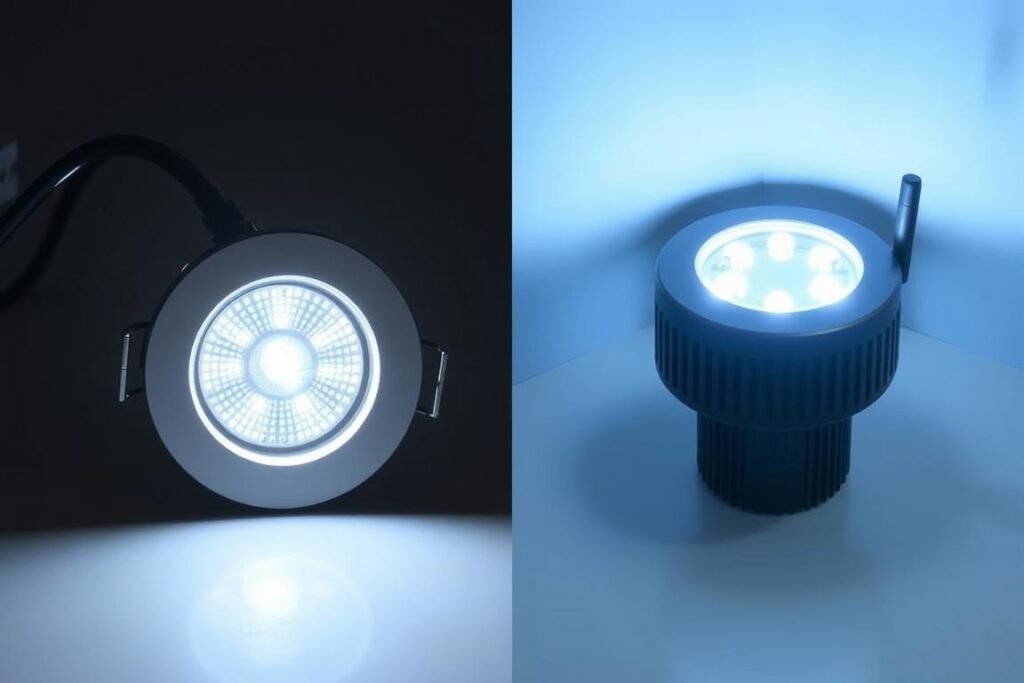
Puck lights are small, disc-shaped LED fixtures. Each light measures about 3 inches in diameter. They create focused pools of illumination on countertops below.
These cabinet light fixtures work best for spot lighting. Position them over specific work zones like cutting boards or coffee stations. They highlight decorative items in glass-front cabinets too.
Installation takes minutes with adhesive mounts or screws. Most puck lights run on batteries or plug into outlets. Battery-powered models offer ultimate flexibility for placement.
Advantages of Puck Lighting
Battery-powered puck lights eliminate wiring entirely. Stick them anywhere under cabinets. No electrician needed. Replace batteries once or twice per year depending on usage.
Hardwired puck lights never need battery changes. They connect to home electrical systems. A licensed electrician should install these for safety and code compliance.
Plug-in puck lights offer middle-ground convenience. They connect to nearby outlets via thin extension cables. You can unplug them when moving or remodeling.
Puck Light Benefits
Compact size fits in tight cabinet spaces
Individual lights allow customized spacing
Easy to replace single malfunctioning units
Lower upfront cost than strip systems
Battery options require no electrical work
Puck Light Limitations
Creates uneven lighting with dark spots between fixtures
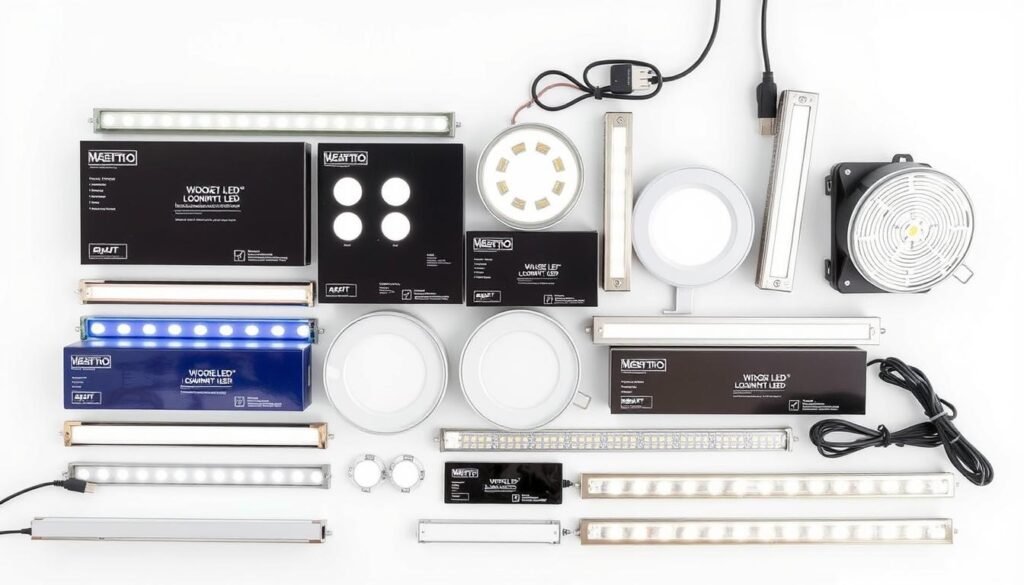
LED light bars combine the focused power of puck lights with the coverage of strip lights. These rigid fixtures come in preset lengths. The aluminum housing provides durability and heat dissipation.
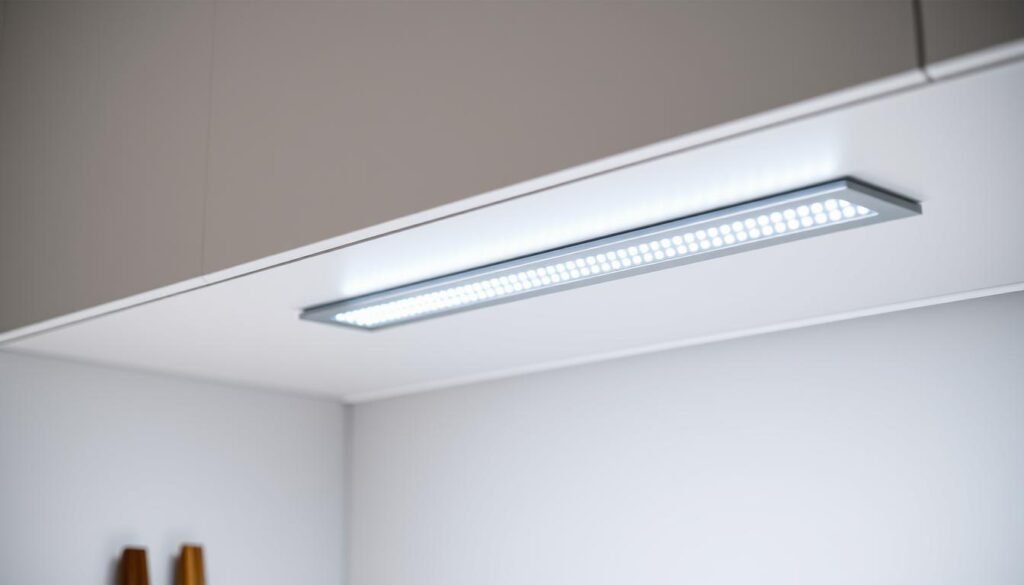
Most bar lights measure between 12 and 48 inches long. They mount flush against cabinet undersides. The low profile keeps lights hidden from view while maximizing illumination.
Premium light bar models include built-in diffusers. These spread light evenly without visible LED hotspots. The result looks professional and polished.
Linkable Light Bar Systems
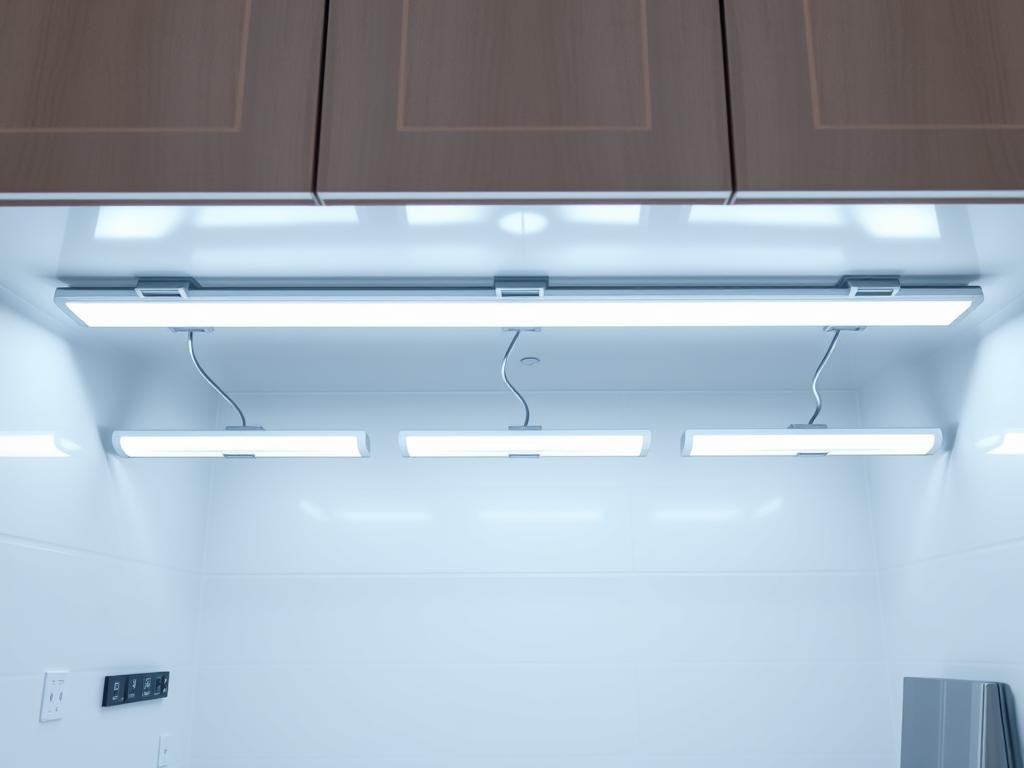
Linkable bars connect end-to-end with special connectors. You build custom-length lighting systems from standard bar sizes. One power supply can run multiple connected bars.
Extension cables allow spacing between bars too. Place bars only where you need light. Skip areas with sinks or stovetops where cabinet light isn’t useful.
Most systems let you connect up to 6 or 8 bars together. Check the power supply specifications. Exceeding maximum wattage causes brightness reduction or system failure.
Comparing Light Output
Lumens measure actual light output. More lumens equal brighter illumination. Compare lumens per foot to judge brightness across different products.
Kitchen task lighting requires 300-500 lumens per foot of counter. Ambient lighting needs only 150-250 lumens per foot. Choose appropriate brightness for your intended use.
Light Type
Typical Lumens/Foot
Best Application
Power Consumption
Basic LED Strip
200-300
Ambient lighting
3-5 watts/foot
High-Output Strip
400-600
Task lighting
6-10 watts/foot
LED Puck Light
150-250 per puck
Accent/spot lighting
2-4 watts per puck
LED Light Bar
350-500
Task/general lighting
6-8 watts/foot
Color temperature also affects perceived brightness. Cool white (4000-5000K) appears brighter than warm white (2700-3000K) at the same lumen output. Choose based on your lighting goals.
Find Your Ideal Light Bar
Compare LED light bars by length, brightness, and linking capability. Discover linkable systems that grow with your needs.
Color temperature dramatically changes how your kitchen feels and functions. Measured in Kelvins, this specification ranges from warm orange tones to cool blue-white light.
Warm white regular LED lights (2700-3000K) create inviting atmospheres. They make wood cabinets glow warmly. These temperatures work best for dining areas and entertaining spaces.
Neutral white (3500-4000K) balances warmth and clarity. This versatile color temperature suits most kitchen activities. Food colors appear natural under neutral white illumination.
Cool white (4500-5000K) mimics bright daylight. This color temperature maximizes visual clarity for detailed tasks. Professional chefs prefer cool white for food preparation.
Matching Color Temperature to Activities
Warm White (2700-3000K)
Creates relaxing, comfortable environments. This color temperature reduces harsh shadows and eye strain during evening hours.
Evening entertaining and casual dining
Highlighting wood grain in cabinets
Creating spa-like kitchen ambiance
Reducing blue light exposure before bedtime
Cool White (4500-5000K)
Provides maximum visibility and color accuracy. This temperature energizes spaces and improves focus during detailed work.
Detailed food preparation and cooking
Reading recipes and measuring ingredients
Cleaning and maintaining kitchen surfaces
Matching paint colors or design elements
Adjustable Color Temperature Options
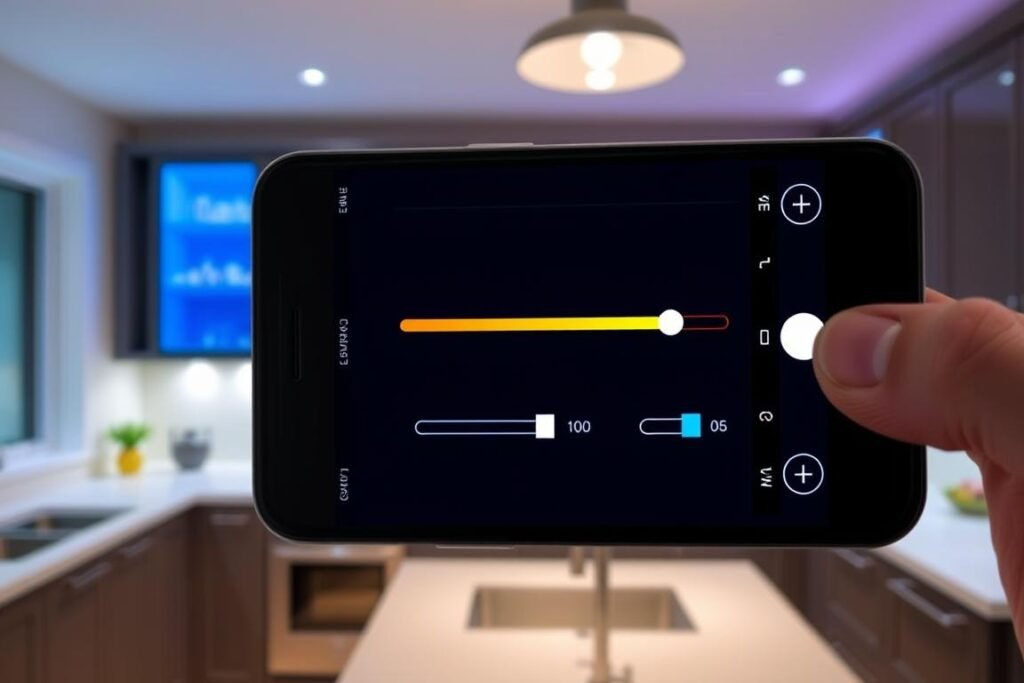
Some advanced LED cabinet systems offer tunable white color. These products let you adjust color temperature on demand. Warm light for dinner parties switches to cool white for morning meal prep.
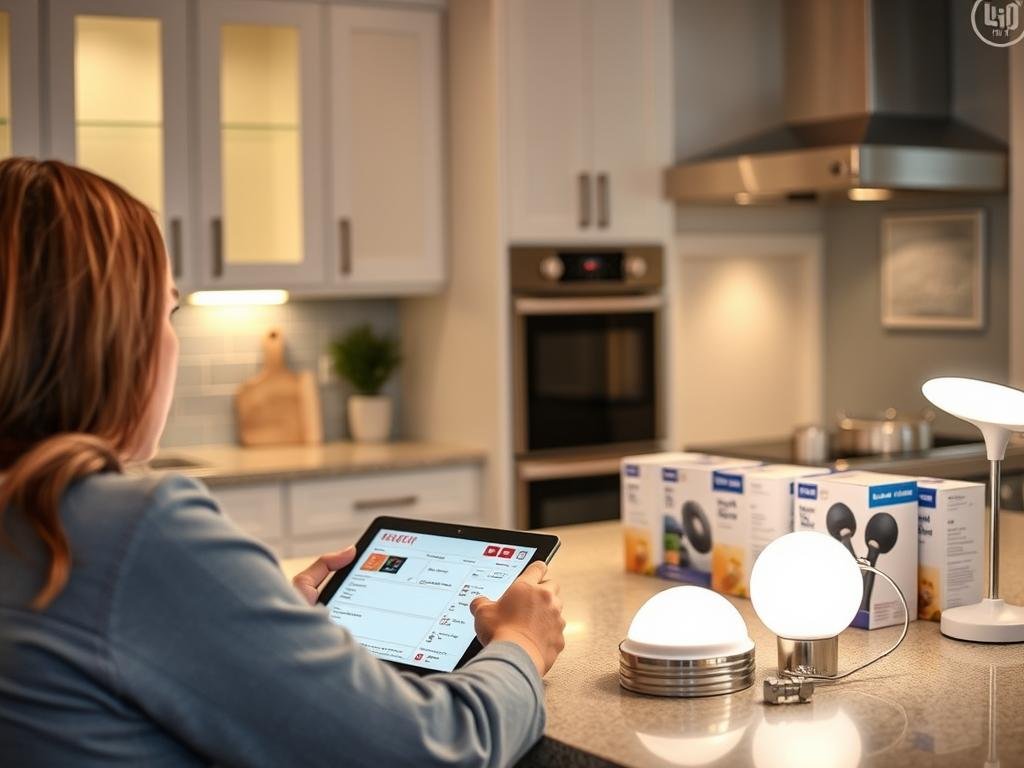
Smart LED lighting connects to phone apps or voice assistants. Program different color temperatures for different times of day. Automation creates perfect lighting without manual adjustment.
Installation Methods and Requirements
Installation complexity varies by product type and power source. Most homeowners can install plug-in and battery-powered cabinet lighting. Hardwired systems may require professional electrical work.
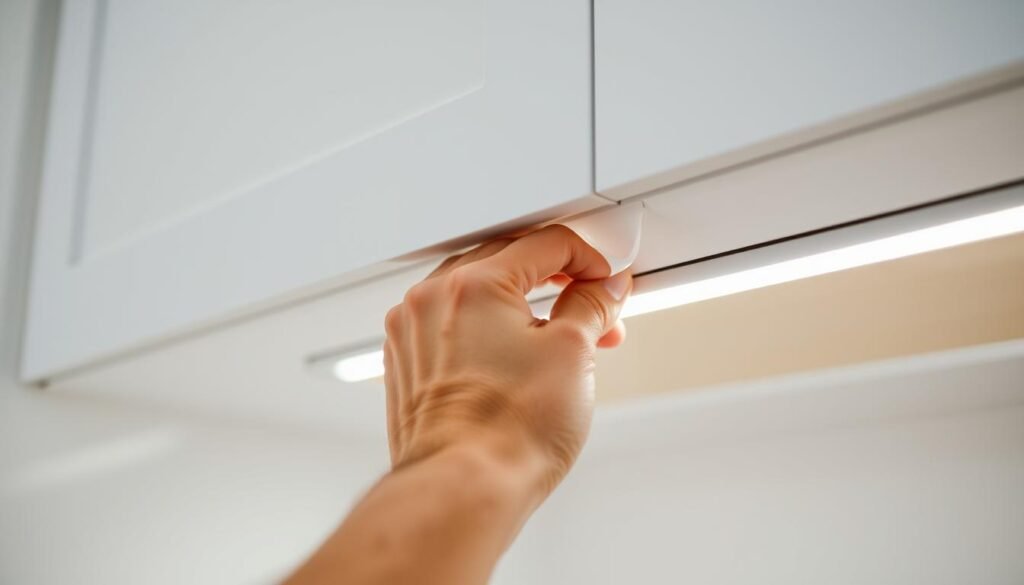
Battery-powered lights offer the simplest installation. Peel adhesive backing and stick lights under cabinets. Insert batteries and you’re done. No tools needed beyond a measuring tape.
Plug-in systems add power cable management. Route thin wires along cabinet edges. Use cable clips to secure wires neatly. Plug into nearby outlets when complete.
Step-by-Step LED Strip Installation
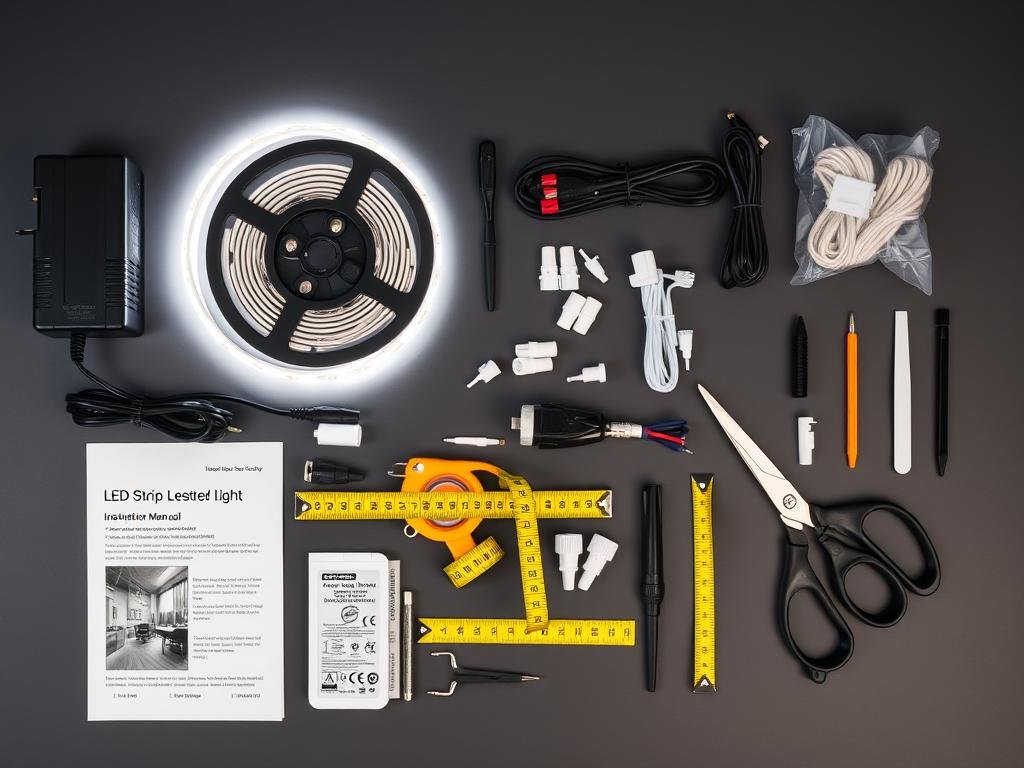
Measure cabinet lengths and calculate how many LED strips you need
Clean cabinet undersides thoroughly with rubbing alcohol to remove grease and dust
Plan power supply location near an electrical outlet
Cut LED strips to length at designated cutting marks if needed
Peel adhesive backing in sections and press strip firmly to cabinet surface
Connect strips together using linking connectors or extension cables
Attach power supply to the first strip in the series
Route power cable neatly along cabinet edge to outlet
Test all lights before finalizing cable management
Secure cables with adhesive clips for professional appearance
Common Installation Mistakes to Avoid
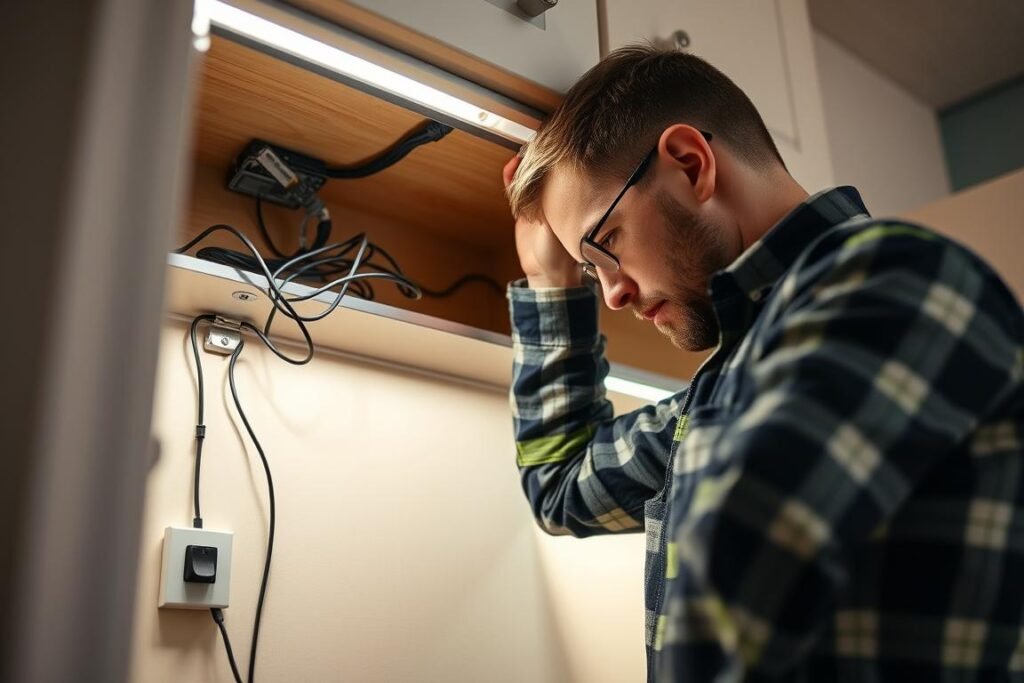
Skipping surface cleaning results in poor adhesive bonding and falling strips
Exceeding maximum run length causes dimming at strip ends
Installing strips too far forward makes them visible from normal viewing angles
Forgetting to test before permanent mounting wastes time on reinstallation
Using incorrect connectors between different brand products causes failure
Mounting strips directly on metal surfaces without insulation risks shorts
Hardwired Installation Considerations
Hardwired cabinet lighting connects permanently to home electrical systems. This eliminates visible power cables and prevents battery changes. Local building codes govern hardwired installation.
Most jurisdictions require licensed electricians for hardwired work. They ensure proper wire sizing, junction box installation, and switch integration. This protects your home and maintains insurance coverage.
Hardwired systems cost more upfront but offer long-term benefits. No batteries to replace. No unplugging for cleaning. Professional appearance with hidden wiring.
Get Installation Supplies
Find complete LED cabinet lighting kits with all necessary installation accessories. Extension cables, connectors, power supplies, and mounting hardware included.
Smart shopping starts with understanding your specific needs. Cabinet layouts, existing electrical access, and budget all influence which products work best for you.
Measure cabinet dimensions accurately before shopping. Note any obstacles like hood vents or wall outlets. These measurements help you select appropriate product lengths and quantities.
Consider total cost beyond initial purchase price. Battery-powered lights need replacement batteries. Hardwired systems require electrician fees. Factor in long-term expenses when comparing options.
Essential Features to Compare
Brightness and Coverage
Evaluate lumens output relative to counter space. Insufficient brightness wastes money on products that don’t illuminate effectively.
Calculate required lumens based on counter length and intended use
Compare lumens-per-watt for energy efficiency ratings
Check beam angle specifications for coverage width
Look for dimmable options to adjust brightness levels
Quality and Durability
Higher-quality products last longer and perform better. Cheap LED lights fail quickly and produce uneven illumination.
Check warranty length as quality indicator
Read customer reviews about longevity and performance
Verify aluminum housing on light bars for heat dissipation
Look for UL or ETL safety certification marks
Power Options
Choose power sources that match your installation capabilities and maintenance preferences.
Battery-powered for rental properties and easy installation
Plug-in for convenience without electrical work
Hardwired for permanent installation and professional appearance
Rechargeable batteries for eco-friendly cordless operation
Smart Features
Advanced products offer automation and remote control capabilities that enhance convenience.
Motion sensors activate lights automatically when approaching
Smartphone app control allows remote brightness and color adjustment
Voice assistant compatibility for hands-free operation
Programmable timers turn lights on and off automatically
Brand Reputation and Support
Established lighting brand manufacturers provide better support and warranty service. Unknown brand products may disappear before you need replacement parts or support.
Research company backgrounds before purchasing. Check how long they’ve manufactured LED products. Read customer service reviews beyond just product performance.
Replacement parts availability matters for expandable systems. Can you buy additional strips or extension cables years later? Verify that brand maintains consistent product lines.
Budget-Friendly Tips
Quality cabinet lighting doesn’t require premium prices. Strategic shopping finds excellent value without sacrificing performance.
Buy complete kits instead of individual components to save money
Watch for seasonal sales on LED lighting during holiday promotions
Start with essential areas and expand lighting gradually as budget allows
Consider refurbished or open-box products from reputable sellers
Compare per-foot costs when evaluating different product lengths
Invest in dimmable lights now even if dimmer installation comes later
Compare Top-Rated Cabinet Lighting
Browse customer-reviewed LED cabinet lighting products. Filter by price, brightness, features, and brand to find your perfect match.
LED cabinet lights require minimal maintenance compared to older lighting technologies. Regular cleaning and occasional inspections keep systems running smoothly for years.
Dust accumulation reduces light output over time. Wipe LED strips and light bars monthly with dry microfiber cloths. Avoid water or cleaning solutions near electrical connections.
Check adhesive mounting periodically for battery-powered and plug-in strip lights. Temperature changes can weaken adhesive bonds. Reapply adhesive backing or switch to mounting clips if strips sag.
Troubleshooting Common Issues
Why do my LED strips dim at the ends?
Voltage drop causes dimming in long LED strip runs. Each LED strip has a maximum recommended length, typically 16-32 feet depending on power supply. Split long runs into multiple segments, each with its own power connection. Use larger wire gauge for power connections to reduce resistance.
What causes flickering LED cabinet lights?
Loose connections are the most common cause of flickering. Check all connector points between strips, power supplies, and outlets. Incompatible dimmer switches also cause flickering with dimmable LED products. Replace standard dimmers with LED-rated dimmers designed for low-voltage lighting.
How do I replace individual LED sections?
Cut failed sections at designated cutting marks on LED strips. Purchase matching replacement strips of the same voltage, color temperature, and LED density. Connect new sections using solderless connectors or linking cables. Test before applying adhesive backing permanently.
Can I extend my existing LED light system?
Yes, if the power supply has sufficient capacity. Check the power supply wattage rating and calculate current system consumption. Add new strip wattage to verify it stays within power supply limits. Purchase extension cables and additional strips from the same product line to ensure compatibility.
When to Replace LED Lights
LED lights last 20,000 to 50,000 hours under normal use. That translates to 10-25 years in typical kitchens. However, earlier replacement makes sense when technology improves significantly.
Newer LED products offer better efficiency and features. Smart controls, tunable white color, and improved color rendering make upgrades worthwhile even when old lights still function.
Visible LED degradation includes color shifting toward blue and reduced brightness. When strips produce less than 70% of original output, replacement improves kitchen functionality.
Transform Your Kitchen with the Right LED Solution
LED cabinet lighting transforms dark kitchens into bright, functional spaces. You’ve learned about strips, pucks, and bars. Each type offers distinct advantages for different situations.
Consider your specific needs when selecting products. Long continuous cabinets benefit from LED strip lights. Focused task areas work well with puck lights. Professional-grade light bars provide maximum durability and output.
Installation ranges from simple stick-and-go battery lights to professional hardwired systems. Choose the approach that matches your budget, skills, and long-term plans.
Color temperature dramatically affects kitchen ambiance and functionality. Warm white creates cozy atmospheres. Cool white maximizes task lighting clarity. Tunable systems provide both options.
Start your cabinet lighting project with accurate measurements and realistic budgets. Quality LED products last decades with minimal maintenance. The investment pays back in improved safety, functionality, and home value.
Your kitchen deserves proper lighting. LED technology makes professional results accessible to any homeowner. Browse available options and begin your transformation today.
Your balcony, no matter how compact, deserves to be a beautiful extension of your home. With the right small balcony furniture, even the tiniest outdoor space can transform into a cozy retreat for morning coffee, evening relaxation, or entertaining friends. This guide will help you discover space-saving solutions, versatile pieces, and design inspiration to create…
Having a backyard pool doesn’t have to drain your savings. With some creativity and smart planning, you can create a refreshing oasis that fits your budget. Whether you’re dreaming of a simple splash zone for the kids or a stylish retreat for entertaining, these budget-friendly pool ideas will help you maximize enjoyment while minimizing costs….
Your backyard holds incredible potential to become the ultimate retreat right outside your door. Whether you have a sprawling yard or a compact space, the right design choices can turn any outdoor area into a stunning oasis. This comprehensive guide brings together innovative backyard ideas that blend style with functionality. You will discover practical solutions…
Creating a beautiful back patio doesn’t have to drain your bank account. With some creativity, smart shopping, and a bit of elbow grease, you can transform even the most neglected outdoor space into a cozy retreat that feels like an extension of your home. Whether you have a tiny apartment balcony or a spacious backyard…
Receiving an invitation with “black tie optional” listed as the dress code can feel like navigating a fashion gray area. Not quite as rigid as black tie, yet more elevated than cocktail attire, this popular wedding dress code offers both flexibility and sophistication. This comprehensive guide will walk you through everything you need to know…
Your porch is more than just an entrance—it’s the first impression visitors have of your home. The right porch planter ideas can transform a basic entryway into a welcoming, personality-filled space that sets the tone for your entire home. Whether you have a sprawling front porch or a compact apartment entryway, thoughtfully chosen planters can…