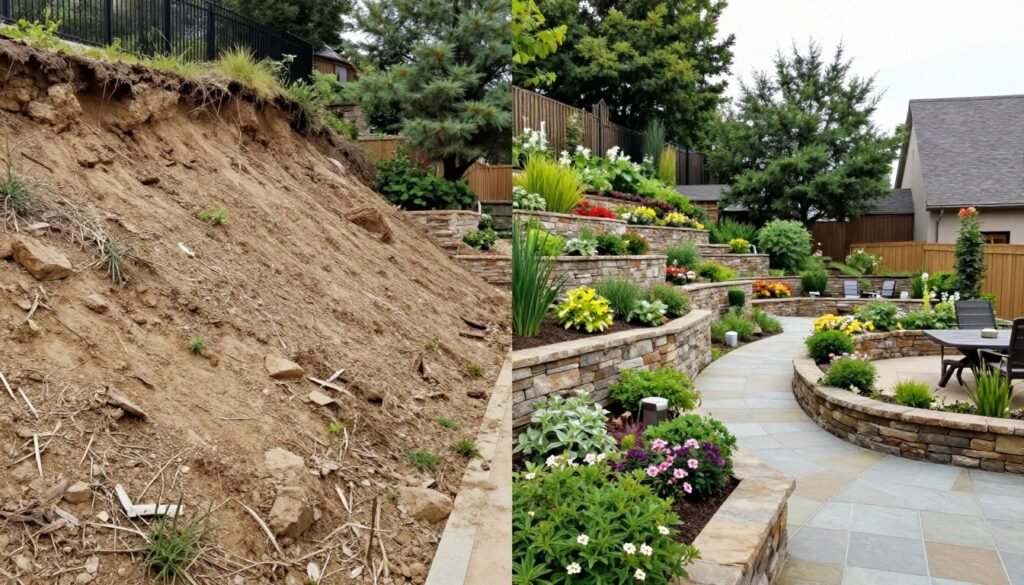
A sloped backyard presents unique challenges that can leave homeowners feeling frustrated. Erosion washes away soil, water pools in unwanted areas, and usable space seems limited. But your hillside property holds incredible potential waiting to be unlocked.
Your slope can become the most striking feature of your home. The elevation changes create opportunities for dramatic landscape design that flat yards simply cannot achieve. Terraced gardens, cascading water features, and multi-level outdoor living spaces transform challenging terrain into enviable outdoor rooms.
This guide reveals proven strategies for sloped backyard landscaping. You will discover how to control erosion, maximize usable space, and create stunning visual appeal. Whether you tackle projects yourself or work with professionals, these ideas will help you see your hillside’s true possibilities.
Ready to Transform Your Slope?
Get instant access to professional landscaping strategies that work for any budget and skill level. Discover step-by-step solutions designed specifically for hillside properties.
Understanding Your Sloped Yard Challenges and Opportunities
Every slope tells a different story. Steep slopes demand different solutions than gentle grades. The direction your hillside faces determines which plants will thrive. Soil composition affects drainage patterns and erosion risk.
Water runs downhill, creating both problems and possibilities. Runoff can cause erosion that strips away topsoil and damages plant roots. However, proper planning channels this water into beneficial features. Rain gardens at the slope’s base capture runoff naturally. Dry creek beds guide water while adding visual interest.
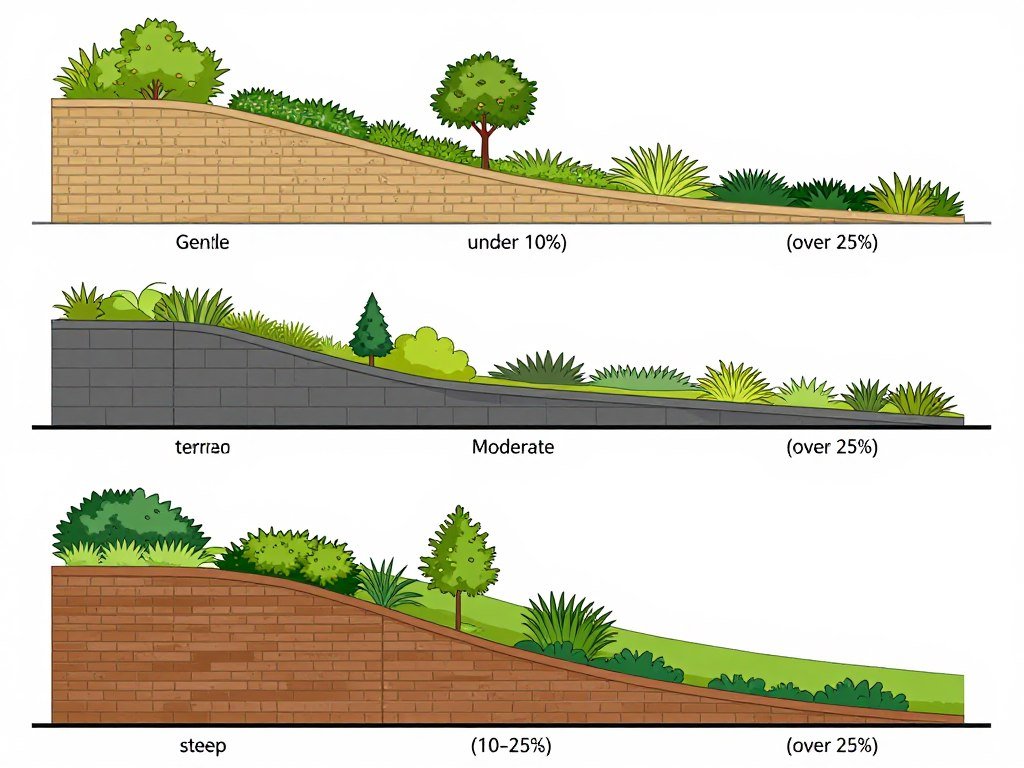
The grade percentage determines your approach. Gentle slopes under 10% offer the most flexibility for traditional landscaping. Moderate slopes between 10-25% require terracing or retaining structures. Steep slopes over 25% need professional engineering for safe, lasting results.
Sun exposure varies dramatically on hillside properties. South-facing slopes receive intense sunlight and dry out quickly. North-facing areas stay cooler and retain moisture longer. This microclimate variation lets you grow diverse plant communities within one yard.
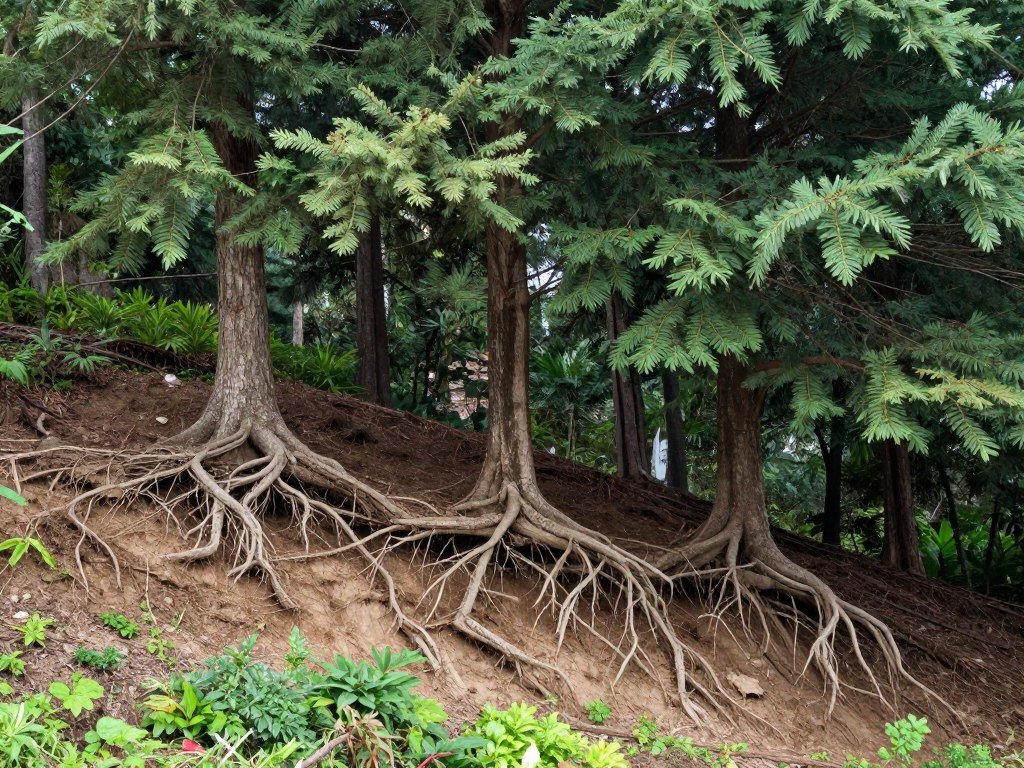
Your slope’s existing features provide clues for landscape design. Natural rock outcroppings anchor retaining walls. Mature trees offer shade and erosion control. Low spots indicate where water naturally collects, perfect locations for rain gardens or ponds.
Retaining Walls: The Foundation of Hillside Design
Retaining walls serve as the backbone of sloped backyard landscaping. These structures hold soil in place, prevent erosion, and create level areas for planting or entertaining. The right wall transforms an unusable slope into functional outdoor space.
Natural Stone Walls for Timeless Appeal
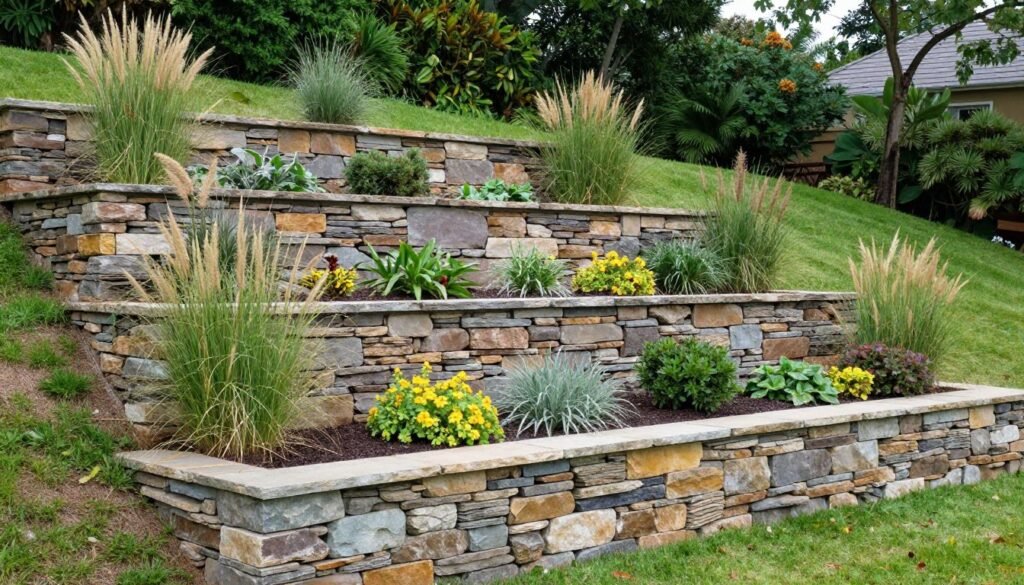
Natural stone creates walls that blend seamlessly with the landscape. Fieldstone, limestone, and granite offer durability that lasts generations. Dry-stacked stone walls allow water to drain naturally through gaps between stones. This prevents pressure buildup that can cause wall failure.
Stone walls work best for heights under four feet. Taller structures require mortar and professional installation. The irregular shapes and earth tones complement plants beautifully. Moss and small ferns eventually colonize the crevices, softening the wall’s appearance.
Timber Retaining Walls for Budget-Friendly Solutions
Pressure-treated lumber provides an affordable option for retaining walls. Railroad ties and landscape timbers create rustic designs that suit informal gardens. These materials work well for DIY projects on gentle to moderate slopes.
Wood walls typically last 10-20 years before needing replacement. Choose lumber rated for ground contact to maximize lifespan. Proper drainage behind the wall prevents rot and extends durability. Gravel backfill allows water to flow freely rather than pooling against the timber.
Concrete Block Systems for Engineered Strength
Interlocking concrete blocks offer the strength needed for tall retaining walls on steep slopes. These modular systems simplify installation while providing professional results. Many blocks feature textured faces that mimic natural stone at a fraction of the cost.
Segmental retaining wall blocks rely on weight and interlocking design rather than mortar. This flexibility allows the wall to shift slightly with freeze-thaw cycles without cracking. Geogrid reinforcement anchors tall walls deep into the hillside for maximum stability.
Master Professional Retaining Wall Techniques
Learn expert strategies for designing, building, and maintaining retaining walls that last. Get detailed plans for every slope type and budget level.
Terracing: Creating Level Garden Spaces on Your Hillside
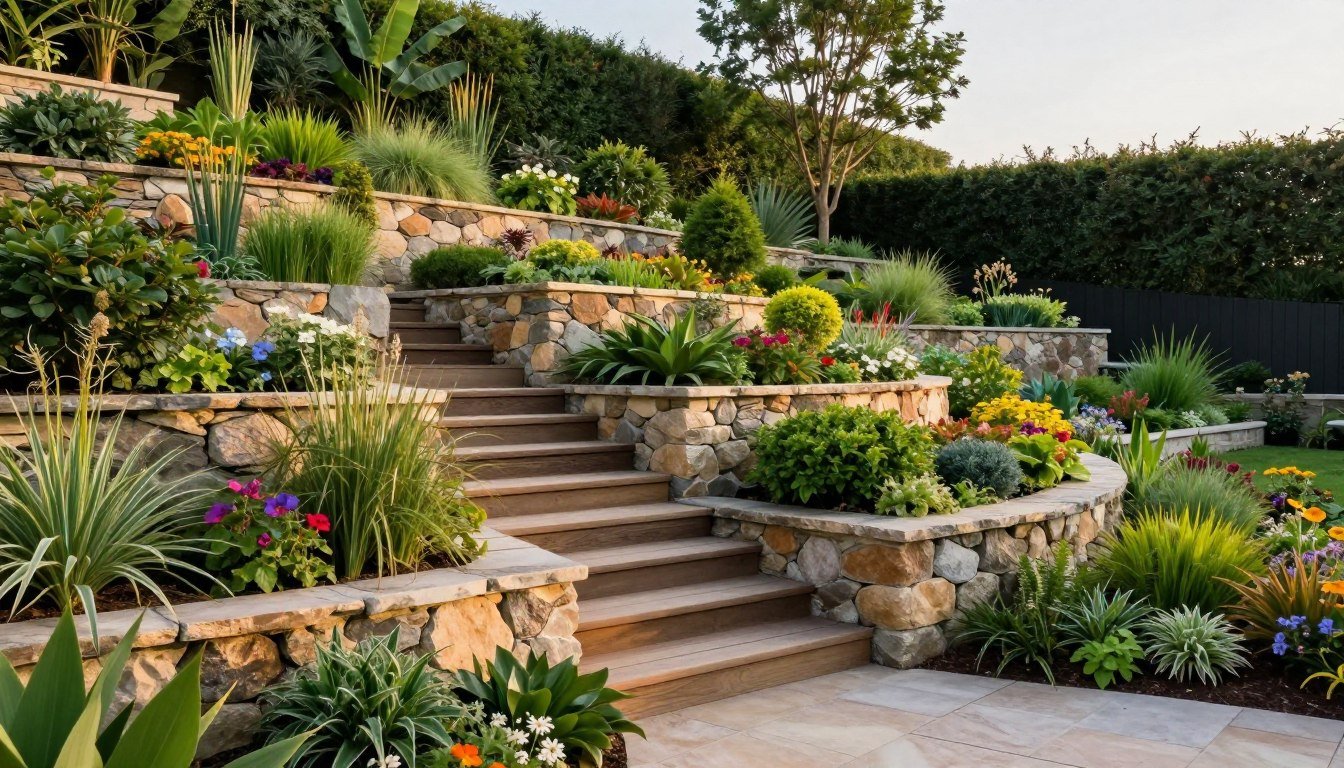
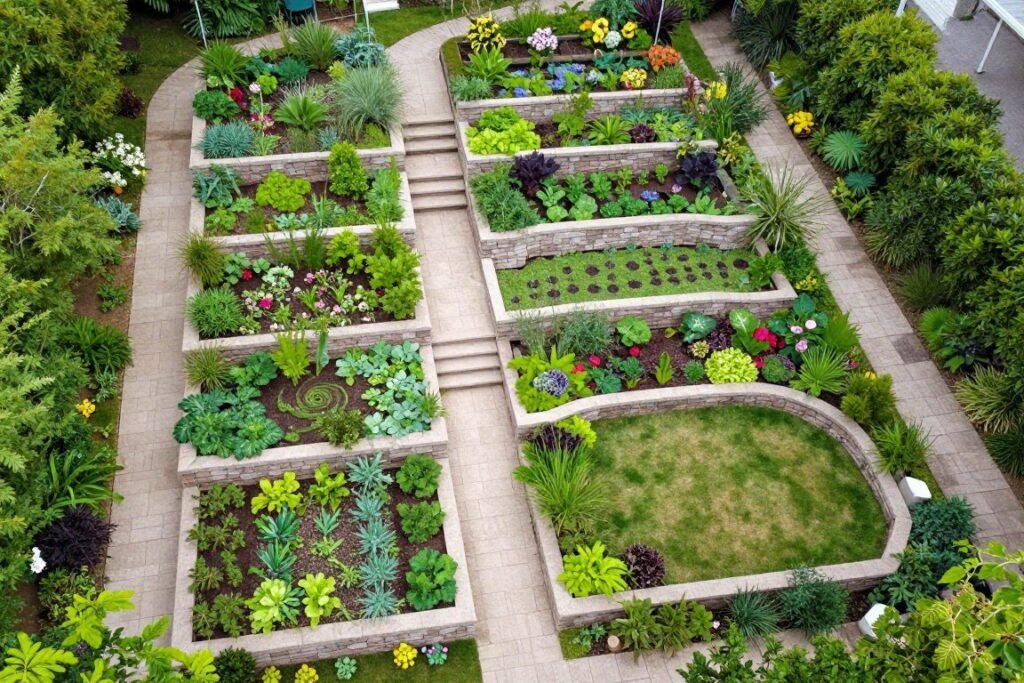
Terraces transform steep slopes into a series of level garden beds. This ancient technique has shaped hillside agriculture for thousands of years. Modern residential terracing applies the same principles to create usable outdoor living areas.
Each terrace creates a microclimate suited to different plants. Upper terraces receive more sun and drain quickly, ideal for drought-tolerant species. Lower terraces collect water and organic matter, perfect for moisture-loving plants. This variation supports diverse planting schemes within a compact area.
Planning Your Terrace Layout
The slope percentage determines terrace depth and wall height. Steeper slopes need more frequent terracing with taller walls. Gentler grades allow wider terraces with shorter walls. A general rule suggests terrace depth should equal twice the wall height for stability.
Access between terraces requires careful planning. Stone steps connect levels while adding architectural interest. Switchback paths reduce the grade for easier walking. Ramps accommodate wheelbarrows and lawn equipment between planting areas.
Soil Management in Terraced Beds
Each terrace needs quality soil to support healthy plant growth. Native hillside soil often lacks organic matter and nutrients. Amending beds with compost improves drainage and fertility. A layer of topsoil over the native subgrade creates an ideal growing medium.
Erosion control remains critical even with terracing. Plants with strong root systems hold soil on each terrace. Mulch protects bare soil from heavy rain impact. Proper drainage prevents water from undermining retaining walls.
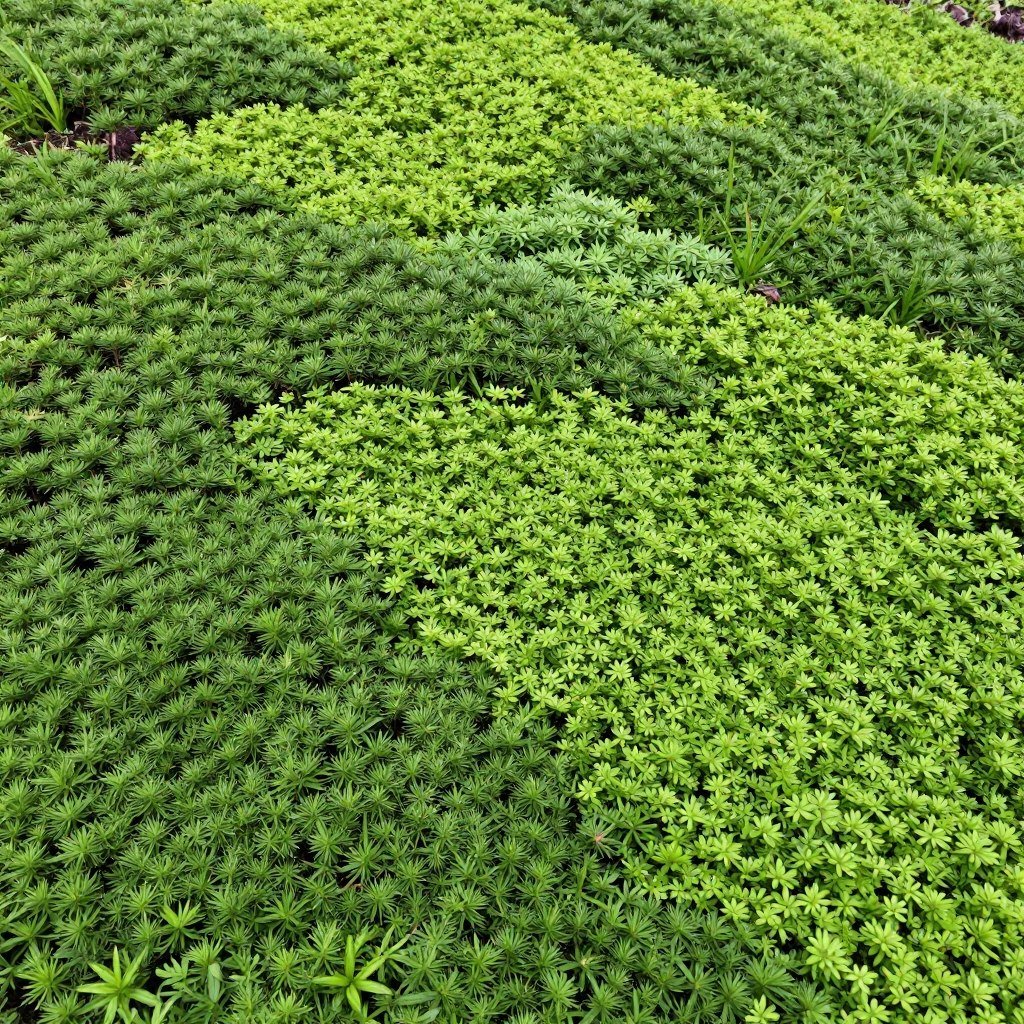
Ground covers spread quickly across terrace faces between garden beds. Creeping thyme, sedum, and ajuga form dense mats that prevent erosion. These low-maintenance plants require minimal care once established. Their roots bind soil particles while their foliage deflects rainfall.
Plant Selection for Slopes and Erosion Control
The right plants turn problematic slopes into low-maintenance landscapes. Deep-rooted species anchor soil against erosion. Drought-tolerant varieties thrive on well-drained hillsides. Native plants adapt naturally to local slope conditions.
Trees for Slope Stabilization
Trees provide long-term erosion control through extensive root systems. Oaks, maples, and pines develop deep taproots that anchor soil layers. Their canopies reduce rainfall impact on the ground below.
Plant trees in strategic locations to maximize benefits. Place them at the top of slopes to intercept water before it gains momentum. Stagger placements to create natural terracing effects. Allow adequate spacing for mature canopy spread.
Shrubs for Mid-Slope Coverage
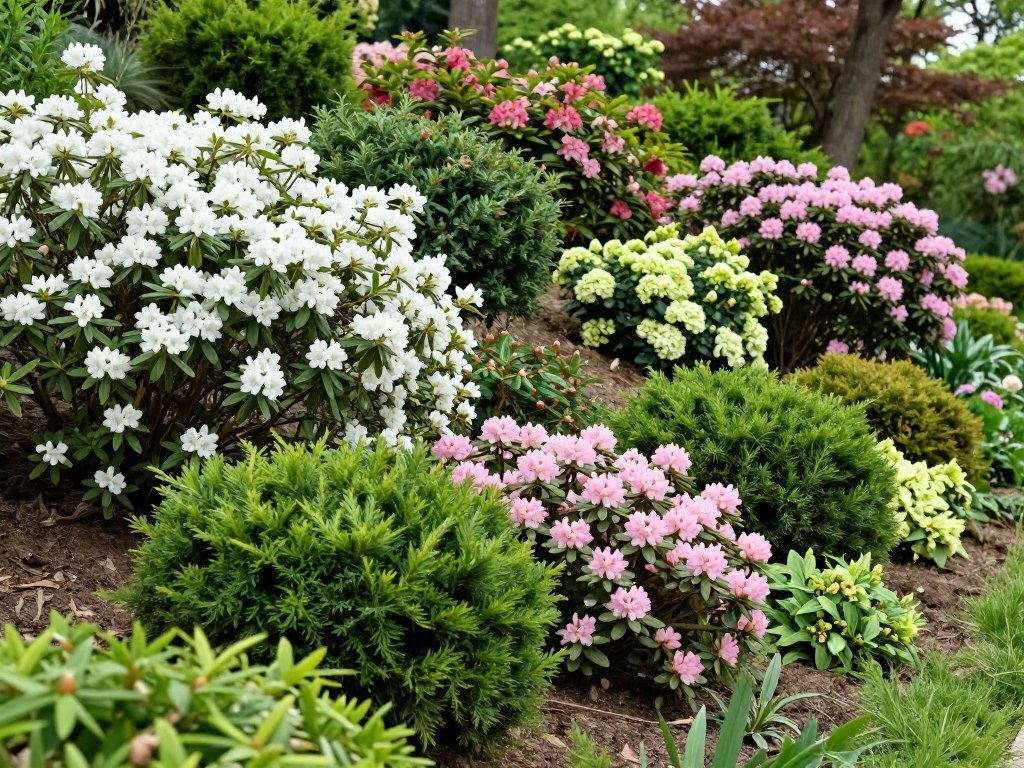
Shrubs fill the middle layer between trees and ground covers. Juniper, sumac, and cotoneaster tolerate dry slope conditions. These woody plants create visual interest throughout seasons while stabilizing soil.
Choose shrubs with different bloom times for year-round color. Spring-flowering spiraea gives way to summer hydrangeas. Fall brings vibrant foliage from burning bush. Evergreen varieties provide winter structure and continued erosion protection.
Ground Covers for Complete Slope Coverage
Ground covers solve the challenge of mowing steep slopes. These low-growing plants spread horizontally to form dense mats. Once established, they outcompete weeds and require minimal maintenance.
Creeping juniper thrives in full sun on dry slopes
Pachysandra excels in shaded hillside areas
Vinca minor provides evergreen coverage with spring flowers
Creeping phlox creates colorful spring displays
Sedum varieties offer succulent foliage for extreme slopes
Ornamental Grasses for Movement and Texture
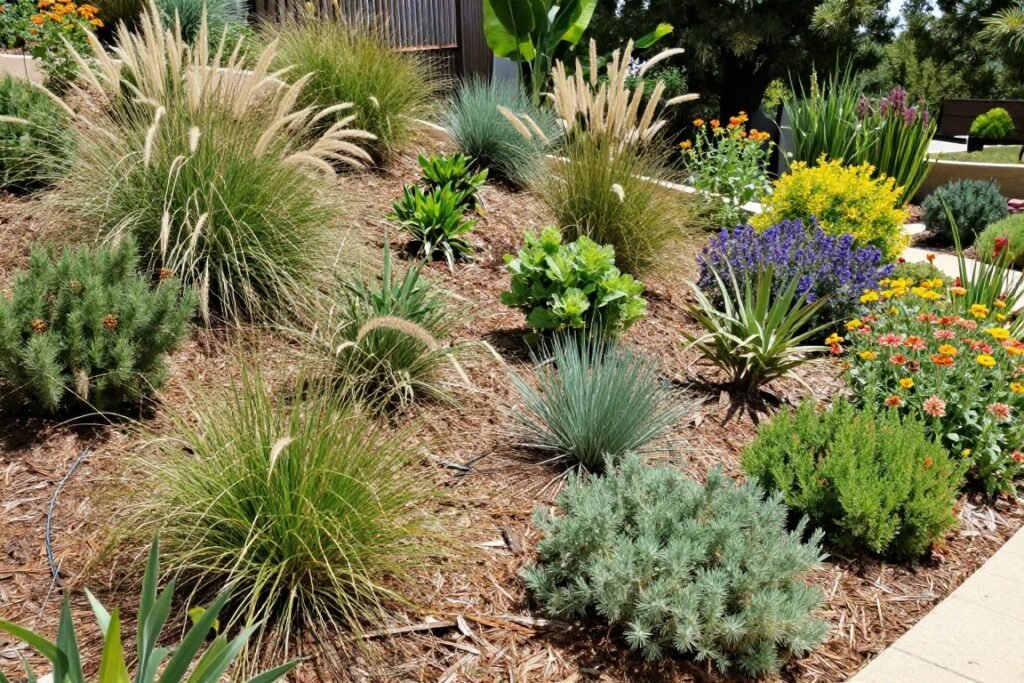
Ornamental grasses add vertical interest to slope plantings. Their fibrous roots bind soil effectively. Grasses sway in breezes, creating dynamic visual appeal. Most species tolerate drought and require little care.
Fountain grass, switchgrass, and feather reed grass suit various slope conditions. Plant in masses for greater impact and erosion control. Their dried foliage provides winter interest. Cut back in early spring before new growth emerges.
Water Management and Drainage Solutions for Sloped Landscapes
Proper water management separates successful slope landscaping from failed attempts. Uncontrolled runoff causes erosion, undermines structures, and damages plants. Strategic drainage systems protect your investment while adding landscape features.
French Drains for Subsurface Water Control
French drains intercept groundwater before it saturates slopes. These buried trenches filled with gravel and perforated pipe redirect water to safe discharge areas. They prevent soggy spots and reduce erosion pressure on retaining walls.
Install French drains at the base of retaining walls to relieve hydrostatic pressure. Run pipes along problem areas where water seeps from the hillside. Discharge collected water into rain gardens, dry wells, or municipal storm systems.
Dry Creek Beds for Surface Runoff
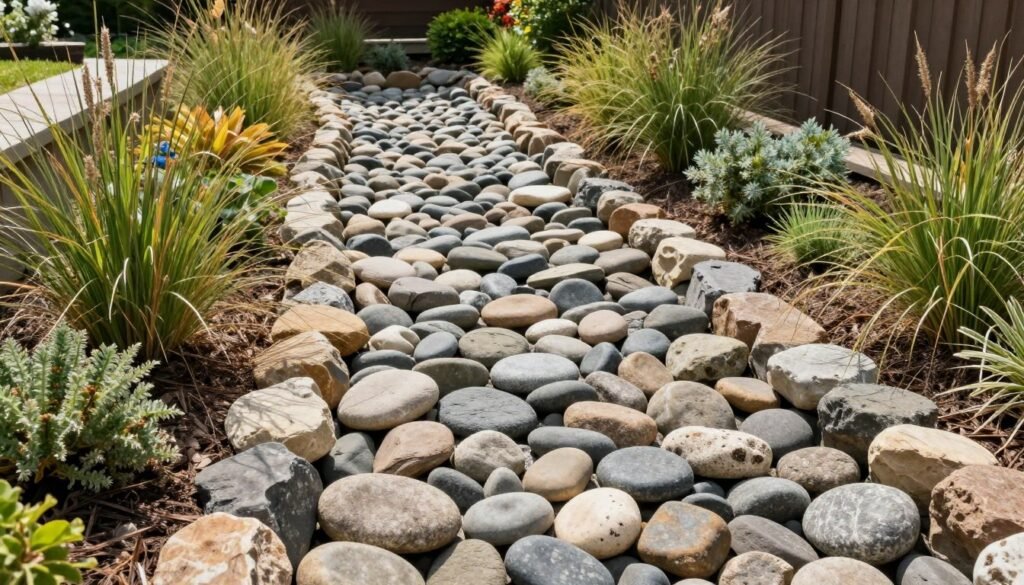
Dry creek beds channel surface water while creating attractive landscape features. These naturalistic drainage swales mimic seasonal streams. River rocks line the channel, slowing water flow and preventing erosion.
Design creek beds to follow natural water paths down the slope. Vary the width to create visual interest. Place larger boulders strategically to direct flow and create small waterfalls during heavy rain. Plant moisture-tolerant species along the banks.
Rain Gardens at the Slope Base
Rain gardens capture and filter runoff from hillsides. These shallow depressions filled with water-loving plants absorb storm water naturally. The garden allows water to percolate into soil rather than flowing to storm drains.
Select a location at the bottom of the slope where water naturally collects. Dig a depression 6-12 inches deep. Amend heavy clay soil with compost to improve drainage. Choose native wetland plants that tolerate periodic flooding and drought.
Prevent Costly Water Damage
Access proven drainage design plans that protect your slope from erosion while creating beautiful water features. Learn professional techniques for every budget.
Slopes offer unique opportunities for multi-level outdoor living areas. Elevated decks provide views impossible on flat lots. Sunken patios create intimate spaces protected from wind. Each elevation change defines distinct functional areas.
Deck Design for Sloped Sites
Decks maximize usable space on steep slopes where grading is impractical. Build the deck into the hillside using a combination of posts and beams. This approach costs less than extensive grading and retaining walls.
Multi-level decks follow the natural slope contour. Connect levels with wide steps that double as seating. Built-in planters along deck edges soften the structure and provide planting space. Under-deck areas offer storage or shaded gathering spots.
Patio Placement and Design
Level patios require cutting into the slope and building retaining walls. Position patios where they provide the best views and sun exposure. A patio at mid-slope creates a destination that draws people into the garden.
Natural stone or concrete pavers suit slope installations. These materials allow water to permeate rather than pooling. Proper base preparation prevents settling and cracking. A slight grade away from the house protects foundations from water damage.
Fire Pit Areas for Hillside Gathering
A fire pit transforms a slope into an evening entertainment destination. Locate the pit on a level terrace with adequate clearance from structures and vegetation. Curved seating walls double as retaining structures while defining the space.
Built-in benches maximize seating without furniture. Natural stone or concrete block construction withstands heat and weather. Add ambient lighting along pathways leading to the fire pit area. Plant fragrant herbs nearby to enhance the sensory experience.
Pathways and Steps for Safe Slope Access
Thoughtful pathway design makes hillside landscapes safe and accessible. Steps connect different elevations while creating architectural interest. Winding paths reduce steep grades to manageable slopes. Both elements become decorative features that enhance the overall design.
Stone Steps for Natural Integration
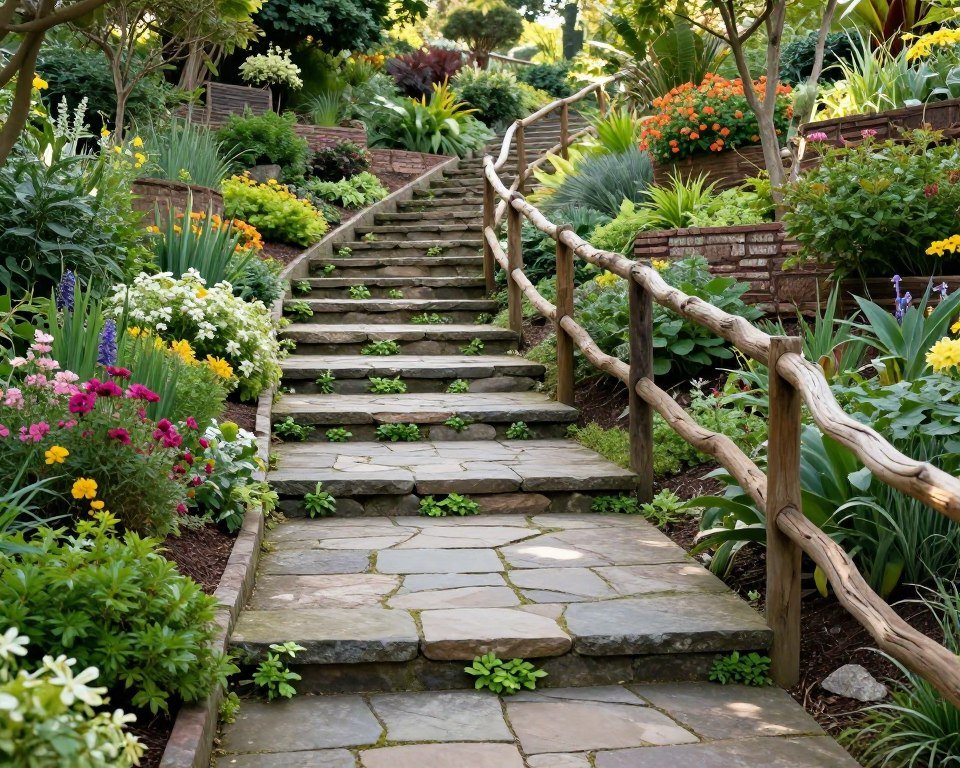
Natural stone steps blend seamlessly into hillside landscapes. Flagstone treads with planted risers create an informal cottage garden feel. Mortared stone provides formal elegance suited to traditional designs.
Step dimensions matter for safety and comfort. Treads should measure at least 12 inches deep. Risers work best between 4-7 inches high. Consistent dimensions prevent tripping. Wider steps accommodate two people walking side by side.
Gravel and Mulch Paths
Permeable paths allow water to soak into the ground rather than running downhill. Crushed gravel provides firm footing and excellent drainage. Wood chip mulch creates soft walking surfaces for woodland gardens.
Edge paths with stones or timber to prevent material migration. Install landscape fabric beneath gravel to suppress weeds. Refresh mulch paths annually as material decomposes. These informal paths suit naturalistic landscape styles.
Switchback Paths for Steep Terrain
Switchback paths reduce the grade on extremely steep slopes. These zigzag routes make climbing easier while creating journey through the landscape. Each turn offers new views and garden vignettes.
Design switchbacks with generous turning radius for comfortable walking. Plant screening at each turn to maintain visual interest. Benches at landings provide rest stops and viewing platforms. This path style transforms a challenging climb into a pleasant garden stroll.
Lighting enhances safety and extends evening enjoyment of hillside spaces. Low-voltage LED fixtures illuminate step edges without glare. Path lights guide visitors along routes. Explore professional lighting design strategies that highlight landscape features while ensuring safe nighttime navigation.
Low-Maintenance Slope Landscaping Strategies
Reducing maintenance on slopes saves time and effort. Strategic planning during installation minimizes ongoing care requirements. Native plants, efficient irrigation, and proper mulching create landscapes that thrive with minimal intervention.
Native Plant Communities
Native plants evolved to thrive in local slope conditions. They resist pests, tolerate drought, and require no fertilizer once established. These species support local wildlife including beneficial pollinators and birds.
Research native plant communities that naturally occur on hillsides in your region. Replicate these associations in your landscape design. Prairie grasses and wildflowers suit sunny slopes. Woodland understory plants thrive on shaded hillsides.
Drip Irrigation for Water Efficiency
Drip irrigation delivers water directly to plant roots with minimal waste. This system works perfectly on slopes where sprinklers cause runoff. Automated timers ensure consistent watering without manual effort.
Install drip lines before mulching or planting ground covers. Space emitters according to plant water needs. Group plants with similar requirements in hydrozones. The system pays for itself through water savings and healthier plants.
Mulch for Weed Suppression and Moisture Retention
A thick mulch layer prevents weed growth and conserves soil moisture. Organic mulches like shredded bark decompose slowly, improving soil as they break down. Apply 3-4 inches deep around plants, keeping mulch away from stems.
Refresh mulch annually to maintain depth as lower layers decompose. On steep slopes, larger bark nuggets resist washing away better than fine materials. Mulch also moderates soil temperature and reduces erosion from rainfall impact.
Design Your Low-Maintenance Slope Garden
Get expert plant selection guides, irrigation plans, and maintenance schedules that minimize your workload while maximizing beauty. Perfect for busy homeowners.
Beautiful hillside landscaping does not require unlimited funds. Phased implementation spreads costs over time. DIY projects reduce labor expenses. Strategic material choices deliver professional results at fraction of contractor prices.
Prioritize Critical Erosion Control
Start with areas experiencing active erosion. These problem spots cause the most damage if left unaddressed. Simple solutions like planting ground covers cost little but prevent expensive repairs later.
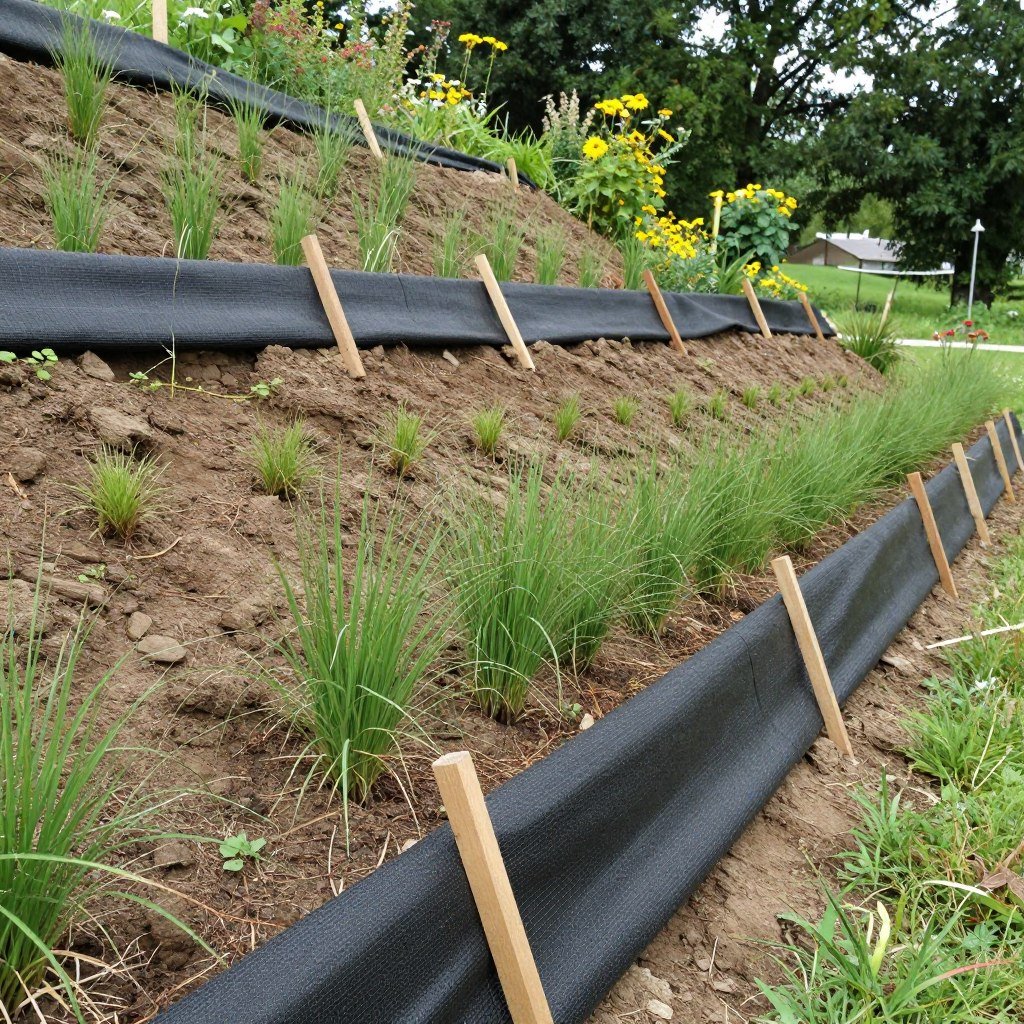
Fabric erosion control blankets provide immediate protection while plants establish. These biodegradable mats hold soil in place and retain moisture for new plantings. Stakes secure the fabric to steep slopes until plant roots take over.
Grass seed mixed with native wildflowers creates fast coverage on disturbed areas. Spread seed in fall for spring germination. Water regularly until plants establish. This approach costs pennies per square foot compared to installed sod.
Repurpose Materials for Retaining Structures
Reclaimed materials build character while saving money. Broken concrete pieces create urban rubble walls. Salvaged bricks form attractive terracing. Local stone yards sell irregular pieces at discount prices.
Wooden pallets disassemble into lumber for raised beds and low walls. Railroad ties from salvage yards cost less than new landscape timbers. These weathered materials add instant age and charm to new landscapes.
Phased Installation Plan
Tackle your slope project in manageable phases. Year one might focus on erosion control and basic grading. Year two adds retaining walls and pathways. Year three completes planting and finishing touches.
This approach spreads the budget over multiple seasons. You learn from each phase before investing in the next. Plants installed earlier mature while you work on later sections. The landscape develops naturally rather than looking newly installed.
Share labor with neighbors tackling similar projects. Pool resources for tool rentals and bulk material purchases. Learn budget-maximizing strategies that help you accomplish more with available funds.
Seasonal Considerations for Slope Landscapes
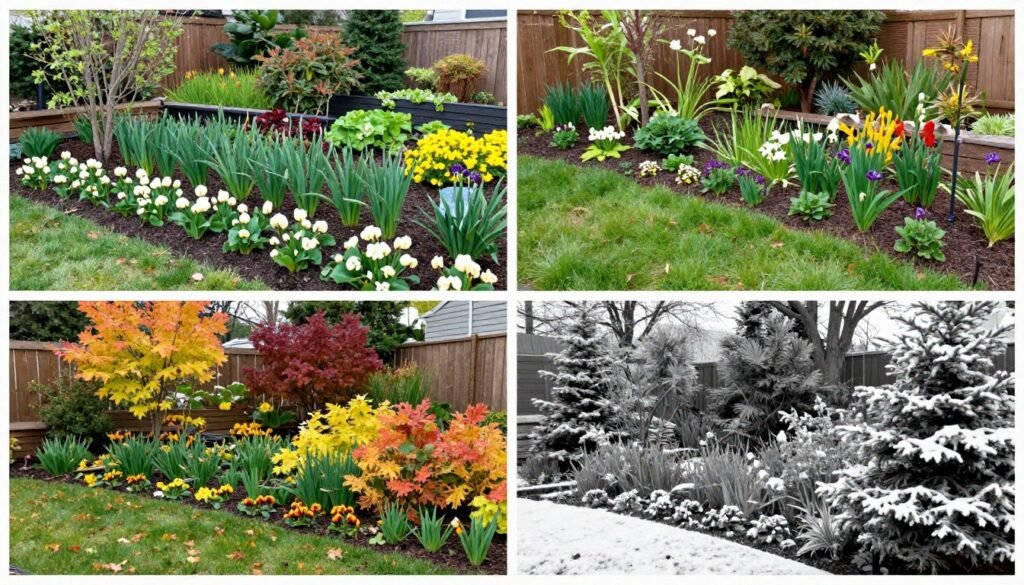
Hillside landscapes face unique seasonal challenges. Winter freezes stress retaining walls. Spring rains test drainage systems. Summer droughts tax plant resilience. Fall leaves require slope-specific cleanup strategies.
Spring: Planting and Maintenance
Spring offers ideal conditions for establishing new slope plantings. Cool temperatures and regular rainfall help plants develop strong roots. Address winter damage to retaining walls and pathways before vegetation obscures problems.
Inspect drainage features after spring thaws. Clear debris from French drains and dry creek beds. Repair erosion damage before summer storms arrive. Divide and transplant overgrown perennials on terraces.
Summer: Water Management
Hot weather stresses slope plantings through rapid moisture loss. Deep watering encourages deep root growth. Mulch layers reduce evaporation and moderate soil temperature. Drought-tolerant plants show their value during dry spells.
Monitor irrigation systems for proper coverage. Adjust emitter positions as plants grow. Hand water any stressed areas showing signs of drought. Deadhead flowering plants to extend bloom periods and maintain appearance.
Fall: Preparation and Protection
Fall is the best time to plant trees and shrubs on slopes. Cooler weather reduces transplant stress. Plants establish roots through winter for vigorous spring growth. Mulch new plantings heavily to prevent frost heaving.
Clean leaves from pathways and steps where they create slip hazards. Leaves trapped behind retaining walls can retain moisture and promote decay. Compost collected leaves or use as mulch on planting beds.
Winter: Structural Integrity
Freeze-thaw cycles challenge retaining walls and paved surfaces. Proper drainage prevents ice formation that damages structures. Keep pathways clear of snow and ice for safe access.
Avoid walking on frozen ground covers, which damages stems. Heavy snow loads can flatten ornamental grasses and shrubs. Gently brush off accumulation to prevent breakage. Use winter as a planning period for spring improvements.
Your Action Plan to Transform Your Sloped Backyard
Your hillside holds tremendous potential waiting to be realized. The challenges that once seemed overwhelming now have clear solutions. Retaining walls, terracing, proper plant selection, and smart water management turn slopes into landscape assets.
Start with a clear plan that addresses your specific site conditions. Assess your slope’s grade, drainage patterns, and sun exposure. Identify problem areas requiring immediate attention. Determine which solutions fit your budget and skill level.
Focus first on erosion control and structural elements. These foundational improvements protect your investment in later plantings and features. Retaining walls and drainage systems provide the framework for everything else.
Select plants suited to your hillside’s unique microclimates. Deep-rooted trees and shrubs provide long-term soil stabilization. Ground covers eliminate mowing on steep areas. Native species reduce maintenance while supporting local ecosystems.
Create outdoor living spaces that take advantage of elevation changes. Multi-level decks and patios expand usable area. Fire pits and seating areas become destinations that draw family and guests into the landscape. Each terrace offers different views and experiences.
Pathways and steps make your hillside accessible and safe. Well-designed circulation encourages exploration of all areas. Lighting extends enjoyment into evening hours. These elements transform steep terrain into an integrated outdoor living environment.
Implement your vision in phases if budget requires. Complete one section thoroughly before starting the next. This approach provides satisfaction from finished areas while spreading costs over time. Each phase informs the next as you learn what works best on your property.
Start Your Slope Transformation Today
Stop struggling with your hillside challenges. Get instant access to comprehensive landscaping plans, plant selection guides, and step-by-step tutorials designed specifically for sloped properties. Transform your slope from problem area to your property’s most stunning feature.
Your sloped backyard can become the landscape feature you have always wanted. The strategies shared here have helped thousands of homeowners turn challenging hillsides into beautiful, functional outdoor spaces. The right approach makes all the difference between frustration and success.
Take action now while motivation is high. Even small improvements deliver immediate results. Each step forward reveals new possibilities. Your hillside landscape journey begins with that first decision to transform your slope into something extraordinary.
Every love story deserves a beautiful chapter. A book themed bridal shower celebrates the bride’s journey while honoring her passion for literature. This timeless theme transforms an ordinary gathering into an extraordinary celebration filled with literary charm and personal meaning. Planning such a special event requires creativity and attention to detail. From vintage book centerpieces…
The moment you decide to propose marks the beginning of one of life’s most exciting journeys. Your girlfriend proposal represents more than just asking a question. It becomes a cherished memory that both of you will replay countless times throughout your relationship. This significant milestone deserves thoughtful planning, genuine emotion, and a personal touch that…
Your wedding day is one of the most memorable moments in your life. Every detail matters, including how your bridal party looks. The right bridesmaid hairstyles can make your bridesmaids feel confident and beautiful while complementing your overall wedding vision. Choosing the perfect bridesmaid hair involves considering multiple factors. You want styles that photograph beautifully…
Attending a fall wedding calls for the perfect blend of style, comfort, and seasonal appropriateness. As autumn leaves turn and temperatures cool, your wedding guest attire should reflect the rich, warm ambiance of the season while adhering to the event’s dress code. This comprehensive guide will help you navigate the world of fall wedding guest…
Blue shoes are the unsung heroes of a versatile wardrobe. They offer the perfect balance of boldness and versatility, allowing you to make a statement without overwhelming your outfit. Whether you’re sporting navy loafers, cobalt heels, or powder blue sneakers, this guide will help you create eye-catching blue shoes outfits for every occasion and season….
The moment when you hear those four special words deserves an outfit that makes you feel absolutely radiant. Your proposal dress will be captured in photographs you’ll treasure forever, shared with loved ones, and remembered as part of one of life’s most magical moments. Choosing the right dress involves balancing personal style with practical considerations….