Backyard Fire Pit Ideas Lounge Areas: 27 Stunning Designs
Creating the perfect outdoor living space starts with one essential element. A well-designed fire pit area transforms your backyard into a warm gathering spot. The right combination of design and comfort makes your outdoor space feel like a natural extension of your home.
Fire pits serve as natural focal points for any yard. They provide heat during cool evenings and create ambiance throughout the year. When you add thoughtful seating and smart design choices, your backyard becomes an inviting lounge area.
This guide explores various fire pit ideas that blend style with function. You’ll discover practical ways to design your outdoor space. From stone installations to modern concrete designs, these ideas help you create the perfect spot for relaxation and entertainment.
Get Professional Fire Pit Lounge Plans
Transform your backyard with comprehensive design plans and expert guidance. Create a stunning outdoor lounge area that your family will love for years to come.
Stone Fire Pit: Classic Elegance for Your Backyard
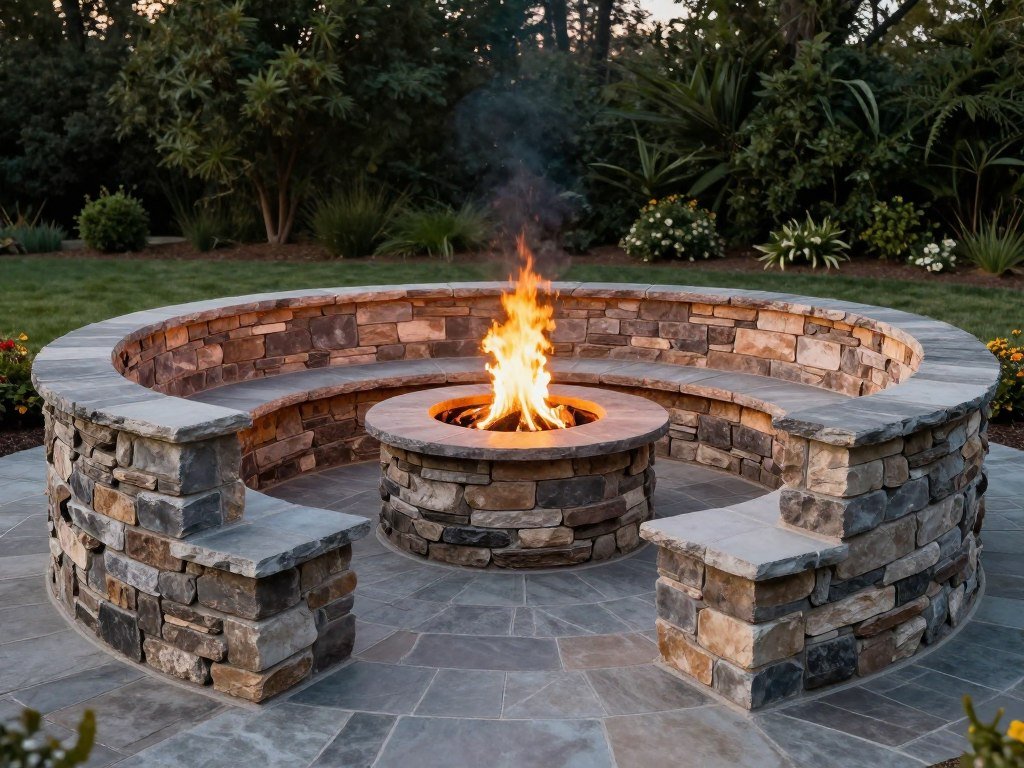
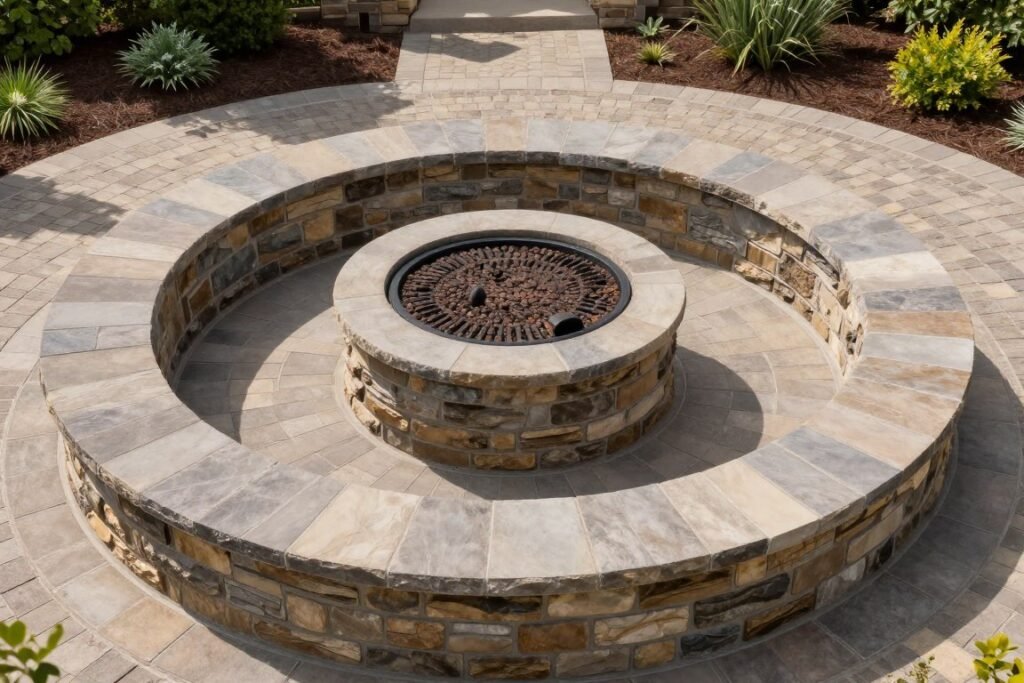
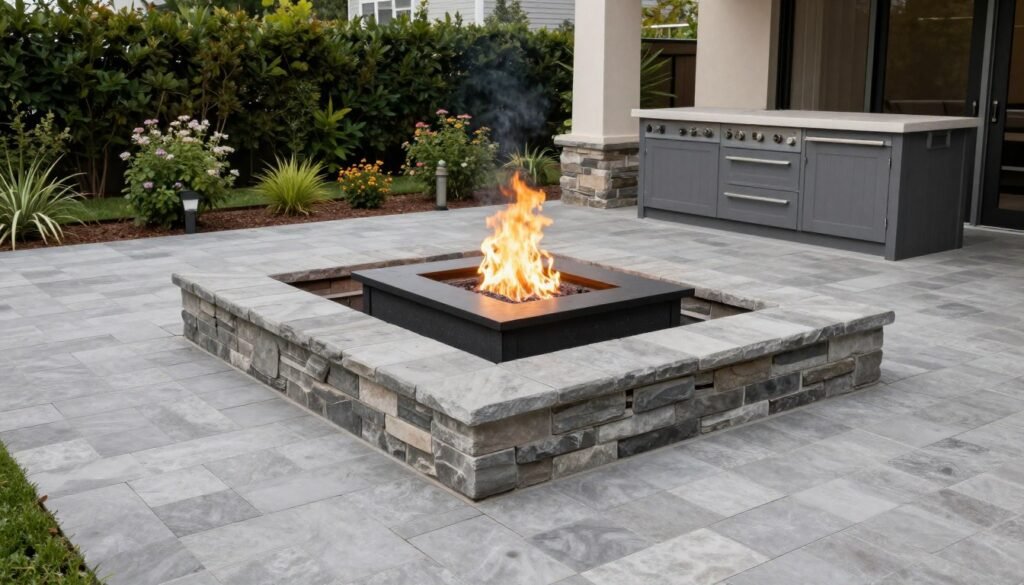
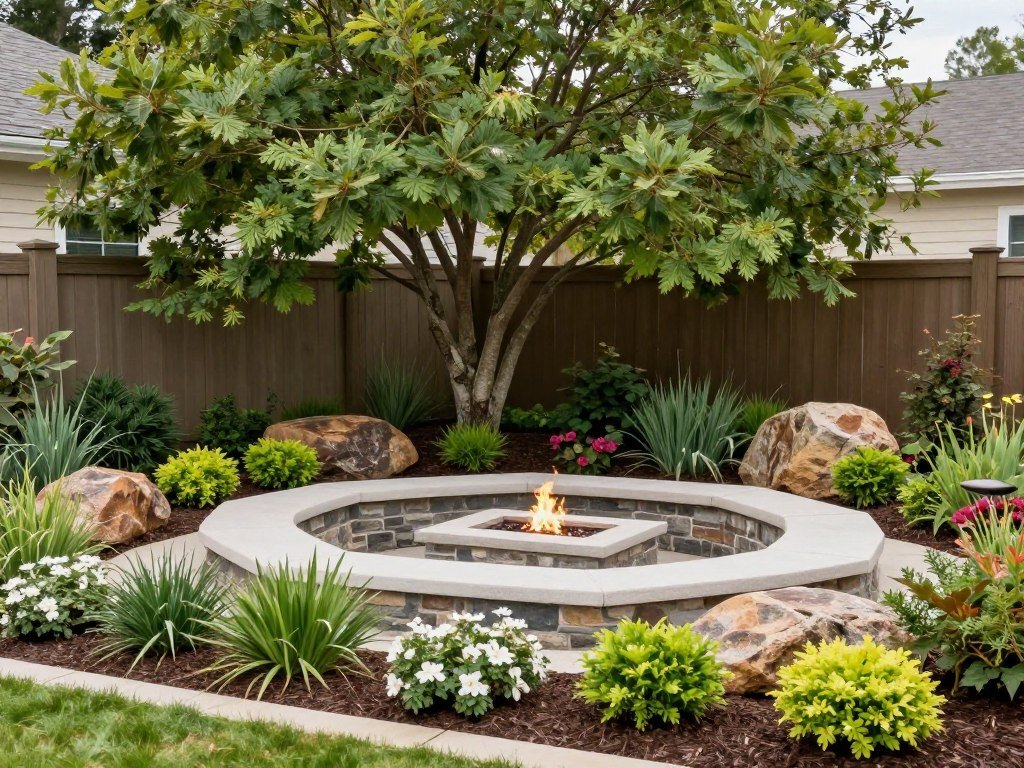
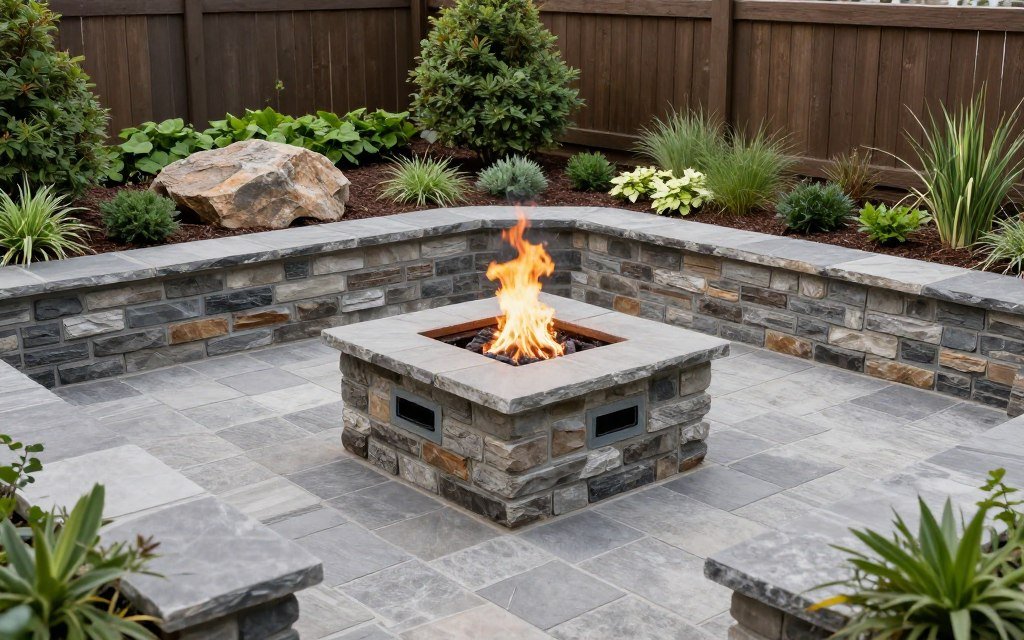
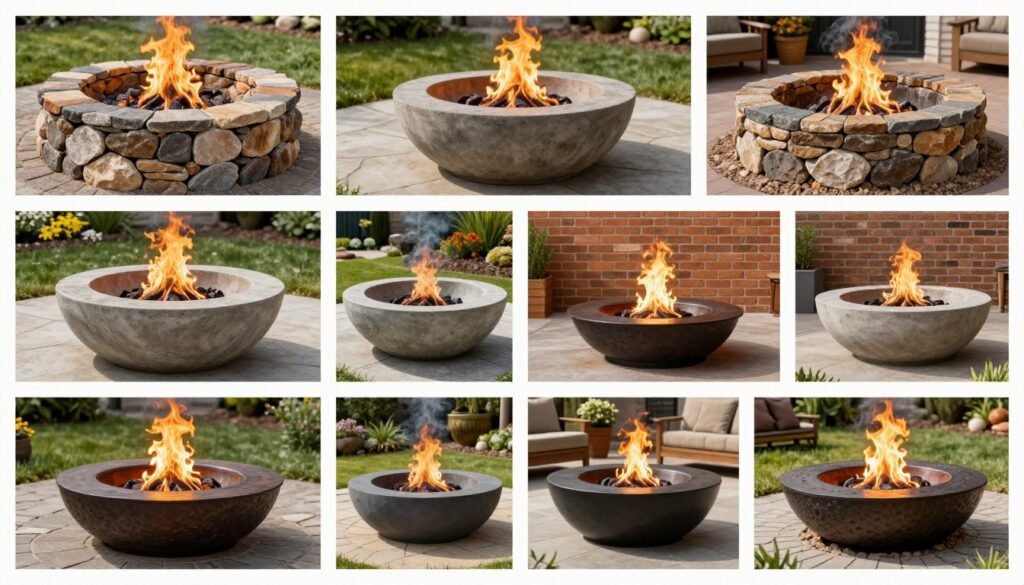
Stone fire pits bring timeless beauty to outdoor spaces. Natural stone creates a rustic charm that blends seamlessly with garden landscapes. The material offers durability that withstands weather conditions year after year.
A stone fire pit area works well with various design styles. You can choose from fieldstone, flagstone, or river rock. Each type provides unique texture and color variations that enhance your backyard aesthetic.
Building a stone fire pit requires careful planning. The structure needs proper foundation and drainage. Many homeowners opt for professional installation to ensure safety and longevity.
Design Considerations for Stone Fire Pits
The size of your stone fire pit depends on available space. A typical pit area measures between four and six feet in diameter. This size accommodates comfortable seating while maintaining safety distances.
Stone selection impacts both appearance and maintenance. Lighter colored stones reflect more heat and stay cooler to the touch. Darker stones absorb heat but create dramatic visual contrast.
Material Options
Fieldstone for natural, irregular appearance
Cut stone for clean, modern lines
River rock for smooth, rounded texture
Flagstone for layered, dimensional look
Installation Basics
Level ground preparation required
Gravel base for proper drainage
Fire-resistant mortar for stability
Metal fire ring insert recommended
Surrounding your stone fire pit with complementary hardscaping creates cohesion. Pavers or flagstone patios extend the usable space. This approach defines the lounge area and provides stable footing.
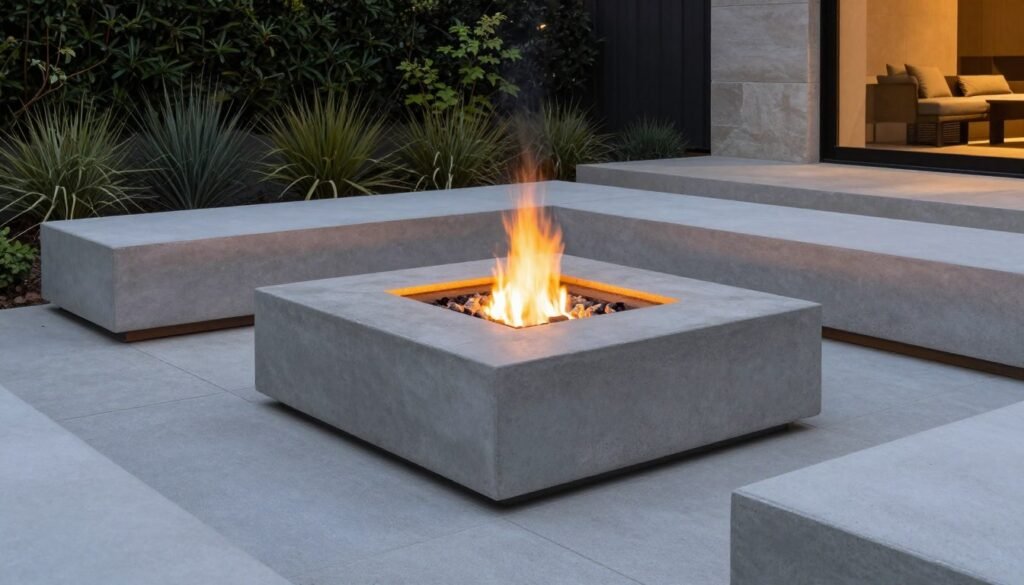
Concrete Fire Pit: Modern Sophistication Meets Function
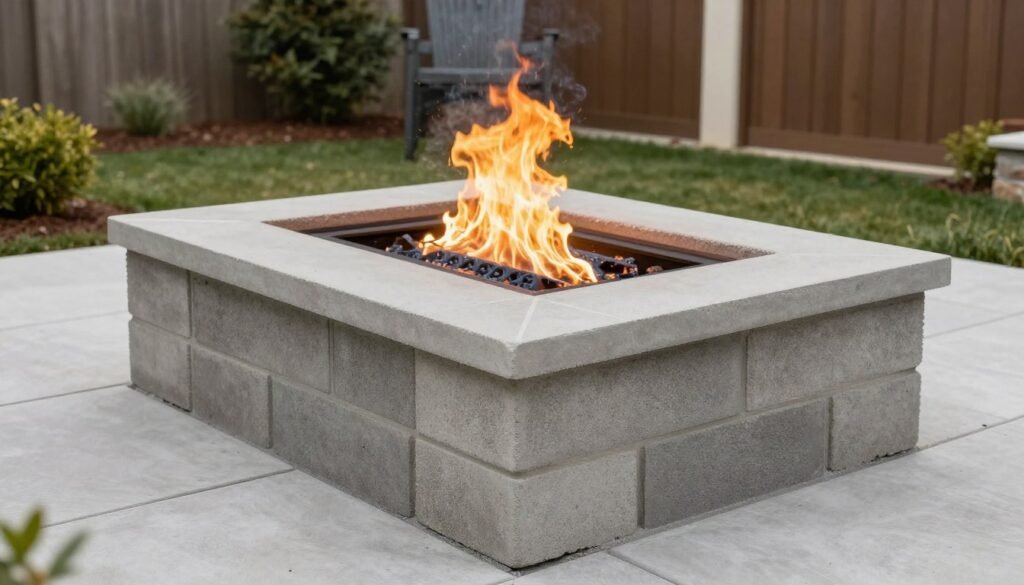
Concrete fire pits offer versatility in design and color options. This material adapts to contemporary and traditional styles equally well. Concrete can be molded into various shapes and finished with different textures.
Modern concrete fire pits come in square, rectangular, and circular forms. The material allows for custom dimensions that fit your specific space. You can add color pigments or decorative aggregates for personalized style.
Benefits of Concrete Fire Pit Designs
Concrete provides excellent heat retention properties. The material radiates warmth long after the fire dies down. This extended heat makes concrete fire pits especially efficient for cool evenings.
Maintenance requirements for concrete remain minimal. The surface resists staining when properly sealed. Regular cleaning with mild soap and water keeps the pit area looking fresh.
Cast Concrete Options
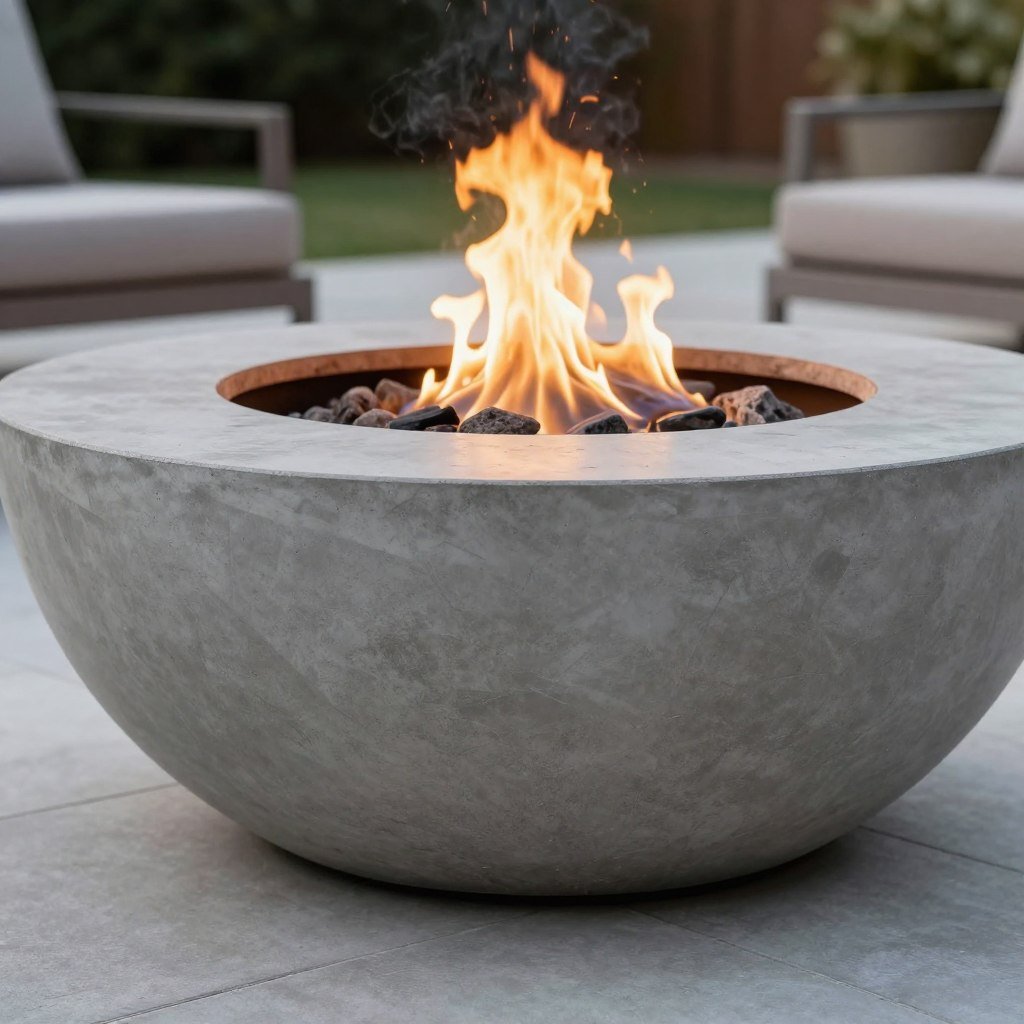
Pre-cast concrete bowls offer instant installation. These portable options come in various sizes and finishes. You can move them seasonally or rearrange your outdoor layout.
Poured Concrete Designs
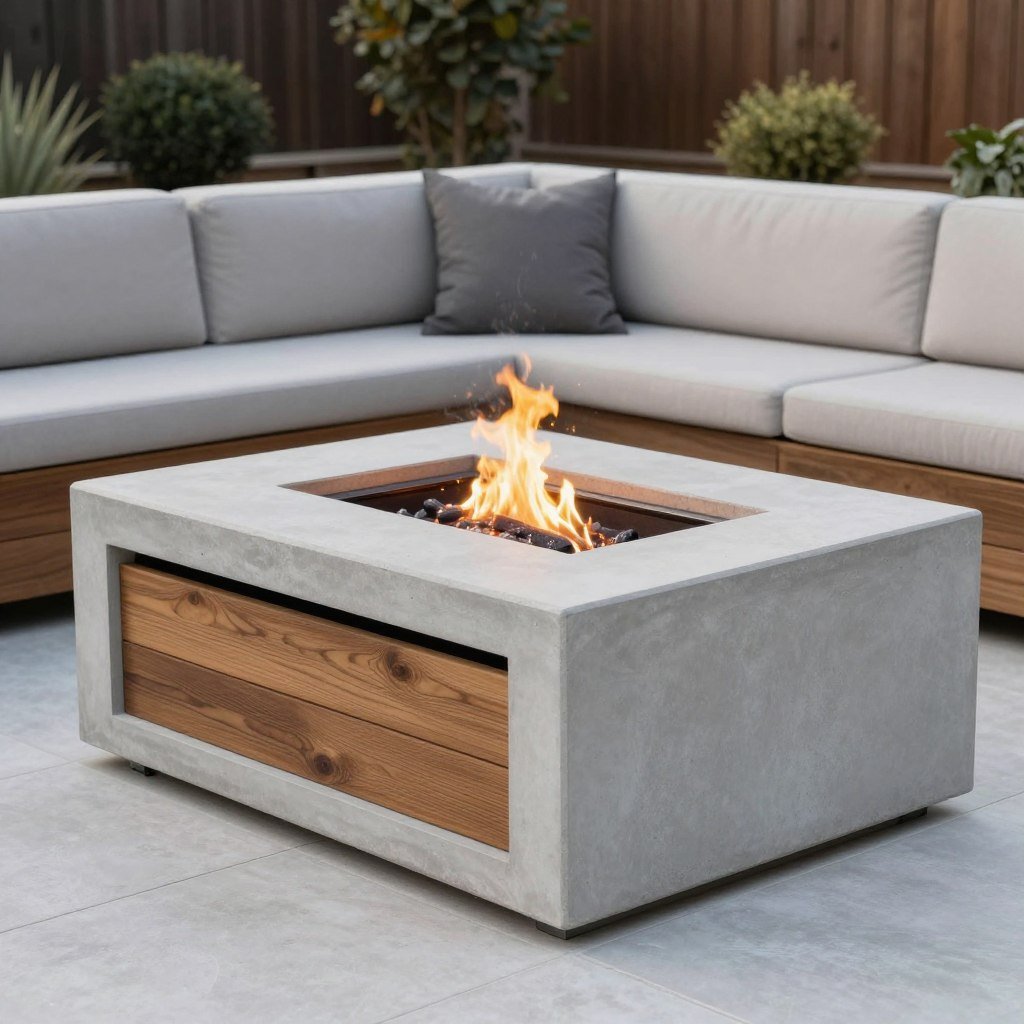
Custom poured concrete creates permanent installations. This method allows for unique shapes and integrated features. Built-in seating or wood storage adds functionality.
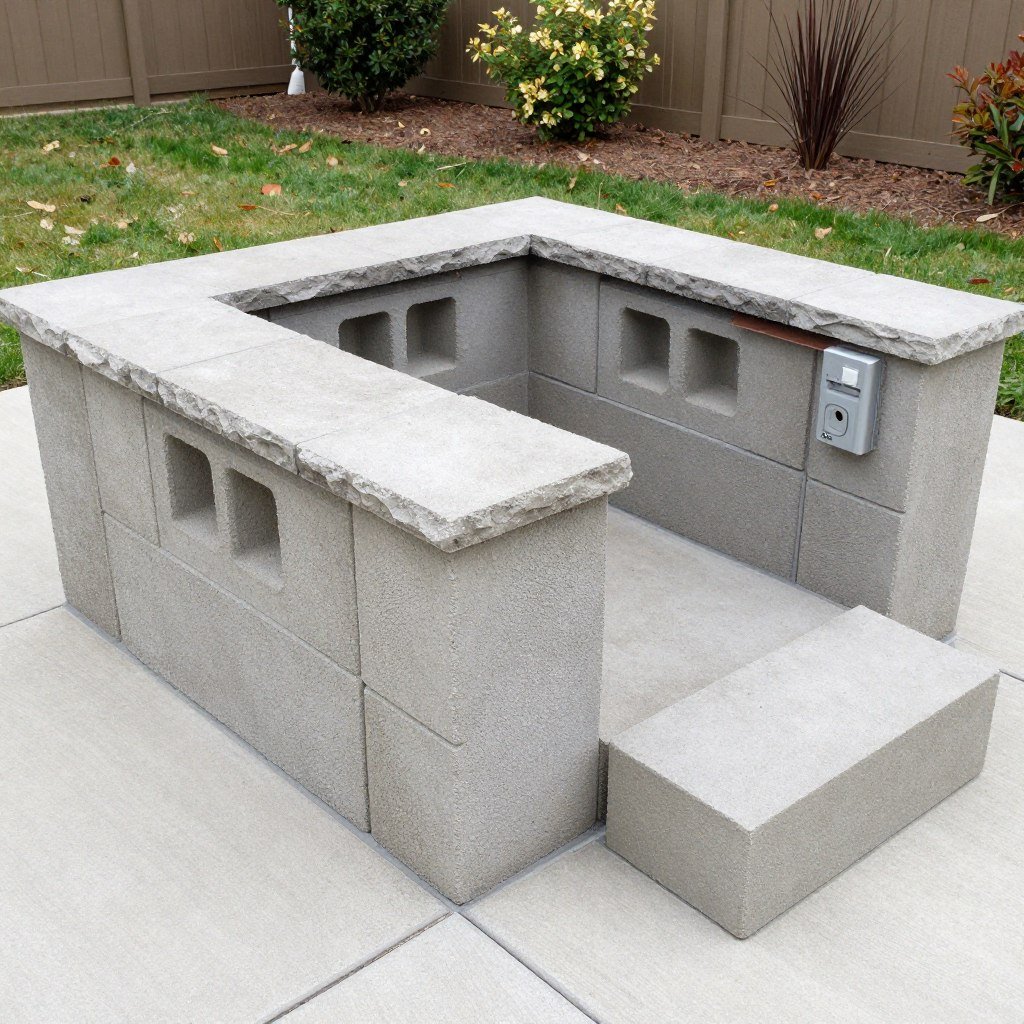
Concrete Block Construction
Concrete blocks offer budget-friendly construction. This DIY-friendly option requires basic masonry skills. The modular design simplifies repairs and modifications.
Outdoor Fire Pit Seating Arrangements That Invite Relaxation
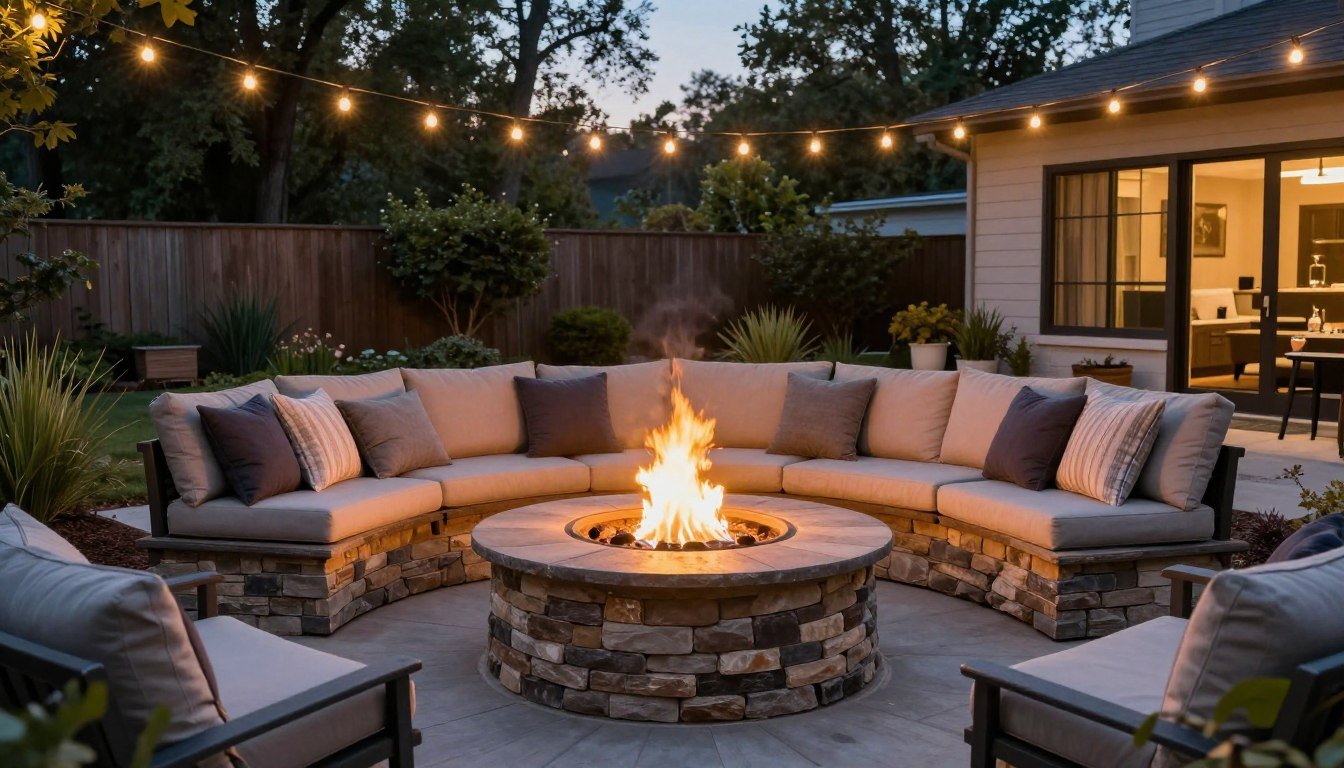
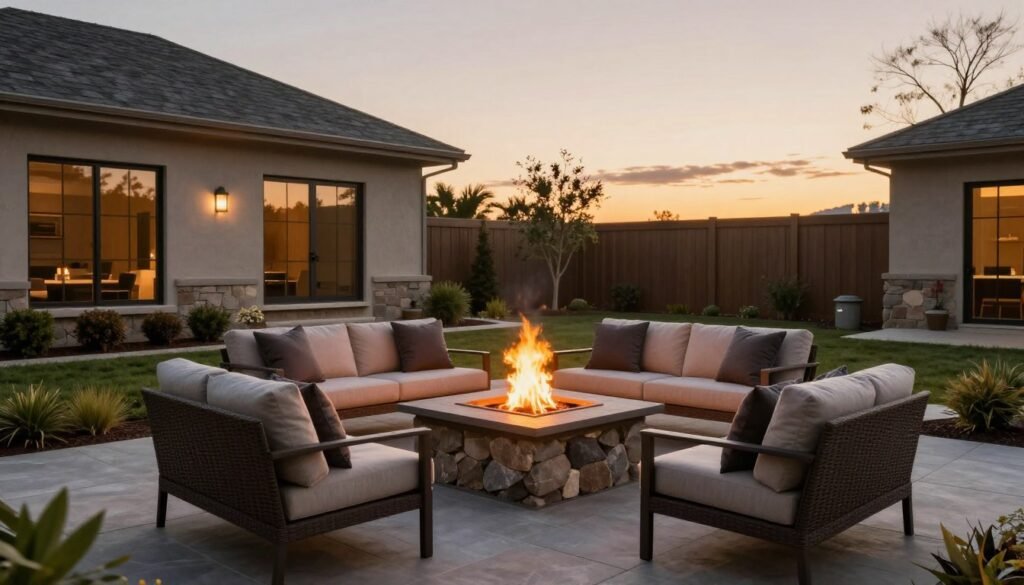
Seating makes or breaks a fire pit lounge area. The arrangement should encourage conversation while maintaining comfort. Proper spacing ensures everyone feels the warmth without sitting too close.
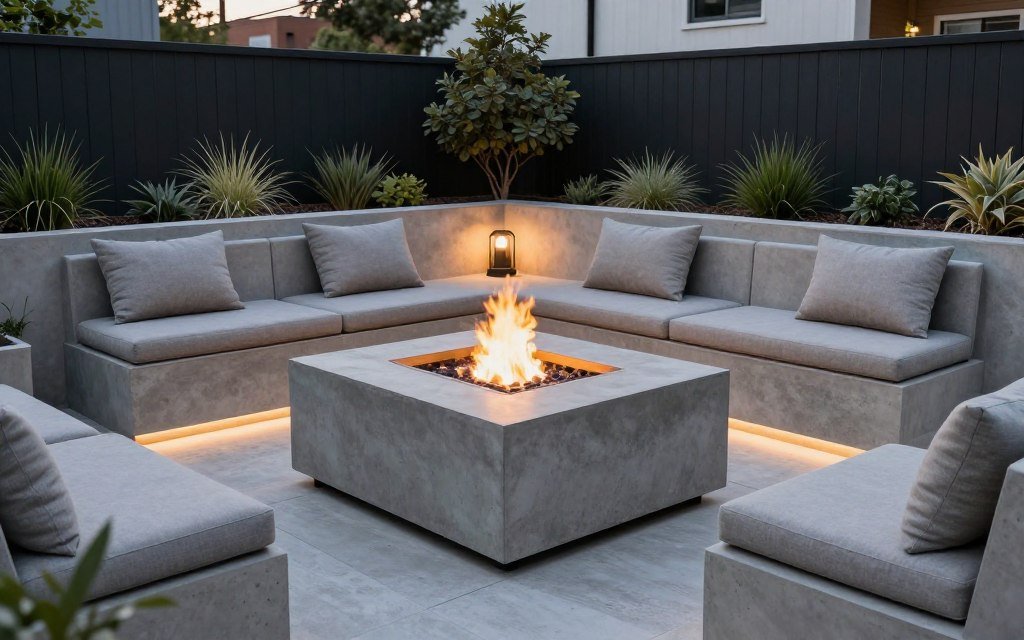
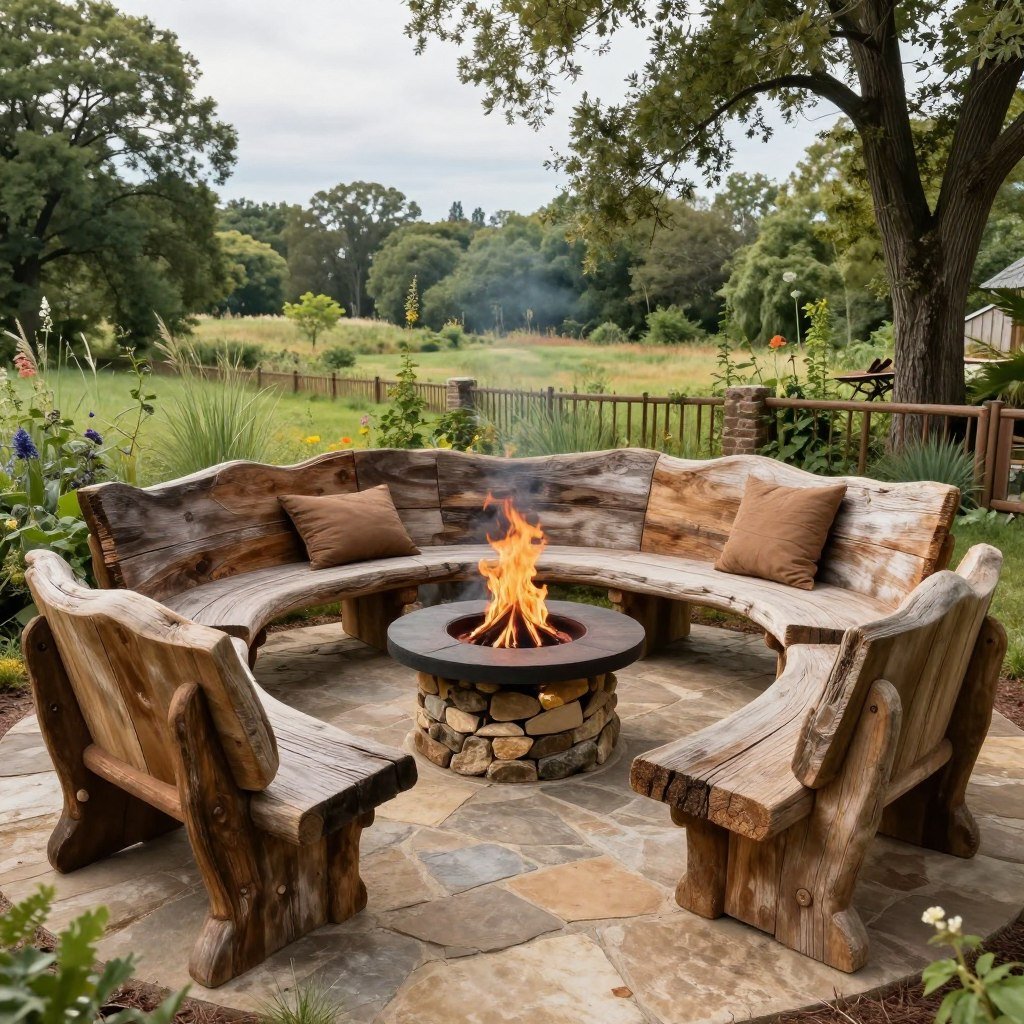
Built-in seating offers permanence and cohesive design. Stone or concrete benches follow the pit area perimeter. These structures require less maintenance than furniture and never need storage.
Furniture Selection for Fire Pit Areas
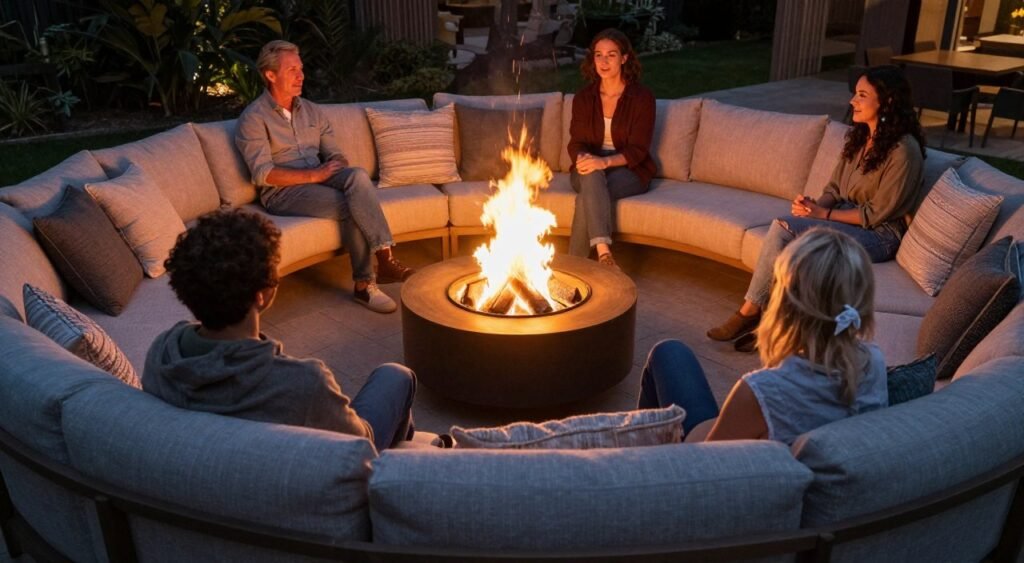
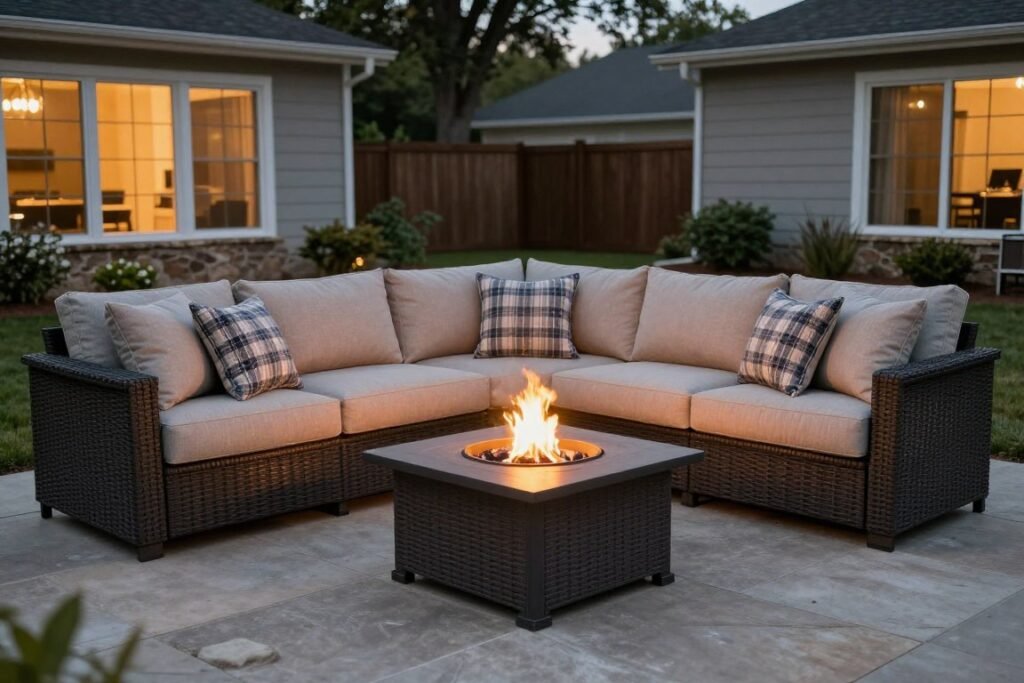
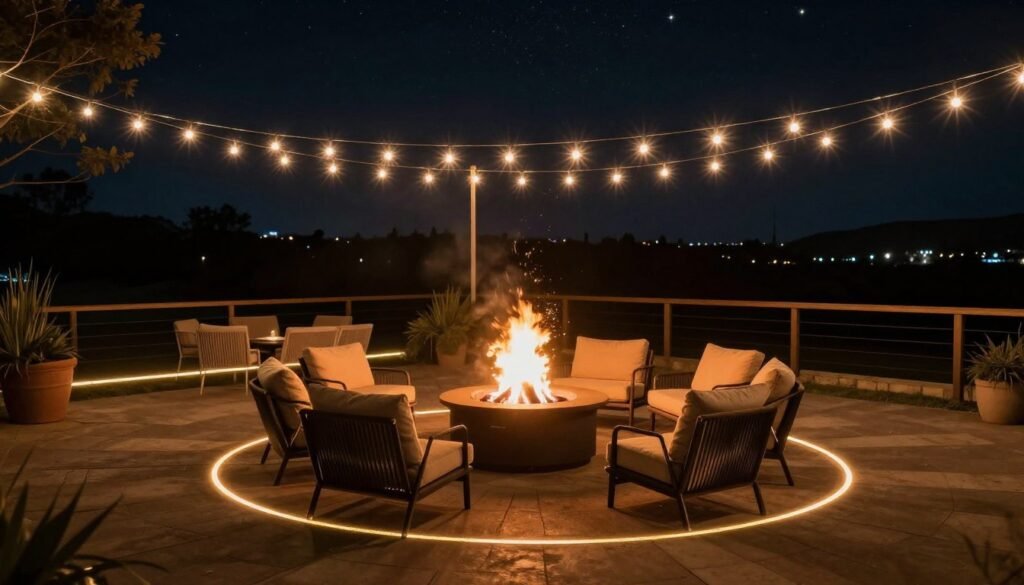
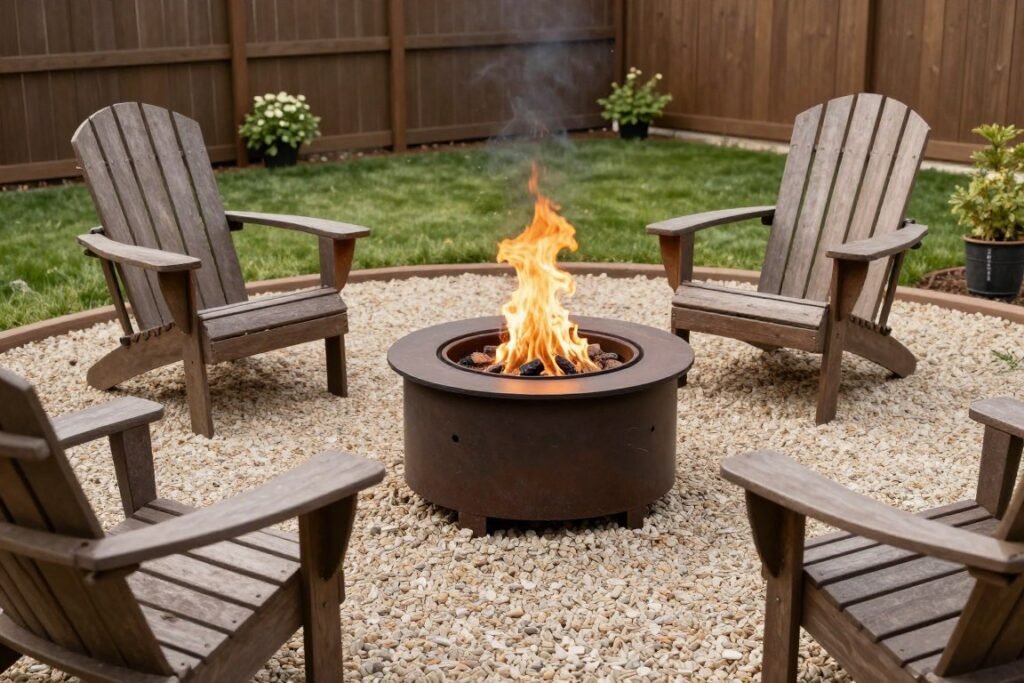
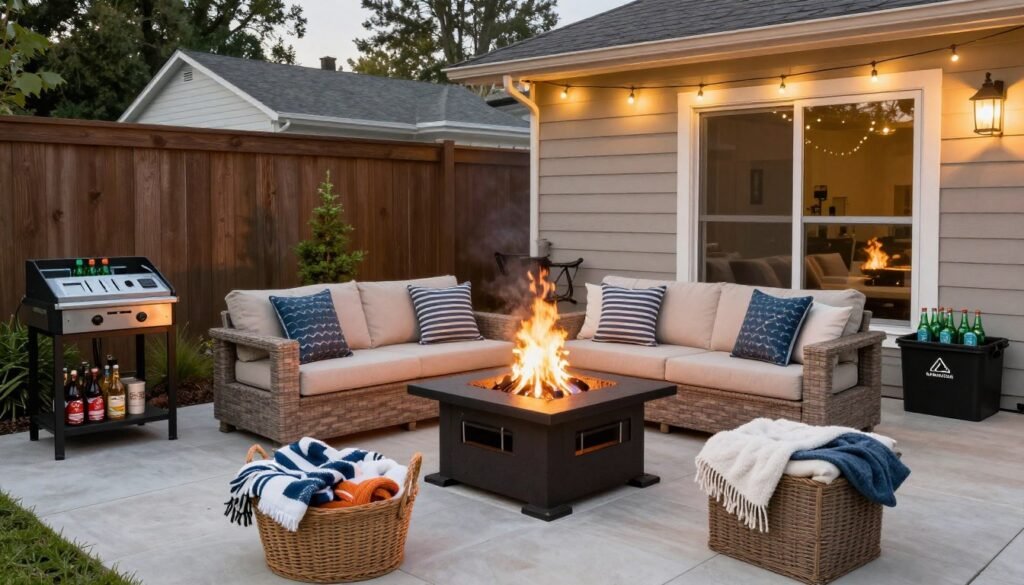
Movable outdoor furniture provides flexibility for different group sizes. Chairs arranged in a circle create intimate settings. Sectional sofas accommodate larger gatherings while defining the space.
Weather-resistant materials extend furniture life in outdoor conditions. Look for aluminum frames with powder coating. Cushions should feature quick-dry foam and solution-dyed fabrics.
Position seating three to four feet from fire pit edge
Create multiple seating zones for larger spaces
Mix furniture types for visual interest and function
Add side tables within easy reach of each seat
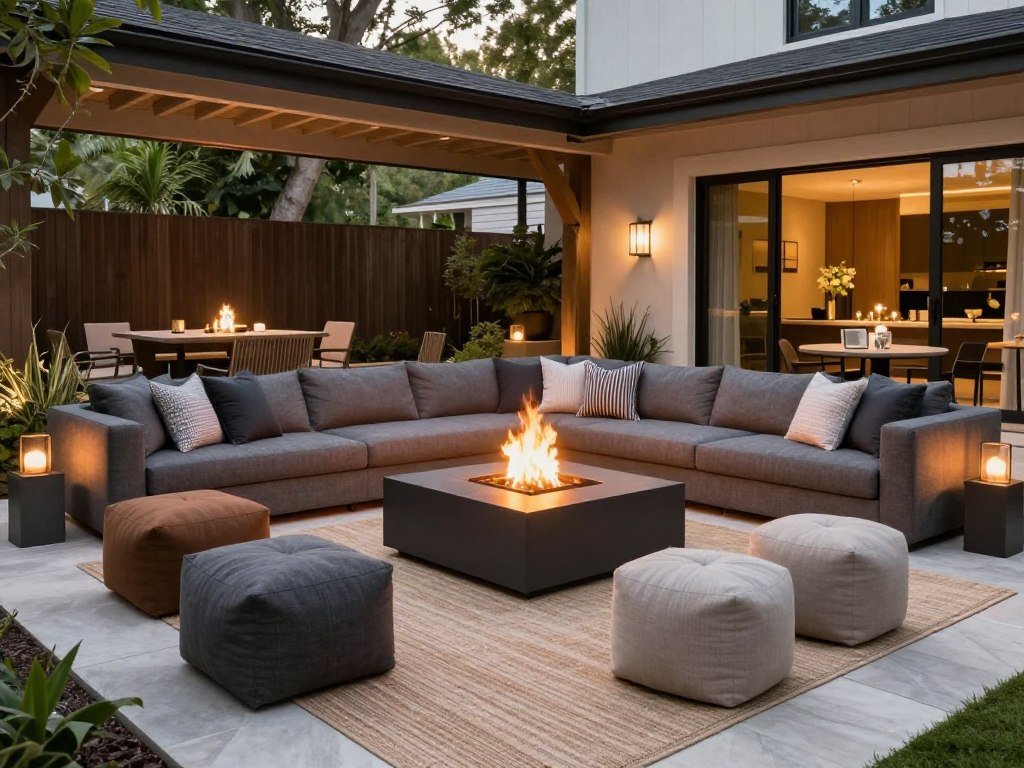
Include ottomans for flexible extra seating
Consider swivel chairs for adjustable positioning
Creating Comfortable Lounge Zones
Layering different seating heights adds depth to the pit area. Combine standard height chairs with lower lounge seats. This variation makes the space feel more dynamic and accommodating.
Outdoor rugs define the lounge boundary and add comfort underfoot. Choose materials designed for exterior use. Polypropylene rugs resist moisture and clean easily.
Design Your Perfect Outdoor Lounge
Get expert layouts and seating arrangements for your backyard fire pit area. Professional plans help you create the ideal entertaining space with proper furniture placement and flow.
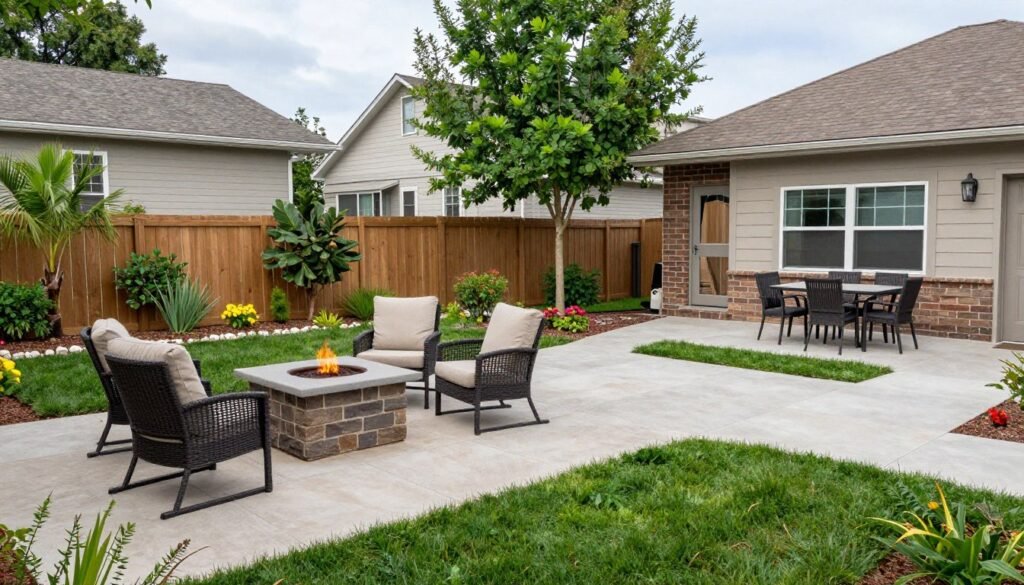
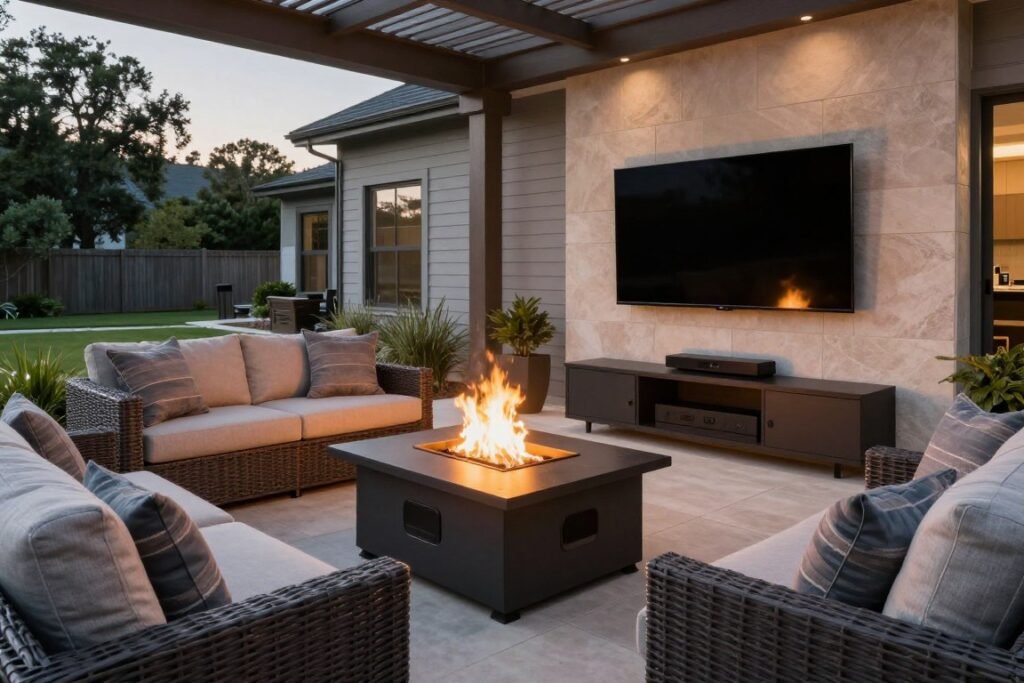
Integrating a fire pit into your existing patio creates unified outdoor space. The pit becomes a central feature rather than an afterthought. Material coordination between patio and pit area strengthens visual flow.
Paver patios accommodate fire pit installations beautifully. The modular nature of pavers allows for precise pit placement. You can create decorative patterns that draw attention to the fire feature.
Material Coordination Strategies
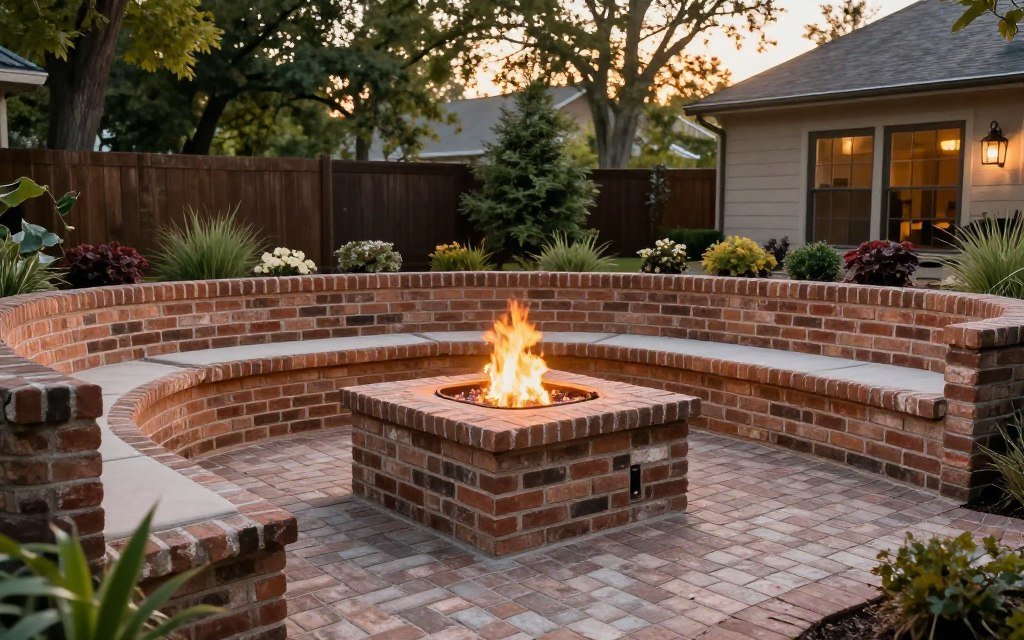
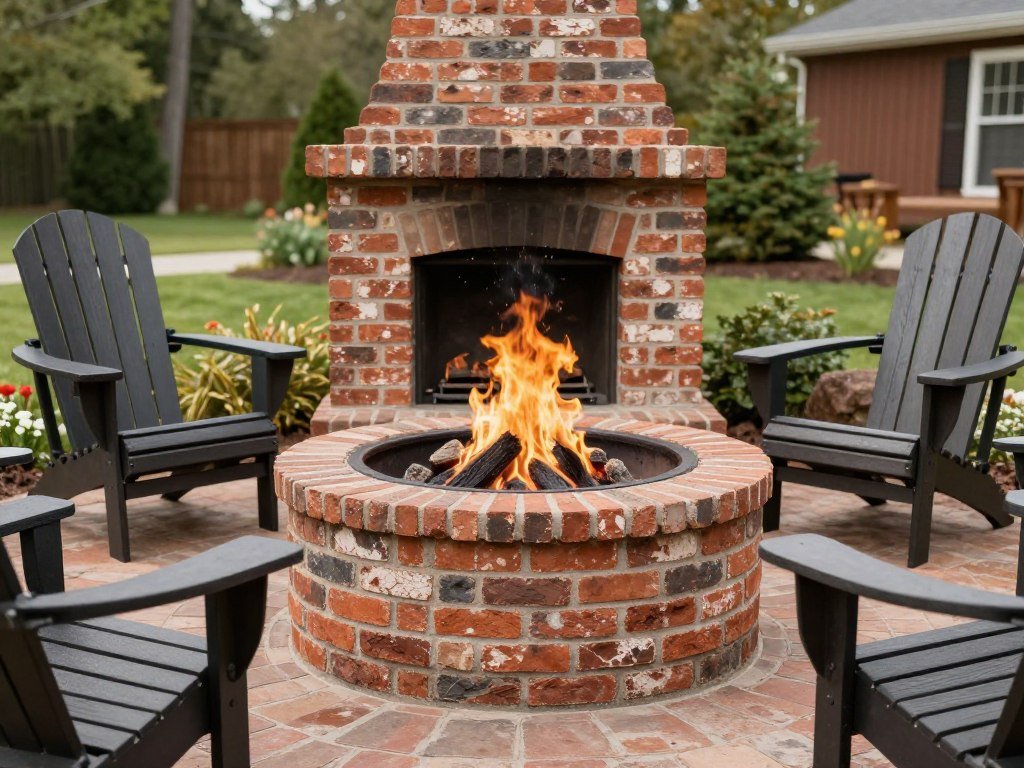
Matching patio and pit area materials creates cohesive design. If your patio uses brick pavers, incorporate brick into the fire pit surround. This repetition ties the elements together naturally.
Contrasting materials can define separate zones within one patio. A stone fire pit on a concrete patio creates intentional focal point. The contrast highlights the pit area while maintaining overall harmony.
Patio Material Options
Concrete pavers for budget-friendly installation
Natural stone for premium appearance
Brick pavers for traditional charm
Stamped concrete for custom patterns
Porcelain tiles for modern aesthetics
Integration Considerations
Plan fire pit location before patio construction
Ensure proper clearances from house and structures
Install gas lines or electrical during patio work
Grade patio away from fire pit for drainage
Leave access paths around pit area
Sunken Fire Pit Designs
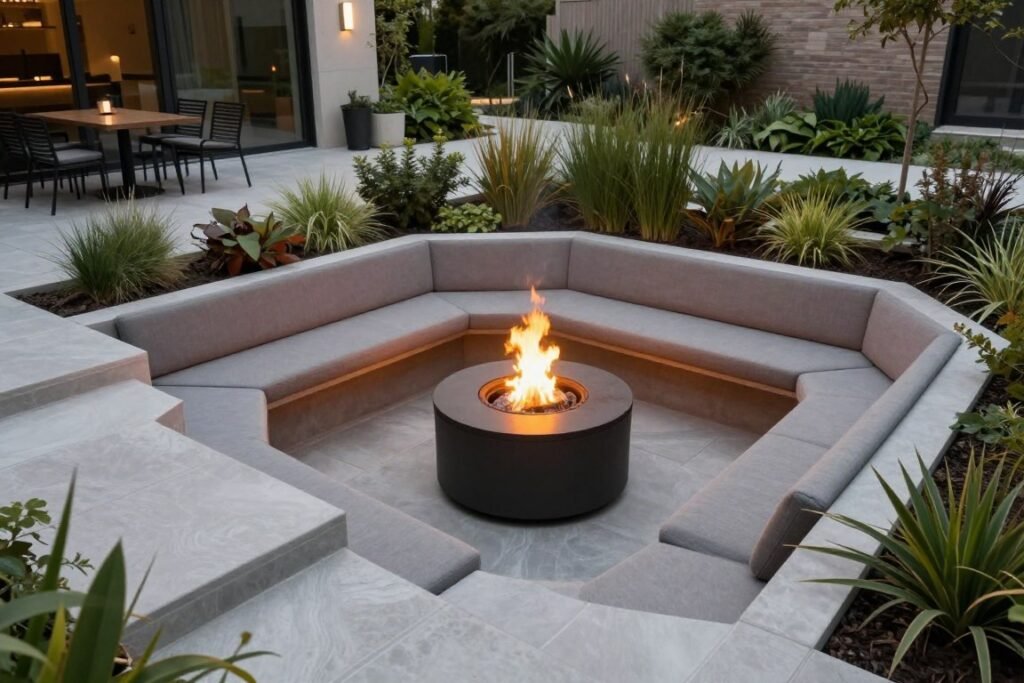
Sunken fire pits create intimate gathering spaces within larger patios. The lowered floor level provides natural wind protection. This design also reduces the visual impact of the fire feature from a distance.
Building a sunken pit area requires significant excavation and drainage planning. The construction involves retaining walls and proper water management. Professional installation ensures structural integrity and safety.
Backyard Fire Pit Landscaping That Enhances Ambiance
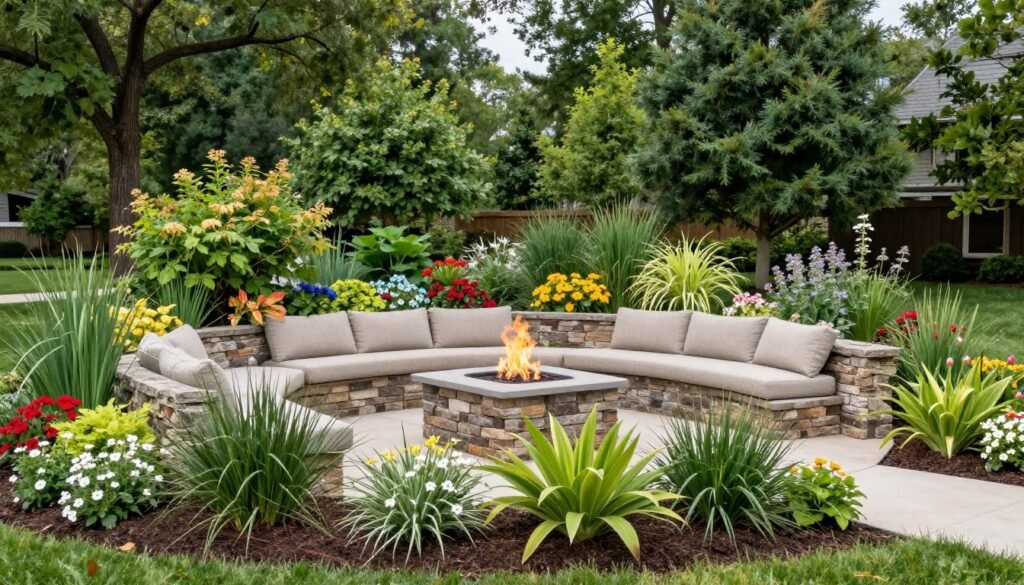
Thoughtful landscaping transforms a basic fire pit into a destination spot. Plants soften hardscape edges and add color throughout seasons. Strategic planting also provides privacy and defines the lounge area boundaries.
Fire-resistant plants near the pit area ensure safety without sacrificing beauty. Succulents, stone crops, and other low-water plants thrive in heat. These choices reduce fire risk while requiring minimal maintenance.
Plant Selection for Fire Pit Zones
Create layers of plants at varying heights around your pit area. Low groundcovers edge the immediate space. Medium shrubs provide backdrop at a safe distance. Tall trees offer overhead canopy and shade during daytime.
Evergreen plants maintain visual interest year-round. They provide structure during winter months when deciduous plants go dormant. Mix evergreens with seasonal bloomers for changing color palette.
Position tall trees 15-20 feet from fire pit area
Plant shrubs minimum 10 feet from pit edge
Use groundcovers 5-8 feet from flames
Choose native plants adapted to local climate
Incorporate fragrant herbs for sensory appeal
Add ornamental grasses for movement and texture
Hardscape and Softscape Balance
Balance between hard and soft elements creates pleasing outdoor space. Too much hardscape feels cold and uninviting. Excessive planting overwhelms the fire pit and restricts movement.
A general guideline suggests 60 percent hardscape to 40 percent planted areas. This ratio provides structure while maintaining organic feel. Adjust proportions based on your yard size and style preferences.
Transform Your Backyard With Professional Plans
Access detailed landscaping plans designed specifically for fire pit lounge areas. Learn proper plant placement, material selection, and design techniques that create stunning outdoor spaces.
Lighting for Fire Pit Areas Creates Magic After Dark
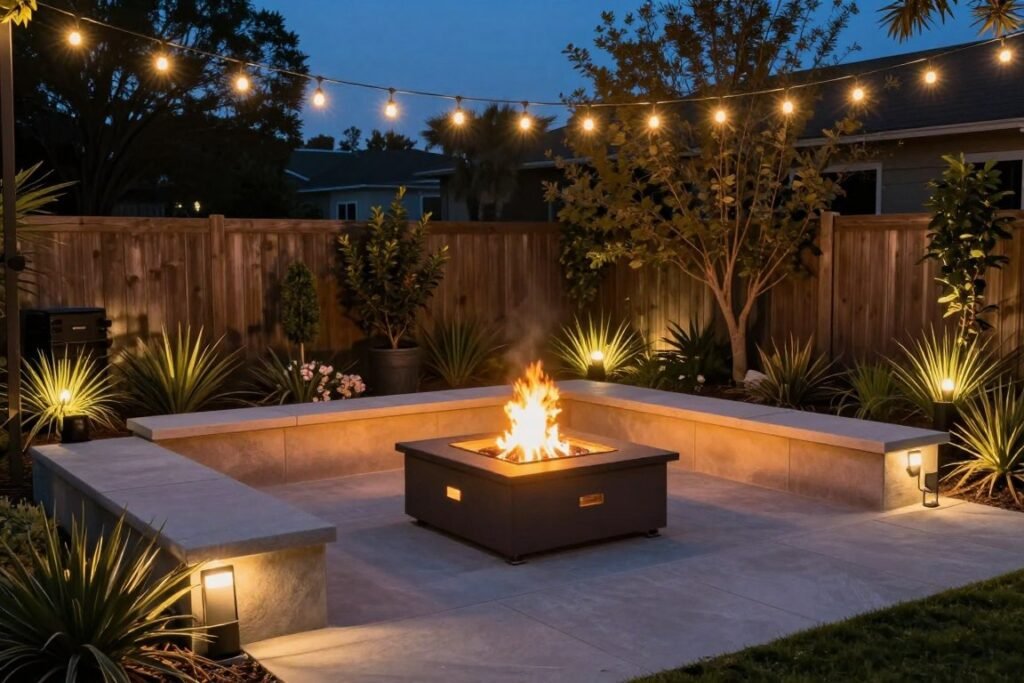
Proper lighting extends the usability of your fire pit lounge area. Ambient lighting creates atmosphere while providing necessary visibility. Layer different light sources for flexible mood setting and practical illumination.
String lights overhead add whimsical charm to outdoor spaces. These fixtures cast soft glow that complements firelight. LED versions consume minimal energy and last for years.
Layered Lighting Approach
Task lighting illuminates seating areas and walking paths. Low-voltage LED fixtures provide safety without harsh brightness. Position lights to avoid glare in seated guests’ eyes.
Accent lighting highlights landscaping features and architectural elements. Uplighting showcases trees and creates dramatic shadows. This technique adds depth and interest to the nighttime yard.
Overhead Options
String lights for festive ambiance
Pendant fixtures for focused light
Pergola-integrated lighting
Solar-powered strands
Ground Level Lights
Path lights along walkways
Well lights in landscape beds
Step lights for safety
Deck post cap lights
Accent Lighting
Spotlights on focal points
Uplights for trees
Wall washers on structures
Color-changing LED options
Smart Lighting Controls
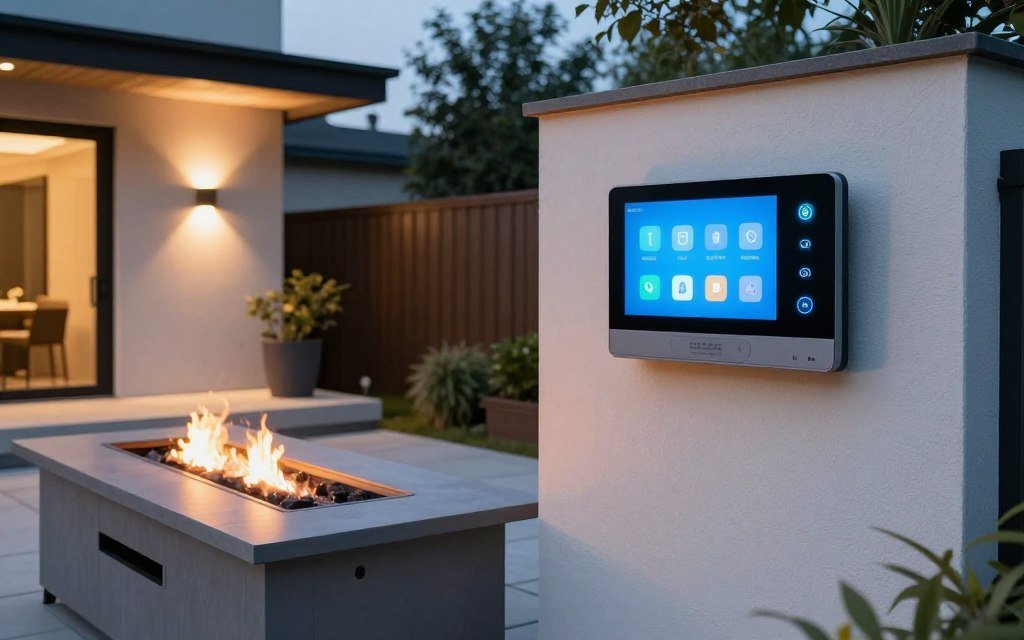
Modern outdoor lighting systems offer remote control and scheduling. Smart switches let you adjust brightness from your phone. Timers ensure lights activate automatically at dusk.
Color-changing LED lights add versatility to your pit area. Match lighting to seasons, holidays, or personal preference. These systems create endless ambiance options beyond standard white light.
Outdoor Space Layout Planning for Maximum Enjoyment
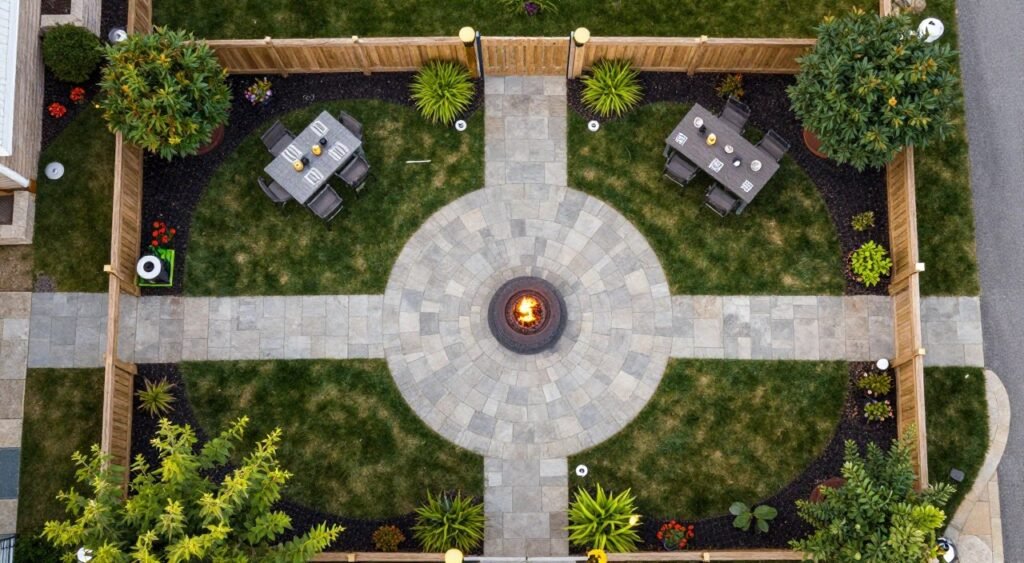
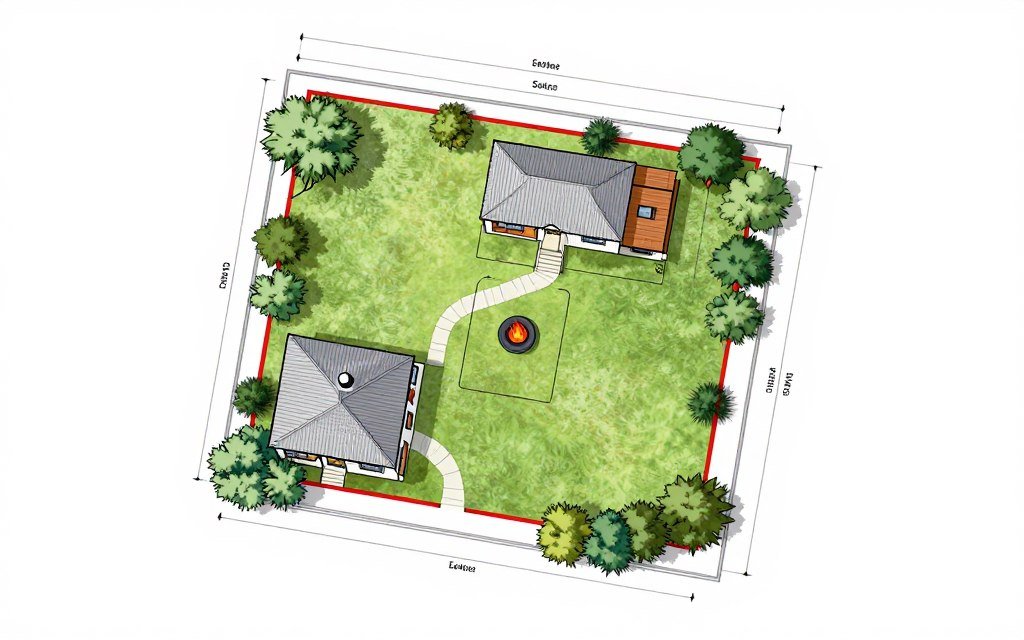
Effective layout planning ensures your fire pit lounge area functions beautifully. Consider traffic flow between house and pit area. Create clear pathways that guide movement without disrupting conversations.
The fire pit should anchor the space without dominating it. Position the pit to allow 360-degree access when possible. This arrangement lets guests move freely and find their preferred spot.
Zone Definition Strategies
Divide your backyard into distinct zones for different activities. The fire pit becomes the social gathering zone. Adjacent areas might include dining space, play area, or garden beds.
Hardscape changes signal zone transitions naturally. Shift from pavers to gravel or concrete. These material changes define spaces without physical barriers.
Maintain 3-foot minimum pathway width for safe passage
Position fire pit 10-20 feet from house structure
Create sight lines from indoor living spaces
Allow for furniture flexibility within zones
Include buffer space between activity areas
Plan for seasonal furniture storage access
Privacy and Enclosure
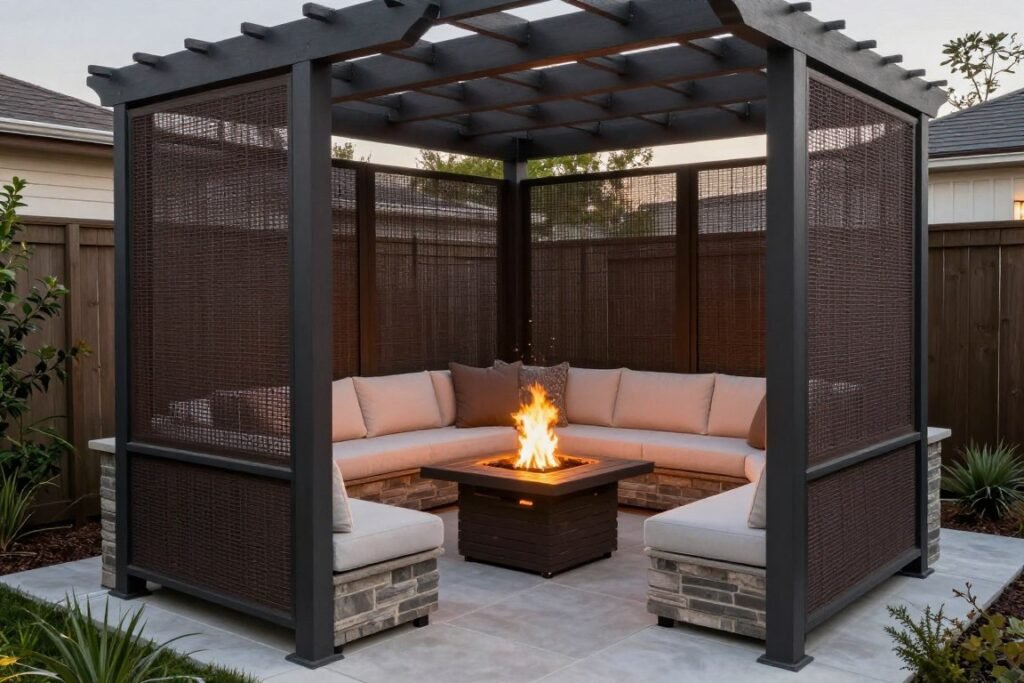
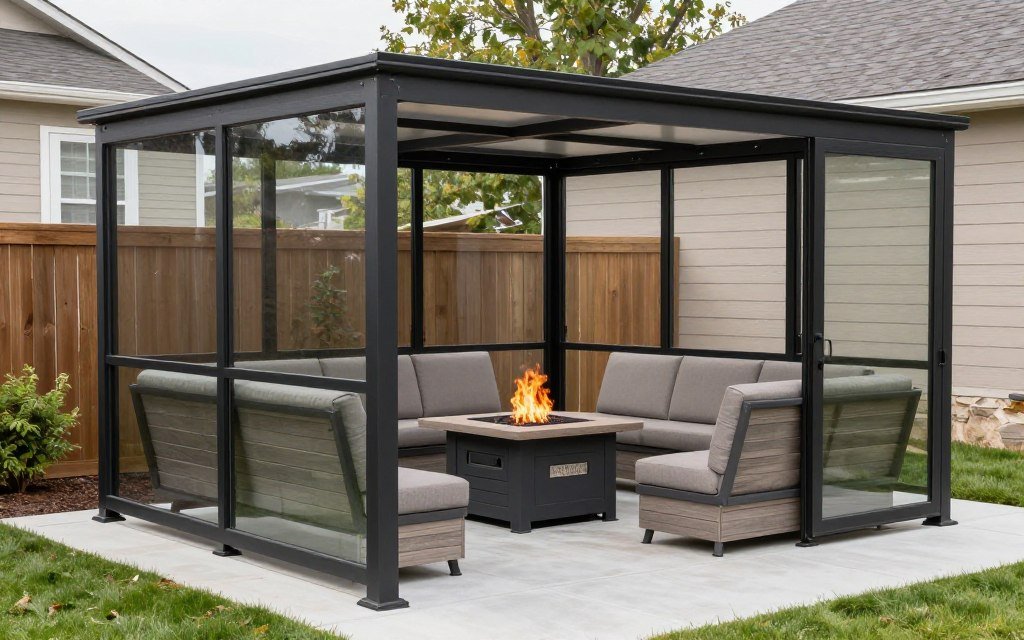
Creating partial enclosure makes fire pit areas feel more intimate. Fencing, walls, or tall plantings provide privacy screening. Overhead structures like pergolas define the ceiling plane.
Balance enclosure with openness to avoid claustrophobic feeling. Leave at least one side open to yard or view. This approach maintains connection to broader landscape while creating cozy retreat.
Create the Perfect Outdoor Layout
Professional layout plans take the guesswork out of designing your fire pit lounge area. Get scaled drawings, measurement guides, and placement recommendations that ensure your space functions beautifully.
Fire pit style should complement your home architecture and landscape design. Modern homes pair well with clean-lined concrete or metal pits. Traditional houses suit brick or natural stone installations.
The pit shape influences surrounding space layout. Round pits encourage circular seating arrangements. Square or rectangular designs align with linear furniture placement and architectural geometry.
Traditional Fire Pit Designs
Traditional pits feature brick, natural stone, or stacked stone construction. These materials bring warmth and established character. The design emphasizes craftsmanship and permanence.
Round shapes dominate traditional fire pit design. The circular form references ancient gathering spaces around flames. This shape creates egalitarian seating where no position feels more important.
Contemporary Fire Pit Concepts
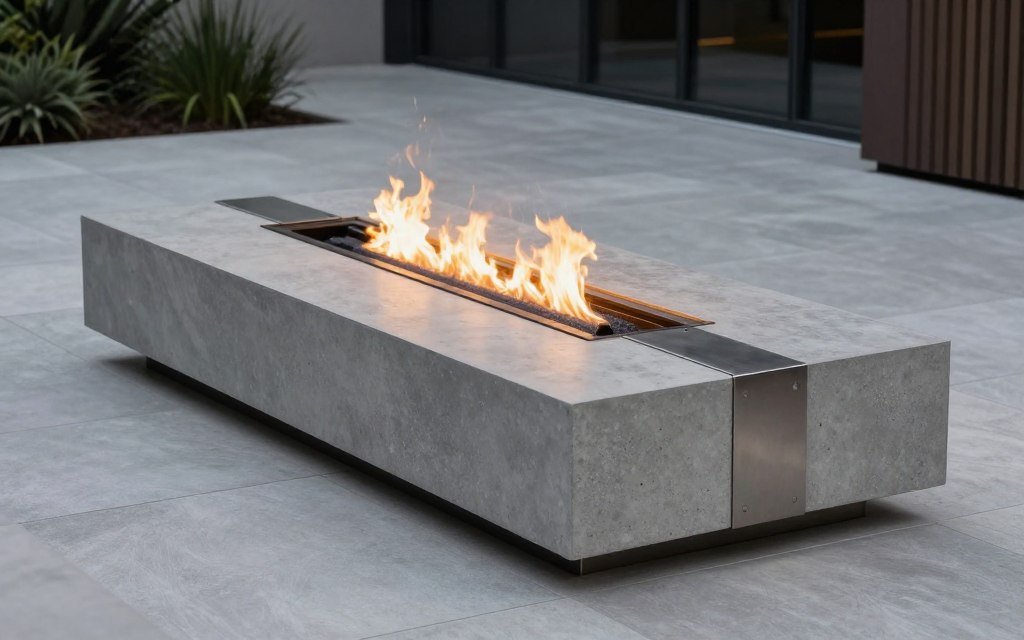
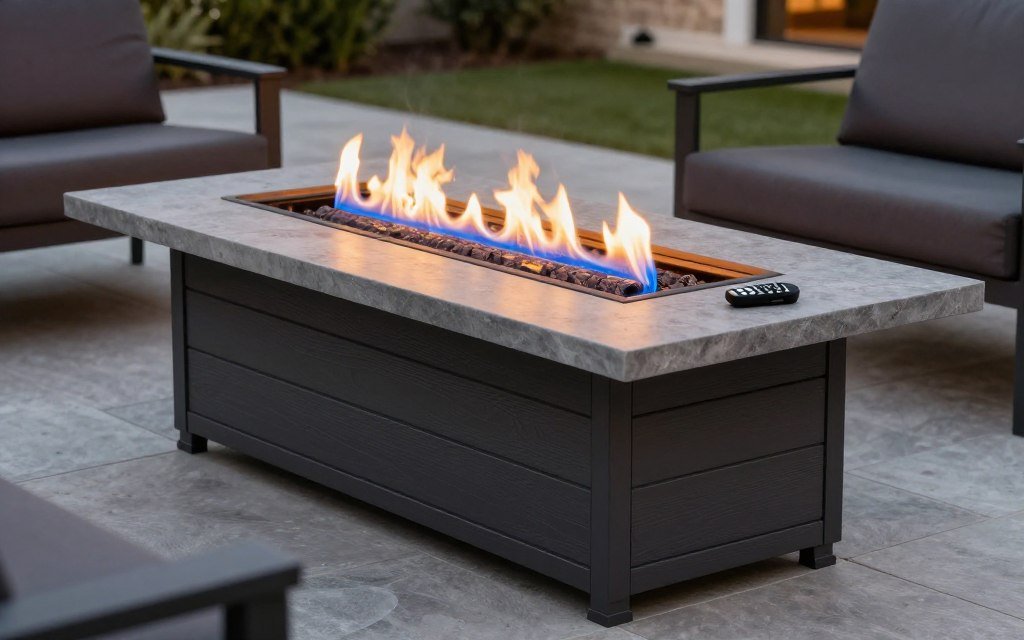
Contemporary designs embrace geometric forms and industrial materials. Concrete, steel, and glass create striking visual statements. These pits often incorporate gas fuel for clean burning and easy control.
Linear fire features suit modern architecture particularly well. Long rectangular pits span significant distances. This design creates dramatic effect and accommodates larger gatherings.
Rustic Style
Rustic designs celebrate natural materials and imperfection. Fieldstone, reclaimed wood, and organic shapes define this aesthetic. The style works beautifully in wooded or natural settings.
Mediterranean Style
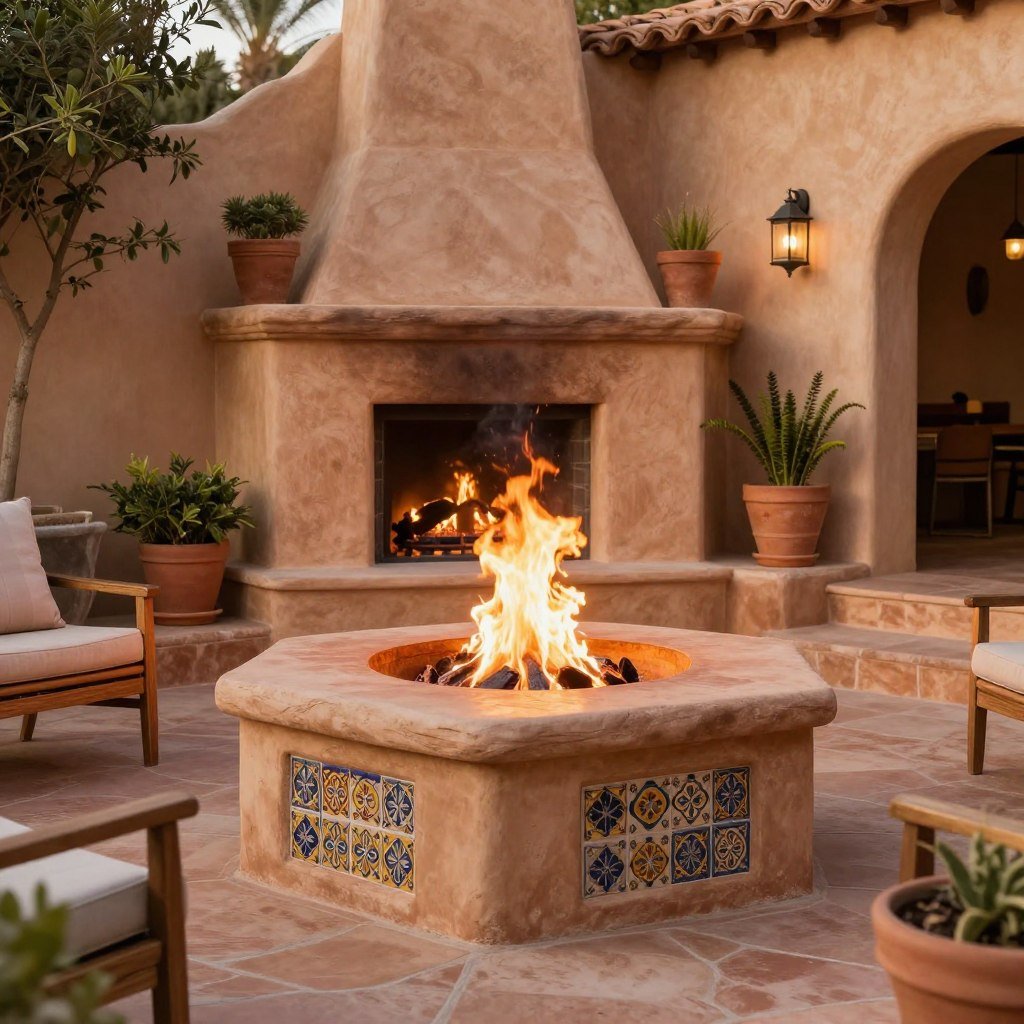
Mediterranean pits feature stucco finishes and decorative tiles. Warm color palettes and arched details characterize the style. These designs pair with courtyard layouts and terra cotta accents.
Industrial Style
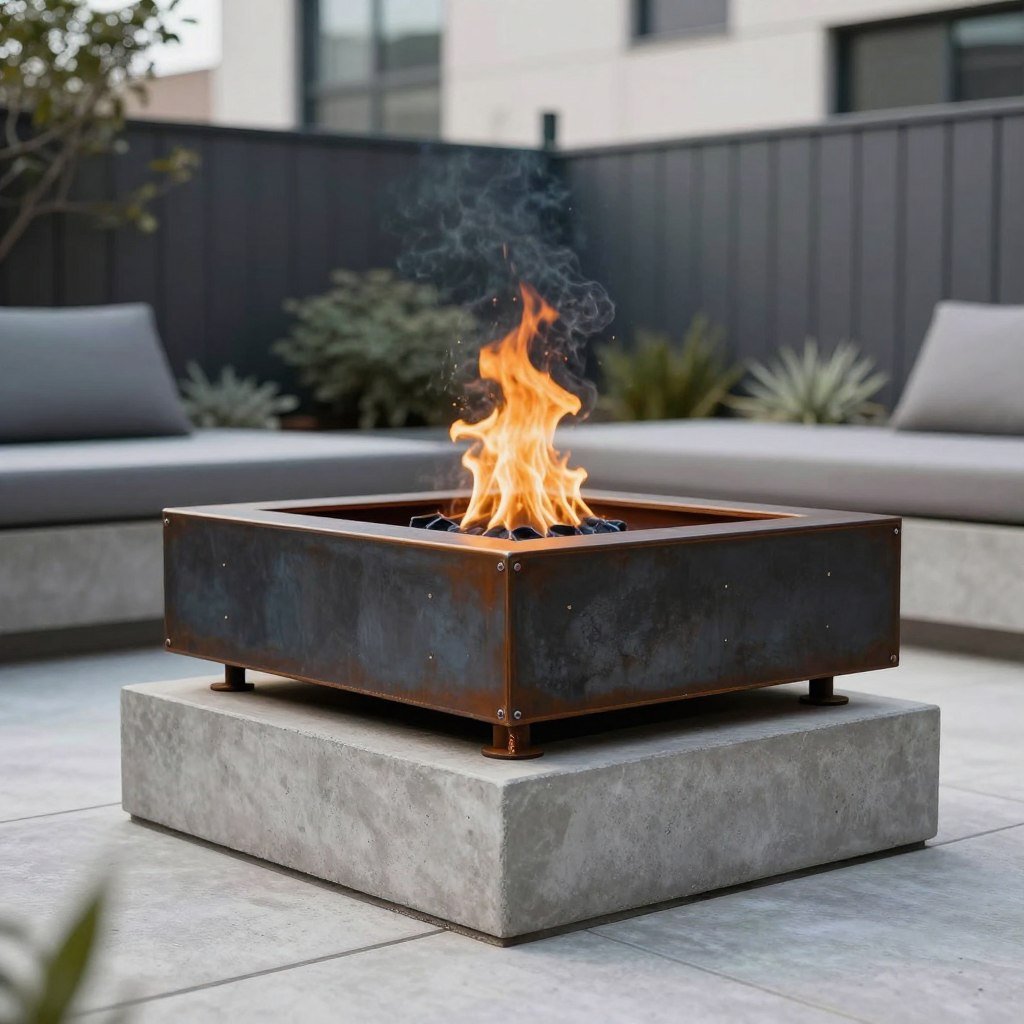
Industrial designs showcase raw materials like steel and concrete. Exposed welds and unfinished surfaces create authentic urban aesthetic. The style suits modern loft-inspired outdoor spaces.
Wood Burning vs Gas Fire Pits: Making the Right Choice
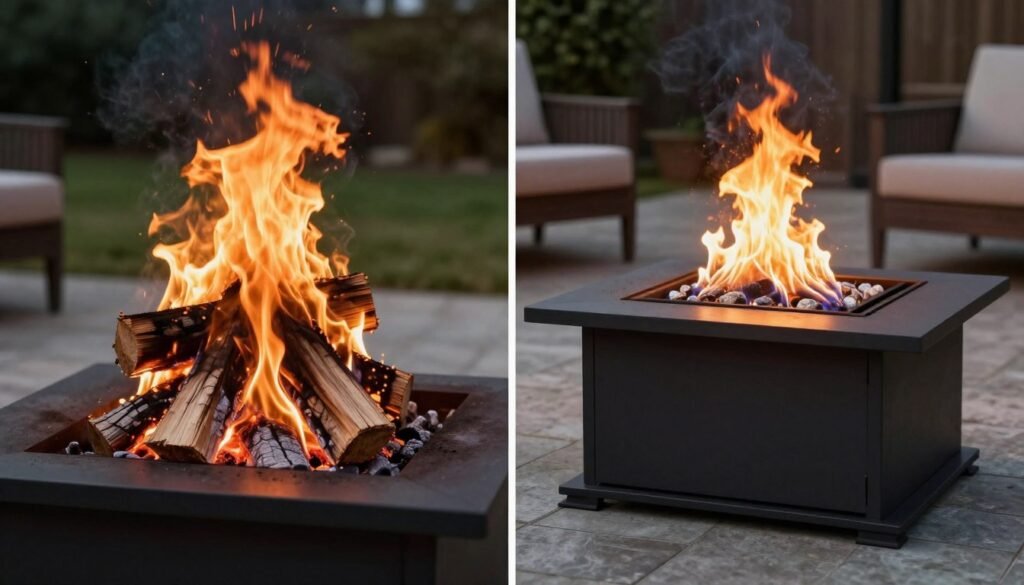
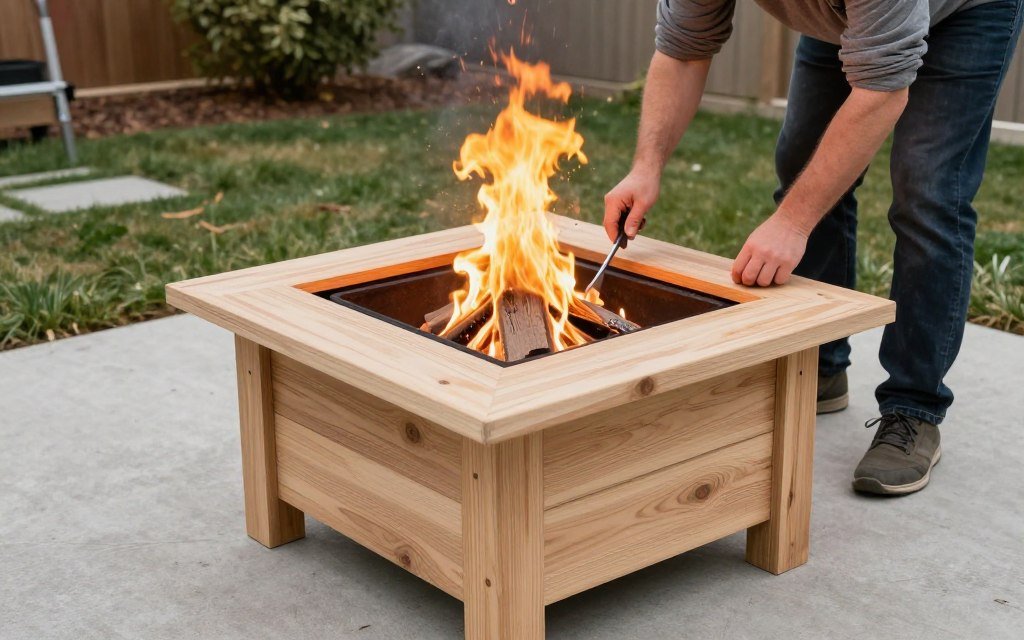
Fuel choice significantly impacts your fire pit experience. Wood-burning pits offer authentic campfire ambiance with crackling sounds and wood smoke aroma. Gas pits provide convenience with instant ignition and adjustable flame control.
Wood-burning pits require more active maintenance during use. You need to add logs periodically and manage ash cleanup. The ritual of fire-building appeals to many outdoor enthusiasts.
Wood-Burning Fire Pit Advantages
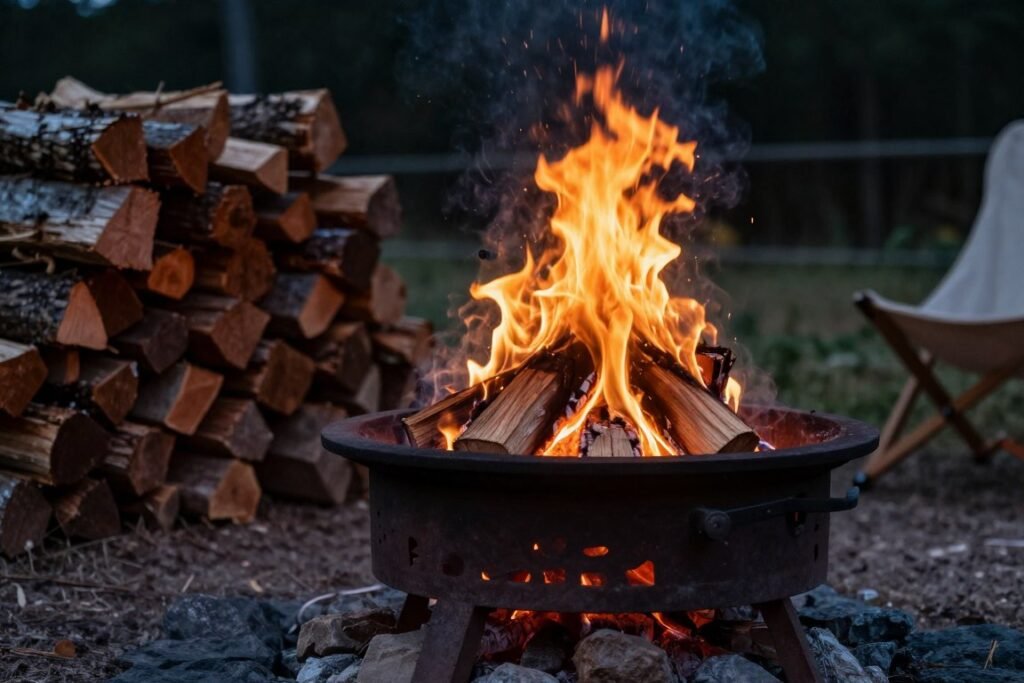
Natural wood fires create unmatched ambiance and authentic experience. The dancing flames and changing colors captivate attention. Wood smoke adds nostalgic scent that many associate with outdoor memories.
Wood fuel costs less than propane or natural gas in most regions. Burning fallen branches from your property eliminates fuel cost entirely. This option appeals to budget-conscious homeowners.
Creates authentic campfire experience with crackling sounds
Produces aromatic wood smoke many people enjoy
Allows for higher heat output than gas alternatives
Works during power outages or gas service interruptions
Lower ongoing fuel costs in many areas
Provides option to cook food over open flame
Gas Fire Pit Benefits
Gas fire pits offer unparalleled convenience for busy lifestyles. Push-button ignition starts fires instantly without preparation. Flame height adjusts easily to desired heat level.
Gas burning produces no ash or smoke residue. This cleaner operation means less maintenance and no cleanup after each use. Your outdoor furniture stays cleaner without ash exposure.
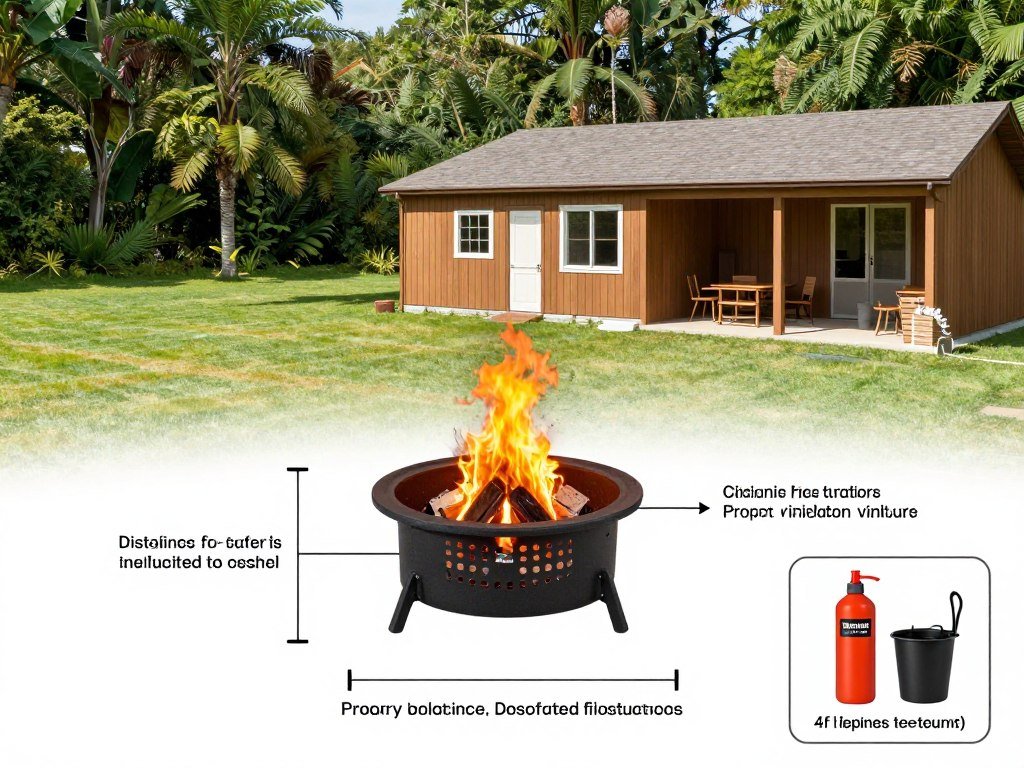
Safety must guide every fire pit planning decision. Local building codes specify minimum distances from structures. Most jurisdictions require 10 to 25 feet clearance from buildings.
Check with your local fire department before installation. Some areas restrict fire pit use during dry seasons. Homeowners associations may have additional rules governing outdoor fires.
Essential Safety Guidelines
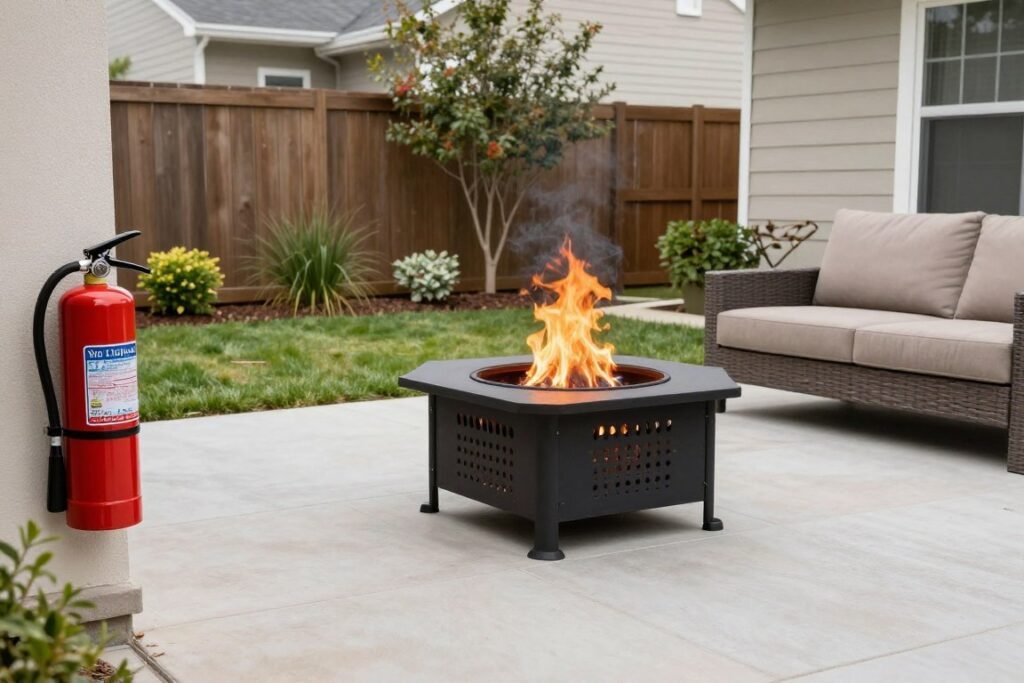
Keep fire extinguisher or garden hose near the pit area. These tools allow quick response to any fire emergency. Never leave burning fires unattended even briefly.
Clear vegetation and combustible materials from around the pit. Maintain bare zone of gravel, stone, or pavers. This fire-resistant buffer prevents accidental spreading.
Install on level, stable, non-combustible surface
Maintain proper clearance from overhanging branches
Use fire pit screen to contain sparks and embers
Never use accelerants to start or enhance fires
Burn only seasoned firewood, never treated lumber
Fully extinguish fires before leaving area
Keep children and pets supervised around active fires
Wind and Weather Considerations
Avoid using fire pits during windy conditions. Strong winds spread embers beyond the pit area. Cancel outdoor fires when wind speeds exceed 10-15 mph.
Position your pit considering prevailing wind patterns. Place the fire pit downwind from main seating areas when possible. This arrangement directs smoke away from guests.
Build Safely With Professional Guidance
Access comprehensive safety guidelines and building codes checklist for your fire pit project. Professional plans include safety considerations, proper measurements, and compliance requirements.
Creating beautiful fire pit lounge areas doesn’t require enormous budgets. Smart material choices and DIY approaches reduce costs significantly. The key lies in strategic spending and creative problem-solving.
Concrete blocks offer the most affordable permanent fire pit option. These units stack easily without mortar for beginners. A basic block pit costs one-tenth of professional stone installation.
Cost-Saving Material Alternatives
Gravel proves cheaper than pavers for surrounding surfaces. This loose material drains well and costs little. Edge the gravel with landscape timbers or bricks for finished appearance.
Metal fire rings create instant fire pit centers for minimal investment. Set a ring in excavated soil or gravel bed. Surround with collected stones from your property or inexpensive landscaping rock.
Low-Cost Materials
Concrete blocks instead of cut stone
Pea gravel for surrounding area
Metal fire rings instead of built structures
Salvaged bricks from demolition sites
Landscape timbers for edging
River rock from home center bulk bins
Budget Seating Ideas
Wooden pallets converted to benches
Cinder blocks with cushions
Log sections from fallen trees
Discount store folding chairs
DIY concrete bench molds
Repurposed indoor furniture
DIY Installation Savings
Labor represents the largest expense in professional fire pit installation. Tackle the project yourself to save 50-70 percent of total costs. Most basic designs require only common tools and moderate skill.
Start with simple designs for your first project. Round pits using stacked materials work well for beginners. Save complex shapes and built-in features for future upgrades.
The right accessories transform basic fire pits into complete outdoor entertainment centers. These additions enhance comfort, safety, and functionality. Many accessories solve common fire pit challenges.
Fire pit covers protect your investment when not in use. Quality covers prevent water accumulation and debris collection. This simple accessory extends pit lifespan significantly.
Comfort and Convenience Accessories
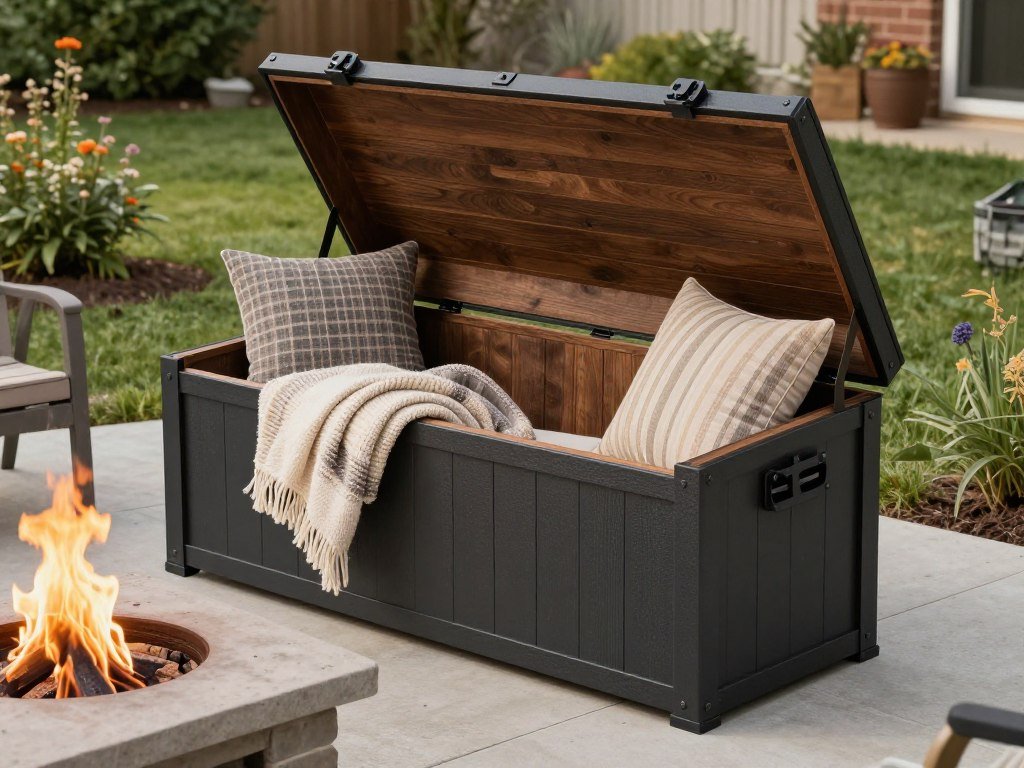
Outdoor storage benches serve dual purposes near fire pits. These pieces provide extra seating while storing blankets and cushions. Weather-resistant construction protects contents from elements.
Portable fire pit tables add surface space around seating areas. These small tables hold drinks and snacks within easy reach. Look for heat-resistant tops that withstand ember contact.
Spark screens to contain flying embers safely
Cooking grates for outdoor meal preparation
Log holders to keep firewood organized and dry
Poker tools for fire management and safety
Heat-resistant gloves for safe wood handling
Ash buckets for cleanup and disposal
Entertainment Enhancements
Outdoor speakers extend music throughout the pit area. Wireless options eliminate visible wiring hassles. Position speakers to provide even sound coverage without overwhelming conversation.
Built-in beverage coolers keep drinks accessible during gatherings. These features integrate into seating walls or nearby structures. Ice-free electric coolers offer set-and-forget convenience.
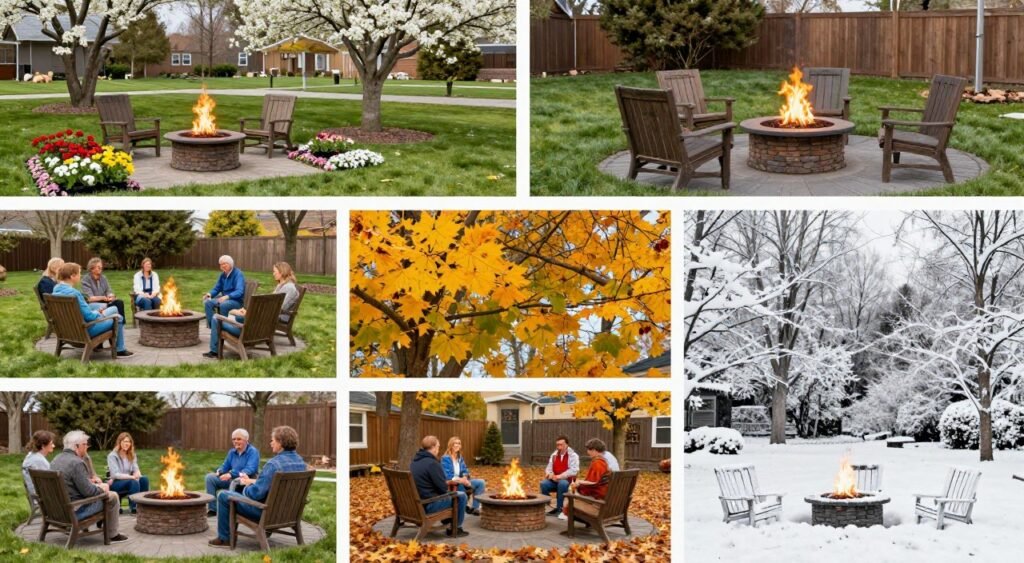
Fire pits extend outdoor season far beyond summer months. Proper preparation and maintenance ensure reliable performance year-round. Each season brings unique considerations for pit care.
Spring cleaning removes winter debris and prepares the space. Inspect for damage from freeze-thaw cycles. Replace cracked stones or repair mortar joints before active use begins.
Summer Fire Pit Enjoyment
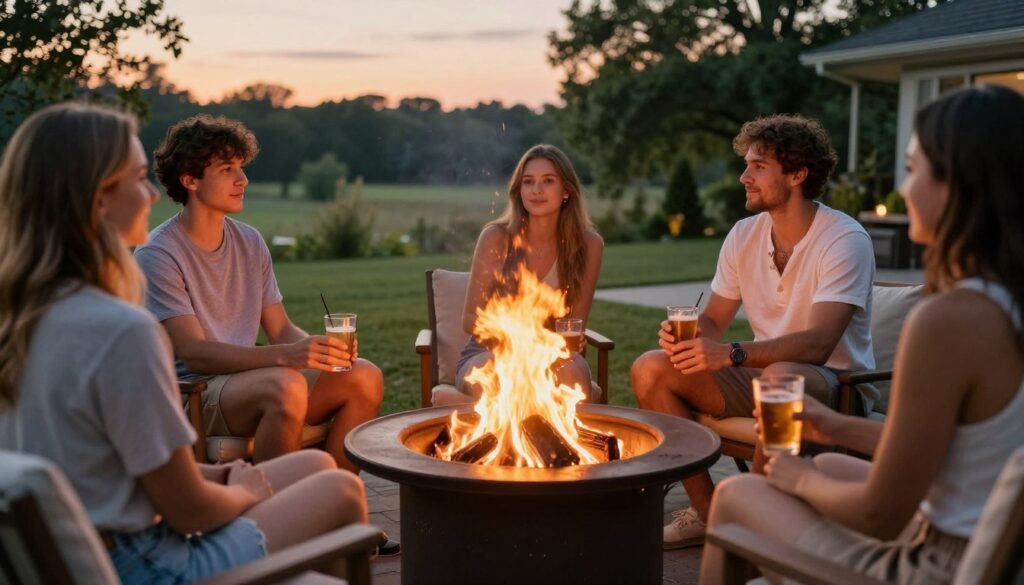
Summer offers longest fire pit season with warm evenings perfect for outdoor gatherings. Lighter fires provide ambiance without excessive heat. Focus on atmosphere rather than warmth during hot months.
Check local burn bans during dry summer periods. Many regions restrict open fires during drought conditions. Respect these regulations to prevent wildfire risks.
Fall Fire Pit Appeal
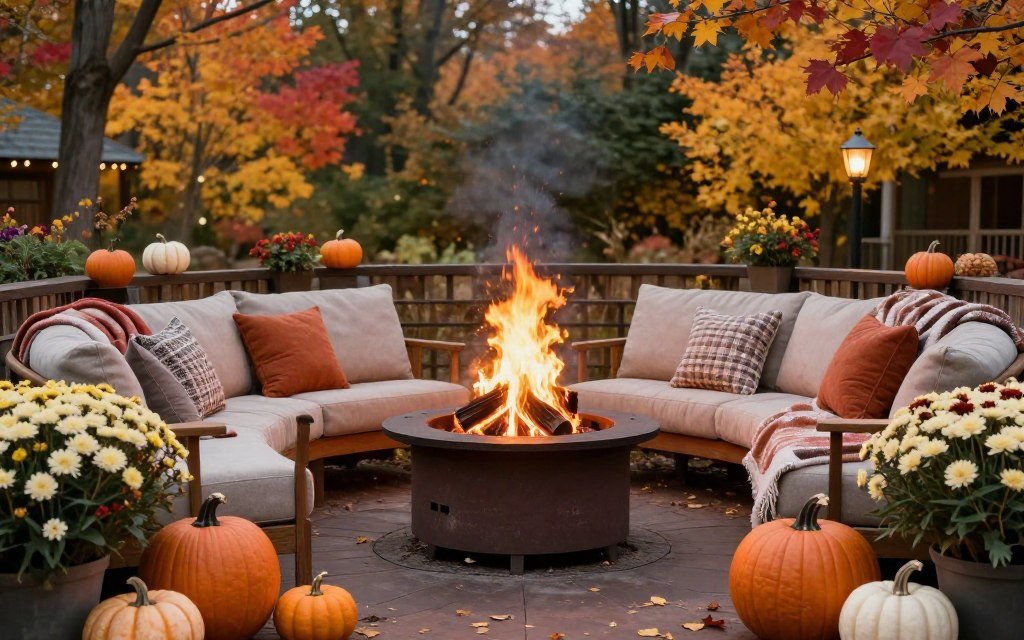
Autumn represents prime fire pit season in many climates. Cool evenings make warmth welcome while days remain pleasant. Fall colors create beautiful backdrop for outdoor entertaining.
Add seasonal decorations to enhance fall ambiance. Pumpkins, mums, and cornstalks celebrate the season. These natural elements complement fire pit gatherings beautifully.
Winter Fire Pit Considerations
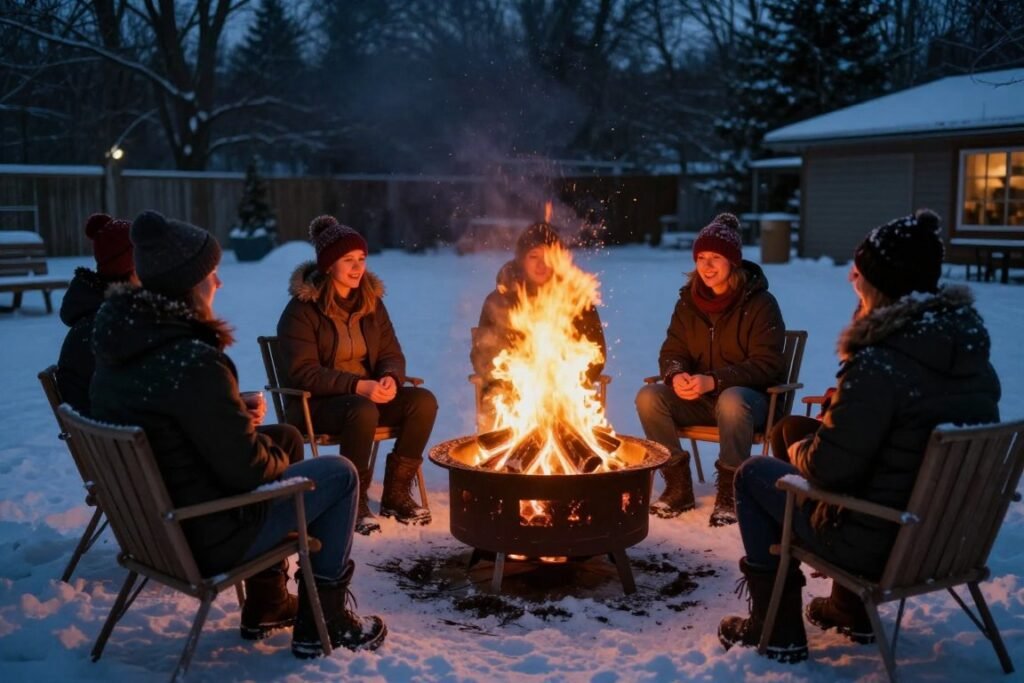
Winter fires provide magical outdoor experiences despite cold weather. Larger fires combat frigid temperatures effectively. Provide plenty of blankets for guest comfort.
Clear snow from pit area before use for safety. Ensure drainage paths remain unobstructed by ice. Winter fires burn cleaner due to lower humidity levels.
Spring: Deep clean pit, repair damage, refresh landscaping
Summer: Monitor burn restrictions, use lighter fires for ambiance
Fall: Peak usage season, prepare for temperature drops
Winter: Large fires for warmth, clear snow regularly, ensure drainage
Enjoy Your Fire Pit Year-Round
Get comprehensive seasonal maintenance guides and usage tips. Learn how to maximize enjoyment and protect your investment through every season with proper care techniques.
Understanding local regulations prevents costly mistakes and legal issues. Building codes vary significantly between jurisdictions. Research requirements before beginning any fire pit project.
Many municipalities require permits for permanent fire pit installations. The permit process ensures compliance with safety standards. Contact your local building department early in planning.
Common Regulatory Requirements
Setback distances from property lines often dictate pit placement. Typical requirements range from 10 to 25 feet from boundaries. These rules protect neighboring properties from fire risks.
Height restrictions may apply to fire pit structures. Some codes limit pit depth or height above grade. These rules ensure fires remain manageable and visible.
Obtain building permits for permanent installations
Verify HOA rules before beginning construction
Check municipal fire codes and restrictions
Confirm gas line installation permits if applicable
Research seasonal burn ban policies
Understand liability requirements and insurance implications
Professional Installation Considerations
Gas fire pit installations typically require licensed contractors. Gas line work demands specialized knowledge and permits. Professional installation ensures code compliance and safe operation.
Some jurisdictions mandate professional inspections even for DIY projects. These inspections verify proper construction and safety measures. Factor inspection fees into project budgets.
Transforming your backyard with a fire pit lounge area creates lasting value. The space becomes a gathering point for family and friends throughout the year. Thoughtful design ensures both beauty and functionality.
Start with clear vision of how you’ll use the space. Consider your typical group size and entertaining style. These factors guide decisions about pit size, seating capacity, and layout.
Quality materials and proper construction deliver decades of enjoyment. Invest in durable options that withstand your climate conditions. Professional guidance helps avoid costly mistakes during planning and installation.
The best fire pit lounge areas balance multiple design elements harmoniously. Hardscape, landscaping, lighting, and furnishings work together. This integration creates cohesive outdoor rooms that feel intentional and inviting.
Your fire pit area reflects your personal style and lifestyle needs. Whether modern and minimal or rustic and cozy, the design should feel authentically yours. Create a space that draws you outdoors and encourages lingering.
Start Building Your Dream Outdoor Space Today
Get complete fire pit lounge area plans with detailed instructions, material lists, and professional design guidance. Transform your backyard into the entertaining space you’ve always imagined. Professional plans make the process easy and ensure beautiful results.
Your balcony is more than just an architectural feature—it’s an opportunity to create a personal retreat that reflects your style and enhances your living space. Whether you have a spacious terrace or a tiny apartment balcony, the right decor can transform this outdoor area into your favorite spot at home. From cozy reading nooks to…
Babydoll tops have become a wardrobe staple for fashion-forward individuals seeking both comfort and style. With their flowy silhouette and versatile appeal, these feminine pieces effortlessly transition from casual daytime looks to elegant evening ensembles. Whether you’re drawn to their flattering cut or their ability to complement various body types, babydoll tops offer endless styling…
Finding the perfect modest summer dresses that combine style, comfort, and appropriate coverage can transform your warm-weather wardrobe. The beauty of modest fashion lies in its versatility—these thoughtfully designed pieces offer elegant solutions for staying cool while maintaining your personal style preferences. Whether you’re dressing for religious reasons, personal comfort, or simply appreciate the timeless…
Planter boxes are the versatile heroes of modern gardening, offering endless possibilities for both seasoned gardeners and beginners alike. Whether you’re working with a spacious backyard or a tiny apartment balcony, the right planter box can transform your space into a thriving garden oasis. These practical containers allow you to grow flowers, herbs, vegetables, and…
Your bridesmaids play a special role on your big day. These incredible women stand beside you during one of life’s most important moments. Capturing beautiful bridesmaids photos preserves these memories forever. The right shots showcase your bridal party bond. They tell the story of your friendship. They capture spontaneous laughter and heartfelt emotions that make…
Your living room deserves lighting that does more than just brighten the space. The right lighting ideas can transform your room into a warm sanctuary where you relax after long days. Good lighting design creates depth and brings out the best in your decor. Many homeowners struggle with dark corners or harsh overhead lights. This…