The Ultimate Guide to Outdoor Cat Houses: Safety, Style & Warmth for Your Feline Friend
Providing a safe, comfortable shelter for outdoor cats is essential for their wellbeing. Whether you’re caring for your own indoor/outdoor cat, community cats, or feral felines in your neighborhood, a quality outdoor cat house offers protection from harsh weather, predators, and provides a stress-free sanctuary. In this comprehensive guide, we’ll explore everything you need to know about selecting the perfect outdoor cat house that balances safety, comfort, and style.
This Website contains affiliate links. That means I may earn a small commission if you purchase through my links, at no extra cost to you.
Why Your Outdoor Cat Needs a House
Outdoor cats face numerous challenges from extreme temperatures to predators. A dedicated outdoor cat house provides essential protection and numerous benefits for their health and wellbeing.
Weather Protection

Outdoor cat houses provide crucial shelter from rain, snow, wind, and extreme temperatures. Even cats with thick fur can suffer from hypothermia when temperatures drop below 45°F, especially if they get wet. A proper shelter keeps them dry and maintains body heat during cold months.
Related Posts:






Safety from Predators

A well-designed outdoor cat house offers protection from predators like coyotes, raccoons, and aggressive dogs. Features like elevated floors, small entrances, and strategic placement can significantly reduce the risk of unwanted encounters and give cats a secure retreat.
Stress Reduction

Having a dedicated safe space reduces stress for outdoor cats. Consistent access to a familiar shelter helps cats feel secure and establishes territory, which is particularly important for community cats and feral felines who don’t have access to indoor spaces.
“In general, if it’s too cold for you to be outside for any length of time, it is certainly too cold for cats to be outside without proper shelter.” – Dr. Stephanie Ninnemann, Veterinarian
Types of Outdoor Cat Houses
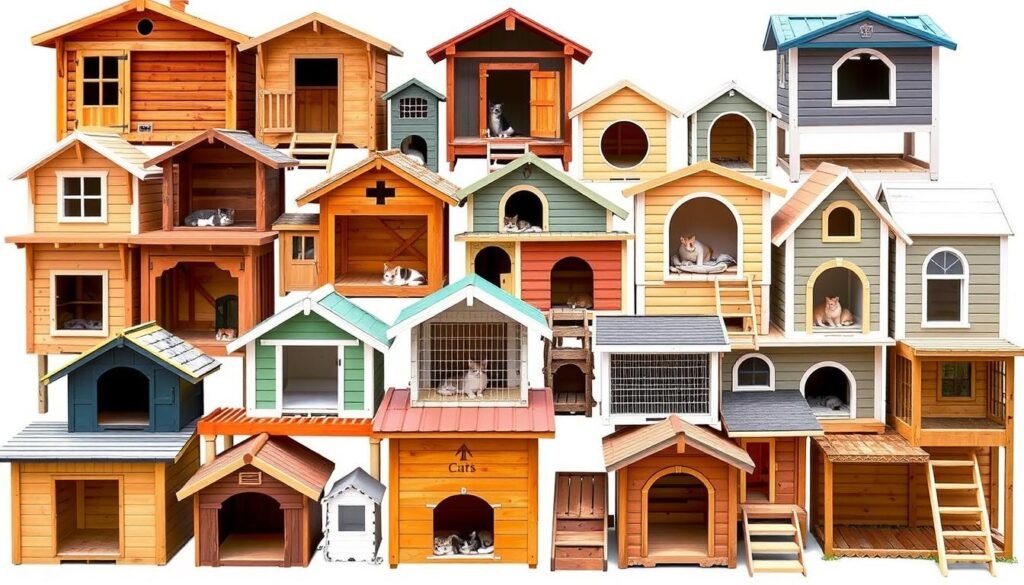
There are several styles of outdoor cat houses available, each with unique benefits and features designed for different situations and climates.
Wooden Cat Houses

Wooden cat houses offer excellent insulation and a natural aesthetic that blends with outdoor surroundings. They typically feature slanted roofs for water runoff, raised floors to prevent flooding, and can be painted or stained to match your garden decor. Wood provides natural insulation but requires occasional maintenance to prevent rot.
Insulated Cat Houses

Insulated cat houses are specifically designed for cold climates. They feature double-walled construction with insulation material between layers to trap body heat. These shelters are essential when temperatures drop near freezing and often include features like door flaps to block wind and retain warmth.
Heated Cat Houses

Heated cat houses incorporate low-voltage heating pads that activate when your cat enters. These are ideal for areas with freezing temperatures and should be placed in sheltered locations like garages or porches with access to electricity. Look for MET-listed heating elements for safety.
Plastic/Resin Shelters

Plastic or resin cat houses offer superior waterproofing and easy cleaning. These lightweight shelters are typically more affordable and require no maintenance. They’re ideal for rainy climates and can be enhanced with straw insulation during colder months for added warmth.
Multi-Level Cat Houses

Multi-level cat houses provide space for multiple cats or bonded colonies. These larger structures feature separate compartments and multiple entrances, allowing cats to enter and exit safely. They’re ideal for community cat caretakers managing several felines in one location.
DIY Cat Shelters

DIY cat shelters made from storage bins offer an affordable solution for helping outdoor cats. These can be created using two plastic totes (one inside the other) with insulation between them and straw bedding inside. They’re highly waterproof and can be customized to suit your specific needs.
Key Features to Look For in Outdoor Cat Houses
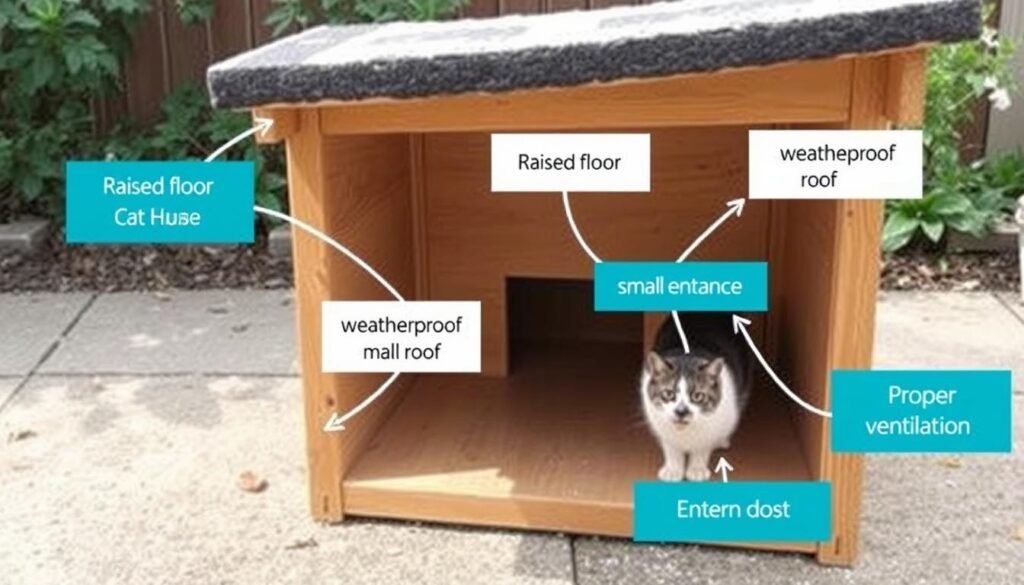
When selecting an outdoor cat house, certain features are essential for ensuring your feline friend stays safe, comfortable, and protected from the elements.
Weather Resistance
Insulation Quality
Size and Design
Maintenance and Durability
Expert Tip: “Straw is the best option to keep the inside of the shelter dry, as it repels moisture, can easily be changed out, and provides a comfy area for cats to rest and burrow into. Never use hay, blankets, or towels, which absorb moisture and can freeze in cold weather.”
How to Choose the Right Outdoor Cat House
Selecting the perfect outdoor cat house depends on several factors including your local climate, the number of cats you’re sheltering, and where you’ll place the house.

Climate Considerations
| Climate Type | Recommended Features | Best House Type |
| Cold Winter (Below 32°F) | Heavy insulation, heating pad, small entrance with baffle | Insulated wooden house or heated cat house |
| Mild Winter (32-45°F) | Standard insulation, straw bedding, wind protection | Wooden cat house or DIY insulated bin |
| Rainy Climate | Excellent waterproofing, raised floor, slanted roof | Plastic/resin shelter or waterproof wooden house |
| Hot Summer | Good ventilation, shade placement, light colors | Wooden house with ventilation or shaded plastic shelter |
Number of Cats
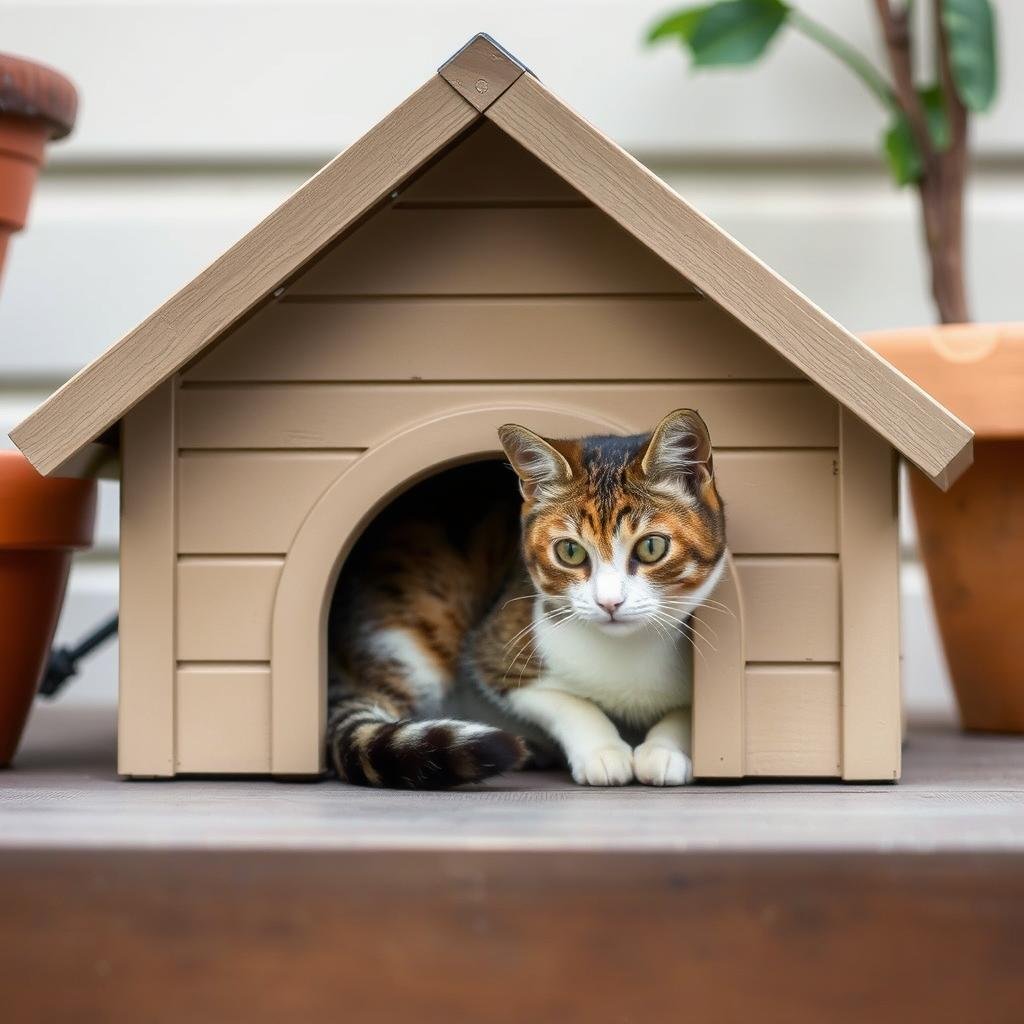
Single Cat: Choose a compact house (approximately 12″L × 18″W × 12″H) with one entrance. This size retains body heat efficiently while giving the cat enough space to turn around comfortably.

Multiple Cats: For bonded cats or colonies, select a multi-level or compartmentalized house with multiple entrances. Increase dimensions by 1.5-2 times for each additional cat to ensure adequate space.
Placement Considerations
Find the Perfect Outdoor Cat House
Ready to provide your outdoor feline friends with a safe, comfortable shelter? Browse our recommended selection of high-quality outdoor cat houses designed to withstand the elements and keep cats cozy year-round.
Top Picks: Best Outdoor Cat Houses
Based on expert recommendations and real-world testing, here are our top picks for outdoor cat houses in different categories.
Wooden Outdoor Cat House

This wooden cat house features a hinged roof for easy cleaning, a single baffled entrance to keep out wind and rain, and sits 3 inches off the ground to prevent flooding. The weatherproof design stays dry even in heavy rain, and the compact size retains warmth efficiently.
Pros
- Excellent weather resistance
- Easy maintenance with hinged roof
- Attractive natural wood appearance
- Elevated design prevents flooding
Cons
- Requires additional insulation in very cold climates
- Wood may need occasional maintenance
- Assembly required
Insulated Outdoor Cat Shelter

This fully insulated cat house features removable insulation panels that work in both cold and warm weather. The durable waterproof shell has a lifetime guarantee against cracking or fading. A single small entry with an optional protective flap and awning keeps wind and rain out while deterring predators.
Pros
- Superior heat retention in cold weather
- Durable shell with lifetime guarantee
- Configurable entrance with optional baffle
- Works year-round with removable insulation
Cons
- Higher price point
- Larger footprint than some models
- Initial assembly can be challenging
Multi-Cat Outdoor Shelter
This two-story cat house is perfect for bonded cats or small colonies, with enough space for 2-3 adult cats. The dual-door design allows multiple cats to enter and exit without obstacles. Made from eco-friendly, moisture-repellent materials, it’s easy to clean and backed by a 10-year warranty.
Pros
- Spacious design for multiple cats
- Two baffled entrances for easy access
- Durable, eco-friendly construction
- 10-year warranty
Cons
- Larger size reduces heat retention
- Requires specialized tool for roof removal
- Higher price point
Heated Outdoor Cat House

This heated cat house features a low-voltage, MET-listed heating pad that activates by weight. Ideal for areas with freezing temperatures, it includes a weatherproof, insulated design with removable door flaps. Best used in sheltered areas like porches or garages with access to electricity.
Pros
- Safe, low-voltage heating system
- Weight-activated to save energy
- Machine-washable heating pad cover
- Removable door flaps for customization
Cons
- Requires electricity access
- Not recommended for direct outdoor exposure
- Not elevated off the ground
DIY Storage Bin Cat Shelter

This budget-friendly DIY solution uses two plastic storage bins (one nested inside the other) with insulation between them. The design is highly waterproof, retains heat effectively, and can be customized to your specific needs. With proper assembly, it provides excellent protection at a fraction of the cost of prefabricated houses.
Pros
- Extremely budget-friendly
- Excellent waterproofing
- Customizable size and insulation
- Easy to clean and maintain
Cons
- Requires assembly and cutting
- Not as durable as commercial options
- Less aesthetically pleasing
Ready-to-Use Cat Shelter

This expertly crafted wooden shelter arrives fully assembled, requiring no tools or setup. Every joint is caulked for weather resistance, and the walls and ceiling are insulated. The single baffled entrance keeps rain out while allowing easy access. The raised floor and high-quality construction make this an excellent investment for years of use.
Pros
- No assembly required
- High-quality, expert construction
- Fully insulated walls and ceiling
- Aesthetically pleasing design
Cons
- Premium price point
- Interior maintenance requires removing screws
- Snug interior limits use to smaller cats
Tips for Making the House Inviting for Cats
Once you’ve selected the perfect outdoor cat house, these tips will help make it more appealing and comfortable for your feline friends.

Proper Bedding
Strategic Placement
Acclimating Cats
Maintenance Tips
Pinterest-Worthy Tip: Create a charming “cat village” by grouping several small shelters together with decorative elements like stone pathways or miniature fences. This not only looks adorable in photos but provides multiple options for community cats who may not want to share space.
Creating a Safe Haven for Outdoor Cats
Providing an outdoor cat house is one of the most compassionate things you can do for outdoor cats in your community. These shelters offer protection from harsh weather, predators, and give cats a sense of security and territory. Whether you choose a premium pre-assembled model, a budget-friendly DIY option, or something in between, the most important factors are proper insulation, weatherproofing, and appropriate sizing.
Remember that outdoor cat houses work best when paired with other forms of care, including regular feeding, fresh water, and, when possible, spay/neuter services to prevent overpopulation. By creating a safe, warm shelter for outdoor cats, you’re making a significant difference in their quality of life and helping them thrive despite the challenges of outdoor living.

Help Outdoor Cats Stay Safe & Comfortable
Ready to make a difference in the lives of outdoor cats? Explore our recommended selection of outdoor cat houses and provide the shelter they need to thrive in any weather.