The Ultimate Guide to Balcony Plants: Transform Your Urban Space
A balcony garden offers a slice of nature in urban living, turning concrete spaces into vibrant green retreats. Whether you have a sun-drenched south-facing balcony or a shady north-facing nook, there’s a perfect collection of balcony plants waiting to transform your outdoor space. This comprehensive guide will help you select the right plants, create stunning arrangements, and maintain a thriving balcony garden regardless of your conditions or experience level.
This Website contains affiliate links. That means I may earn a small commission if you purchase through my links, at no extra cost to you.
Assessing Your Balcony Environment
Understanding your balcony’s unique conditions is the first step to plant success
Related Posts:






Before purchasing a single plant, take time to understand your balcony’s unique environment. This crucial first step will save you time, money, and disappointment.
Sunlight Exposure
Monitor your balcony throughout the day to determine how many hours of direct sunlight it receives:
- Full sun: 6+ hours of direct sunlight (typically south-facing)
- Partial sun/shade: 3-6 hours of direct sunlight (typically east or west-facing)
- Full shade: Less than 3 hours of direct sunlight (typically north-facing or obstructed)
Wind Exposure
High-rise balconies often experience stronger winds than ground-level gardens. Note if your balcony is:
- Sheltered: Protected by surrounding buildings or structures
- Moderately windy: Occasional breezes that might disturb lightweight items
- Very windy: Regular strong winds that can damage delicate plants
Temperature Fluctuations
Urban balconies can create microclimate effects:
- Heat reflection: Concrete, glass, and metal surfaces can intensify heat
- Cold exposure: Elevated balconies may experience colder temperatures than ground level
- Building heat: Proximity to building walls may provide additional warmth
For accurate monitoring of your balcony’s conditions, consider a weather station that measures temperature, humidity, and light levels. Search for balcony weather station to find options that will help you make informed planting decisions.
Best Plants for Sunny Balconies
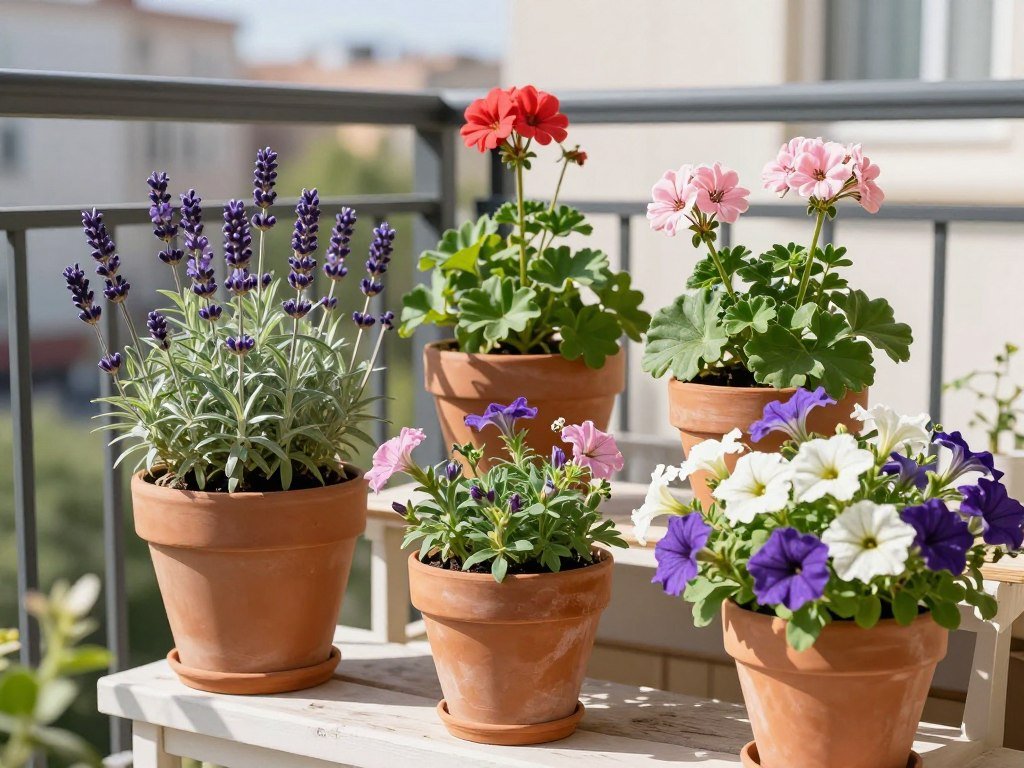
Sun-loving plants create a vibrant display on south-facing balconies
South-facing balconies receive abundant sunlight, making them perfect for plants that thrive in full sun. These plants not only tolerate heat but often produce more vibrant flowers and stronger aromas when bathed in sunlight.
Flowering Sun-Lovers
- Geraniums (Pelargonium): Drought-tolerant with vibrant blooms in red, pink, and white
- Petunias: Cascading flowers perfect for hanging baskets
- Lavender: Fragrant purple spikes that attract pollinators
- Verbena: Long-blooming with delicate clusters of flowers
Edible Sun-Lovers
- Rosemary: Aromatic herb that doubles as an ornamental
- Thyme: Low-growing herb with tiny fragrant leaves
- Cherry tomatoes: Compact varieties perfect for containers
- Basil: Essential culinary herb that loves warmth
Drought-Tolerant Options
- Succulents: Diverse shapes and colors with minimal water needs
- Yucca: Architectural plant with sword-like leaves
- Agave: Striking rosettes that add dramatic structure
- Portulaca: Low-growing with vibrant flowers that open in sunlight
“Sun-loving plants typically need more frequent watering on balconies due to increased evaporation and wind exposure. Consider self-watering containers to maintain consistent moisture levels.”
Looking for beautiful containers for your sun-loving plants? Search for self-watering planters outdoor to find options that will keep your plants hydrated even on hot days.
Best Plants for Shaded Balconies

Shade-tolerant plants create a lush oasis on north-facing balconies
North-facing balconies or those shadowed by surrounding buildings require plants that thrive with minimal direct sunlight. Rather than fighting these conditions, embrace them with shade-loving species that will flourish where sun-lovers would struggle.
Flowering Shade-Lovers
- Begonias: Colorful flowers and interesting foliage
- Fuchsias: Dangling bicolor blooms perfect for hanging baskets
- Impatiens: Reliable bloomers in shady conditions
- Hydrangeas: Compact varieties with stunning flower clusters
Foliage Shade-Lovers
- Ferns: Delicate fronds that add texture and movement
- Heuchera: Colorful leaves in purple, silver, and lime green
- Ivy: Trailing vines perfect for hanging baskets or railings
- Caladium: Heart-shaped leaves with striking patterns
Edible Shade-Tolerant Plants
- Mint: Aromatic herb that actually prefers some shade
- Parsley: Nutritious herb that tolerates partial shade
- Lettuce: Leafy greens that appreciate protection from hot sun
- Chervil: Delicate herb with anise-like flavor
Shade-loving plants typically prefer consistent moisture and humidity. Group plants together to create a microclimate that retains moisture, and consider using a small humidifier during dry periods.
Create a lush shade garden with the right soil mix. Search for potting soil for shade plants to find options specifically formulated for shade-loving species.
Wind-Resistant Plants for Exposed Balconies

Wind-resistant plants maintain their beauty even on exposed balconies
High-rise balconies and corner units often experience significant wind exposure that can damage delicate plants. Selecting wind-resistant species and taking protective measures ensures your balcony garden thrives despite challenging conditions.
Best Wind-Resistant Plant Types
Structural Plants
- Ornamental grasses: Flexible stems that bend rather than break
- Bamboo: Small varieties add height and movement
- Dwarf conifers: Compact evergreens with strong branches
- Cordyline: Architectural plants with strap-like leaves
Flowering Wind-Tolerant Plants
- Lavender: Woody stems resist breaking in wind
- Dianthus: Low-growing with sturdy stems
- Geraniums: Tough plants that withstand various conditions
- Agapanthus: Strap-like leaves and strong flower stems
Wind Protection Strategies
Beyond plant selection, these strategies help protect your balcony garden from wind damage:
- Windbreaks: Install trellis panels or bamboo screens to reduce wind velocity
- Heavy containers: Use substantial pots that won’t topple in strong gusts
- Grouping: Arrange plants to shield each other from direct wind
- Secure staking: Provide support for taller plants without restricting movement
Protect your balcony garden from wind with decorative screens that double as privacy barriers. Search for balcony privacy screen wind protection to find stylish and functional options.
Choosing the Right Containers for Balcony Plants

The right containers enhance both plant health and balcony aesthetics
Container selection is crucial for balcony gardening success. The right pots not only complement your design aesthetic but also provide proper growing conditions for your plants while addressing balcony-specific challenges.
Container Materials
Lightweight Options
- Fiberglass: Durable, frost-resistant, and lightweight
- Plastic: Affordable and available in many styles
- Fabric grow bags: Collapsible for easy storage
- Resin: Mimics stone or ceramic at a fraction of the weight
Weather-Resistant Options
- Concrete: Extremely durable but heavy (check weight limits)
- Glazed ceramic: Beautiful and insulating for roots
- Metal: Modern aesthetic but can heat up in direct sun
- Composite: Combines durability with lighter weight
Space-Saving Solutions
- Railing planters: Attach directly to balcony railings
- Hanging baskets: Utilize vertical space
- Tiered planters: Stack multiple plants in a small footprint
- Wall-mounted pockets: Create living walls on blank surfaces
Container Considerations
- Drainage: All containers must have drainage holes to prevent root rot
- Size: Larger containers require less frequent watering and provide more root space
- Weight: Consider your balcony’s weight restrictions when filled with wet soil
- Insulation: Thicker containers provide better insulation against temperature extremes
- Saucers: Use saucers to catch water runoff and prevent staining balcony surfaces
Maximize your balcony space with vertical gardening solutions. Search for vertical balcony planters to find innovative ways to grow more plants in limited space.
Seasonal Care for Balcony Gardens

Regular maintenance keeps your balcony garden thriving year-round
Balcony gardens require specific care routines that differ from ground-level gardens. Understanding these unique needs helps your plants thrive throughout the changing seasons.
Spring Care
- Refresh soil: Replace the top layer of soil in perennial containers
- Prune and clean: Remove dead growth and clean containers
- Start seeds: Begin warm-season annuals indoors for later transplanting
- Fertilize: Apply slow-release fertilizer as plants enter active growth
Summer Care
- Watering: Check moisture daily; containers dry out faster than ground soil
- Heat protection: Move sensitive plants away from reflective surfaces
- Deadheading: Remove spent flowers to encourage continued blooming
- Pest monitoring: Check regularly for pests that thrive in warm conditions
Fall Care
- Transition plants: Replace summer annuals with cool-season options
- Reduce fertilizing: Taper off feeding as growth slows
- Clean gutters: Ensure drainage paths remain clear of fallen leaves
- Prepare for frost: Have frost cloth ready for tender perennials
Winter Care
- Insulation: Wrap containers to protect roots from freezing
- Reduced watering: Water only when soil is dry several inches down
- Snow management: Remove heavy snow from plants to prevent breakage
- Indoor relocation: Move tender plants inside or to protected areas
“Container plants experience more extreme temperature fluctuations than in-ground plants. Their roots are more exposed to freezing in winter and overheating in summer.”
Keep your balcony plants healthy with proper tools and supplies. Search for balcony gardening tools kit to find compact tools designed for container gardening.
Creating Themed Balcony Gardens

A themed garden creates a cohesive and immersive balcony experience
Designing your balcony garden around a specific theme creates a cohesive, intentional space that reflects your personal style. These themed garden ideas can be adapted to various balcony sizes and conditions.
Edible Garden
Transform your balcony into a productive mini-farm with these edible options:
- Herbs: Basil, mint, rosemary, thyme, cilantro
- Vegetables: Cherry tomatoes, lettuce, peppers, radishes
- Fruits: Strawberries, dwarf citrus, blueberries
- Edible flowers: Nasturtium, pansies, calendula
Mediterranean Retreat
Create a sun-drenched European escape with these drought-tolerant plants:
- Olive tree: Dwarf variety as a focal point
- Lavender: For fragrance and purple blooms
- Rosemary: Aromatic and architectural
- Bougainvillea: Vibrant climbing vine for walls
Tropical Oasis
Bring vacation vibes home with lush, dramatic foliage:
- Banana plant: Dwarf varieties for dramatic leaves
- Palms: Small varieties like parlor palm
- Bird of paradise: Striking flowers and foliage
- Colorful bromeliads: For exotic color accents
Cottage Garden
Recreate the charm of an English cottage garden:
- Climbing roses: Compact varieties for railings
- Lavender: For structure and fragrance
- Geraniums: For reliable color
- Trailing lobelia: For cascading blue flowers
Modern Minimalist
Create a sleek, contemporary space with architectural plants:
- Succulents: In geometric arrangements
- Snake plant: For strong vertical lines
- Ornamental grasses: For movement and texture
- Boxwood: For structured green elements
Butterfly & Bee Haven
Support pollinators with these nectar-rich plants:
- Butterfly bush: Dwarf varieties available
- Echinacea: Colorful coneflowers
- Salvia: Long-blooming spikes
- Lantana: Multi-colored blooms that butterflies love
Create your own themed balcony garden with the right plants. Search for mediterranean balcony plants or butterfly attracting plants for containers to get started with your chosen theme.
Troubleshooting Common Balcony Garden Problems

Regular inspection helps catch and resolve plant problems early
Even experienced gardeners encounter challenges with balcony plants. Recognizing common problems and knowing how to address them quickly will keep your garden thriving.
Why are my plants wilting despite regular watering?
Wilting despite moist soil often indicates root problems rather than dehydration. Check for:
- Root rot: From overwatering or poor drainage
- Root-bound plants: Roots circling the container need repotting
- Salt buildup: Flush soil thoroughly with water to remove fertilizer salts
- Wind damage: Excessive wind can cause wilting even with adequate water
How do I manage pests without harsh chemicals?
Balcony gardens can implement effective organic pest management:
- Insecticidal soap: For soft-bodied pests like aphids and mealybugs
- Neem oil: Natural deterrent for many common pests
- Beneficial insects: Ladybugs and lacewings prey on garden pests
- Manual removal: Regular inspection and removal of pests by hand
- Companion planting: Intersperse pest-repelling plants like marigolds
Why are my flowering plants not blooming?
Several factors can prevent plants from flowering properly:
- Insufficient light: Most flowering plants need at least 6 hours of sun
- Improper fertilizer: Too much nitrogen promotes foliage over flowers
- Timing: Some plants bloom only in specific seasons or conditions
- Pruning mistakes: Removing flower buds or pruning at wrong time
- Container stress: Root-bound plants often reduce flowering
How do I prevent soil from washing out during rain?
Balcony containers can lose soil during heavy rain:
- Mulch layer: Add decorative stones or organic mulch on top
- Rain shields: Position containers under eaves during storms
- Soil amendments: Add coconut coir to improve soil structure
- Proper potting: Leave adequate space between soil and pot rim
Keep your balcony plants healthy with organic pest control solutions. Search for organic pest control for container plants to find safe options for your balcony garden.
Creating Your Perfect Balcony Garden

A well-designed balcony garden creates a personal sanctuary in the city
Your balcony garden is more than just a collection of plants—it’s a personal sanctuary that connects you with nature despite urban living. By understanding your unique conditions, selecting appropriate plants, and implementing proper care routines, you can transform even the smallest balcony into a thriving green space.
Remember that balcony gardening is an evolving process. Start small, learn from both successes and failures, and gradually expand your plant collection as you gain confidence. The joy of watching your balcony transform from a concrete space to a vibrant garden makes every effort worthwhile.
Whether you’re creating a productive edible garden, a colorful flowering retreat, or a structured modern space, your balcony garden reflects your personal style while providing countless benefits for your wellbeing. Happy gardening!
Ready to start your balcony garden transformation? Search for balcony garden starter kit to find everything you need to begin your urban gardening journey.