Front Door Planters: The Ultimate Guide to Creating a Welcoming Entrance
Your front door is the focal point of your home’s exterior—it’s the first thing guests notice and the lasting impression neighbors remember. Front door planters are more than just decorative elements; they’re an extension of your personal style and a powerful way to enhance your home’s curb appeal. Whether you’re looking to make a bold statement with vibrant blooms or create a subtle, sophisticated entrance with evergreen topiaries, the right front door planters can transform your entryway from ordinary to extraordinary. In this comprehensive guide, we’ll explore everything you need to know about selecting, styling, and maintaining front door planters that will make your home the envy of the neighborhood.
This Website contains affiliate links. That means I may earn a small commission if you purchase through my links, at no extra cost to you.
Choosing the Right Front Door Planters: Material, Size, and Style Guide
Selecting the perfect planters for your front door involves considering several key factors. The right combination of material, size, and style will not only complement your home’s architecture but also provide the proper environment for your plants to thrive.
Planter Materials: Durability Meets Design
The material of your front door planters affects both aesthetics and functionality. Each option offers unique benefits to consider:
Related Posts:





Weather-Resistant Options
- Fiberglass: Lightweight yet durable, fiberglass planters resist cracking and fading. They’re perfect for areas with extreme temperature fluctuations. Browse fiberglass planters for long-lasting options.
- Polyresin: These planters mimic the look of stone or concrete but weigh significantly less. They’re frost-resistant and ideal for larger planter designs.
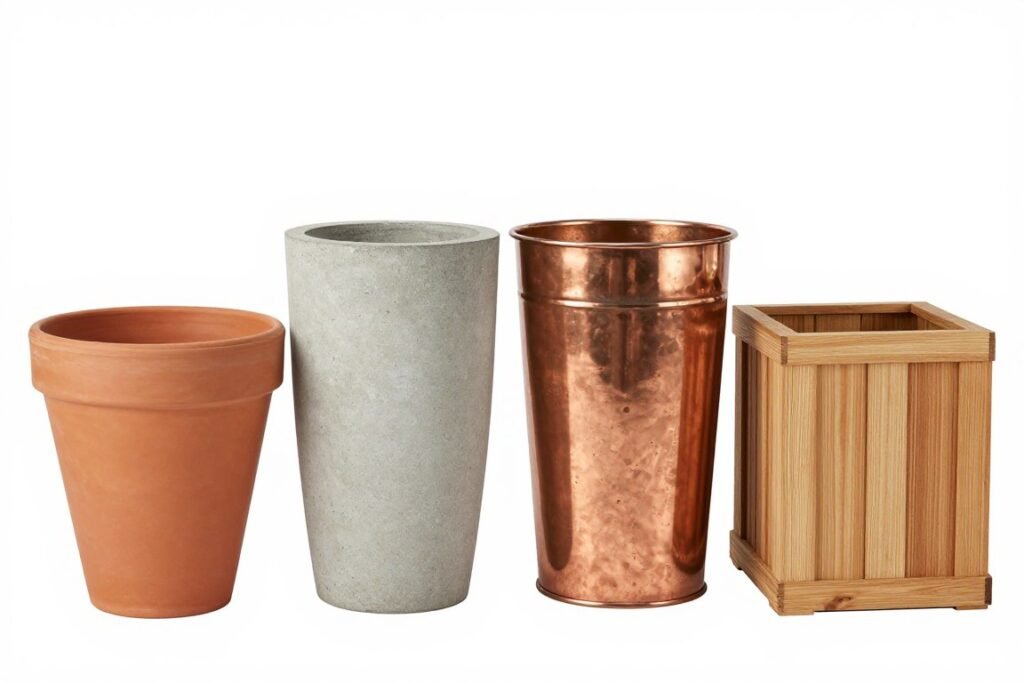
- Metal: Copper, iron, and aluminum planters offer industrial charm and exceptional durability. Consider copper planters that develop a beautiful patina over time.
Classic and Natural Materials
- Terracotta: This timeless material provides excellent breathability for plant roots but may crack in freezing temperatures. Consider bringing these indoors during winter months.
- Concrete: Substantial and sturdy, concrete planters offer a modern, minimalist look. They provide excellent insulation for root systems.
- Wood: Cedar and redwood planters bring natural warmth to your entrance. Look for cedar planter boxes with natural rot resistance.
Finding the Perfect Size and Proportion
Scale matters tremendously when selecting front door planters. The right proportions create visual harmony between your planters and your entryway.
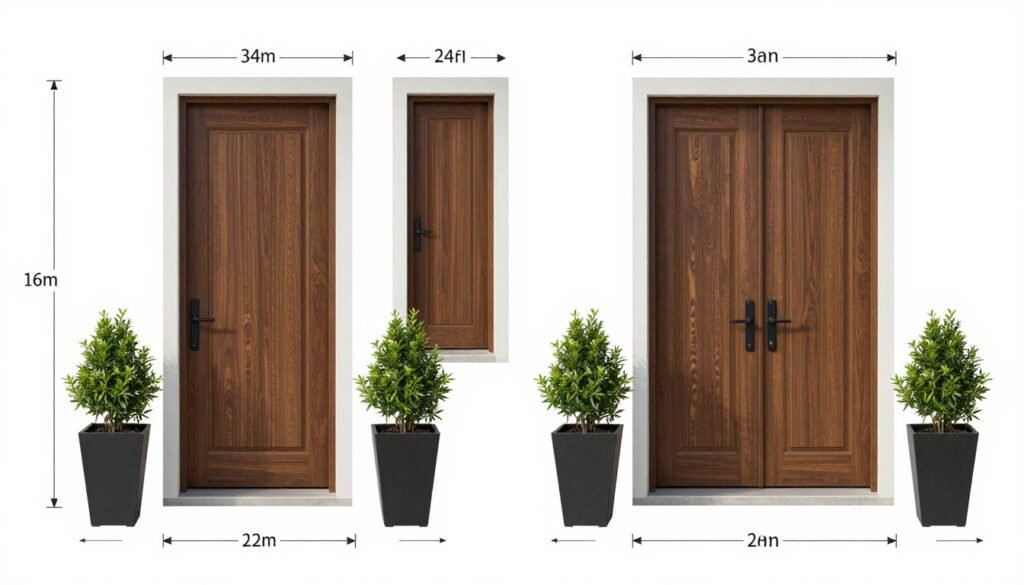
- Height Considerations: For standard single-story homes, planters should typically be at least 12-16 inches tall. For homes with grand entrances or double doors, consider taller planters of 18-24 inches to maintain proper scale.
- Width Proportions: Your planters should be approximately one-third the width of your door for balanced symmetry. For a 36-inch door, consider planters around 12 inches wide.
- Depth Requirements: Ensure your planters have adequate depth (at least 12 inches) to accommodate root systems, especially for larger plants and small trees.
“Your front door planters should be proportional to your entrance—not so small they get lost, not so large they overwhelm. Aim for planters that are approximately one-third the height of your door for perfect visual balance.”
Matching Planter Style to Your Home’s Architecture
Your front door planters should complement your home’s architectural style for a cohesive look:
Traditional Homes
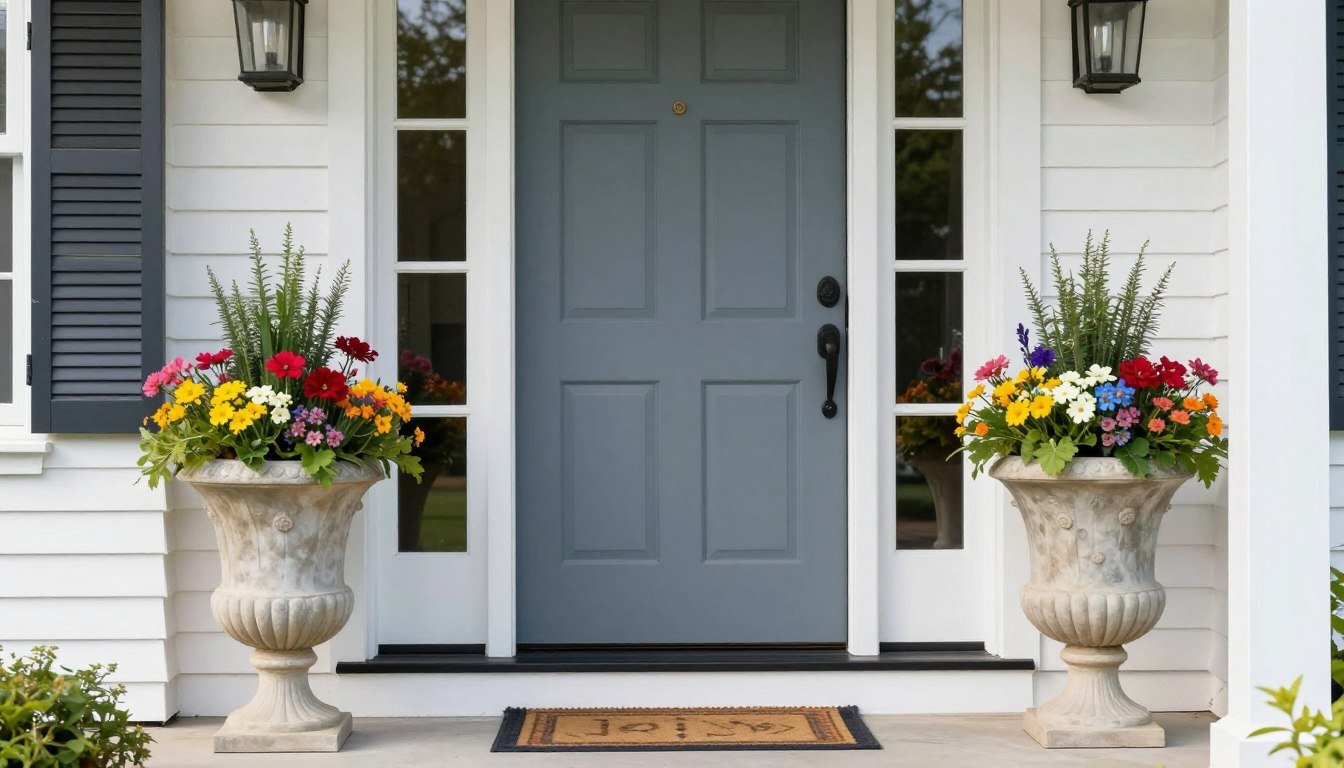
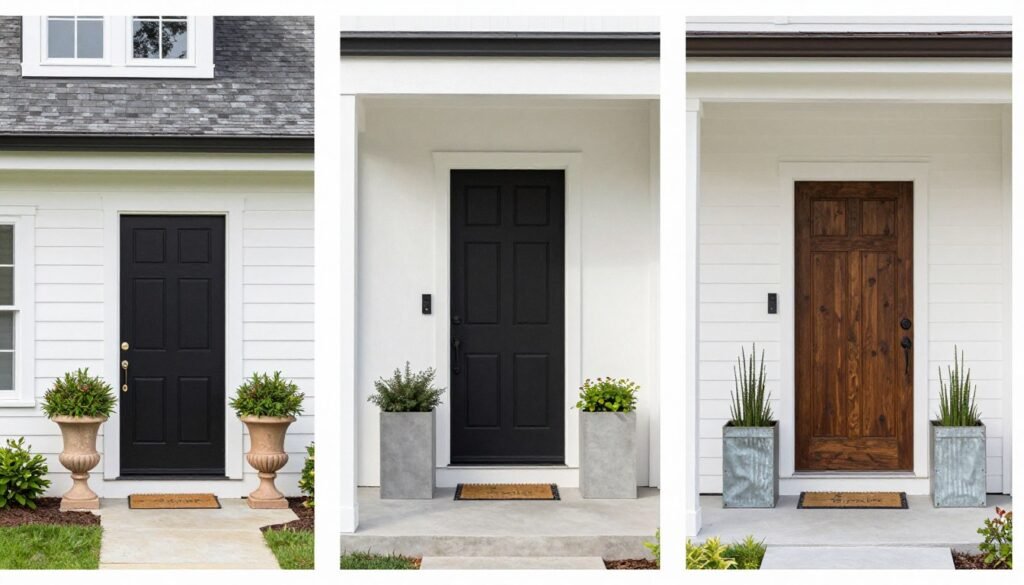
Colonial, Victorian, and Tudor-style homes pair beautifully with classic urns, ornate cast iron planters, or detailed ceramic containers. Look for symmetrical designs with traditional patterns. Classic urn planters create timeless elegance.
Modern Homes
Contemporary and mid-century modern homes call for clean lines and minimalist designs. Consider rectangular fiberglass planters, simple concrete vessels, or sleek metal containers in neutral tones or bold colors.
Farmhouse & Rustic
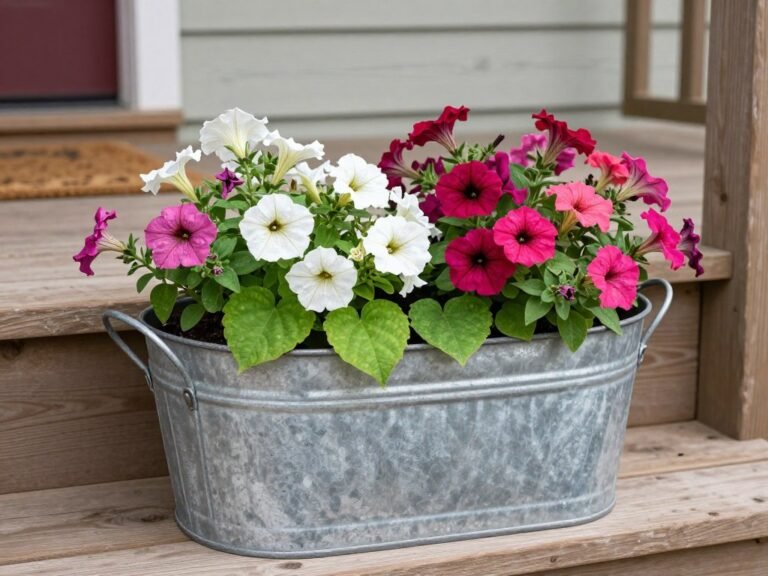
Complement farmhouse or rustic architecture with galvanized metal tubs, wooden barrels, or distressed containers. Rustic galvanized planters add authentic charm.
Top Plant Picks for Your Front Door Planters
Selecting the right plants for your front door planters involves considering hardiness, color impact, and seasonal interest. The perfect combination will provide year-round beauty while withstanding the specific conditions of your entryway.
Evergreen Foundation Plants
Start with these reliable evergreens that provide structure and year-round interest:
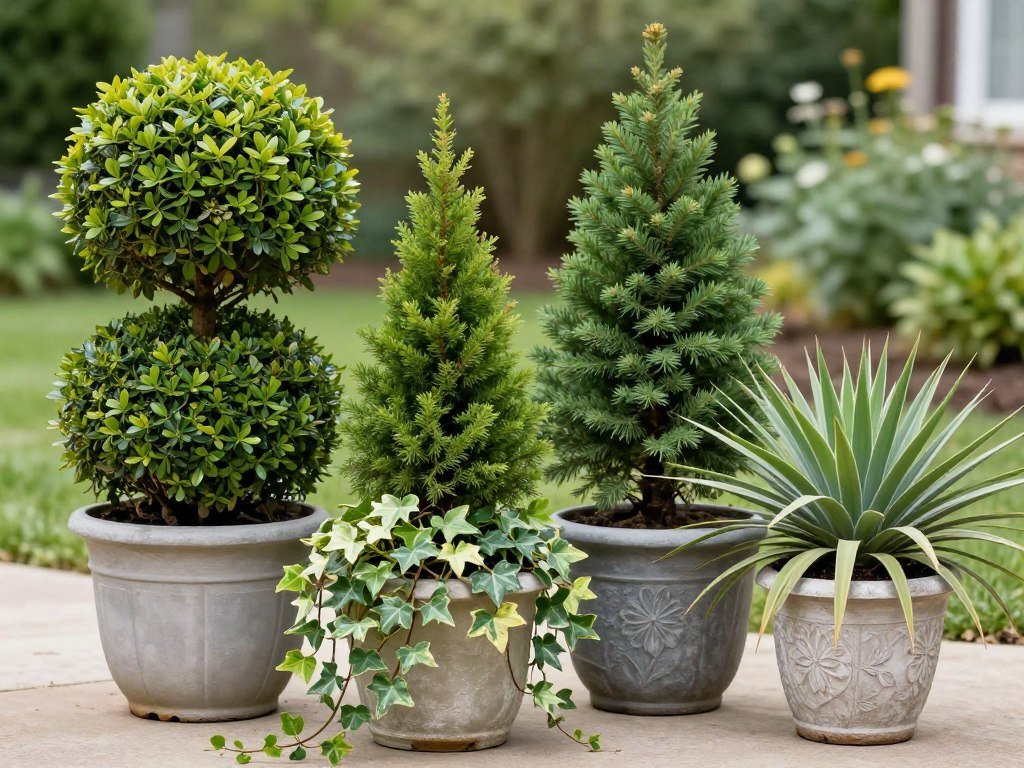
- Boxwood: These classic shrubs can be shaped into balls, cones, or left natural. Their dense foliage provides excellent structure in any season.
- Dwarf Alberta Spruce: With its perfect conical shape, this slow-growing evergreen adds height and requires minimal maintenance.
- English Ivy: As a trailing element, ivy adds elegant cascading texture and remains green throughout the year. Live English ivy plants are perfect for adding trailing elements.
- Dwarf Yucca: For a more architectural look, these drought-tolerant plants provide striking form and texture.
Seasonal Color Stars
Complement your evergreen foundation with these seasonal bloomers for vibrant color:
Spring Favorites
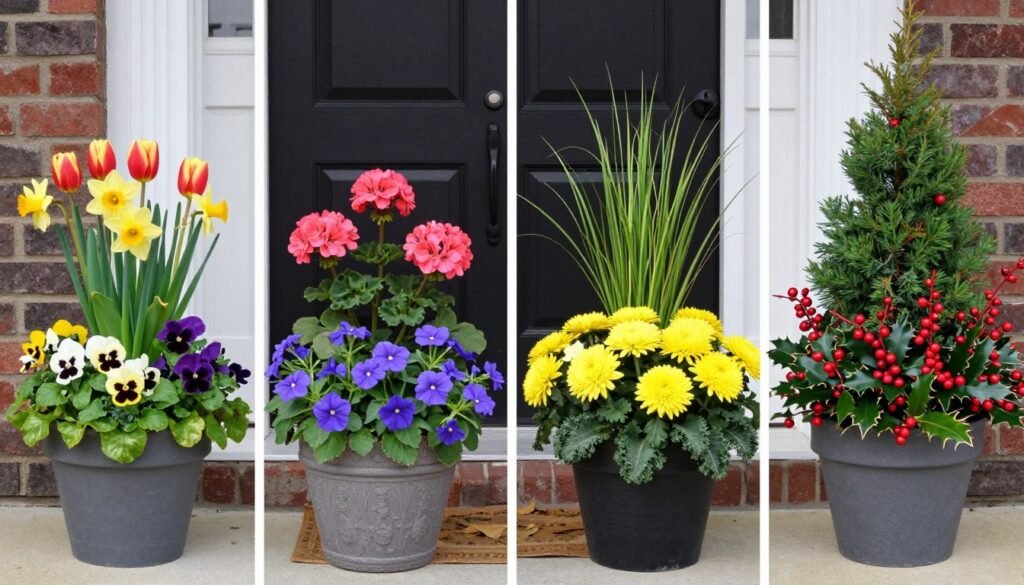
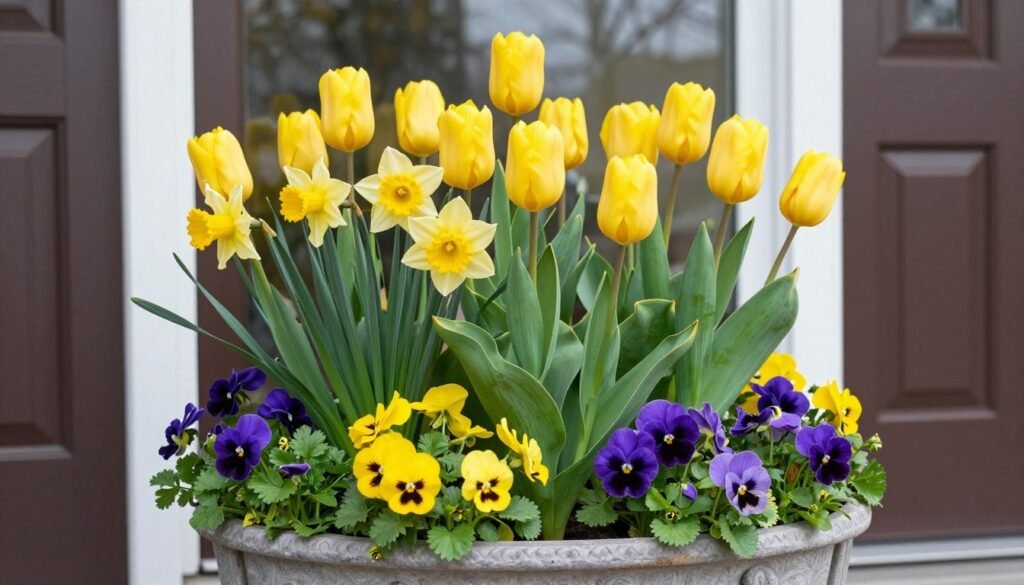
- Tulips and Daffodils: Plant these bulbs in fall for cheerful spring color. Spring bulb collections offer variety and extended blooming periods.
- Pansies: These cool-weather bloomers offer charming “faces” in a rainbow of colors and thrive in spring temperatures.
- Hellebores: Also known as Lenten roses, these early bloomers offer sophisticated flowers even in partial shade.
Summer Stunners
- Geraniums: These reliable bloomers offer continuous color all summer long and are remarkably heat-tolerant.
- Calibrachoa (Million Bells): These trailing flowers resemble tiny petunias and create cascades of color.
- Lantana: Butterfly-attracting clusters of multicolored flowers thrive in hot, sunny locations.
Fall Performers
- Ornamental Kale and Cabbage: These provide architectural interest with purple, pink, and white rosettes.
- Chrysanthemums: Classic fall flowers available in countless colors to complement autumn décor.
- Ornamental Grasses: Varieties like purple fountain grass add movement and texture. Container-friendly ornamental grasses create dynamic displays.
Winter Interest
- Winter Pansies: In milder climates, these can bloom through winter months.
- Red Twig Dogwood: The bare red stems provide striking winter interest.
- Winterberry Holly: Bright red berries persist through winter for festive color.
Plants for Challenging Conditions
Front door locations can present specific challenges. Here are plants that thrive in common entryway conditions:
- For Hot, Sunny Entrances: Succulents, lavender, rosemary, and salvia thrive in heat and require minimal watering. Drought-resistant container plants are perfect for sunny spots.
- For Shady Doorways: Hostas, ferns, coral bells (Heuchera), and begonias flourish with limited direct sunlight.
- For Windy Locations: Choose compact plants with sturdy stems like dwarf conifers, ornamental grasses, and low-growing sedums.
“When selecting plants for front door planters, consider not just what looks beautiful, but what will thrive in your specific entryway conditions. The most stunning arrangements combine plants with similar light, water, and temperature needs.”
Design Principles: Creating Curb Appeal with Front Door Planters
Creating truly eye-catching front door planters involves more than just selecting beautiful containers and healthy plants. Understanding and applying basic design principles will elevate your arrangements from pleasant to professional.
Scale and Proportion: Creating Visual Balance
The relationship between your planters, plants, and entryway creates visual harmony or discord:
- Vertical Scale: For tall doors or two-story entrances, incorporate plants with height like small trees or tall grasses. Consider tall outdoor planters to create proper vertical proportion.
- Horizontal Balance: For wide porches or double doors, use multiple planters or wider containers to fill the space appropriately.
- Plant Height Formula: As a general rule, the tallest plant in your arrangement should be no more than 1.5 to 2 times the height of your container for balanced proportions.
Symmetry vs. Asymmetry: Finding Your Style
The arrangement of your front door planters creates different aesthetic effects:
Symmetrical Arrangements
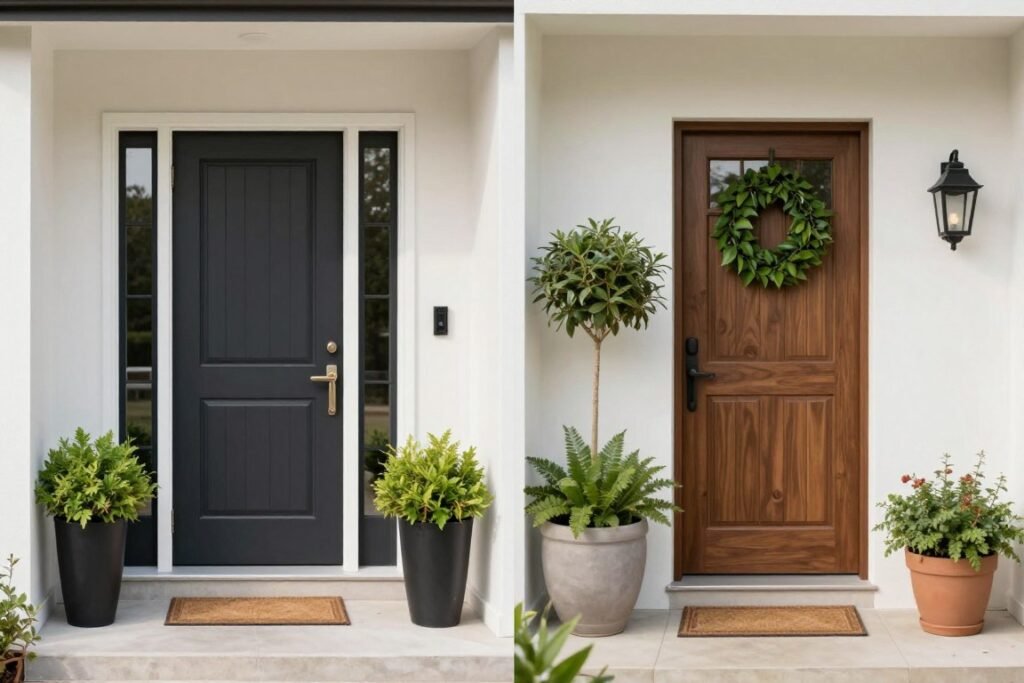
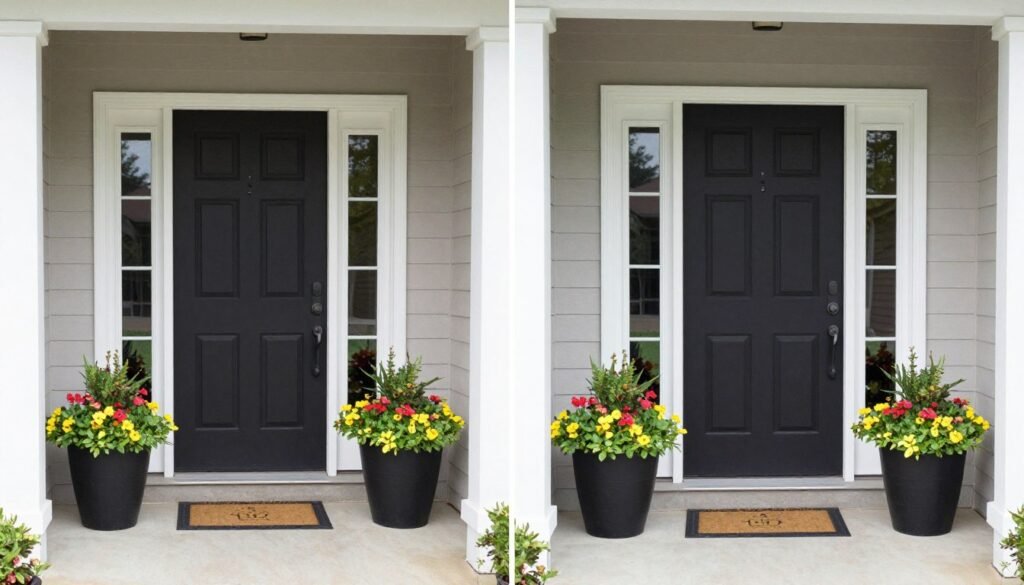
Matching planters with identical plants on either side of your door create a formal, traditional look. This approach works beautifully for colonial, federal, and other classical home styles. Matching planter sets make achieving symmetry simple.
Asymmetrical Arrangements
Different-sized planters or varied plant selections create a more casual, contemporary feel. This approach works well for craftsman, modern, and eclectic home styles. The key is maintaining visual balance through color, texture, or form even when containers differ.
Color Theory: Creating Harmonious Combinations
Color choices dramatically impact the visual appeal of your front door planters:
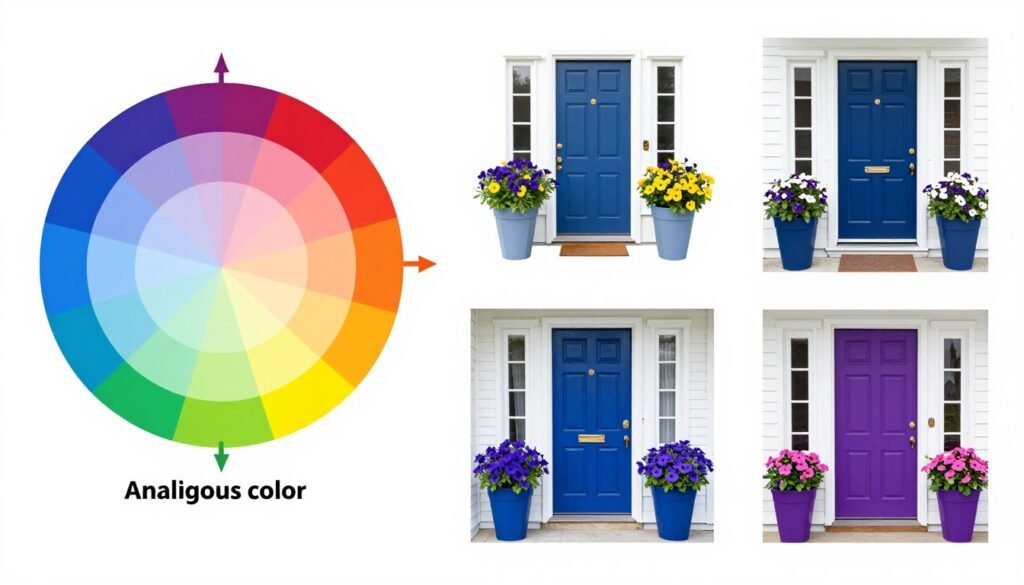
- Complementary Colors: Pairing colors from opposite sides of the color wheel (like purple and yellow) creates vibrant, high-energy combinations.
- Analogous Colors: Using colors adjacent on the color wheel (like blue, purple, and pink) creates harmonious, soothing arrangements.
- Monochromatic Schemes: Variations of a single color create sophisticated, elegant displays.
- Door Color Coordination: Consider your door color when selecting plants and containers. For a red door, try white flowering plants for striking contrast.
The “Thriller, Filler, Spiller” Concept
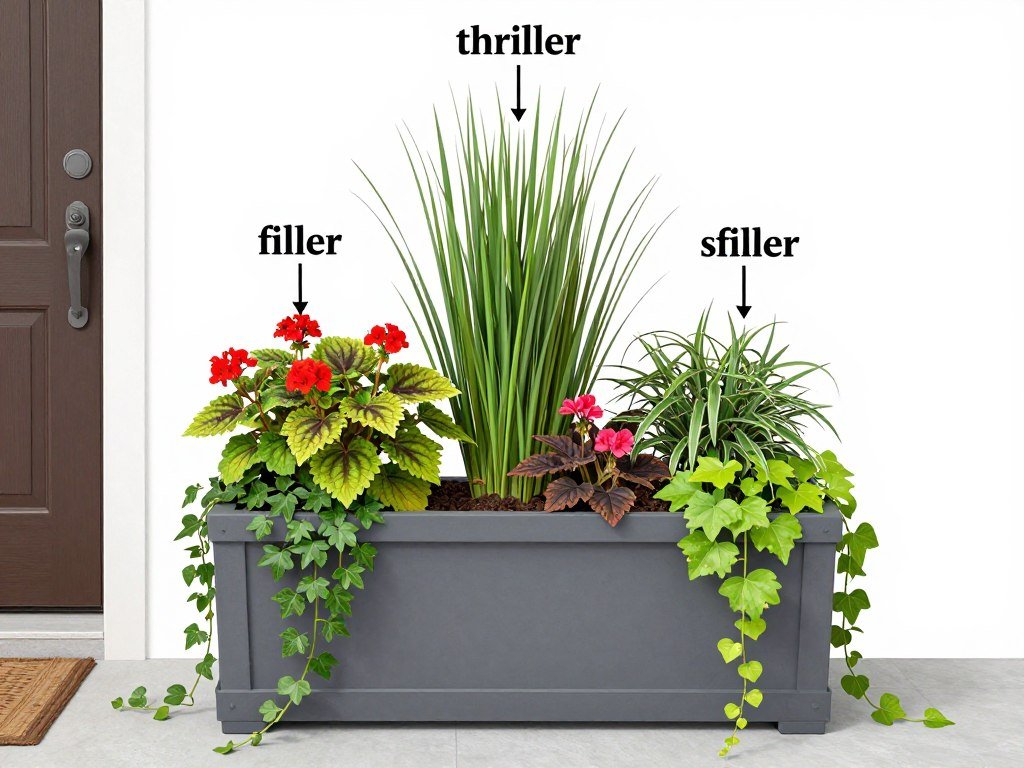
This professional design formula creates dynamic, layered container gardens:
Thriller
The vertical focal point plant that adds height and drama. Examples include ornamental grasses, cannas, or small evergreen shrubs. Place these in the center or back of your container. Vertical accent plants make perfect thrillers.
Filler
Mid-height, mounding plants that add fullness and mass to the arrangement. Examples include geraniums, coleus, or heuchera. These should surround your thriller plant.
Spiller
Trailing plants that cascade over the edges of your container, softening the lines and adding dimension. Examples include ivy, sweet potato vine, or trailing petunias.
Seasonal Planting Guide for Year-Round Curb Appeal
Maintaining beautiful front door planters throughout the year requires strategic seasonal transitions. This guide will help you plan for continuous color and interest regardless of the season.
Spring Refresh: Awakening Your Entrance
As winter fades, bring your entrance to life with these spring strategies:
- Early Spring (March-April): Plant cold-tolerant annuals like pansies, violas, and primroses. Add spring bulbs like tulips and daffodils that were planted the previous fall.
- Late Spring (May): Transition to geraniums, petunias, and other warm-season annuals as temperatures stabilize. Spring flowering bulbs provide early color while other plants establish.
- Spring Color Palette: Embrace fresh pastels like lavender, pink, yellow, and baby blue that reflect the season’s renewal.
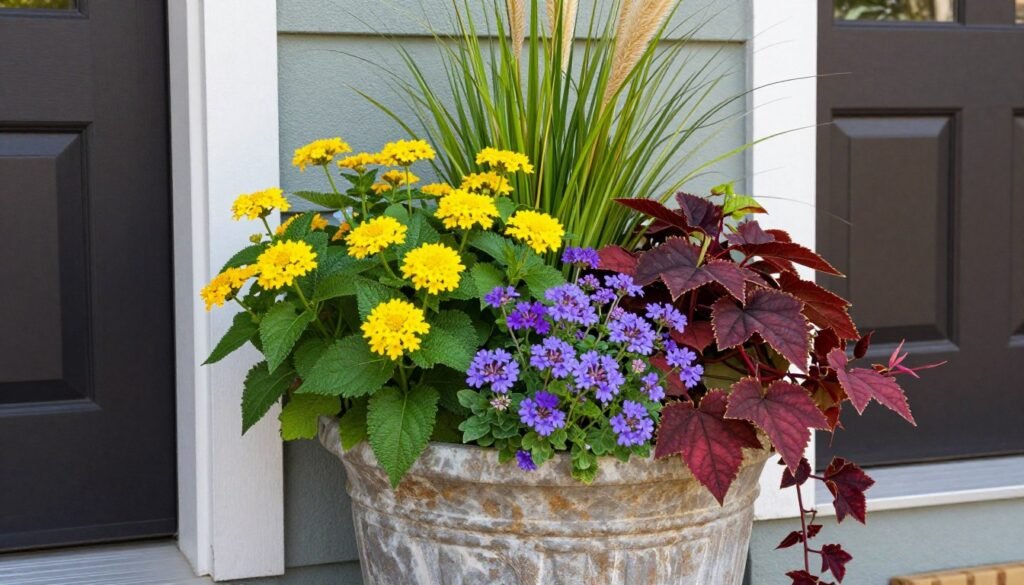
Summer Splendor: Heat-Tolerant Displays
Create drought-resistant, vibrant summer arrangements that withstand the heat:
- Early Summer (June): Install heat-loving annuals like lantana, verbena, and calibrachoa. Consider self-watering planters to reduce maintenance during hot months.
- Mid-Summer (July-August): Maintain vigor by deadheading spent blooms and fertilizing regularly. Add fresh mulch to retain moisture.
- Summer Color Palette: Bold, saturated colors like magenta, orange, bright yellow, and cobalt blue stand up to intense summer light.
Fall Transition: Embracing Autumn Hues
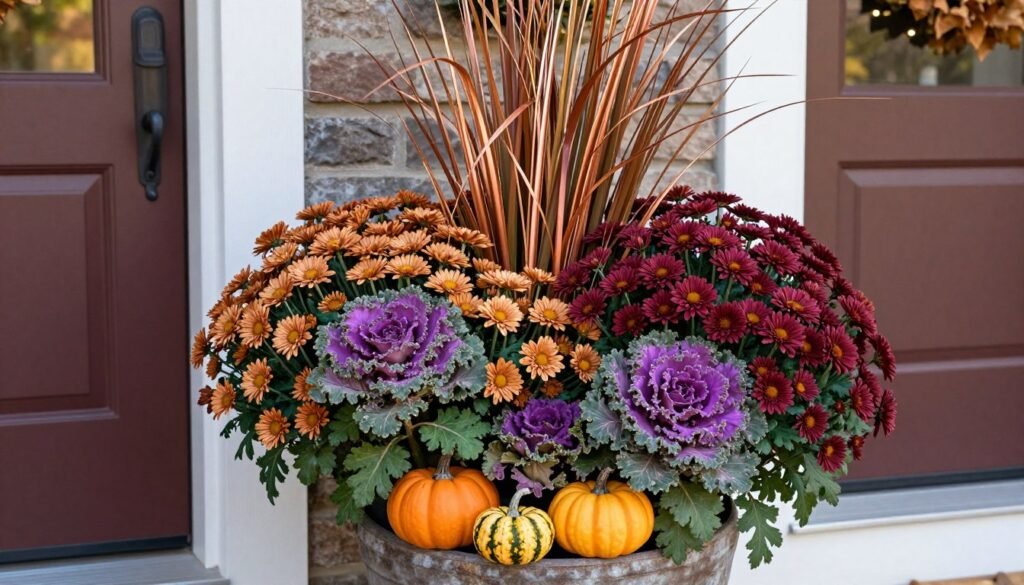
As temperatures cool, transition to fall-friendly arrangements:
- Early Fall (September): Replace fading summer annuals with chrysanthemums, ornamental kale, and ornamental peppers.
- Mid-Fall (October-November): Add ornamental grasses, pumpkins, and gourds for seasonal texture. Fall container garden plants create instant autumn appeal.
- Fall Color Palette: Warm oranges, deep reds, purples, and golden yellows echo the changing leaves.
Winter Wonder: Creating Cold-Season Interest
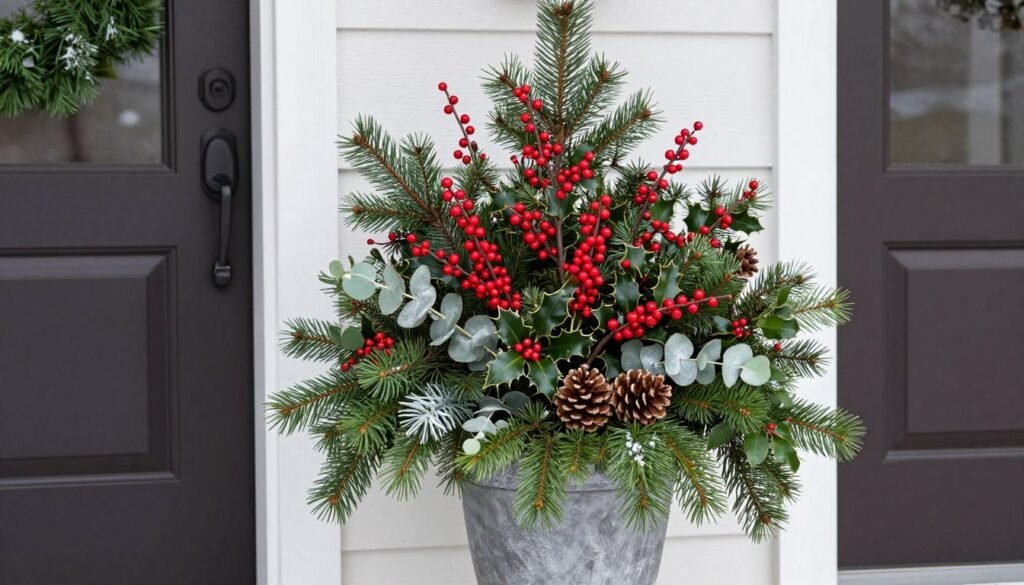
Even in winter, your front door planters can shine with these strategies:
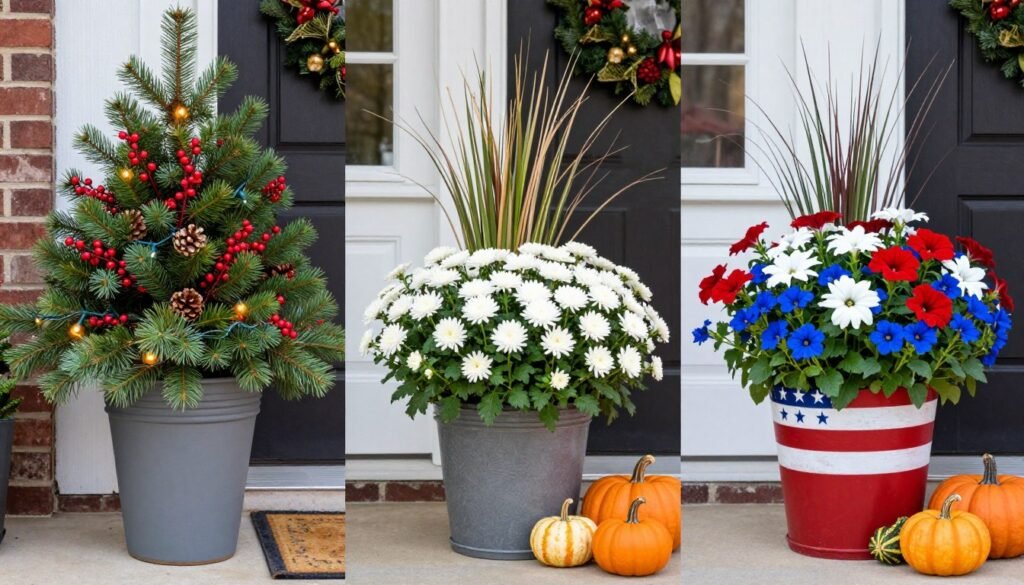
- Early Winter (December): Incorporate evergreen boughs, red-twig dogwood, and winterberry holly for natural color. Winter container decorations add festive touches.
- Mid-Winter (January-February): Maintain interest with frost-resistant elements like birch branches, pine cones, and preserved eucalyptus.
- Winter Color Palette: Silver, white, deep green, and burgundy create sophisticated winter displays.
“The secret to year-round curb appeal isn’t trying to make plants bloom out of season—it’s embracing what each season naturally offers and planning transitions that maintain continuous interest.”
Care and Maintenance: Keeping Your Front Door Planters Looking Their Best
Beautiful front door planters require ongoing care to maintain their appeal. Follow these essential maintenance practices to ensure your containers remain healthy and vibrant throughout their growing season.
Watering Wisdom
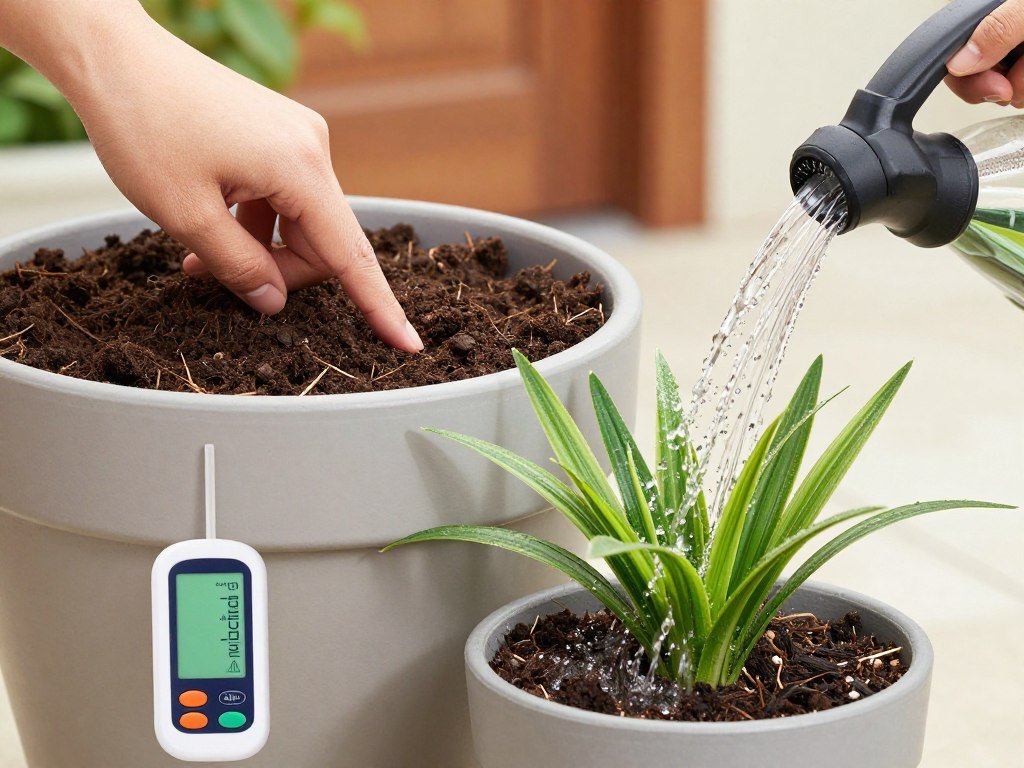
Proper watering is the foundation of healthy container plants:
- Frequency Guidelines: Most front door planters need watering when the top inch of soil feels dry to the touch. In summer heat, this might mean daily watering.
- Morning Watering: Water early in the day to reduce evaporation and allow foliage to dry before evening, preventing fungal issues.
- Watering Systems: Consider self-watering systems or drip irrigation for consistent moisture, especially if you travel frequently.
- Drainage Importance: Ensure your planters have adequate drainage holes to prevent root rot. Elevate containers slightly with pot feet to improve airflow.
Fertilizing for Continuous Blooms
Container plants need regular nutrients to perform their best:
- Slow-Release Options: Apply a high-quality slow-release fertilizer when planting, which will feed plants for several months.
- Liquid Feeding: Supplement with liquid fertilizer every 2-4 weeks during the growing season. Liquid fertilizers for flowering plants promote continuous blooms.
- Seasonal Adjustments: Reduce fertilizing in fall and winter when plant growth naturally slows.
- Organic Options: Consider organic fertilizers like compost tea or fish emulsion for a natural approach.
Grooming and Maintenance Routines
Regular grooming keeps your front door planters looking their best:
Weekly Tasks
- Deadheading: Remove spent blooms to encourage new flowers and prevent seed formation.
- Pruning: Trim leggy growth to maintain compact, full plants.
- Cleaning: Remove fallen leaves and debris that can harbor pests or disease.
Monthly Tasks
- Rotation: Turn containers a quarter turn to ensure even growth and prevent leaning toward light sources.
- Pest Inspection: Check for signs of insects or disease and treat promptly. Organic pest control options keep plants healthy without harsh chemicals.
- Soil Refreshing: Top-dress with fresh potting mix to replenish nutrients and improve appearance.
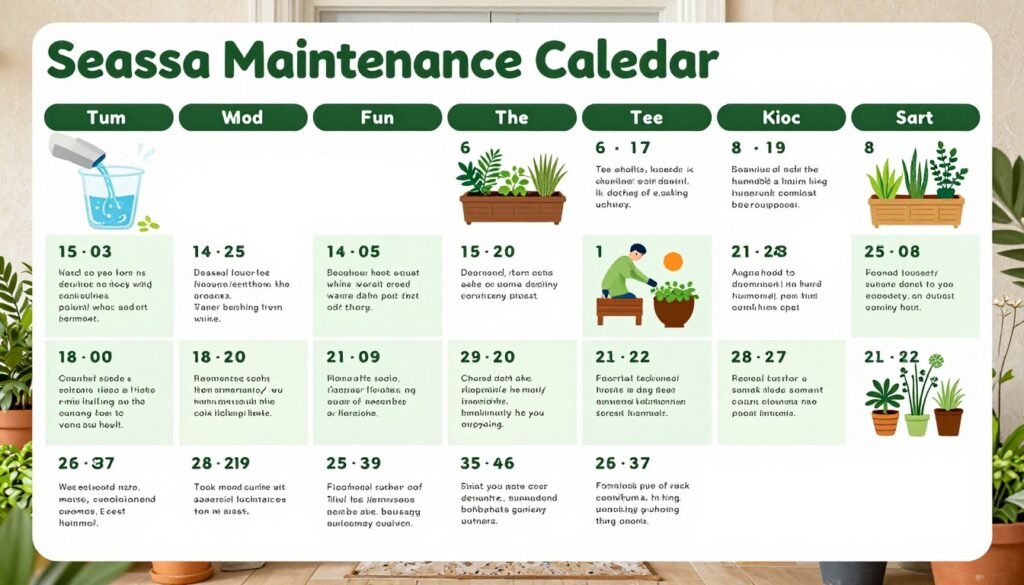
Seasonal Swaps and Refreshes
Keep your front door planters looking fresh with strategic updates:
- Partial Refreshes: Rather than replacing entire arrangements, consider swapping out just a few fading plants while keeping structural elements.
- Transitional Elements: Add seasonal decorative elements like small pumpkins in fall or twinkle lights in winter.
- Soil Replacement: Replace potting mix completely once a year, typically in spring, to provide fresh nutrients and prevent soil compaction. Premium potting soil provides the best foundation for healthy plants.
“The most beautiful front door planters aren’t necessarily the most elaborate—they’re the ones that receive consistent care. Five minutes of daily attention will reward you with months of vibrant displays.”
Creative and Unique Front Door Planter Ideas
Elevate your curb appeal with these innovative approaches to front door planters that go beyond the ordinary. These creative ideas will help your entrance make a memorable impression.
Repurposed and Upcycled Containers
Give new life to unexpected items for truly unique front door planters:
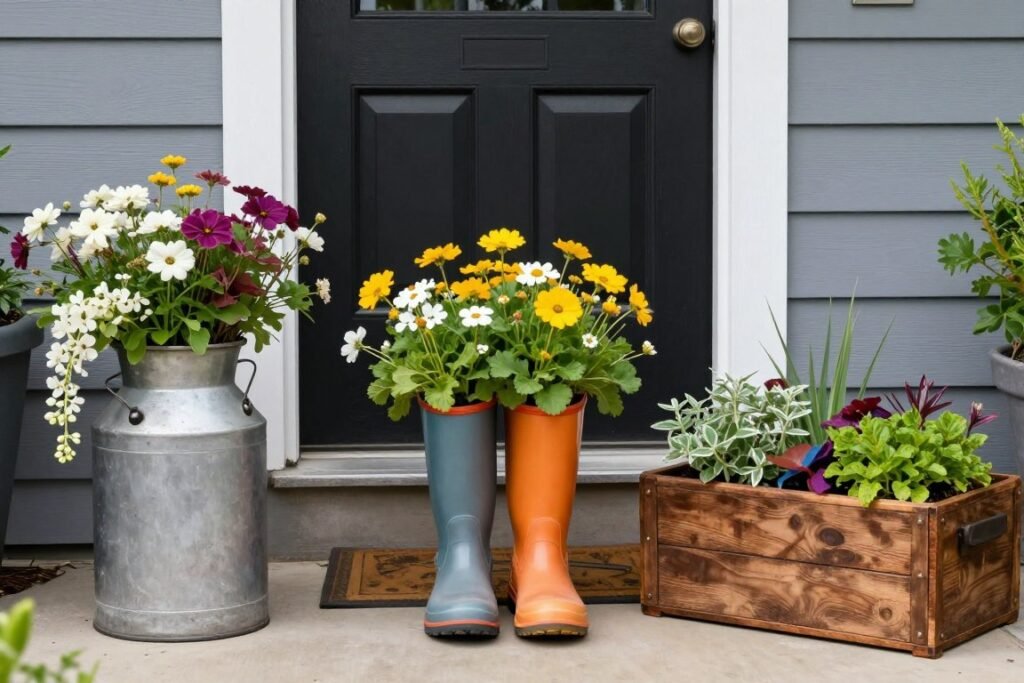
- Vintage Finds: Antique milk cans, old toolboxes, or weathered wooden crates add character and history. Vintage-style containers bring charm to your entrance.
- Repurposed Household Items: Old rain boots, colanders, or even unused light fixtures can become conversation-starting planters.
- Industrial Elements: Galvanized metal buckets, old wheel barrows, or metal tool caddies create industrial-chic displays.
Themed Front Door Planter Designs
Create cohesive, story-telling arrangements with these themed approaches:
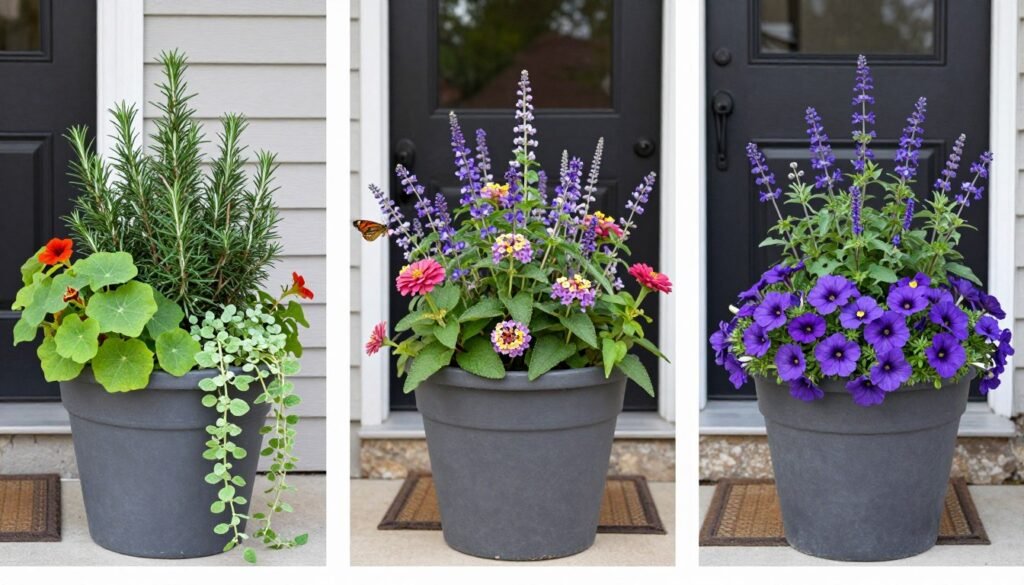
Culinary Herb Gardens
Combine beautiful and functional with herb planters featuring rosemary, thyme, sage, and trailing oregano. Add edible flowers like nasturtiums for color. Herb garden planters offer beauty and practicality.
Butterfly & Pollinator Gardens
Create a living ecosystem with nectar-rich flowers like lantana, salvia, and zinnias that attract butterflies and bees to your entrance.
Monochromatic Magic
Design arrangements using variations of a single color for sophisticated impact. All-white gardens glow at dusk, while all-purple creates dramatic contrast.
Architectural and Structural Elements
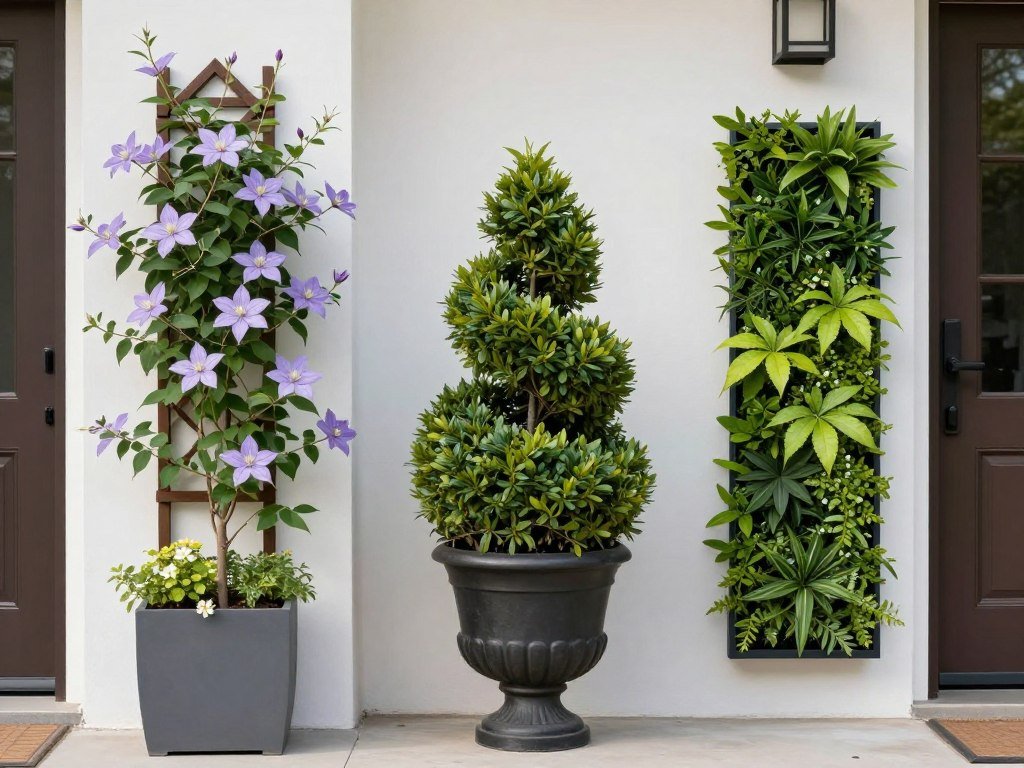
Add dimension and height to your front door planters with these structural approaches:
- Trellises and Obelisks: Incorporate climbing structures for vertical interest. Plant clematis, morning glories, or mandevilla to create living columns. Garden obelisks add instant height to containers.
- Topiary Forms: Use boxwood, rosemary, or ivy trained into balls, spirals, or cones for formal elegance.
- Living Walls: Install vertical planting systems beside your door for a modern, space-saving approach to front door planters.
Seasonal and Holiday Specialties
Create memorable front door planters for special occasions:
- Holiday Transformations: Add string lights, ornaments, or seasonal ribbons to evergreen arrangements for winter holidays.
- Harvest Displays: Incorporate miniature pumpkins, gourds, and dried corn stalks into fall arrangements. Fall harvest decorations enhance autumn planters.
- Patriotic Arrangements: Create red, white, and blue displays with petunias, bacopa, and lobelia for summer holidays.
“The most memorable front door planters tell a story about the people who live inside. Let your containers reflect your personality, interests, and the welcome you want to extend to visitors.”
Conclusion: Elevate Your Curb Appeal with Front Door Planters
Front door planters are far more than decorative accessories—they’re powerful tools for transforming your home’s entrance and creating a lasting impression. By thoughtfully selecting containers that complement your architecture, choosing plants that thrive in your specific conditions, and applying professional design principles, you can create an entryway that welcomes guests and brings you joy every time you come home.
Remember that successful front door planters evolve with the seasons, requiring regular care and occasional refreshes to maintain their beauty. Whether you prefer formal symmetry with classic urns or eclectic charm with repurposed containers, the principles of proportion, color harmony, and thoughtful plant selection will guide you toward creating arrangements that enhance your home’s unique character.
Most importantly, don’t be afraid to experiment and express your personal style. Your front door planters are an opportunity to share a bit of your personality with everyone who passes by or visits your home. With the ideas and techniques shared in this guide, you’re well-equipped to create front door planters that will be the envy of your neighborhood and a source of pride for years to come.
Ready to Transform Your Front Entrance?
Start your front door planter project today with quality containers and plants that will create a welcoming entrance for years to come.
Love these ideas? Pin your favorite front door planter inspirations to your “Front Door Goals” board for later!