Elevate Your Space: The Ultimate Guide to Hanging Planters
Hanging planters are the perfect solution for plant lovers looking to maximize their green space. Whether you’re dealing with limited floor space, want to add visual interest to empty corners, or simply love the cascading effect of trailing plants, hanging planters offer endless possibilities to transform your home. In this guide, we’ll explore different types of hanging planters, share creative styling ideas, and help you find the perfect match for your plants and décor style.
This Website contains affiliate links. That means I may earn a small commission if you purchase through my links, at no extra cost to you.
Why Hanging Planters Are a Game-Changer for Your Space
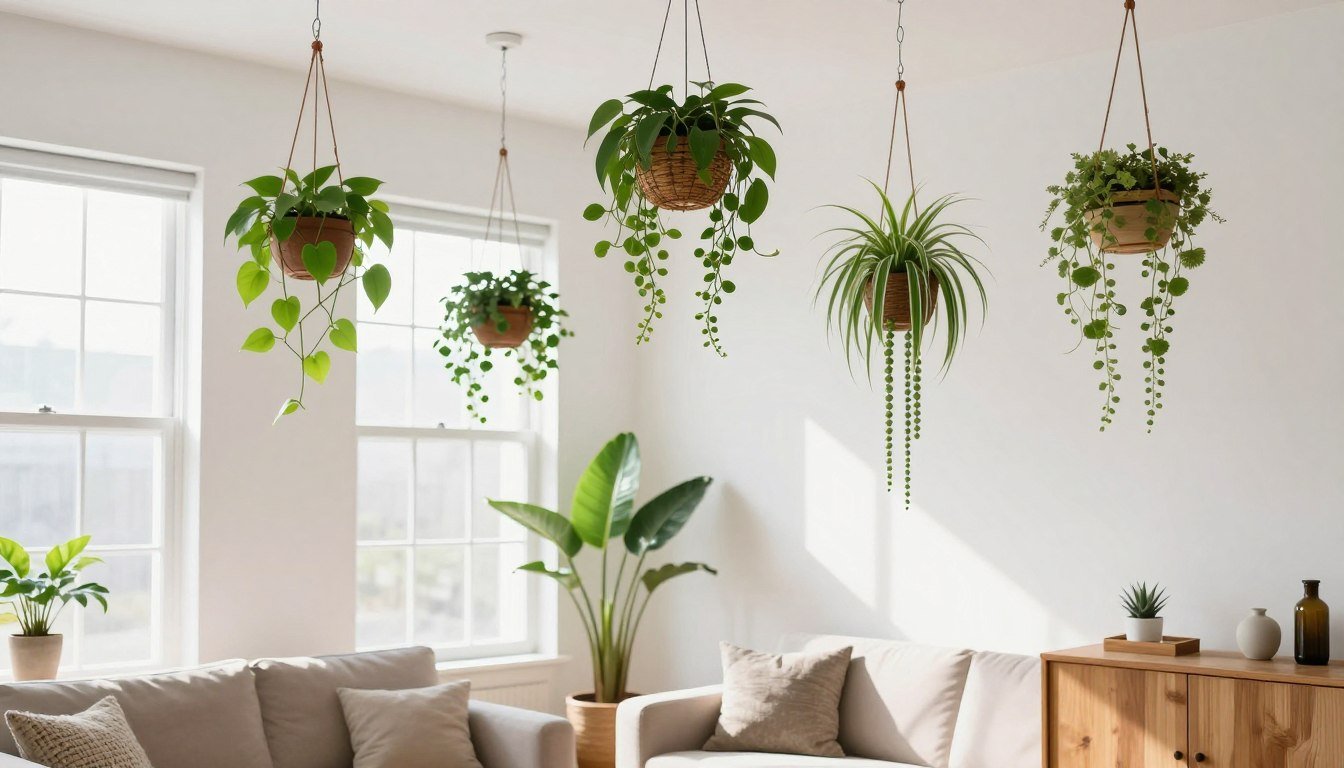
Hanging planters aren’t just beautiful—they’re practical space-savers that bring numerous benefits to your home. By lifting plants off surfaces and floors, they free up valuable real estate while creating visual interest at different heights. This vertical gardening approach is perfect for small apartments, crowded spaces, or simply adding dimension to your existing plant collection.
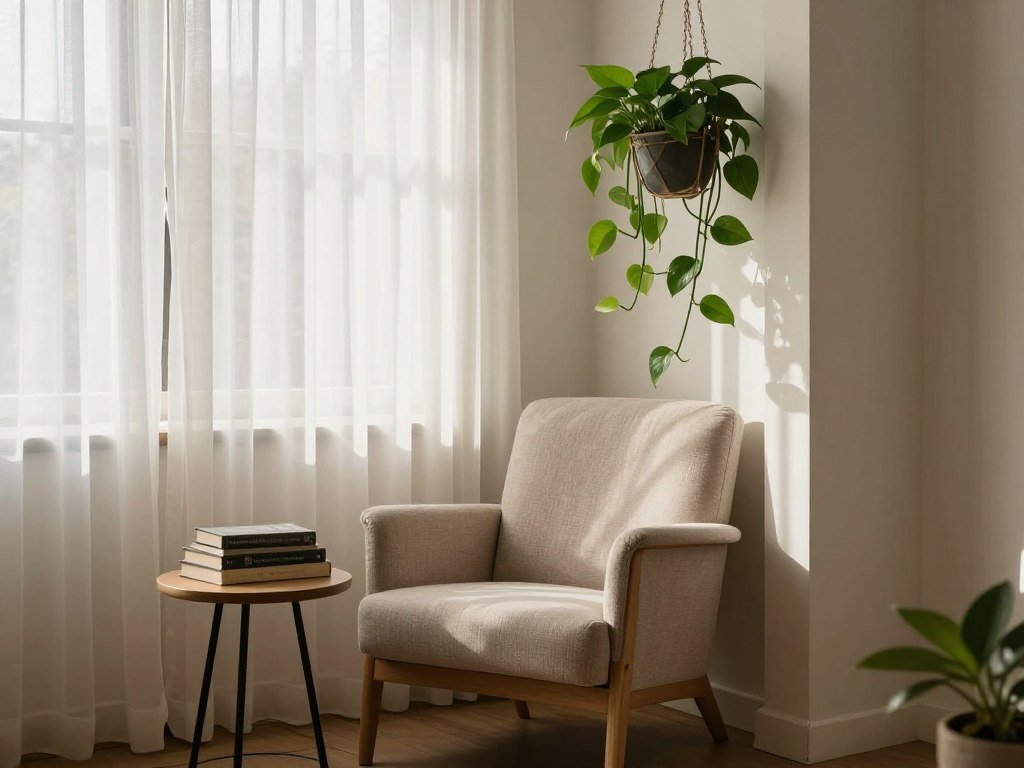
Beyond aesthetics, hanging planters can improve your plants’ health by providing better light exposure. Many trailing plants naturally grow in environments where they cascade from heights, making hanging planters a more natural habitat for them. Plus, elevating plants can keep them safely out of reach from curious pets and children.
Showcase trailing plants in their natural growing pattern
Add dimension and layers to your plant display
Transform empty corners and blank walls
Bring life to overlooked spaces like bathrooms and kitchens
Pin-worthy Tip: Hanging planters at varying heights creates a dynamic “living curtain” effect that adds depth and interest to any room. Save this idea to your Plant Styling board!
Explore Different Types of Hanging Planters
The world of hanging planters offers something for every style preference and plant need. From bohemian macramé to sleek modern designs, let’s explore the most popular options to help you find your perfect match.
Macramé Hanging Planters
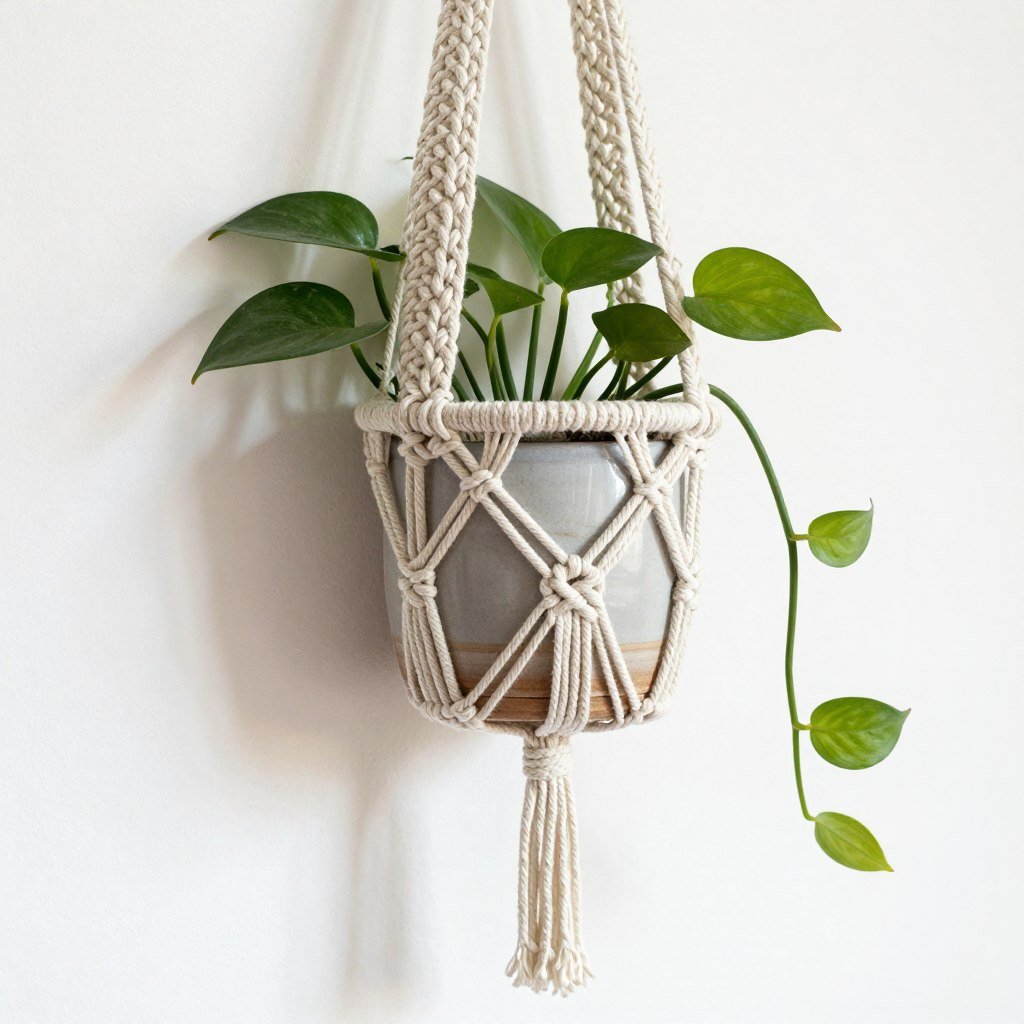
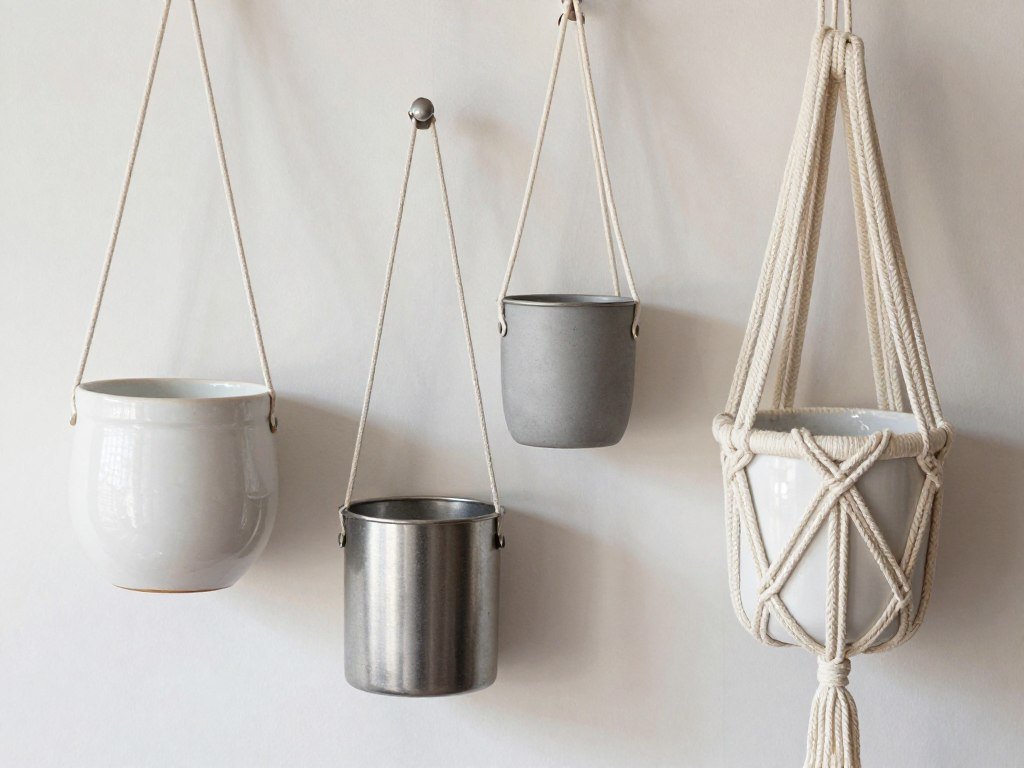
Macramé planters bring bohemian charm and handcrafted texture to any space. These woven cotton or jute hangers cradle your plant pots in an intricate network of knots, adding warmth and artistic flair to your décor.
Perfect for: Boho, eclectic, or vintage-inspired spaces. Plants with dramatic trailing habits like pothos or string of pearls.
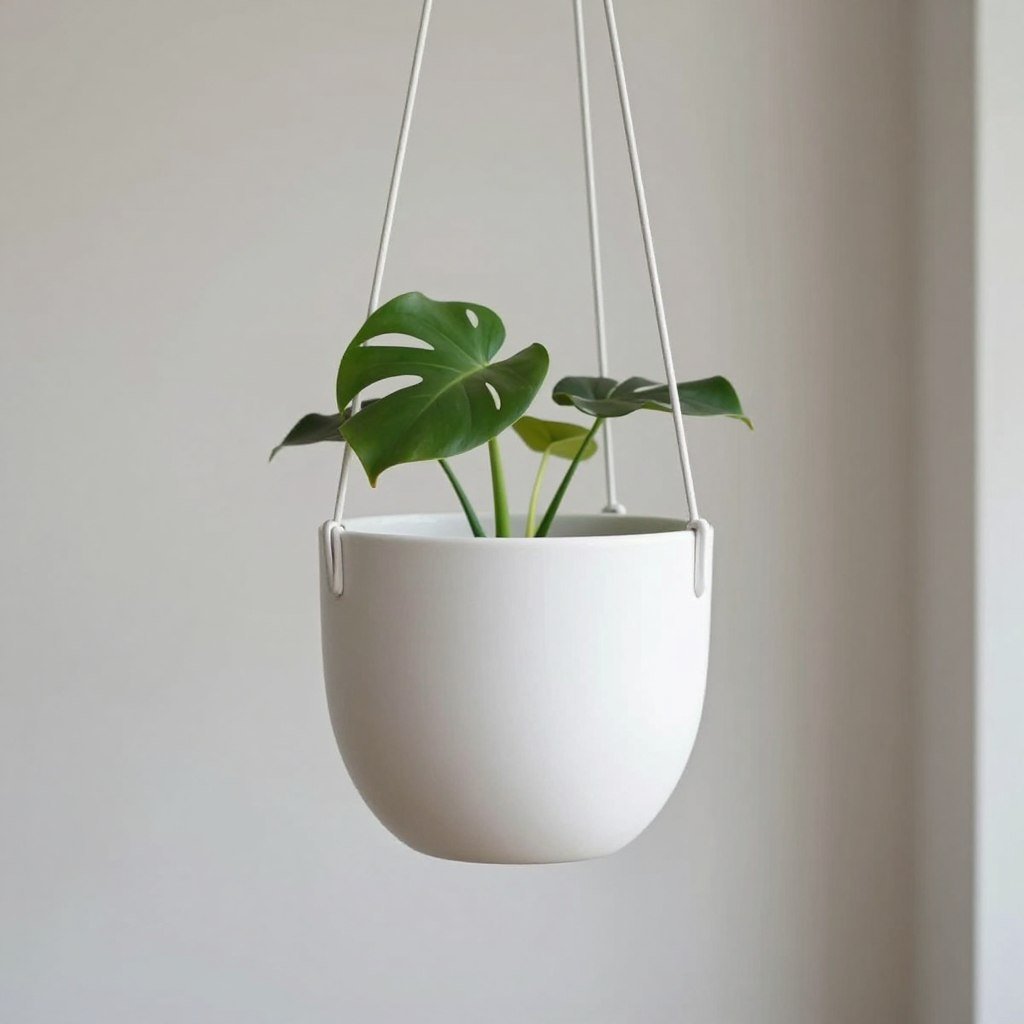
Ceramic hanging planters offer timeless elegance with their smooth finish and substantial feel. Available in countless colors, shapes, and finishes, these versatile containers work in virtually any décor style.
Perfect for: Modern, minimalist, or traditional spaces. Medium-sized plants that benefit from the moisture-retaining properties of ceramic.
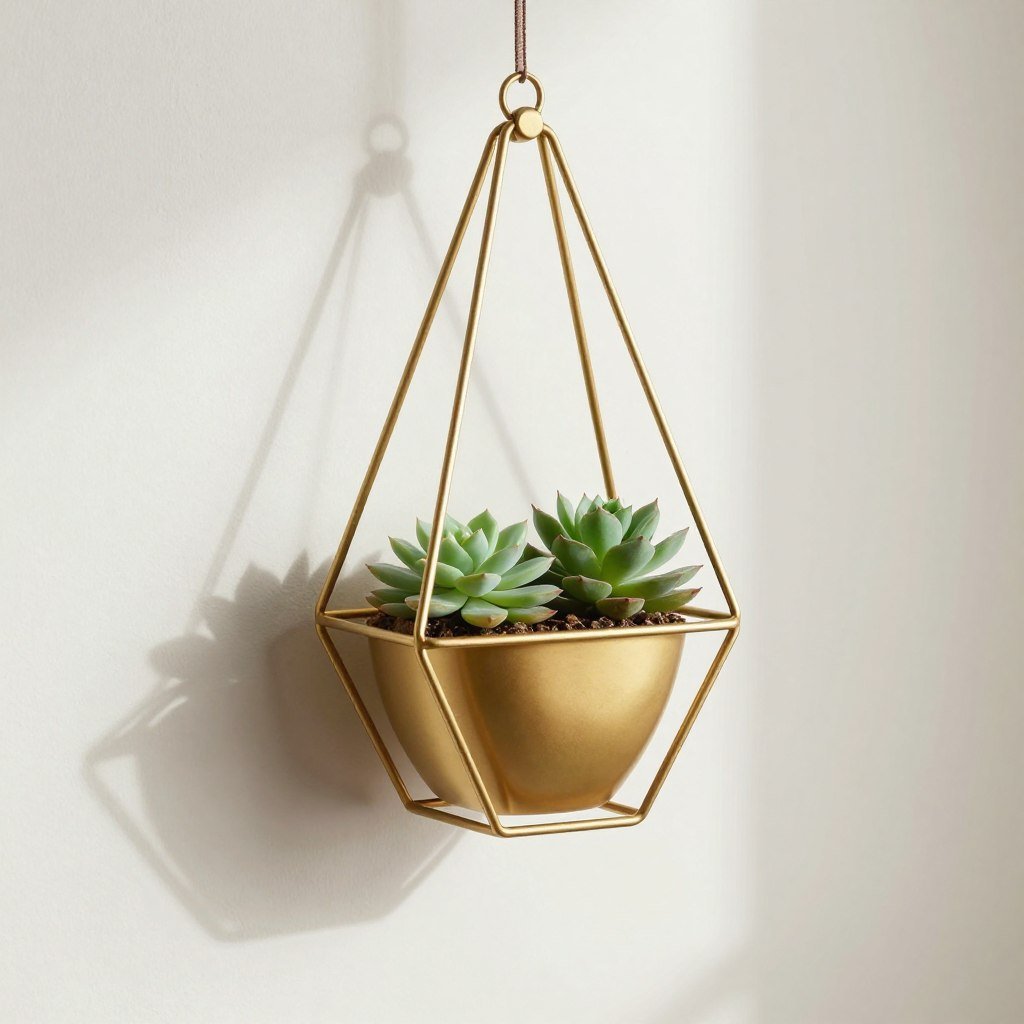
For contemporary spaces, metal and geometric hanging planters make a bold statement. These architectural pieces often feature clean lines, interesting angles, and modern finishes like brass, copper, or matte black.
Perfect for: Industrial, modern, or minimalist spaces. Smaller plants and succulents that create interesting silhouettes.
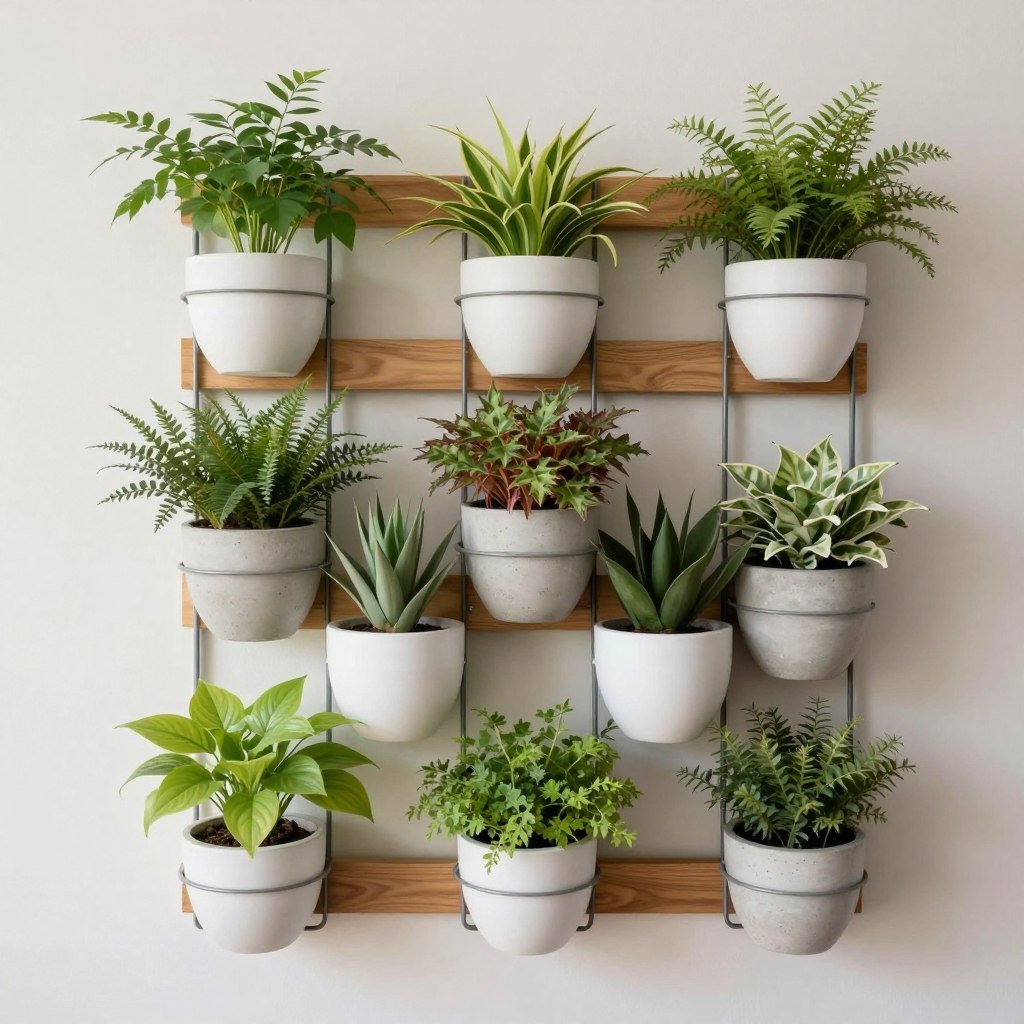
Wall-mounted hanging systems allow you to create stunning vertical gardens without taking up ceiling space. These modular systems can be expanded over time and rearranged to suit your evolving plant collection.
Perfect for: Apartments with limited ceiling options, rental spaces, or creating a focal point on a blank wall.
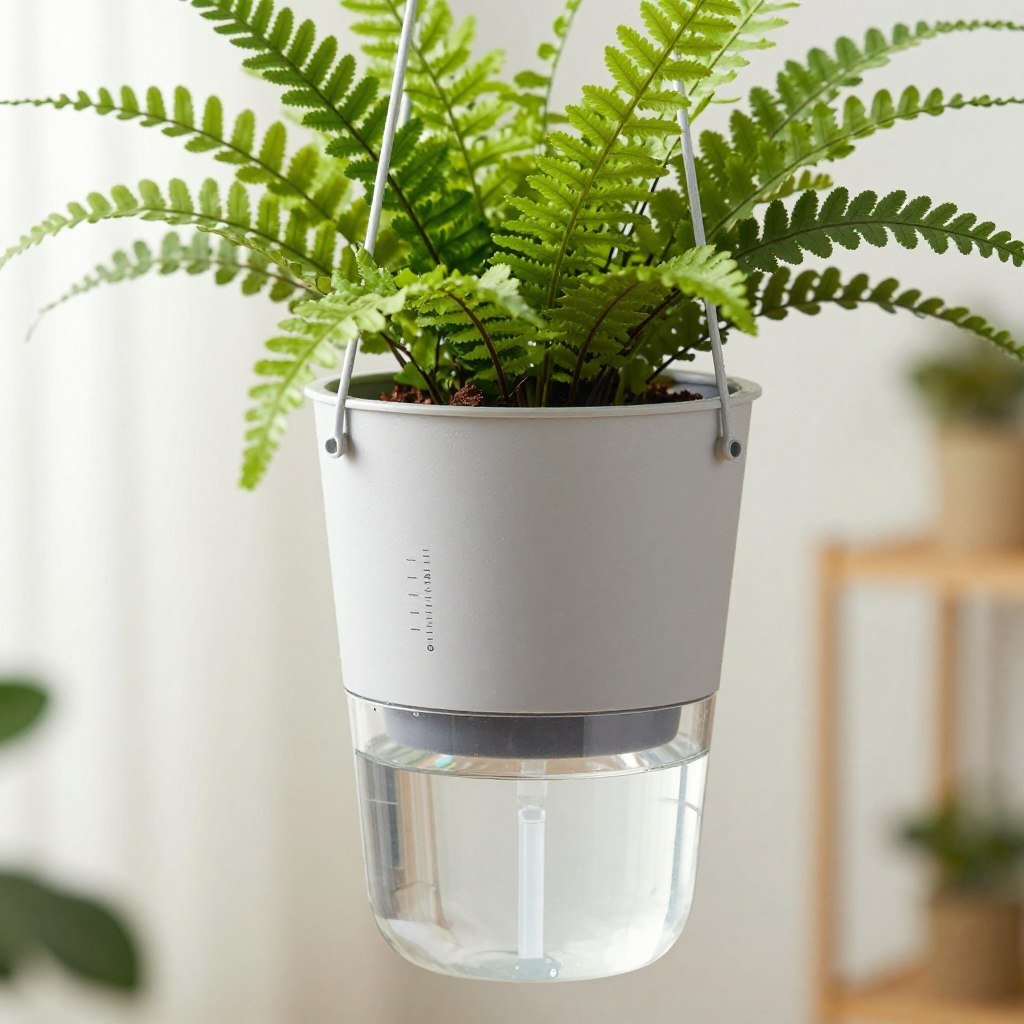
Perfect for busy plant parents or hard-to-reach hanging spots, self-watering planters feature a reservoir that slowly releases moisture to your plants. These practical options help maintain consistent soil moisture.
Perfect for: Forgetful waterers, vacation homes, or plants hung in high, difficult-to-reach locations.
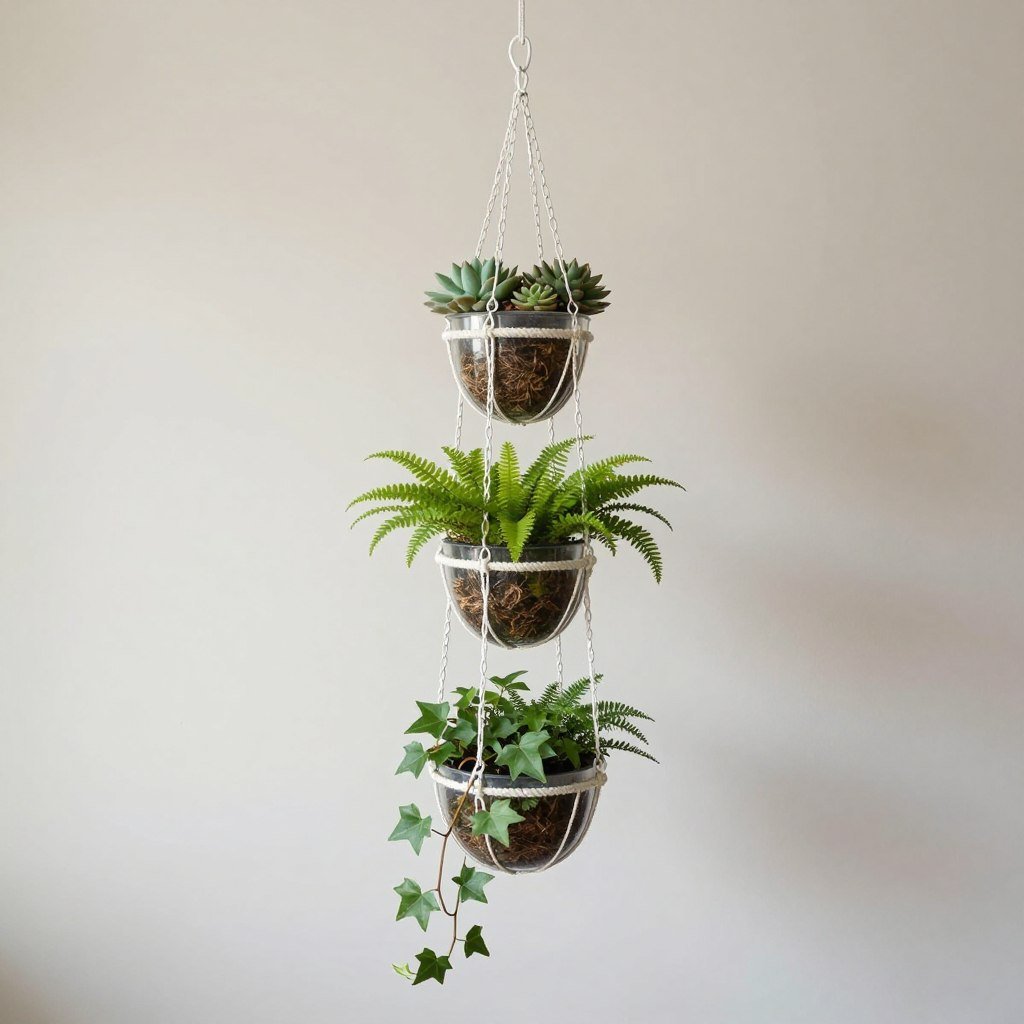
Maximize your vertical space with tiered hanging planters that accommodate multiple plants in a single hanging unit. These space-efficient options create a dramatic cascading effect with various plants at different levels.
Perfect for: Small spaces that need big plant impact, or showcasing a collection of smaller plants together.
Which hanging planter style caught your eye? Save this section to your Pinterest board for future reference when shopping for your plant babies!
Creative DIY Hanging Planter Ideas
Looking to add a personal touch to your hanging plant display? These DIY hanging planter ideas are not only budget-friendly but also highly customizable to match your unique style. Get ready to flex your creative muscles!
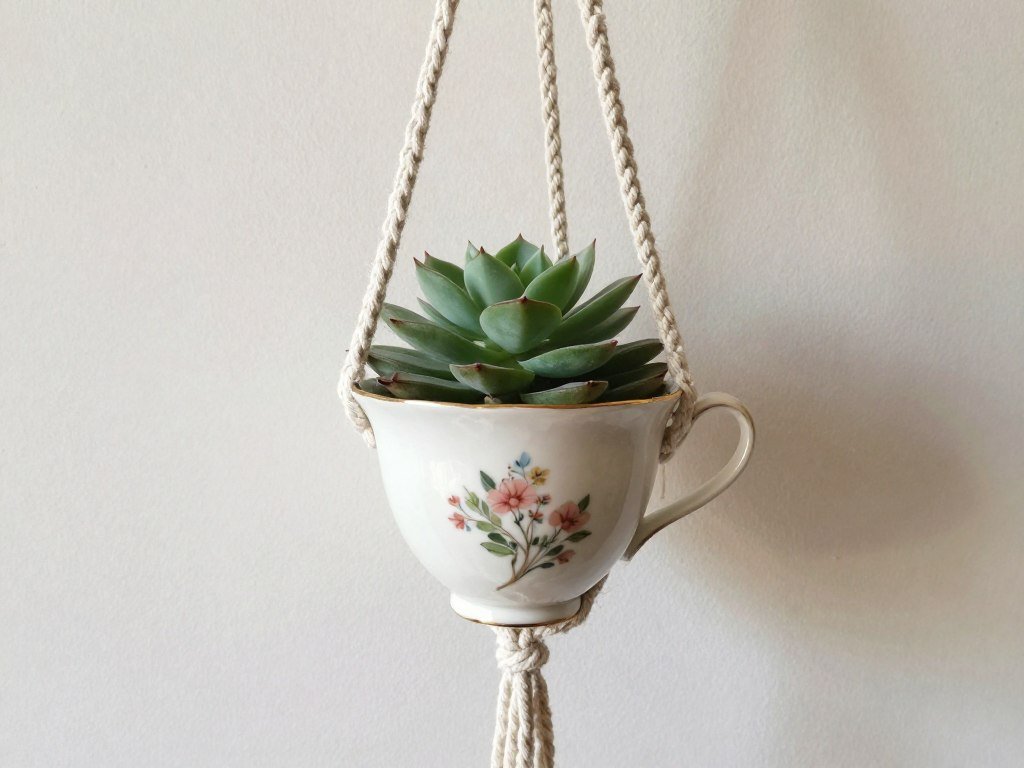
Upcycled Teacup Planters
Transform vintage teacups or mugs into charming hanging planters by drilling small drainage holes and attaching sturdy cord or thin chain. This whimsical approach gives new life to thrift store finds while creating a one-of-a-kind display.
Pin-worthy Tip: Create a collection of mismatched vintage teacup planters for an eclectic gallery wall of tiny hanging plants! Save this idea to your DIY board!
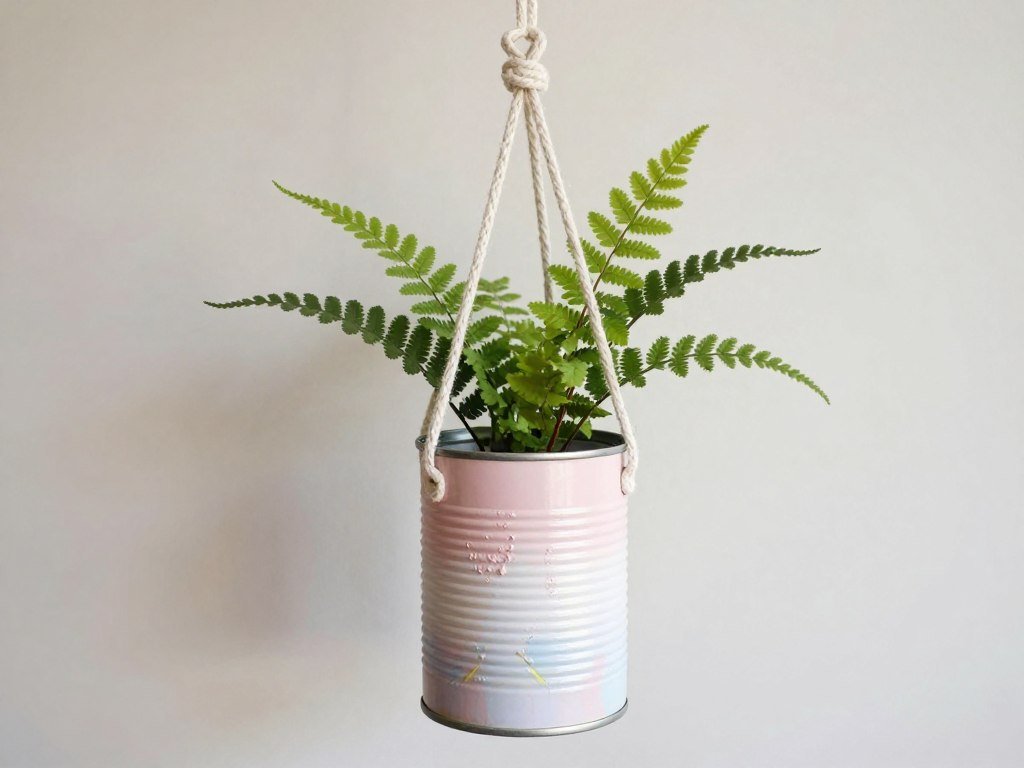
Painted Tin Can Planters
Repurpose empty tin cans into stylish hanging planters with just a bit of paint and creativity. Clean empty cans thoroughly, sand any sharp edges, add drainage holes, and paint in colors that complement your décor. Attach strong cord or wire for hanging.
Pin-worthy Tip: Group painted tin can planters in a gradient of colors for a stunning rainbow effect! Perfect for herbs in a kitchen window. Pin this colorful idea!
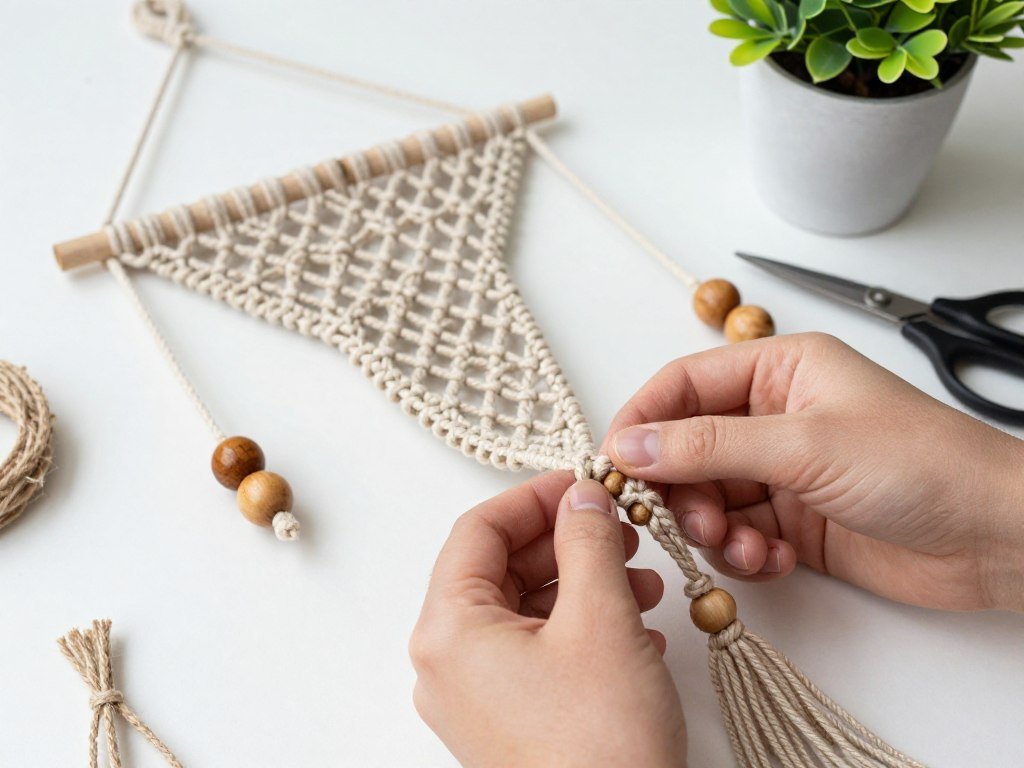
Basic Macramé Plant Hanger
Even beginners can create a simple macramé plant hanger with basic knot techniques. Start with cotton rope or cord, wooden beads for decoration, and a metal ring for the top. Numerous online tutorials can guide you through the process of creating this boho-chic planter.
Pin-worthy Tip: Add wooden beads or dip-dye the bottom of your macramé hanger for a custom look that matches your color scheme! Save this creative idea!
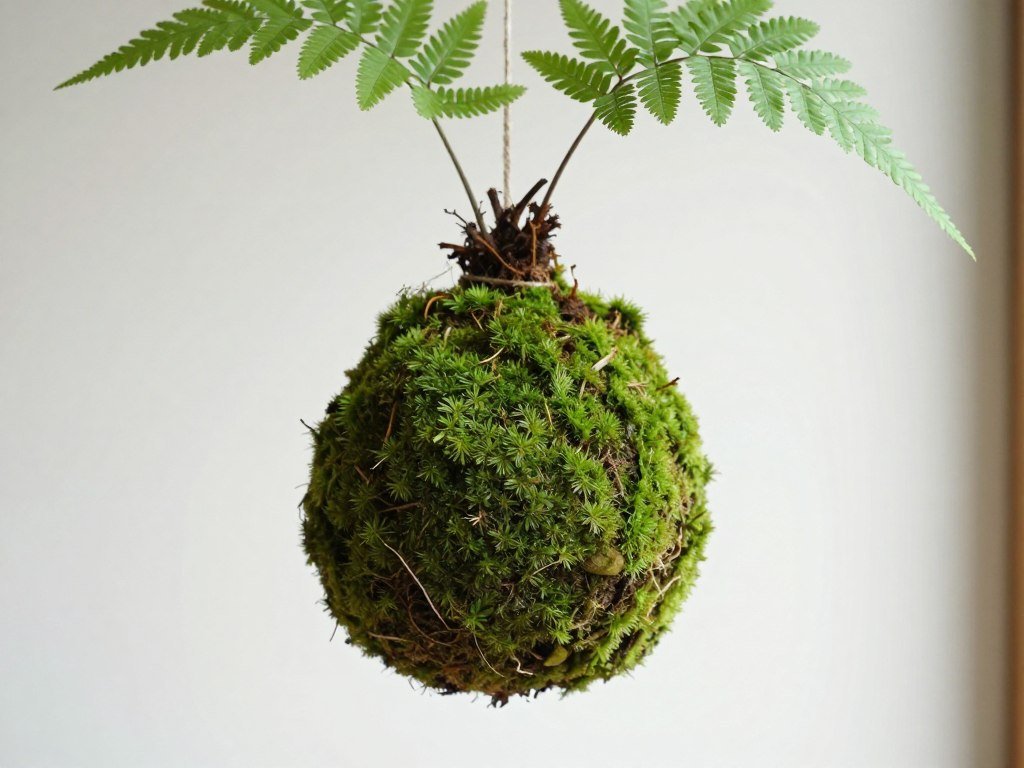
Kokedama String Gardens
Kokedama, or Japanese moss balls, offer a unique way to display hanging plants without conventional containers. This technique involves wrapping plant roots in moss and soil, binding with string, and hanging the resulting ball. The result is a floating garden with minimal materials.
Pin-worthy Tip: Create a constellation of kokedama at different heights for a magical floating garden effect! Pin this Japanese-inspired technique!
Ready to Start Your DIY Project?
Gather your supplies and get creative! Don’t forget to pin these DIY ideas to your project board for later.
Finding the right hanging planter involves more than just picking a style you love. Consider these important factors to ensure your plants thrive in their new elevated homes.
Size and Weight Considerations
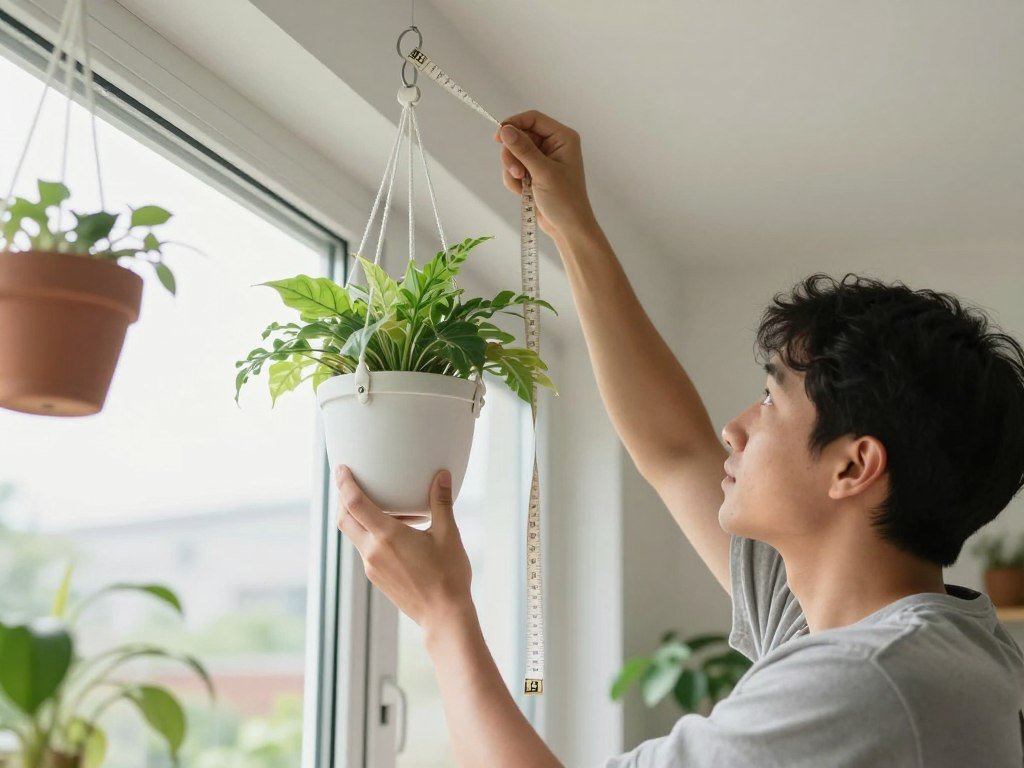
Before selecting a hanging planter, consider both the current and future size of your plant. Many trailing plants will grow substantially over time, so choose a planter that allows room for growth. Also consider the weight capacity of your ceiling or hanging point—ceramic and water-filled planters can become quite heavy.
How do I know if my ceiling can support a hanging planter?
For lightweight planters (under 10 pounds when watered), a ceiling hook screwed into a joist or a toggle bolt in drywall is usually sufficient. For heavier planters, always locate a ceiling joist using a stud finder and use appropriate heavy-duty hooks or brackets rated for the weight.
Drainage and Water Management
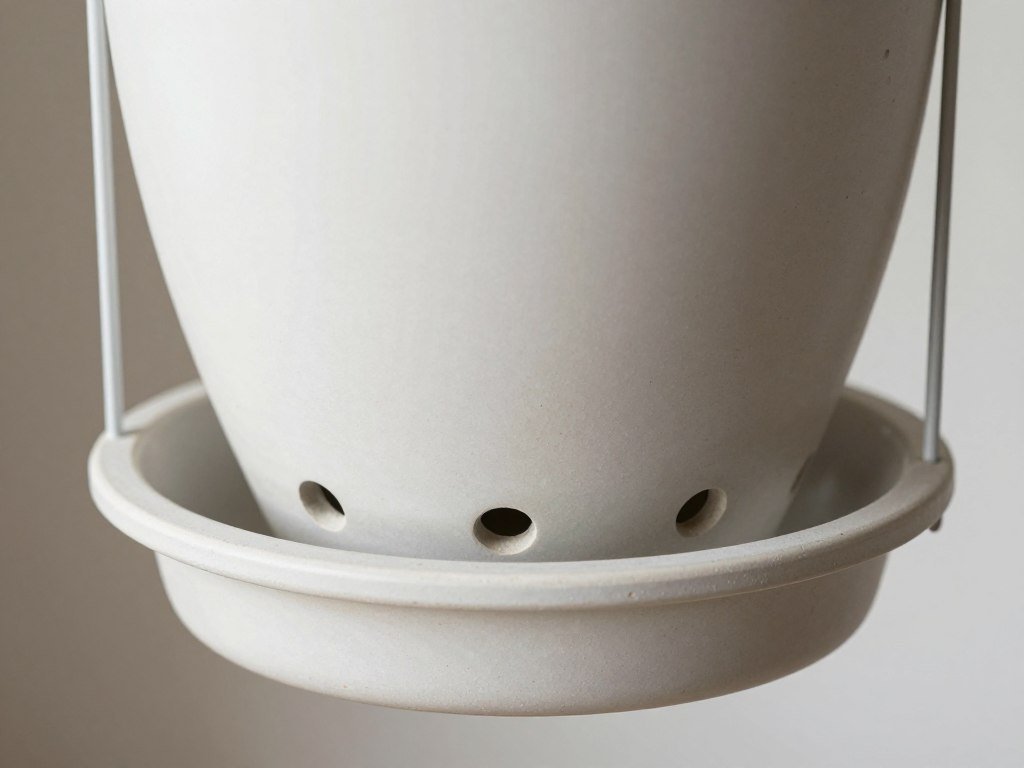
Proper drainage is crucial for plant health. Look for hanging planters with drainage holes to prevent root rot, or be prepared to drill your own. For indoor use, consider planters with built-in saucers or removable drip trays to catch excess water. Self-watering planters can be ideal for thirsty plants or hard-to-reach locations.
What if my favorite planter doesn’t have drainage holes?
You have two options: carefully drill holes yourself (use a special ceramic drill bit for ceramic planters) or use the “pot within a pot” method. Place your plant in a plastic nursery pot with drainage holes, then set this inside your decorative hanging planter. Remove the inner pot for watering, allowing it to drain completely before returning it to the hanging planter.
Material Matters
Different planter materials affect both aesthetics and plant health. Ceramic and terracotta retain moisture longer, making them good for plants that like consistent soil moisture. Metal planters can heat up quickly near windows, potentially stressing roots. Plastic is lightweight and affordable but may not provide the aesthetic appeal of natural materials.
Pin-worthy Tip: Match your planter material to your plant’s needs! Drought-tolerant plants do well in porous terracotta, while moisture-loving ferns prefer water-retaining ceramic. Save this plant-matching guide!
Hanging Mechanisms
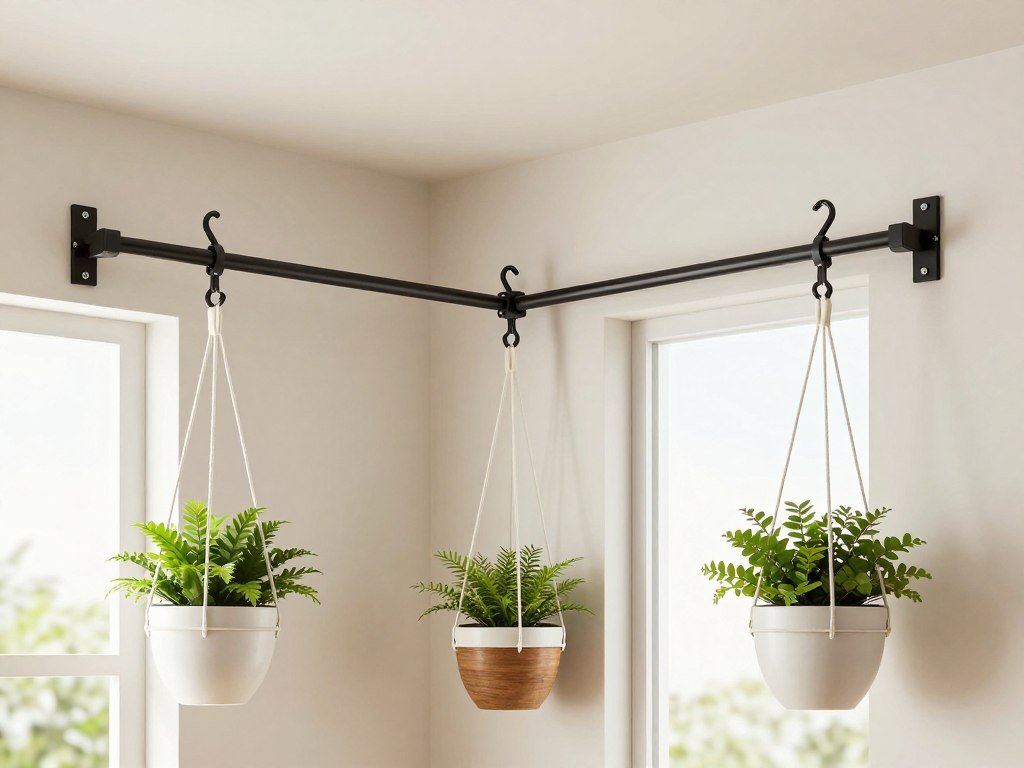
Consider how your planter will hang and where. Ceiling hooks require permanent installation but offer stability. Tension rods between walls or in window frames provide no-drill options for renters. Wall brackets offer another solution for those who can’t access ceiling joists. Ensure whatever mechanism you choose can support the weight of your plant when fully watered.
Now that you know what to look for, it’s time to find the perfect hanging planter for your space and plants. Don’t forget to pin this guide for reference when shopping!
Not all plants thrive in hanging conditions. Here are some spectacular options that will flourish in elevated planters and create stunning displays with their trailing or cascading growth habits.
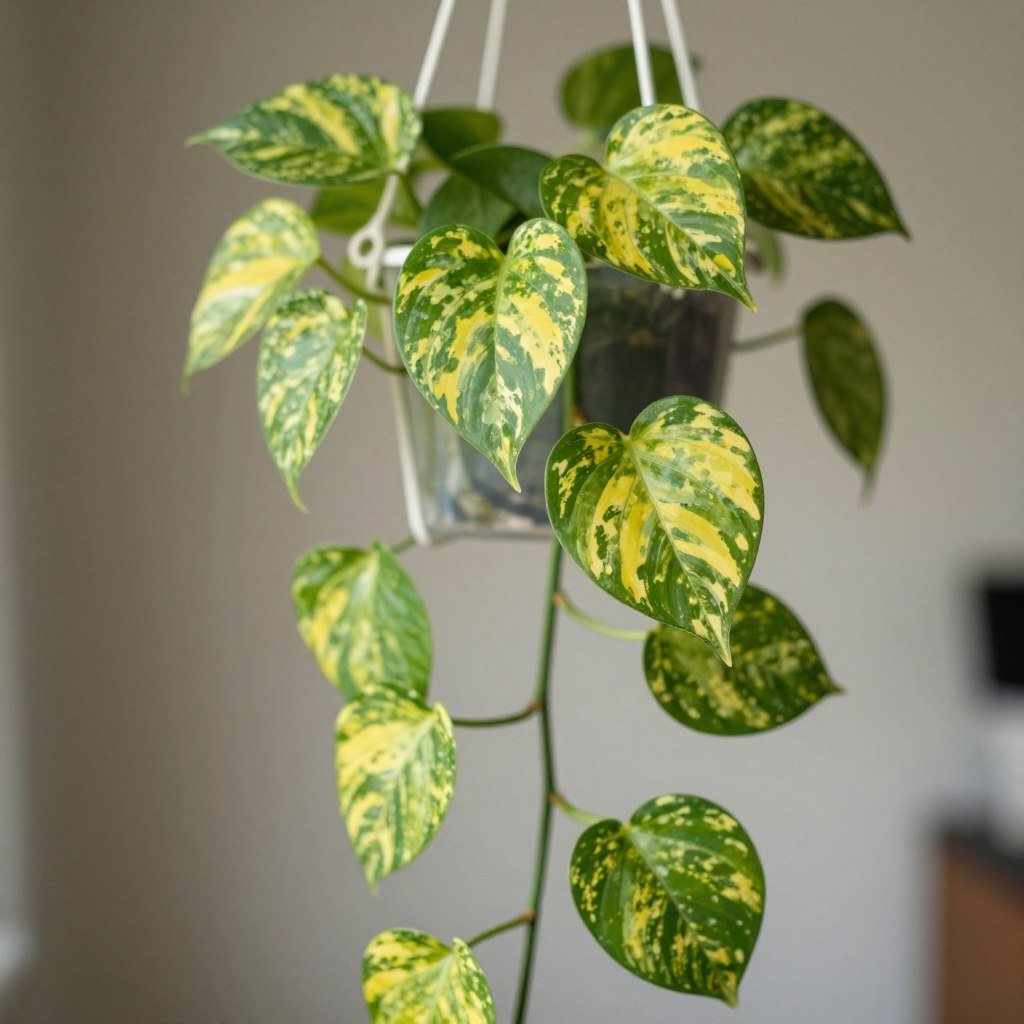
Pothos (Epipremnum aureum)
Perhaps the quintessential hanging plant, pothos features heart-shaped leaves on vines that can grow several feet long. Available in green, golden, marble queen, and neon varieties, these adaptable plants tolerate low light and irregular watering, making them perfect for beginners.
Care tip: Allow soil to dry out between waterings. Trim occasionally to promote fuller growth.
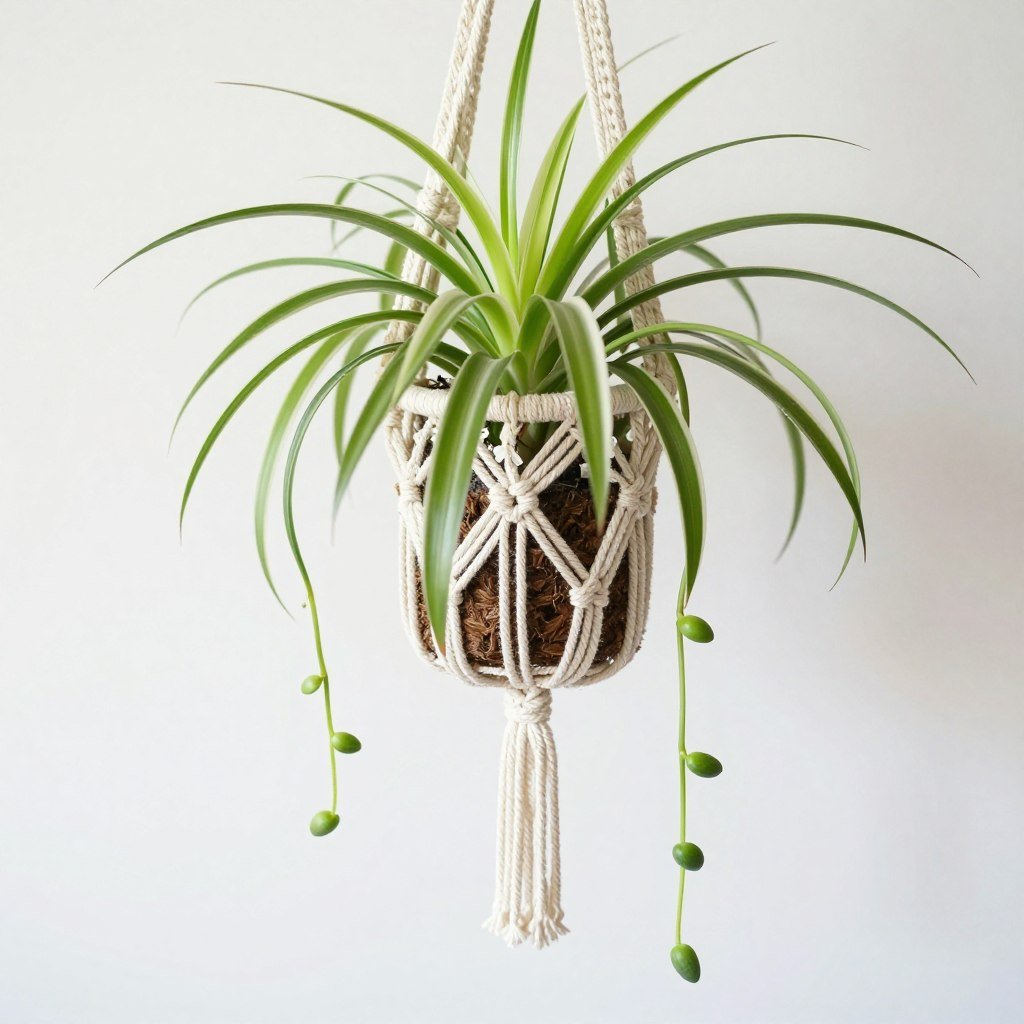
Spider Plant (Chlorophytum comosum)
Spider plants feature arching variegated leaves and produce baby “spiderettes” that dangle from the mother plant on long stems. These hardy plants are excellent air purifiers and adapt well to various light conditions, though they prefer bright indirect light.
Care tip: Keep soil consistently moist but not soggy. Remove baby plants to propagate or maintain plant size.
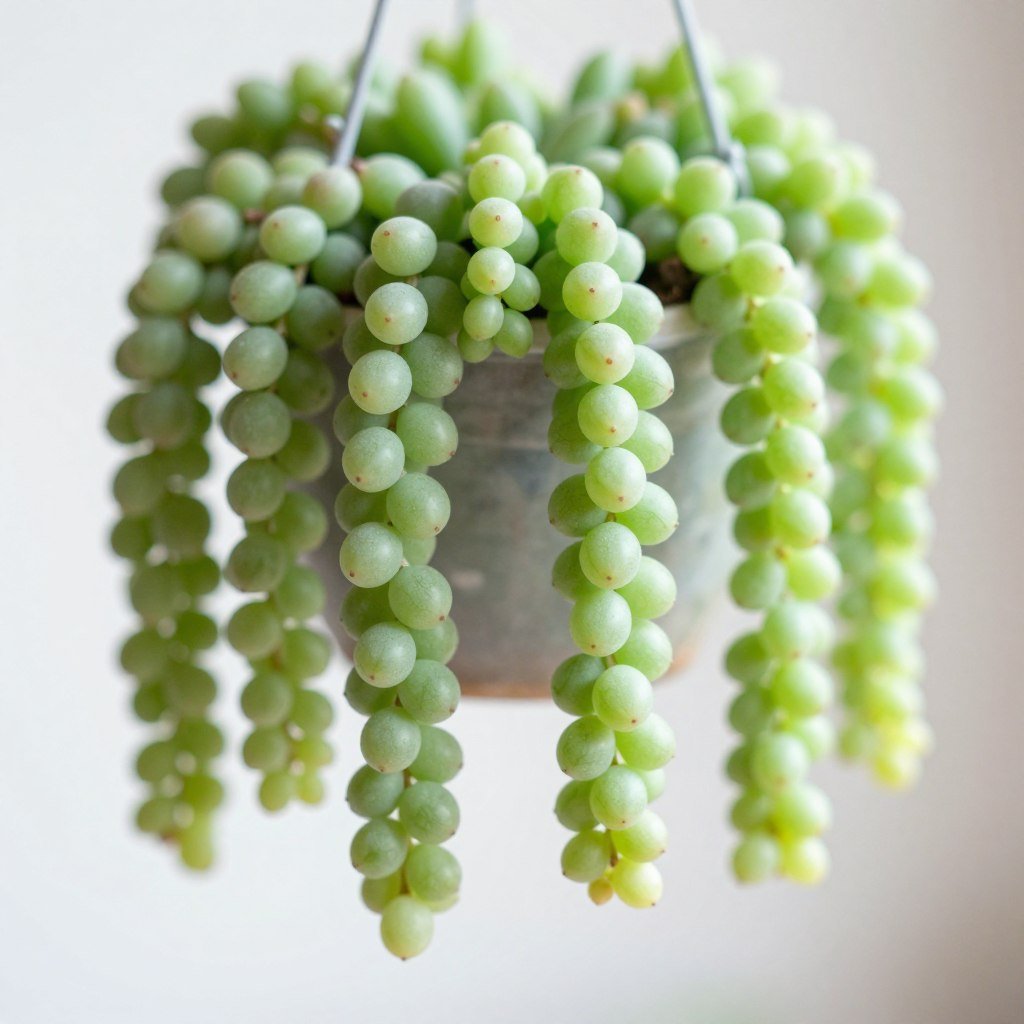
String of Pearls (Senecio rowleyanus)
This unique succulent features bead-like leaves that resemble a string of pearls cascading over the sides of the pot. It creates a dramatic display in hanging planters and requires minimal water, making it perfect for those who tend to forget watering.
Care tip: Provide bright indirect light and allow soil to dry completely between waterings.
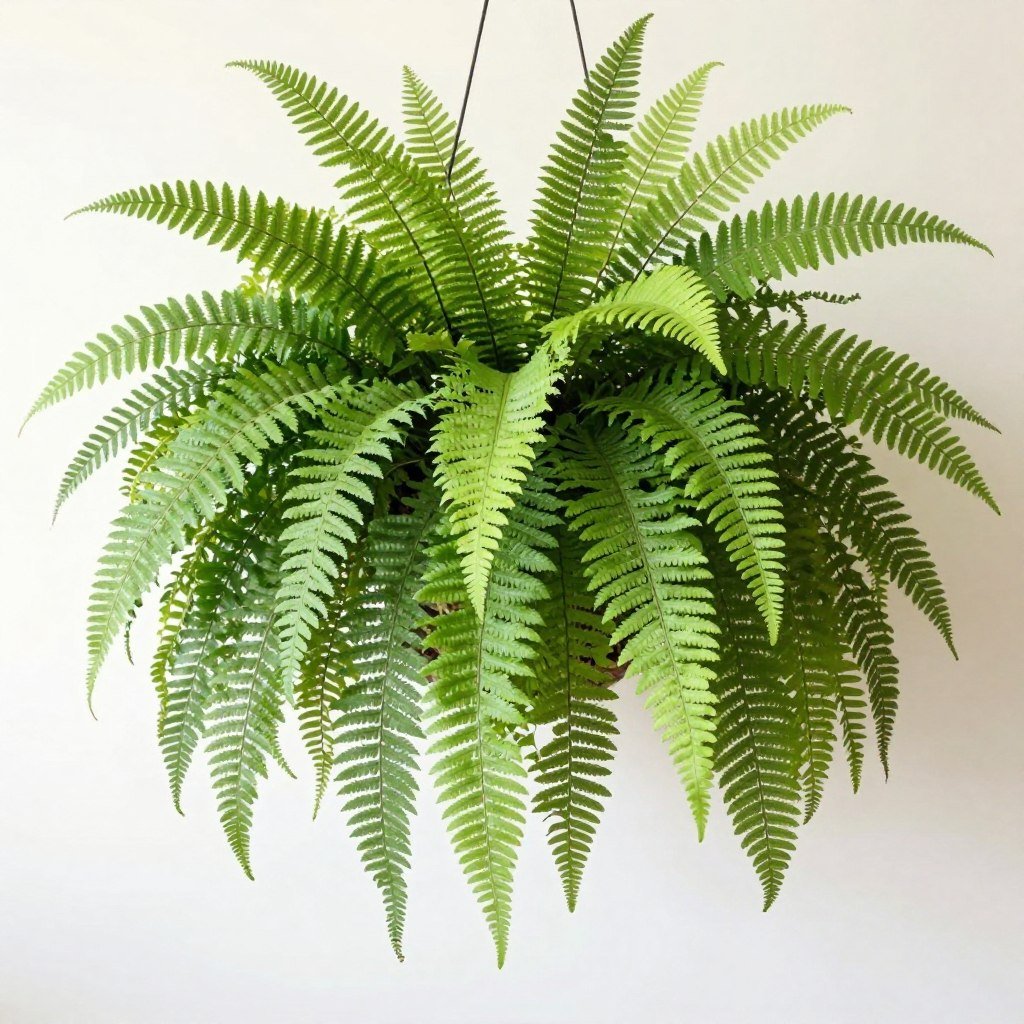
Boston Fern (Nephrolepis exaltata)
With their feathery fronds and lush appearance, Boston ferns create a dramatic display in hanging baskets. These classic hanging plants prefer consistent moisture and humidity, making them ideal for bathrooms or kitchens.
Care tip: Mist regularly and keep soil consistently moist. Avoid direct sunlight which can scorch the delicate fronds.
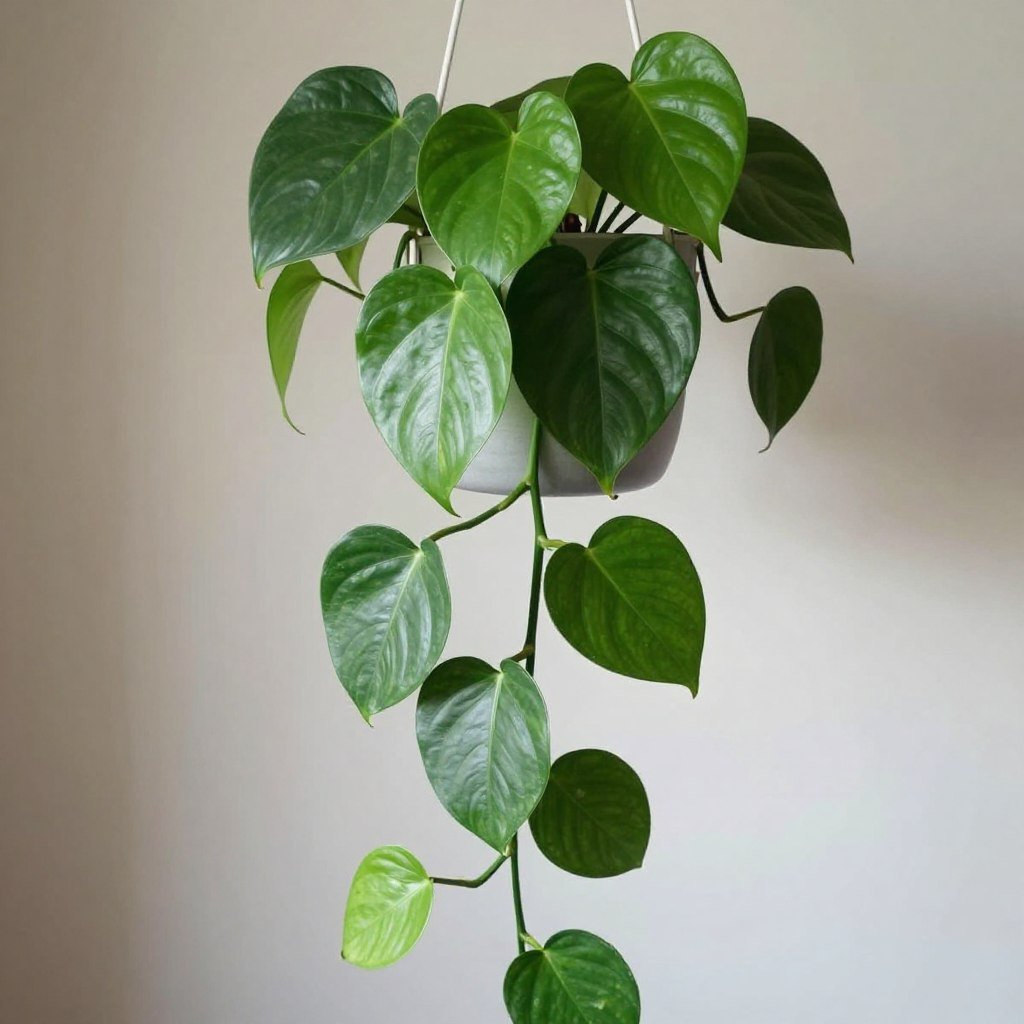
Philodendron (Various species)
Similar to pothos but with generally darker, heart-shaped leaves, philodendrons are classic trailing plants that thrive in hanging planters. Varieties like heartleaf philodendron create elegant cascades of foliage that can grow several feet long.
Care tip: Tolerates low light but grows best in medium indirect light. Allow top inch of soil to dry between waterings.
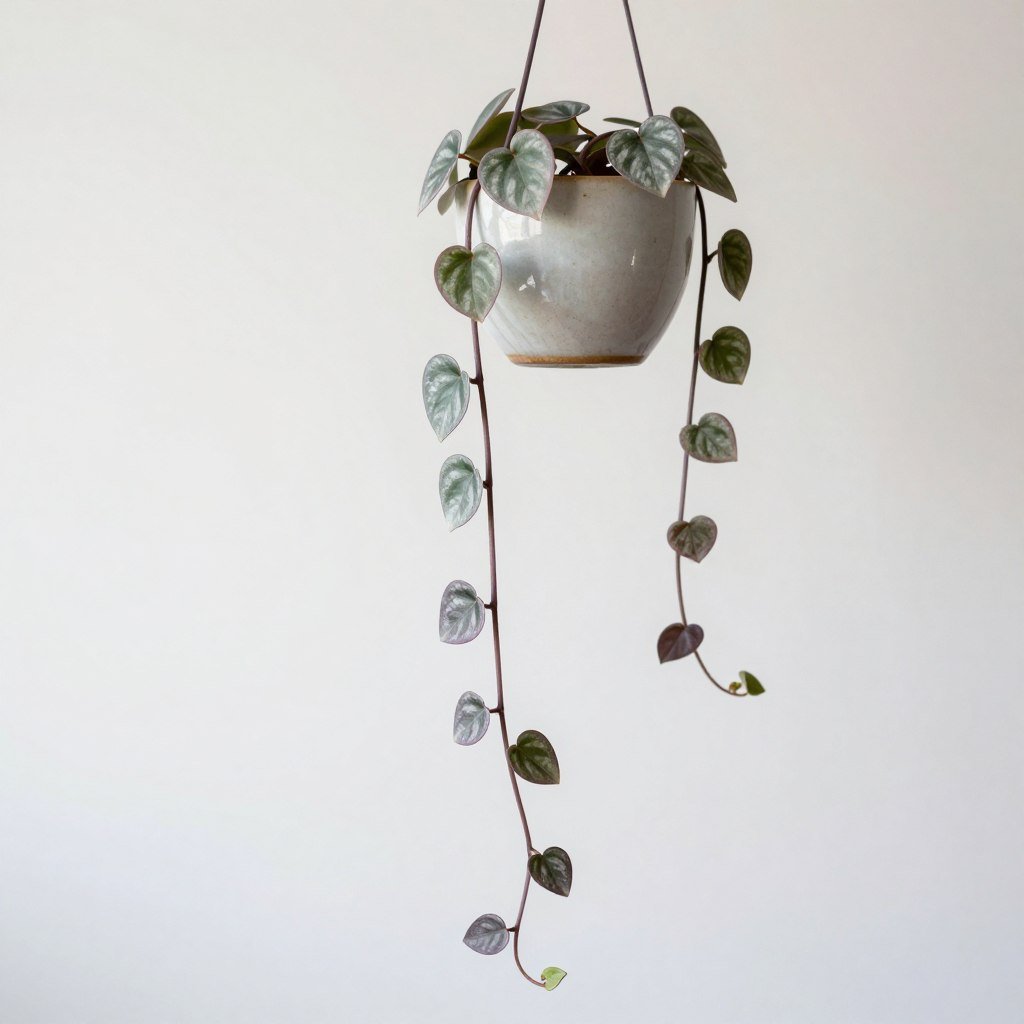
String of Hearts (Ceropegia woodii)
This delicate trailing succulent features tiny heart-shaped leaves on thin purple stems. The leaves often show beautiful variegation in green, silver, and purple tones. String of hearts grows quickly in the right conditions, creating long chains of dainty foliage.
Care tip: Provide bright indirect light and allow soil to dry between waterings. Can tolerate some direct morning sun.
Pin-worthy Tip: Create a stunning display by combining fast-growing trailing plants like pothos with slower-growing accent plants like string of pearls in a tiered hanging planter! Save this plant combination idea!
Ready to Grow Your Hanging Garden?
Find the perfect plants for your hanging planters and watch your space transform with cascading greenery!
Keeping your hanging plants healthy requires some special considerations. Follow these tips to ensure your elevated garden thrives year-round.
Watering Without the Mess
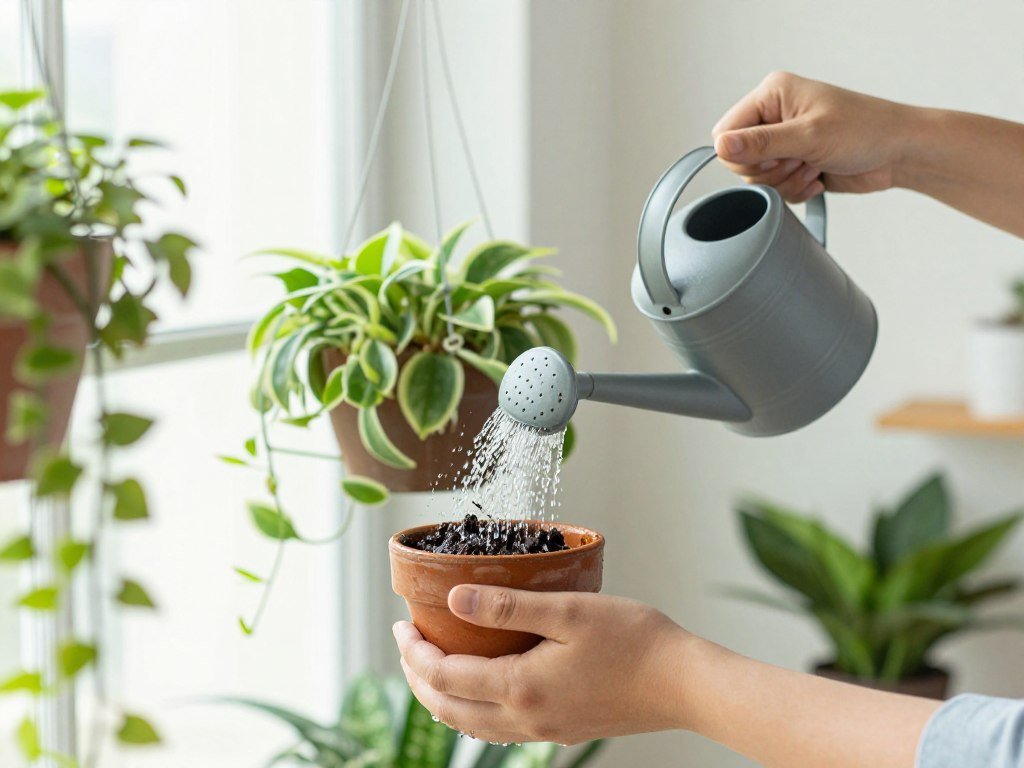
Watering hanging plants can be challenging without creating a mess. Use a long-spouted watering can for precise watering, or temporarily unhook plants and water them in a sink or bathtub. For plants that need consistent moisture, consider self-watering planters or water-wicking systems.
Pin-worthy Tip: Use a turkey baster or plastic syringe to water small hanging plants with precision and zero mess! Save this clever watering hack!
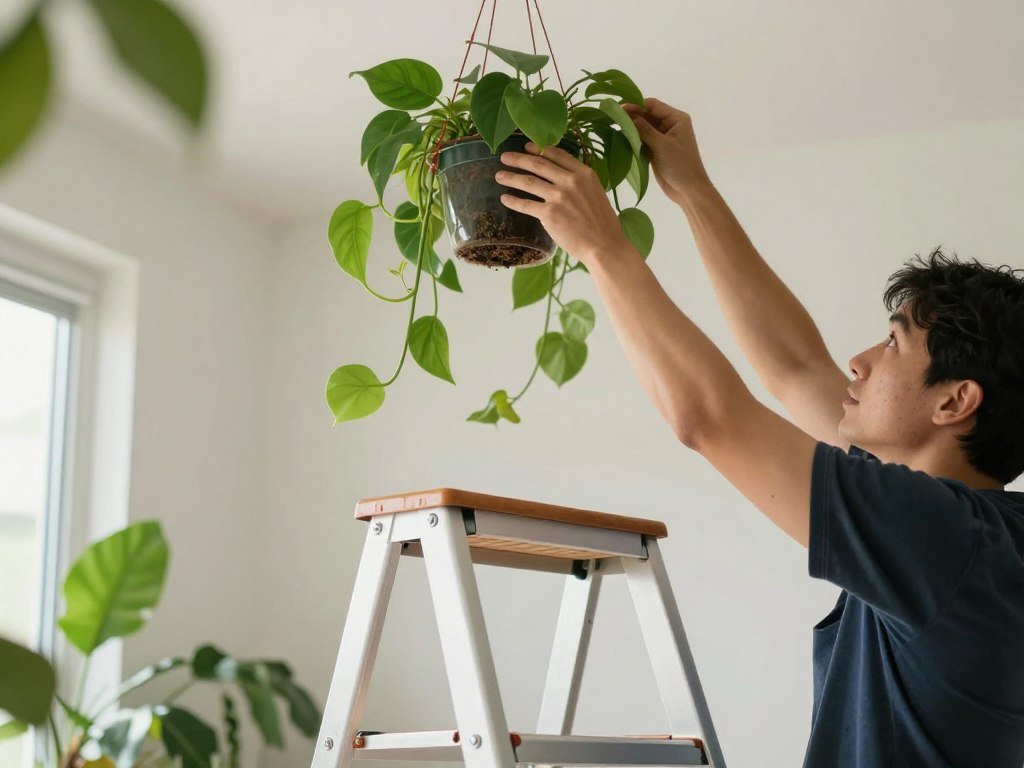
Before hanging plants, consider how you’ll access them for regular care. Use stable step stools or ladders for ceiling-hung plants, and install pulleys or adjustable hanging systems for very high installations. Remember that plants need regular inspection for pests, pruning, and occasional repotting.
How often should I rotate hanging plants?
Rotate hanging plants a quarter turn weekly to ensure even growth on all sides. Plants naturally grow toward light sources, so rotation prevents them from becoming lopsided. This is especially important for ferns and other plants with symmetrical growth habits.
Fertilizing Hanging Plants
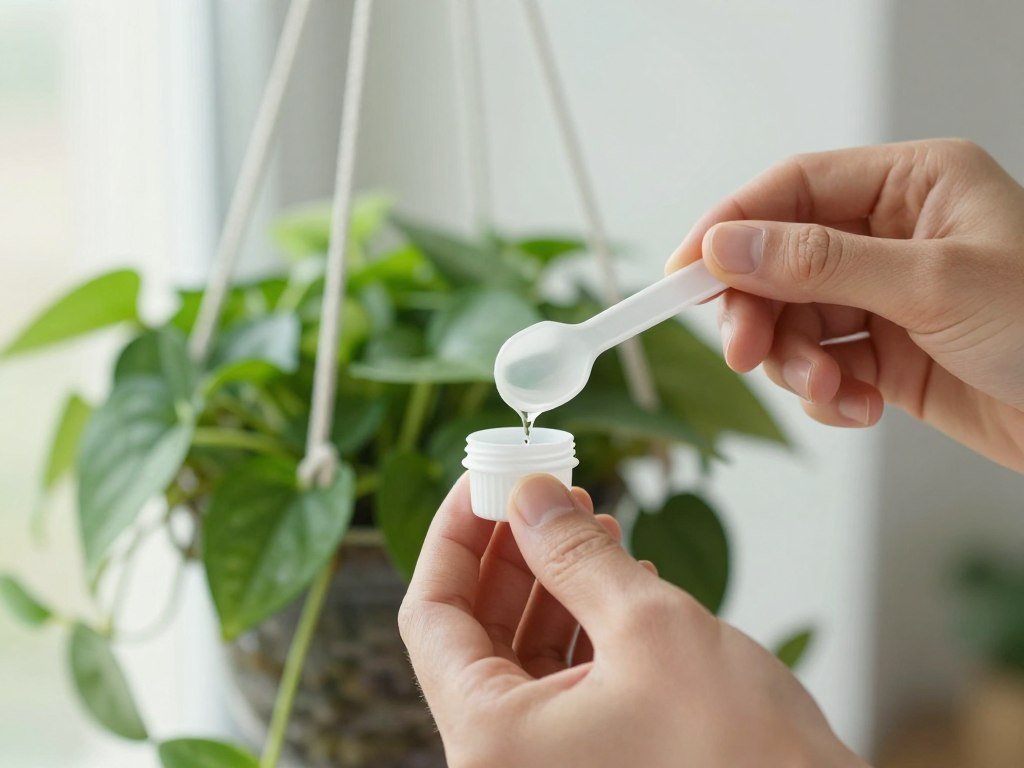
Hanging plants in limited soil volumes may need more frequent fertilizing than their ground-dwelling counterparts. Use a balanced liquid fertilizer diluted to half strength every 2-4 weeks during the growing season (spring and summer). Reduce or eliminate fertilizer during fall and winter when plant growth naturally slows.
Pin-worthy Tip: Make fertilizing easier by using slow-release fertilizer pellets that feed your hanging plants for months with just one application! Pin this low-maintenance care tip!
Pruning for Health and Appearance
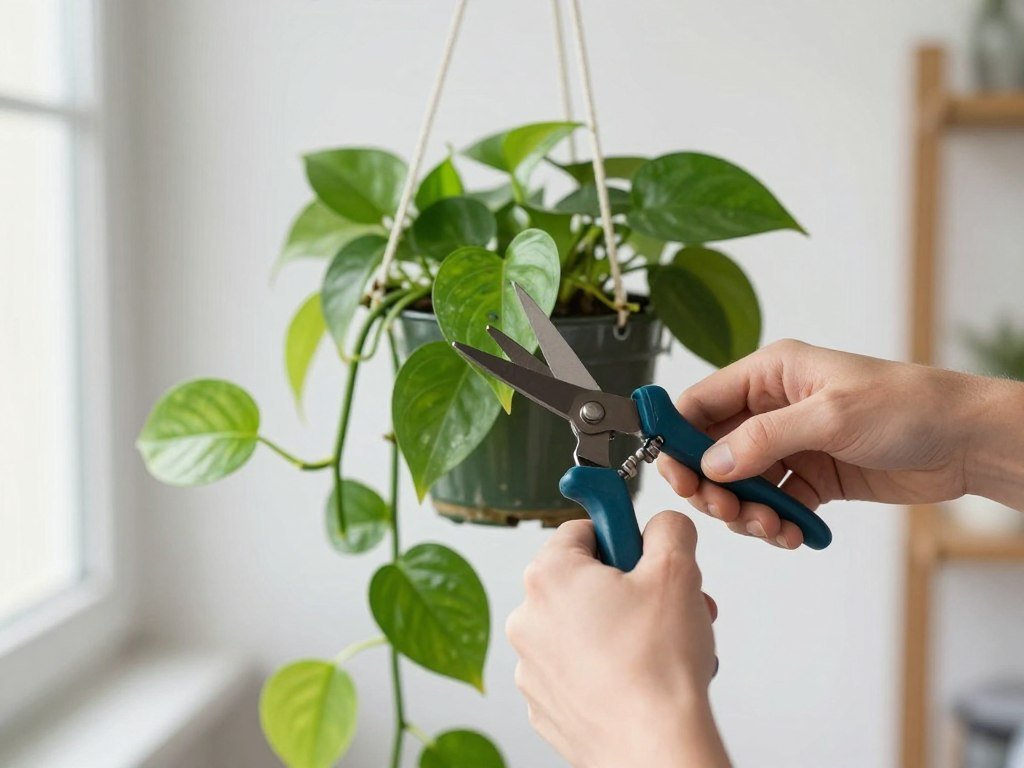
Regular pruning keeps hanging plants looking their best and encourages fuller growth. For trailing plants like pothos and philodendron, pinch or cut stems just above a leaf node to promote branching. Remove yellowing or damaged leaves promptly. Bonus: many pruned stems can be propagated to create new plants!
When is the best time to prune hanging plants?
The ideal time to prune most hanging plants is during the active growing season (spring and early summer) when they can quickly recover and produce new growth. Avoid major pruning during winter months when growth is naturally slower. Always use clean, sharp scissors or pruning shears to make clean cuts and prevent disease transmission.
Keep Your Hanging Garden Thriving!
With the right care routine, your hanging plants will flourish for years to come. Don’t forget to pin these care tips for future reference!
Hanging planters offer endless possibilities for bringing greenery into your home in creative, space-saving ways. Whether you choose macramé for boho charm, sleek ceramics for modern elegance, or DIY options for personal expression, the right hanging planters can transform any space from ordinary to extraordinary.
Remember to consider your plant’s needs, your space constraints, and your personal style when selecting hanging planters. With proper placement, care, and maintenance, your hanging garden will thrive and become a stunning focal point in your home.
We hope this guide has inspired you to elevate your plant game with hanging planters! Don’t forget to pin your favorite ideas to your Pinterest boards for future reference, and share your hanging plant creations with fellow plant enthusiasts.
Ready to Transform Your Space?
Find the perfect hanging planters and plants to create your own elevated garden oasis!
As winter fades and the first hints of warmth touch the air, it’s time to welcome spring with vibrant container gardens that celebrate the season’s renewal. Whether you have a sprawling garden or just a tiny balcony, spring planters offer endless possibilities to express your creativity and bring nature’s beauty to any space. From repurposed…
Creating a handmade anniversary card shows your partner how much you care. Each fold of paper and every carefully placed heart becomes part of your love story. Whether you are celebrating your first year together or decades of shared memories, a DIY anniversary card carries meaning that store-bought options cannot match.This Website contains affiliate links….
Your wedding day deserves photos that capture genuine emotion and personality. Traditional poses have their place in every album, but unique wedding picture ideas transform ordinary moments into extraordinary memories. This comprehensive guide presents creative photography concepts that celebrate your love story in authentic ways.This Website contains affiliate links. That means I may earn a…
A screened in porch creates that perfect middle ground between indoor comfort and outdoor living. It lets you enjoy fresh air without the bugs, shade without giving up the breeze, and extends your living space in the most delightful way. But creating this oasis doesn’t have to drain your savings. With some creativity and smart…
Your balcony is more than just an architectural feature—it’s an opportunity to create a personal retreat that reflects your style and meets your needs. Whether you have a tiny apartment balcony or a spacious terrace, the right design approach can transform this outdoor space into your favorite spot at home. From cozy reading nooks to…
Choosing the perfect hairstyle for your bridesmaid look can feel overwhelming. You want to feel beautiful and confident while complementing the bride and matching the wedding vibe. Wearing your hair down offers a romantic, effortless style that works beautifully for almost any wedding theme.This Website contains affiliate links. That means I may earn a small…