DIY Privacy Fence on a Budget: Create Privacy Without Breaking the Bank
Creating a private outdoor space doesn’t have to drain your wallet. Building a DIY privacy fence on a budget is not only cost-effective but also rewarding. Whether you’re looking to block nosy neighbors, create a cozy backyard retreat, or simply define your property boundaries, this guide will walk you through affordable options that look great and stand the test of time.
This Website contains affiliate links. That means I may earn a small commission if you purchase through my links, at no extra cost to you.
Why Build a DIY Privacy Fence?
Before diving into materials and construction, let’s explore why a DIY privacy fence might be the perfect solution for your outdoor space:
- Save 50-70% compared to professional installation
- Customize height, style, and materials to match your home
- Create a defined space for children and pets to play safely
- Block unwanted views and reduce noise from busy streets
- Add value to your property with improved curb appeal
- Gain satisfaction from completing a meaningful home project
Building your own fence puts you in control of both the budget and design. With some basic tools and a weekend or two of work, you can transform your outdoor space while keeping costs manageable.
Related Posts:





Planning Your Budget-Friendly Privacy Fence
Proper planning is crucial for any successful DIY project, especially when working with budget constraints. Take time to consider these important factors:
Check Local Regulations
Before purchasing materials or digging any holes, check your local building codes and homeowners association rules. Many areas limit fence height to 6 or 8 feet and may require permits. Some neighborhoods have specific guidelines about fence appearance, especially for front yards.
Measure Your Space
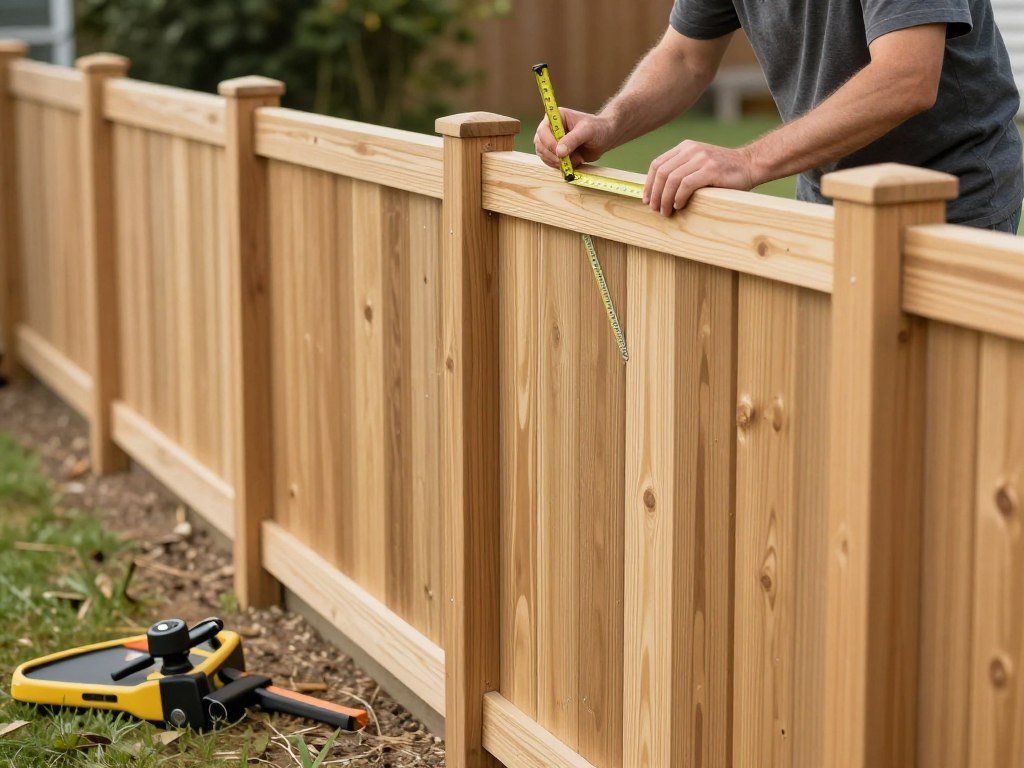
Carefully measure the area where you plan to install your fence. Calculate the total linear footage needed and determine how many posts you’ll require (typically spaced 6-8 feet apart). Add 10% extra material to account for mistakes or damaged pieces.
Consider Your Privacy Needs
Think about how much privacy you actually need. Do you need a solid barrier, or would a semi-private design with some visibility work? The amount of privacy required will influence your material choices and design.
Ready to start planning?
Get the essential measuring tools you’ll need for accurate fence planning.
Budget-Friendly Privacy Fence Materials
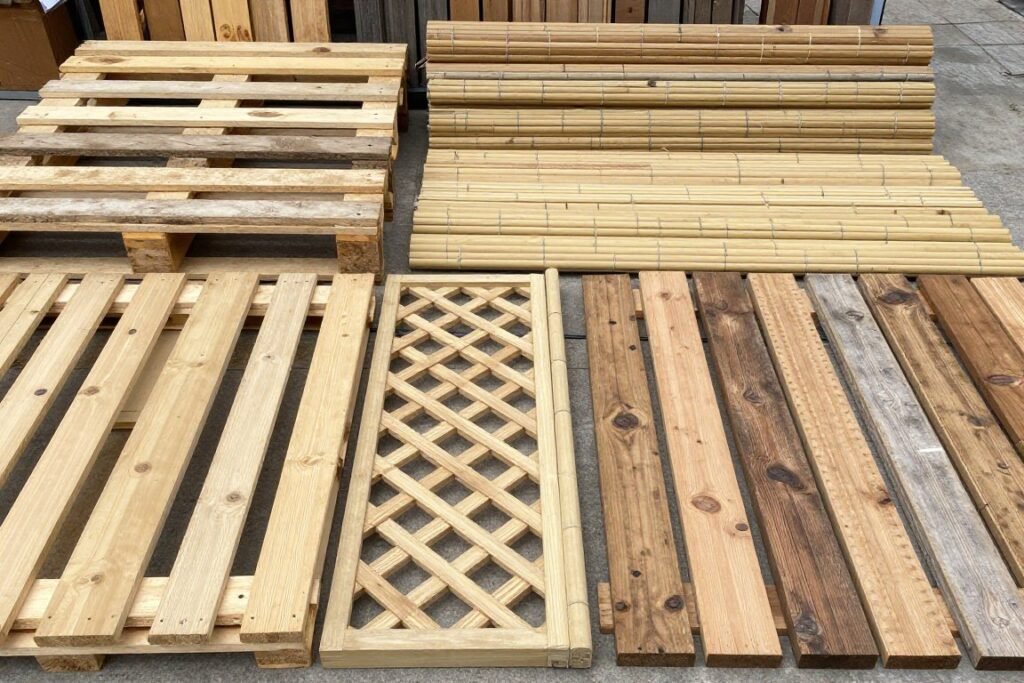
The materials you choose will have the biggest impact on your budget. Here are some affordable options that provide excellent privacy without the premium price tag:
Wooden Pallets
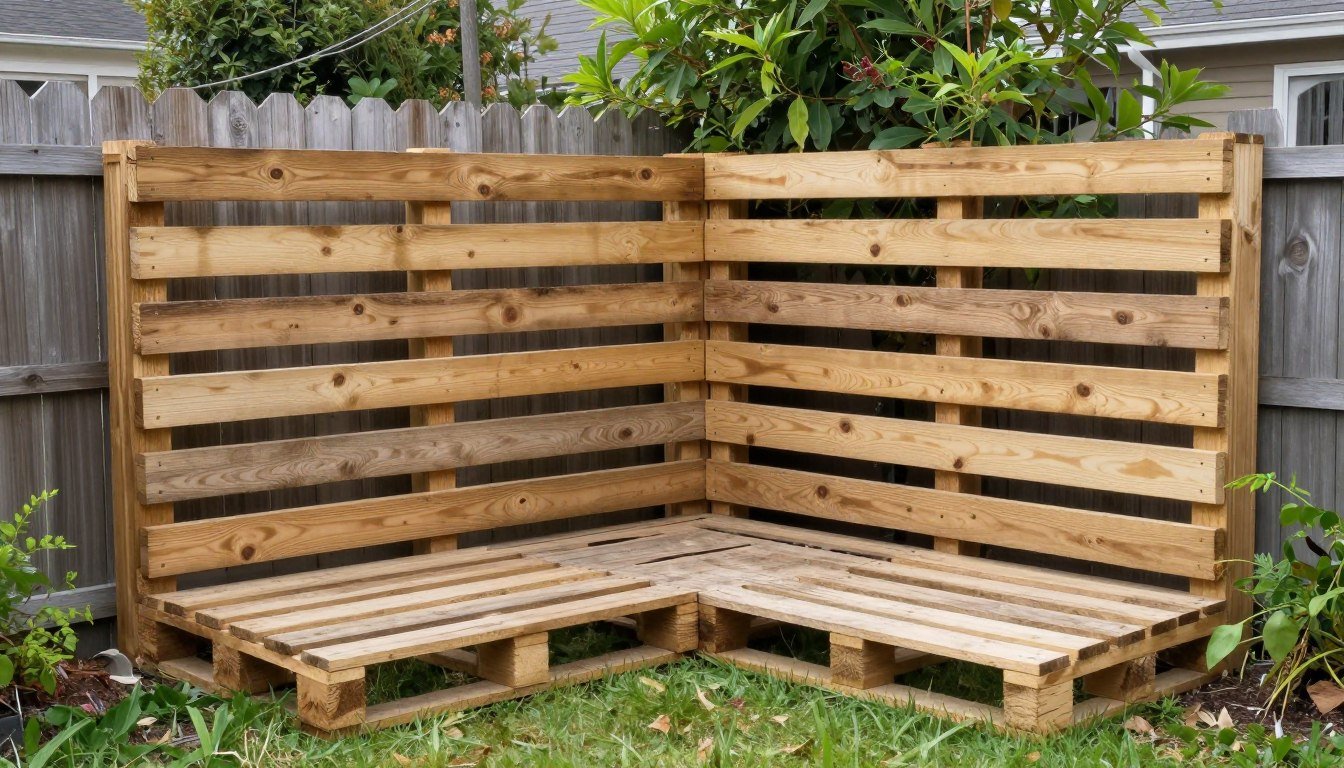
Often available for free from businesses or online marketplaces, pallets can be disassembled and repurposed into an attractive fence. Look for heat-treated (HT) pallets rather than chemically treated ones, especially if you have children or pets.
Lattice Panels
Pressure-treated lattice panels cost significantly less than solid wood panels while still providing decent privacy, especially when combined with climbing plants. They also allow for airflow, making them ideal for windy areas.
Bamboo Fencing
Rolled bamboo fencing is relatively inexpensive and creates an attractive natural look. It’s lightweight, easy to install, and can be attached to an existing chain-link fence or mounted between posts.
Reclaimed Wood
Check demolition sites, online marketplaces, or community groups for free or low-cost reclaimed wood. Old barn wood, shipping crates, or discarded lumber can be repurposed into a unique, character-filled fence.
Corrugated Metal
Used metal roofing or siding creates a modern industrial look and is surprisingly affordable. It’s durable, weather-resistant, and can be combined with wood posts for stability and visual interest.
Composite Fence Boards
While more expensive upfront than some options, composite materials require virtually no maintenance and won’t rot, warp, or need staining. This makes them cost-effective in the long run for busy homeowners.
Find Your Perfect Fence Material
Browse affordable options for your DIY privacy fence project.
Essential Tools for Your DIY Privacy Fence
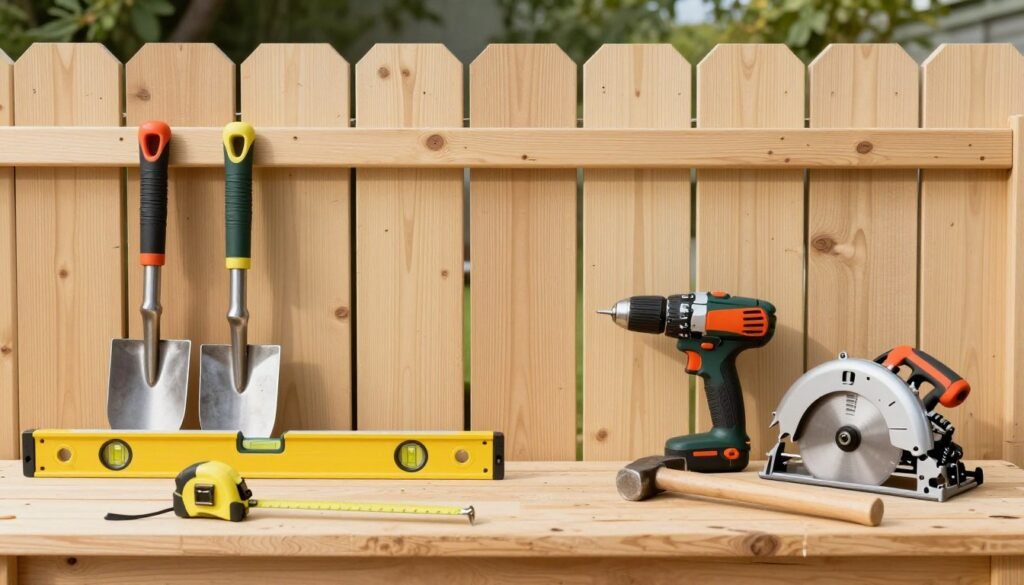
Having the right tools will make your fence installation much easier and more efficient. Here are the essentials you’ll need:
- Post hole digger – Manual or rented power auger for digging post holes
- Circular saw – For cutting fence boards to size
- Drill/driver – For screwing boards and brackets together
- Level – To ensure posts and boards are straight
- Tape measure – For accurate measurements
- String line – To mark straight fence lines
- Hammer – For general construction needs
- Safety equipment – Gloves, eye protection, and sturdy footwear
Don’t have all these tools? Consider borrowing from friends or renting from a local hardware store. Many home improvement stores also offer tool rental services at reasonable daily rates.
Budget-Friendly Option #1: Pallet Privacy Fence
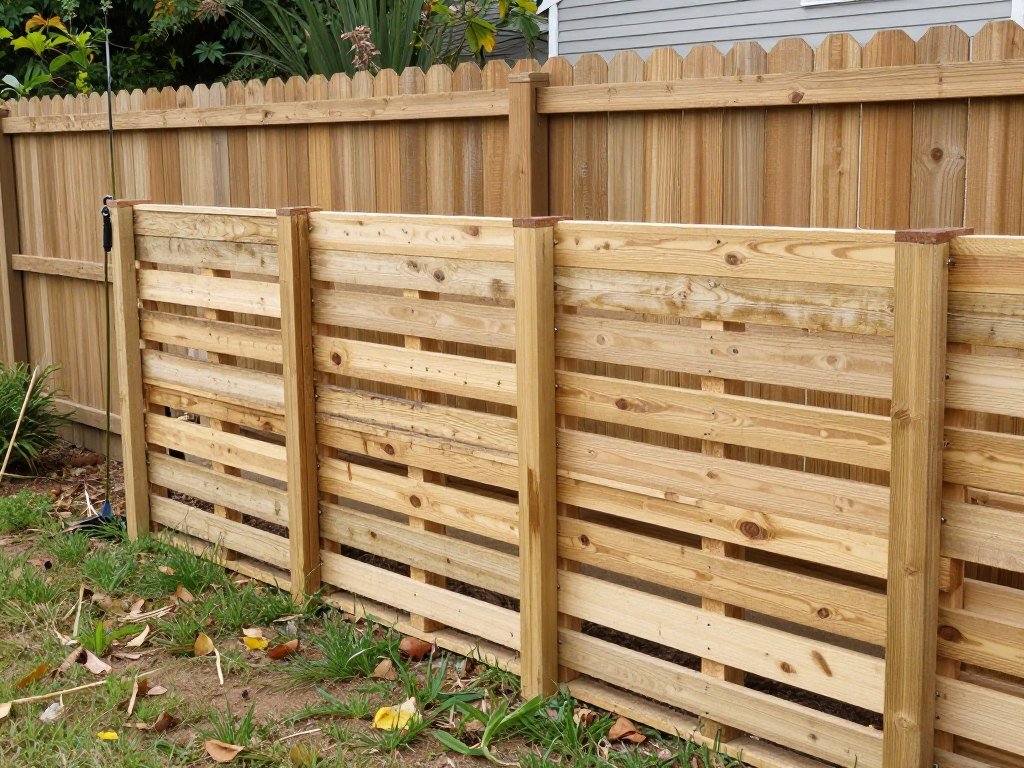
Materials Needed
- Wooden pallets (heat-treated)
- 4×4 pressure-treated posts
- Concrete mix
- 2×4 lumber for support
- Exterior screws
- Exterior stain or paint (optional)
Step-by-Step Instructions
- Prepare the pallets – Clean the pallets and remove any nails or staples. Sand rough edges to prevent splinters.
- Set your posts – Dig holes 2 feet deep, place 4×4 posts, check for level, and fill with concrete. Space posts according to pallet width (typically 4-5 feet apart).
- Let concrete cure – Allow 24-48 hours for concrete to set completely before attaching pallets.
- Attach pallets – Secure pallets to posts using exterior screws. You can mount them vertically or horizontally depending on your design preference.
- Add support – Attach 2×4 braces between posts if needed for additional stability.
- Finish the fence – Apply exterior stain or paint to protect the wood and enhance appearance.
This pallet fence option typically costs $100-$200 for a 25-foot section, assuming you can source free pallets and only need to purchase posts, concrete, and hardware.
Budget-Friendly Option #2: Lattice Privacy Screen
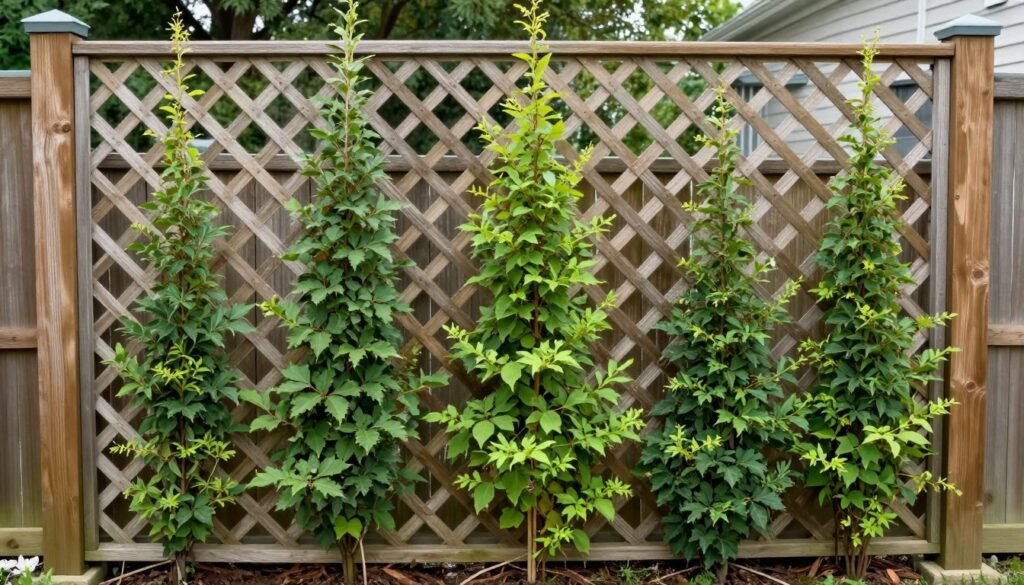
Materials Needed
- Pressure-treated lattice panels
- 4×4 pressure-treated posts
- 1×4 lumber for framing
- Concrete mix
- Exterior screws
- Exterior paint or stain
Step-by-Step Instructions
- Set your posts – Dig holes 2 feet deep, place 4×4 posts 6-8 feet apart, check for level, and fill with concrete.
- Create frames – Build rectangular frames from 1×4 lumber sized to fit between posts.
- Attach lattice – Secure lattice panels to the frames using screws or staples.
- Mount panels – Once concrete has cured, attach the framed lattice panels to the posts.
- Finish the fence – Apply exterior paint or stain in your chosen color.
- Add plants – For additional privacy, plant climbing vines like jasmine, clematis, or ivy at the base of the lattice.
This lattice privacy screen typically costs $150-$300 for a 25-foot section, depending on the quality of lattice and whether you choose to add climbing plants.
Ready to build your lattice fence?
Find everything you need to create a beautiful lattice privacy screen.
Budget-Friendly Option #3: Bamboo Roll Fence
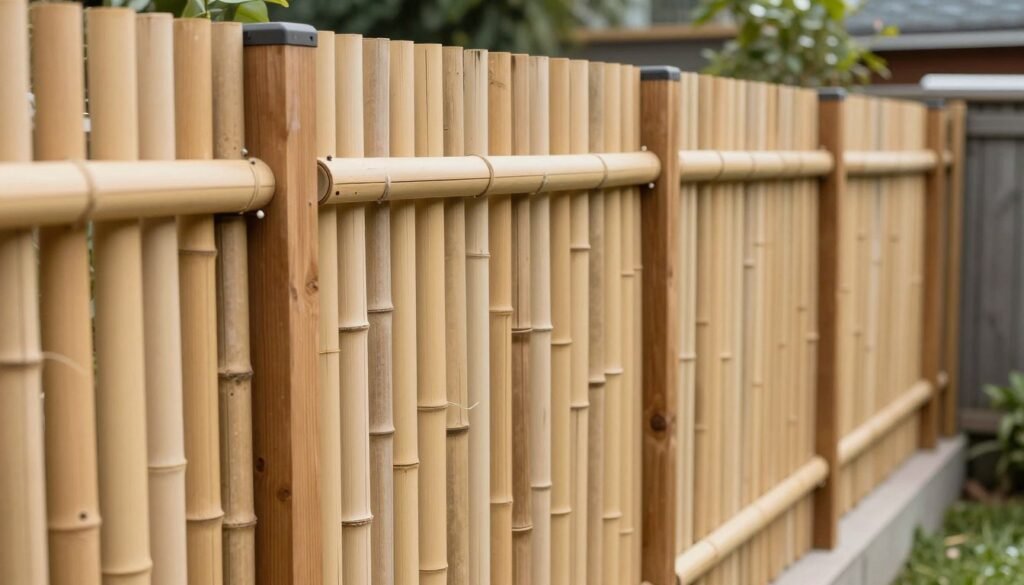
Materials Needed
- Bamboo fencing rolls
- 4×4 pressure-treated posts
- Concrete mix
- UV-resistant zip ties or galvanized wire
- Eye hooks (optional)
- Clear exterior sealant
Step-by-Step Instructions
- Set your posts – Dig holes 2 feet deep, place 4×4 posts 6-8 feet apart, check for level, and fill with concrete.
- Prepare bamboo – Unroll and lay out bamboo fencing to ensure it’s the correct height and length.
- Attach bamboo – Once concrete has cured, secure bamboo rolls to posts using UV-resistant zip ties or galvanized wire. For a cleaner look, install eye hooks on posts and thread wire through them.
- Trim excess – Cut any excess bamboo at the ends using pruning shears.
- Seal the bamboo – Apply clear exterior sealant to protect bamboo from weather and extend its lifespan.
This bamboo roll fence typically costs $200-$350 for a 25-foot section, depending on the quality and thickness of the bamboo rolls.
Maintaining Your Budget Privacy Fence
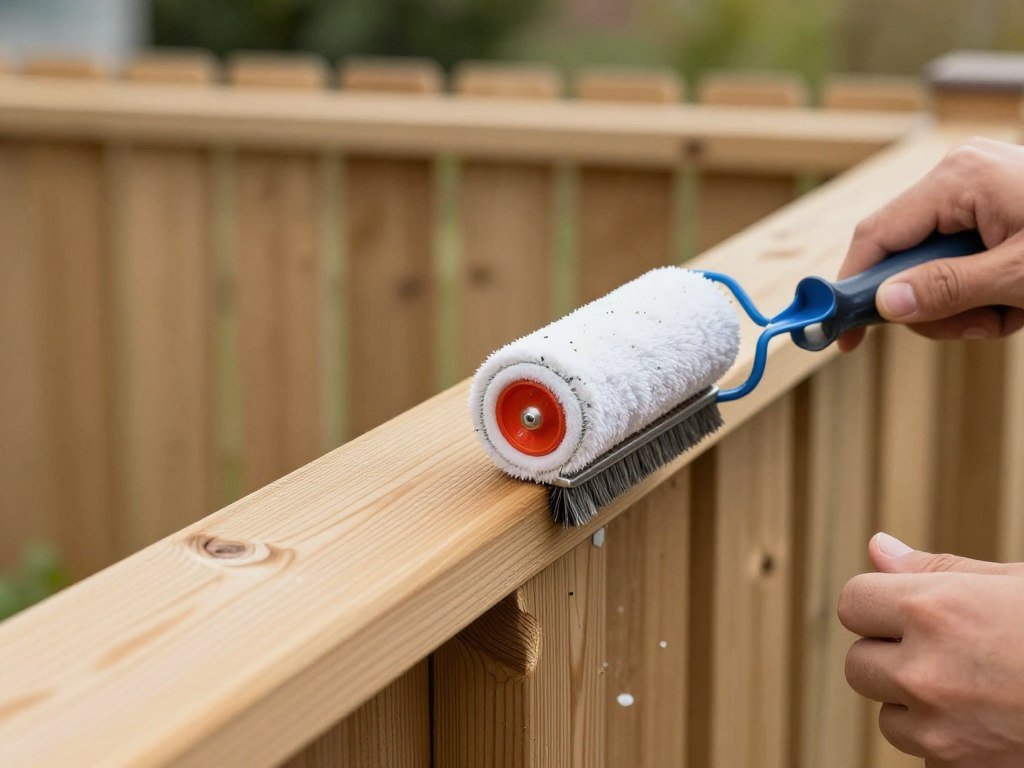
Proper maintenance will extend the life of your DIY privacy fence and keep it looking great for years to come:
Regular Inspections
Check your fence twice a year for loose boards, protruding nails, or signs of rot. Address small issues before they become major problems.
Cleaning
Clean your fence annually using a garden hose or pressure washer on a low setting. For wooden fences, use a mild detergent solution to remove dirt, mildew, and algae.
Sealing and Staining
Apply a waterproof sealant to wooden fences every 2-3 years to prevent moisture damage. Consider using a stain with UV protection to prevent fading from sun exposure.
Repairs
Replace damaged boards or sections promptly. Keep extra materials on hand for quick repairs.
Plant Management
Trim vines and plants growing on your fence to prevent excessive weight and moisture retention. Keep grass and weeds trimmed away from the bottom of the fence.
Protect Your Investment
Find quality sealants and stains to maintain your DIY privacy fence.
Enhancing Your DIY Privacy Fence
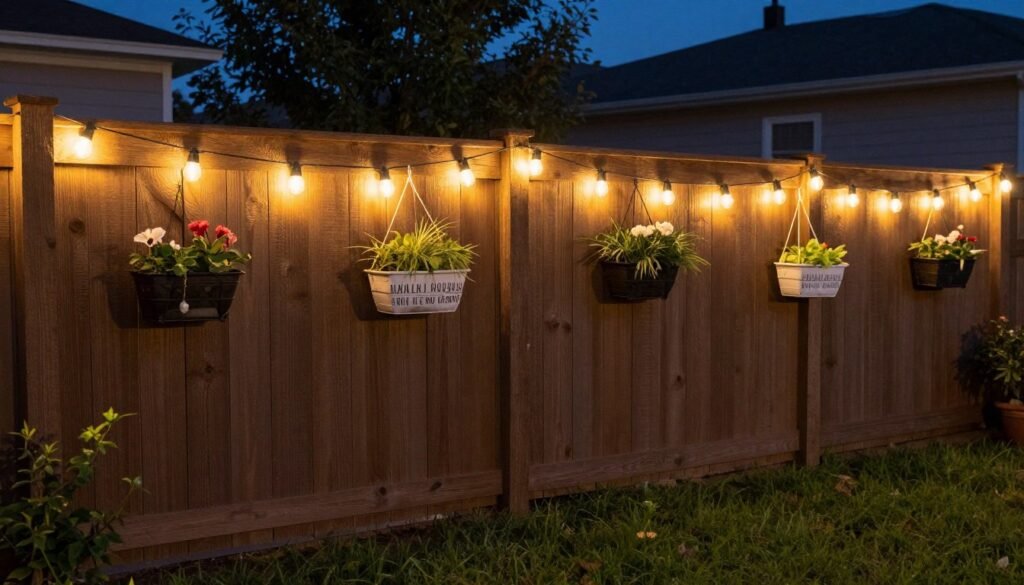
Once your basic fence is installed, consider these affordable enhancements to add style and functionality:
Lighting
Add solar-powered post cap lights or string lights to illuminate your outdoor space and create ambiance in the evening. These are inexpensive and require no electrical wiring.
Planters
Attach hanging planters or window boxes to your fence for vertical gardening. Growing herbs, flowers, or small vegetables maximizes your garden space and adds visual interest.
Decorative Elements
Incorporate decorative elements like metal art, mosaic tiles, or painted designs to personalize your fence and make it a focal point rather than just a boundary.
These enhancements not only improve the appearance of your DIY privacy fence but can also increase your enjoyment of your outdoor space. Best of all, they can be added gradually as your budget allows.
Troubleshooting Common DIY Fence Issues
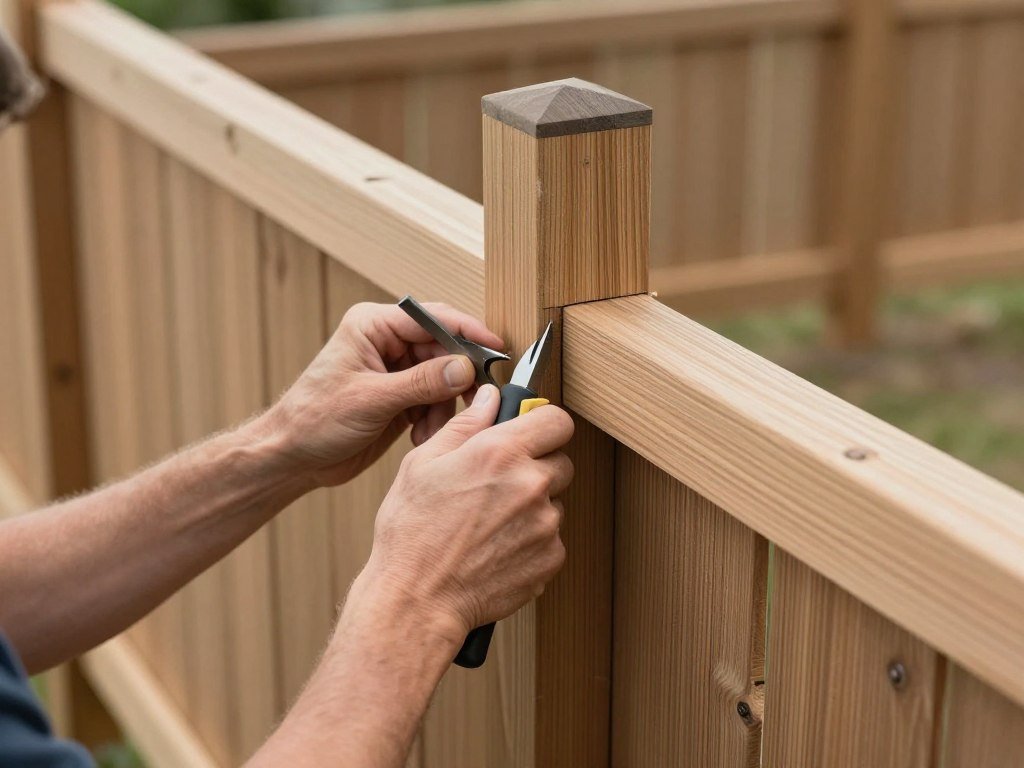
What if my fence posts are leaning?
Leaning posts usually indicate insufficient depth or concrete. For minor leaning, brace the post with a temporary support, dig around the base, and add more concrete. For severely leaning posts, you may need to remove and reset them completely.
How do I fix warped fence boards?
Slightly warped boards can often be straightened by adding more fasteners. For severely warped boards, replacement is usually the best option. To prevent warping, make sure boards are properly sealed and have adequate spacing for expansion and contraction.
What should I do about gaps between fence boards?
Small gaps are normal and allow for wood expansion. For excessive gaps, you can add additional boards or install thin strips of wood as gap fillers. Another option is to attach bamboo or reed screening to the back of the fence to block visibility through gaps.
How can I level my fence on sloped ground?
For gentle slopes, you can “stair-step” your fence panels, keeping each panel level while creating a stepped effect along the slope. For steeper slopes, consider a racked fence design where the rails follow the slope while the pickets remain vertical.
Start Your DIY Privacy Fence Project Today
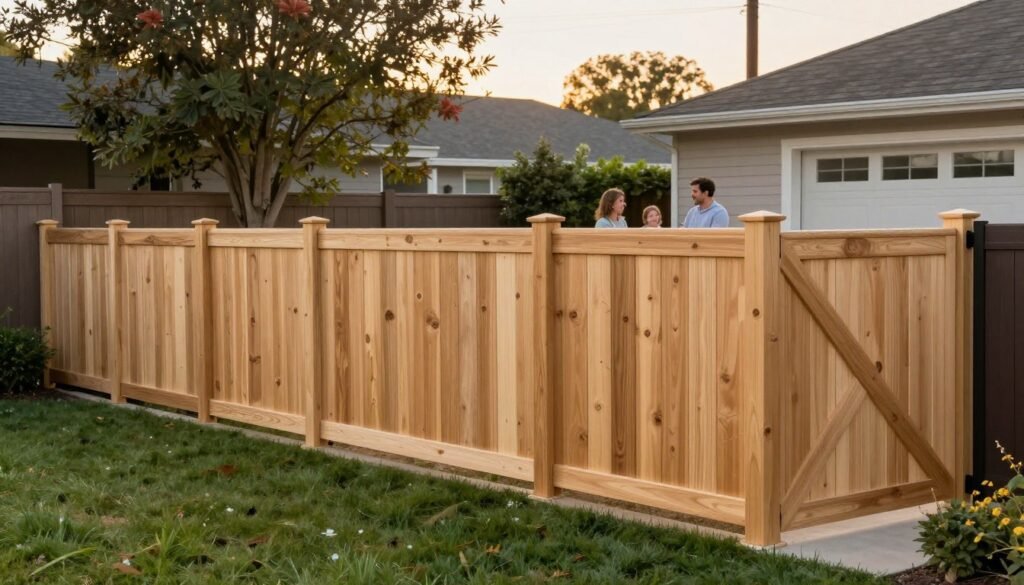
Building a DIY privacy fence on a budget is an achievable project that can transform your outdoor space. By choosing affordable materials, planning carefully, and following the steps outlined in this guide, you can create a beautiful and functional fence that provides the privacy you desire without breaking the bank.
Remember that your fence doesn’t have to be perfect from day one. You can start with a basic structure and enhance it over time as your skills and budget allow. The most important thing is to get started and enjoy the process of creating something valuable for your home.
Ready to Transform Your Outdoor Space?
Get all the supplies you need to start your DIY privacy fence project today.