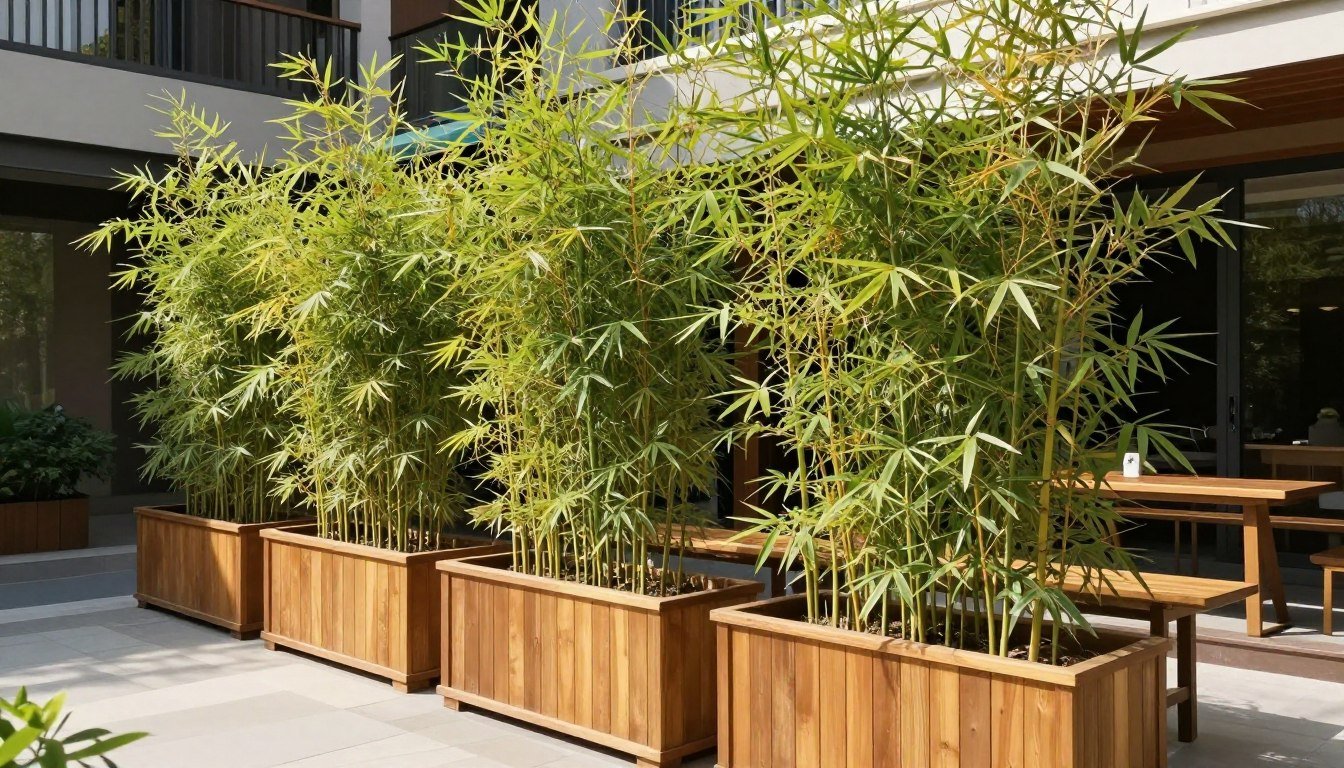
Creative Privacy Planter Ideas for Your Outdoor Sanctuary
Looking to create a secluded retreat in your outdoor space? Privacy planters offer the perfect blend of functionality and beauty, creating natural barriers while enhancing your landscape design. Whether you’re seeking respite from nosy neighbors, street noise, or simply want to define different areas of your yard, these versatile solutions can transform any outdoor area into a personal oasis.
This Website contains affiliate links. That means I may earn a small commission if you purchase through my links, at no extra cost to you.
In this guide, we’ll explore inspiring privacy planter ideas, recommend the best plants for natural screens, share DIY projects, and provide expert design tips to help you create your own private paradise. From urban balconies to spacious backyards, there’s a privacy planter solution perfect for your needs.
What Are Privacy Planters & Why You Need Them
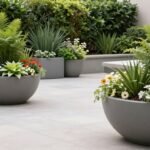
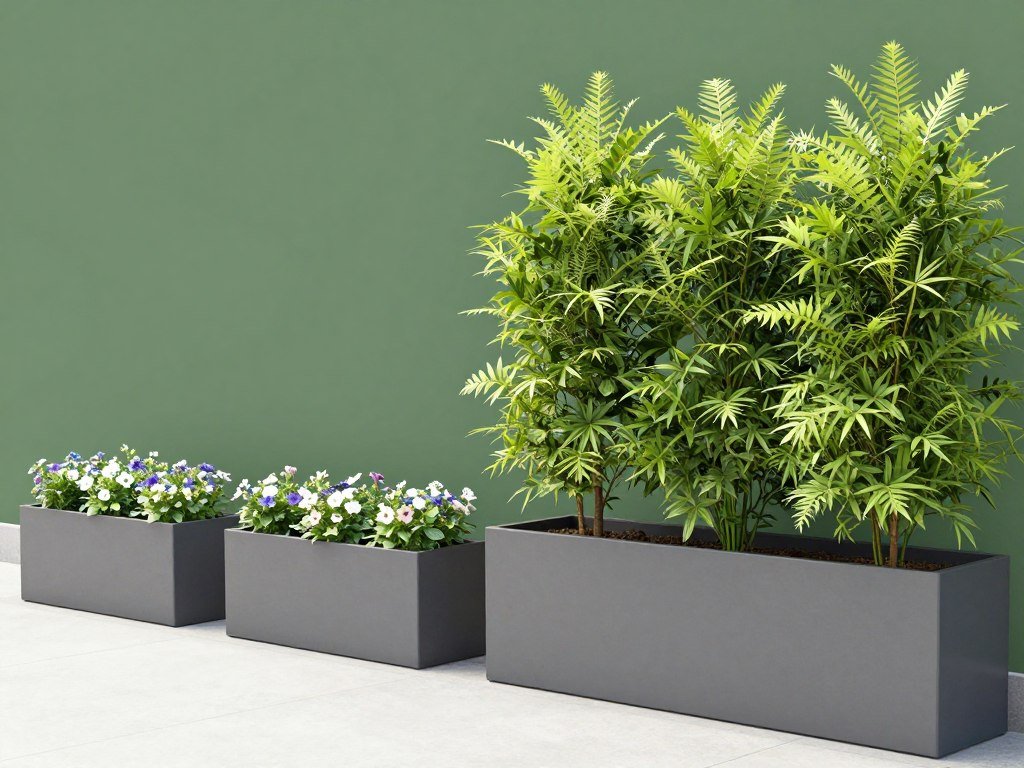
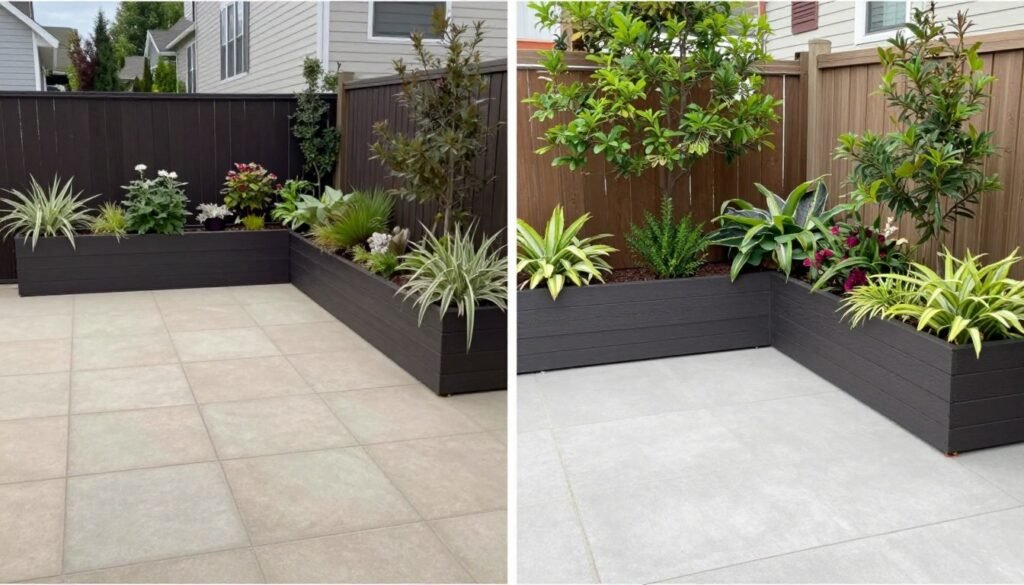
Privacy planters are specially designed containers that hold tall or dense plants to create natural screens around your outdoor living spaces. Unlike standard planters, privacy planters are typically taller, wider, and sturdier to accommodate larger plants that can effectively block unwanted views.
Related Posts:
Benefits of Privacy Planters
- Create natural, beautiful barriers without the stark appearance of fences
- Add greenery and life to your outdoor spaces
- Portable and flexible – rearrange as needed
- Reduce noise pollution from streets or neighbors
- Define and separate different areas of your yard or patio
- Provide shade and wind protection
- Enhance property value with attractive landscaping
Considerations
- Require regular watering and plant maintenance
- Larger planters can be heavy and difficult to move once filled
- Quality planters can be an investment
- Plants take time to grow to full privacy-providing height
- Seasonal changes may affect privacy levels with deciduous plants
Privacy planters work wonderfully in various settings – from creating intimate dining spaces on urban decks to establishing boundaries between properties in suburban yards. They’re especially valuable for renters who can’t install permanent structures but still desire privacy.
Ready to Start Your Privacy Planter Project?
Browse a wide selection of high-quality planters designed specifically for privacy screens.
Best Plants for Privacy Planters
Choosing the right plants is crucial for creating effective privacy screens. The ideal plants should grow tall enough to block unwanted views, be dense enough to create a visual barrier, and thrive in container environments. Here are some excellent options categorized by growth habit:
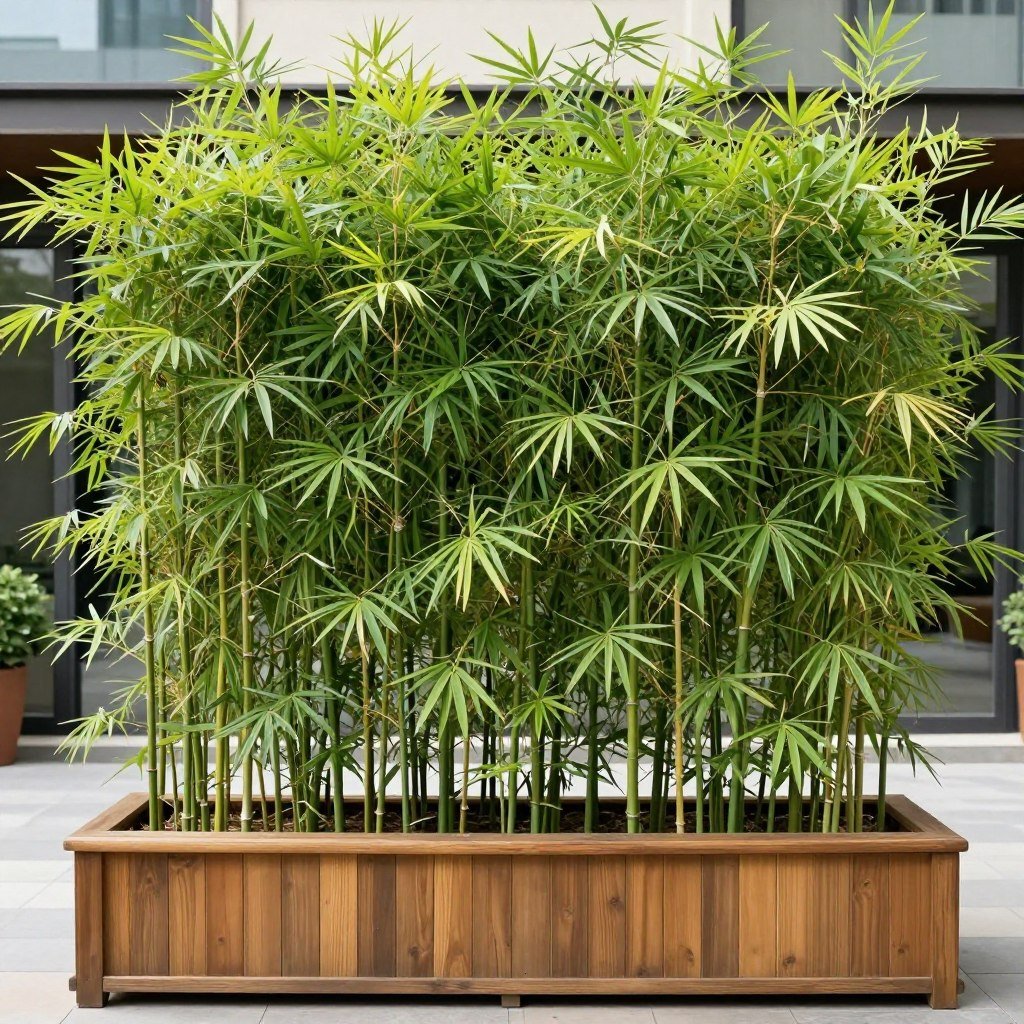
Fast-Growing Screening Plants
- Bamboo – Fast-growing with dense foliage
- Arborvitae – Evergreen with thick coverage
- Privet – Quick-growing hedge plant
- Italian Cypress – Tall, columnar growth habit
These plants establish privacy quickly, with some varieties growing several feet per year. Bamboo is particularly effective in planters, creating a lush screen in minimal time.
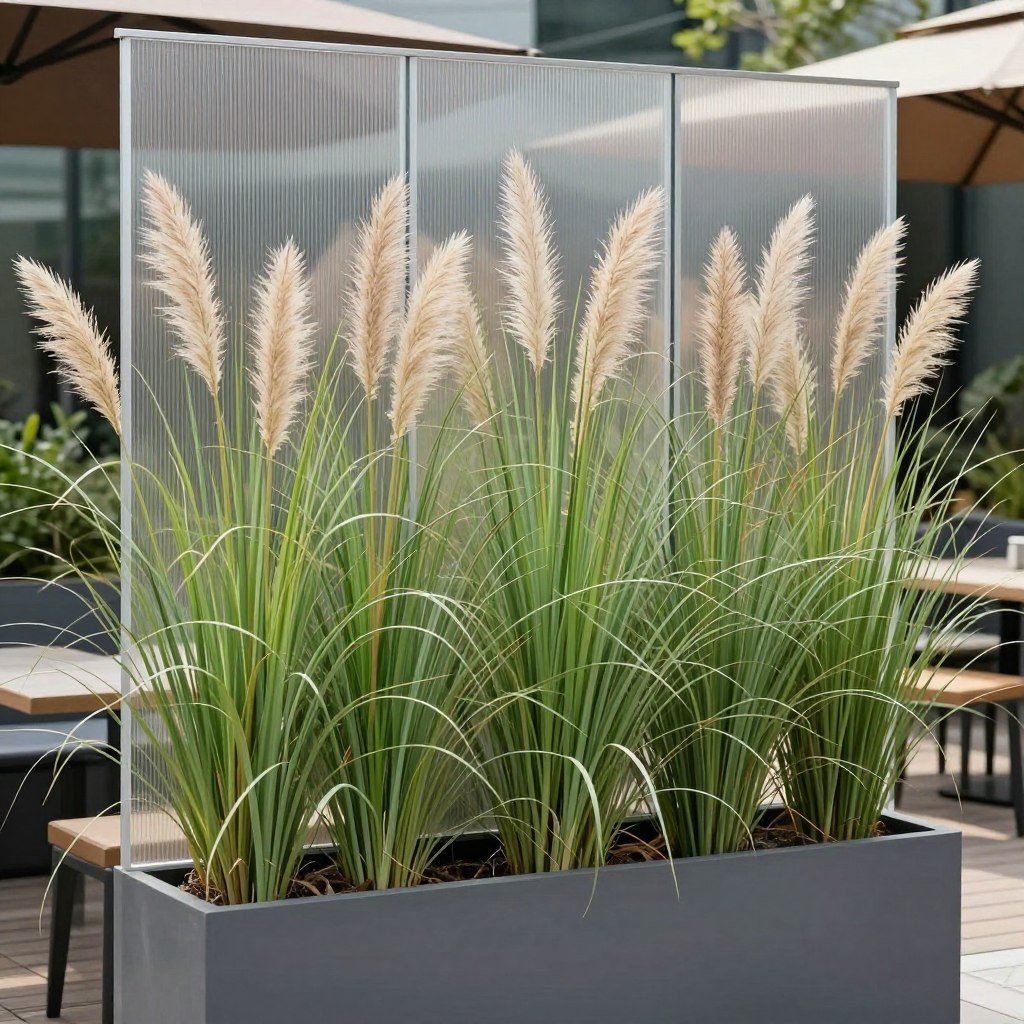
Ornamental Grasses
- Maiden Grass – Elegant with feathery plumes
- Pampas Grass – Dramatic with tall white plumes
- Zebra Grass – Distinctive striped foliage
- Fountain Grass – Graceful arching habit
Ornamental grasses offer a softer, more dynamic privacy solution. They move beautifully in the breeze while still providing screening, and many varieties add winter interest.
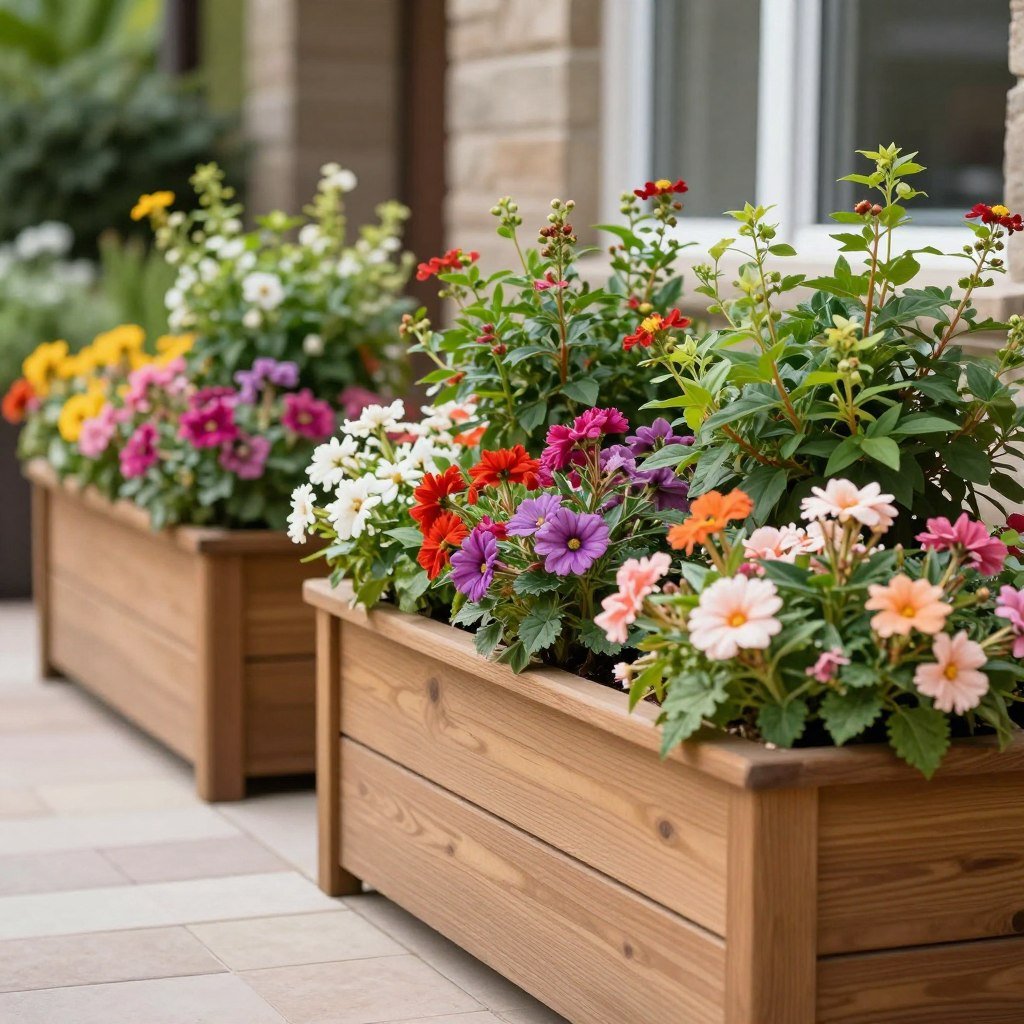
Flowering Privacy Plants
- Hydrangea – Beautiful blooms and dense foliage
- Rose of Sharon – Prolific summer flowers
- Crape Myrtle – Colorful blooms on tall stems
- Butterfly Bush – Attracts pollinators
These plants combine privacy with ornamental appeal, offering seasonal blooms while maintaining good screening properties. They’re perfect when you want your privacy solution to be a focal point.
What plants work best in small privacy planters?
For smaller planters, consider columnar plants that grow upward rather than outward. Dwarf varieties of arborvitae, Italian cypress, and certain bamboo species work well. You can also use climbing plants like jasmine or clematis on a trellis within the planter.
How do I maintain plants in privacy planters?
Regular watering is essential, as plants in containers dry out faster than those in the ground. Use high-quality potting soil with good drainage, and fertilize according to each plant’s needs. Prune as needed to maintain desired height and density. In cold climates, some planters may need winter protection.
Ready to Green Up Your Privacy Screen?
Find the perfect plants for your privacy planters:
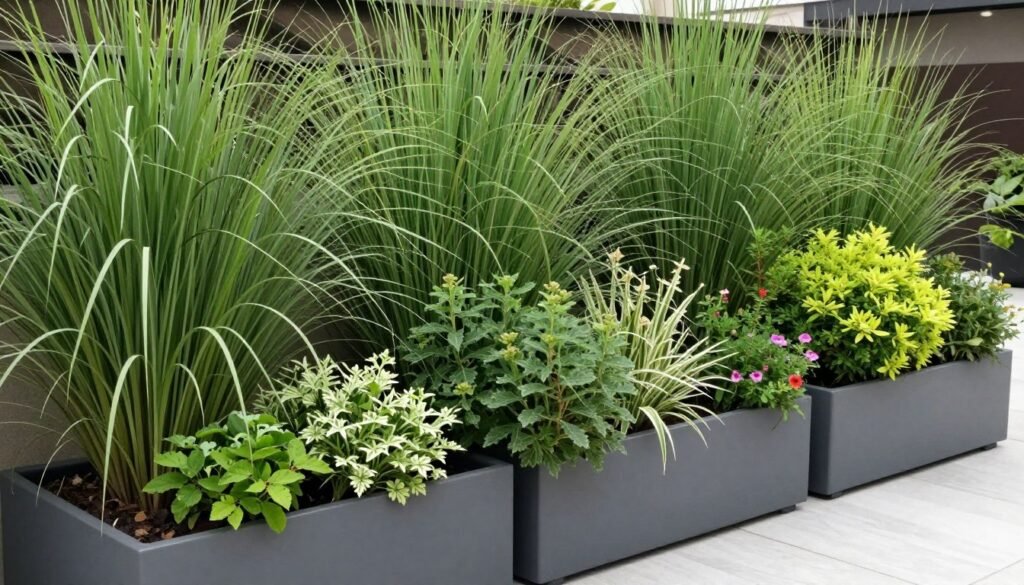
DIY Privacy Planter Projects
Building your own privacy planters can be a rewarding weekend project that saves money while creating a custom solution perfectly tailored to your space. Here are three DIY privacy planter projects ranging from simple to more advanced:
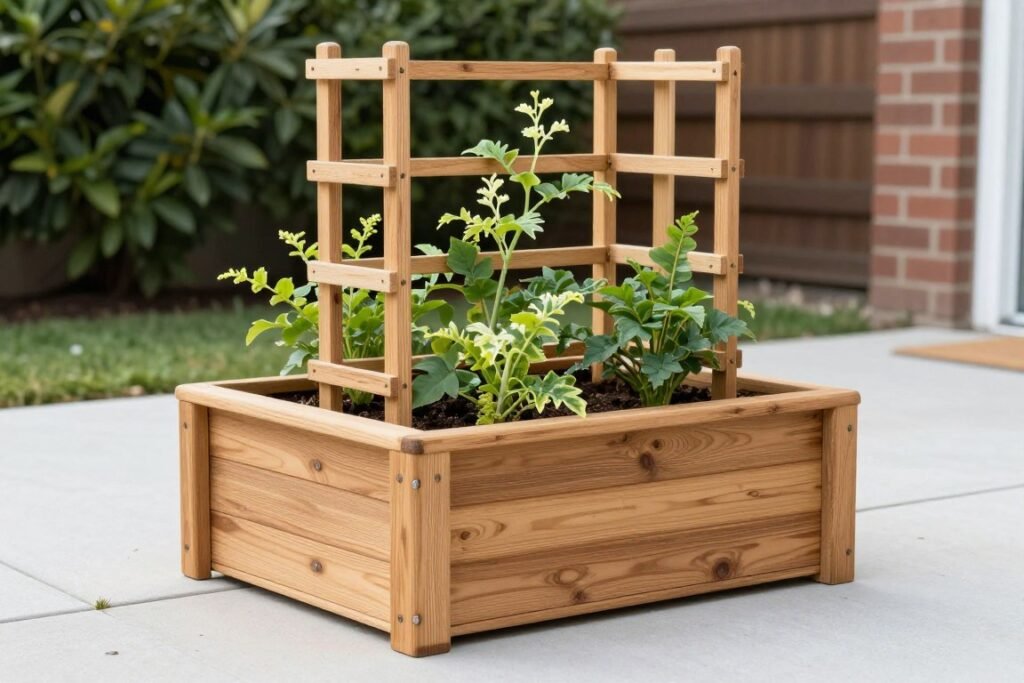
Beginner: Cedar Box Planter with Trellis
This project can be completed in a weekend and costs approximately $50-75 per planter, depending on size.
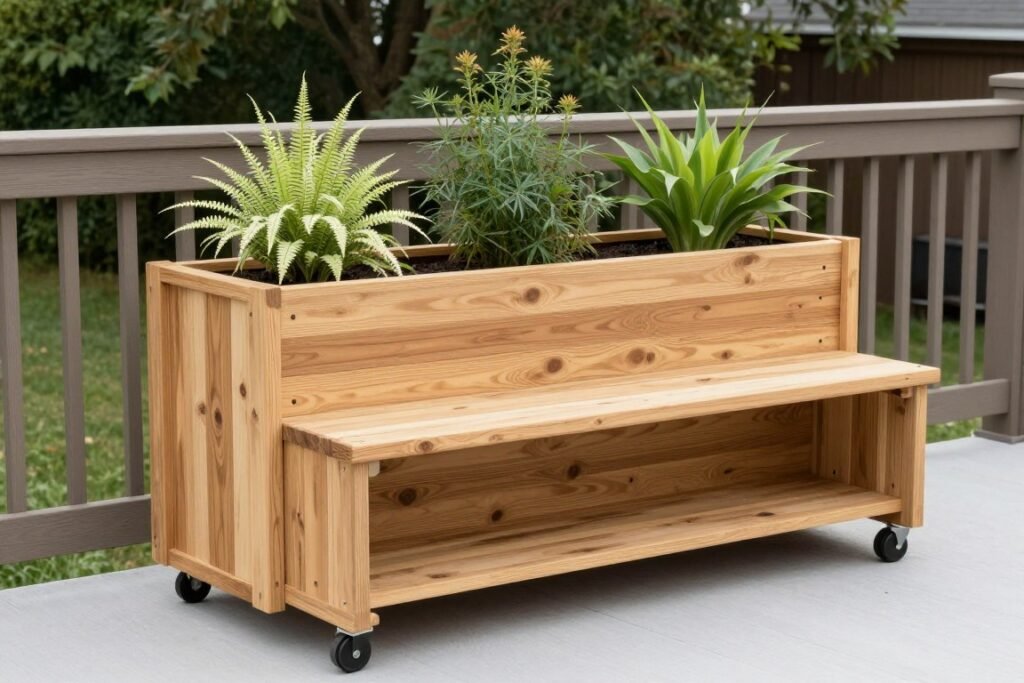
Intermediate: Mobile Privacy Planter with Bench
This multifunctional project combines seating with privacy and can be moved as needed. Budget around $150-200 for materials.
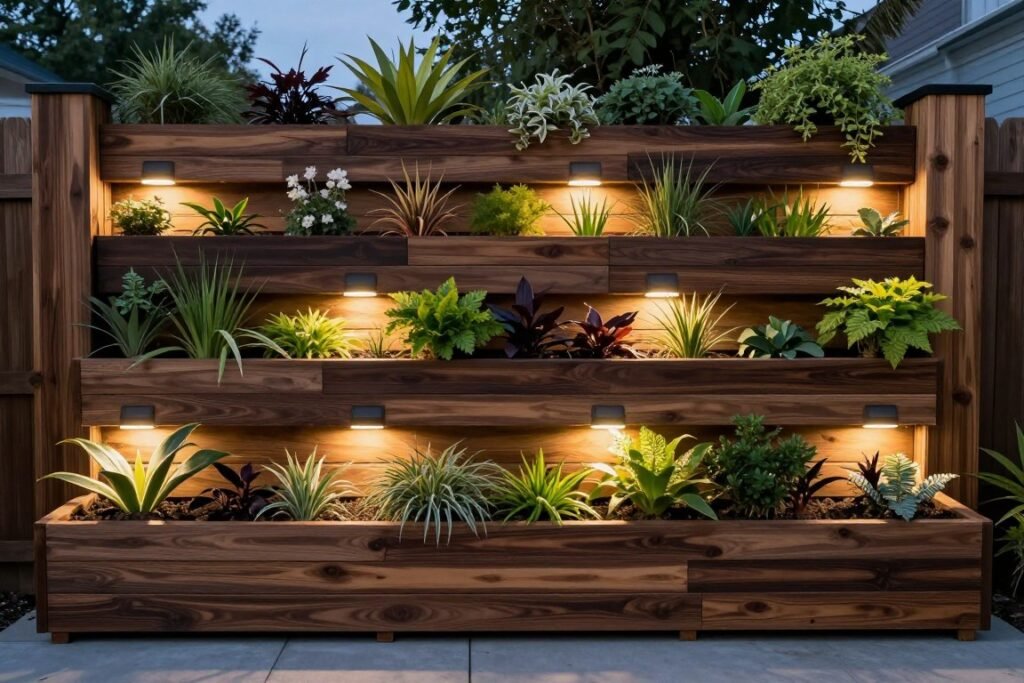
Advanced: Tiered Privacy Planter Wall
This statement piece requires carpentry skills but creates a stunning privacy solution. Budget $300-500 depending on size and materials.
“Building our own privacy planters allowed us to create exactly what we needed for our awkward-shaped patio. The project was surprisingly straightforward, and the results have transformed our outdoor living space.”
Ready to Build Your Own Privacy Planter?
Get all the supplies you need to create your custom privacy solution:
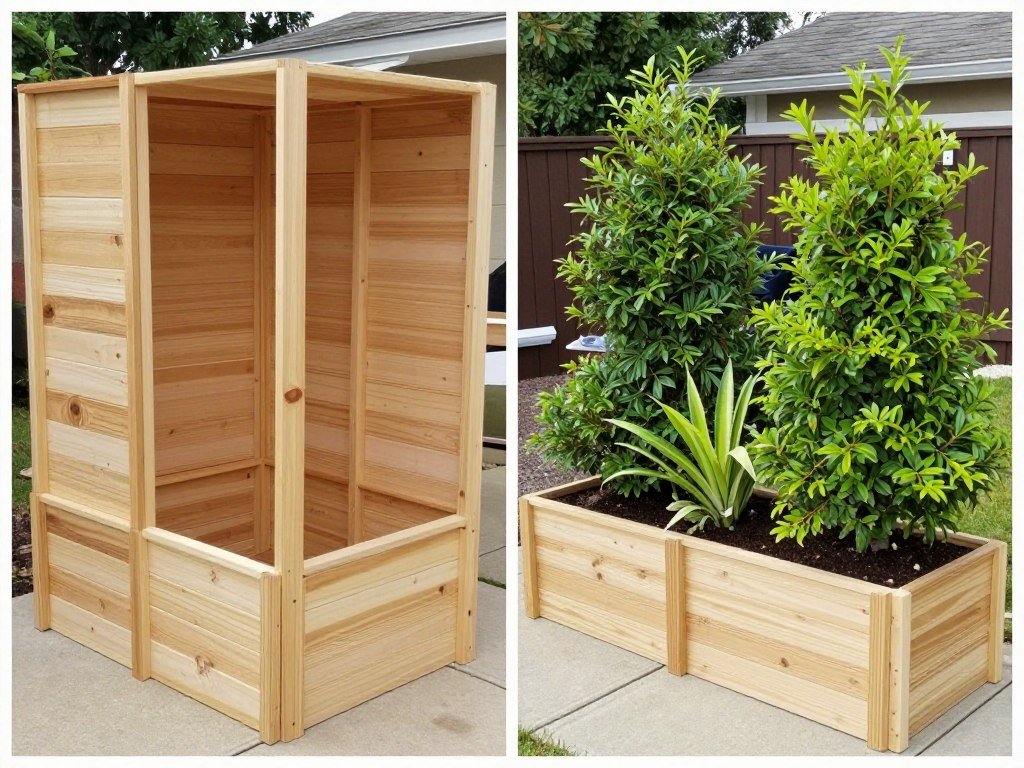
Creative Design Ideas for Privacy Planters
The way you arrange and style your privacy planters can dramatically impact both their effectiveness and aesthetic appeal. Here are some inspiring design approaches to consider for your space:
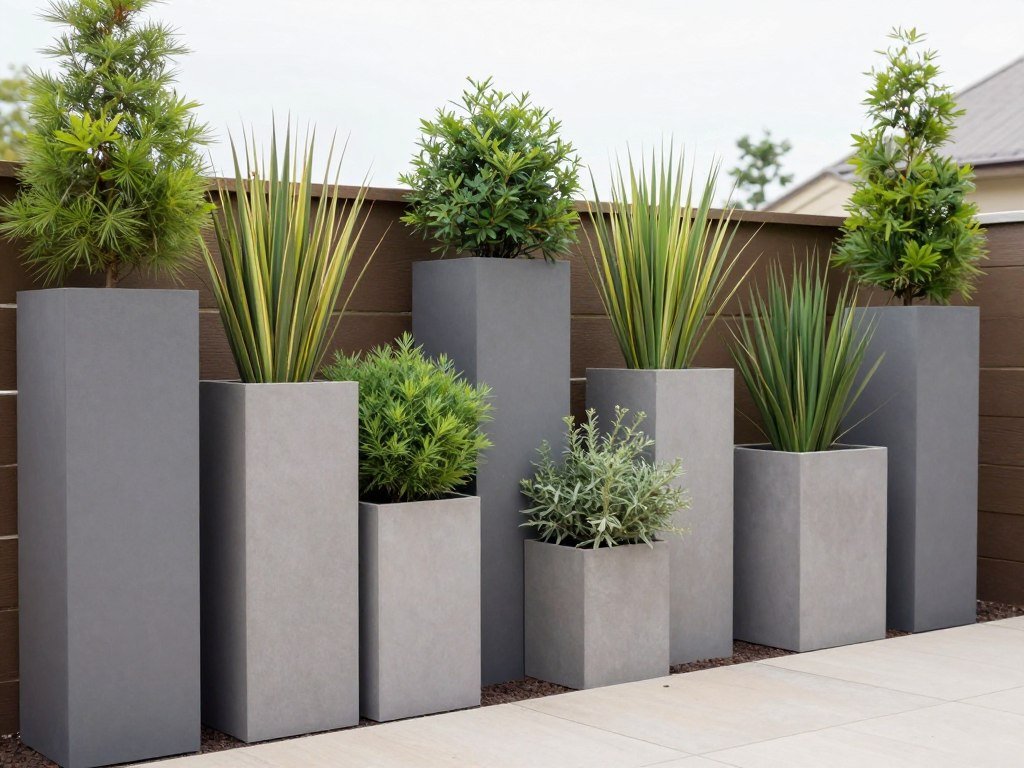
Staggered Heights
Create visual interest by arranging planters of different heights in a zigzag pattern. This approach breaks up the monotony of a straight line while still providing effective screening. Mix tall, columnar plants with medium-height bushier varieties for a layered effect.
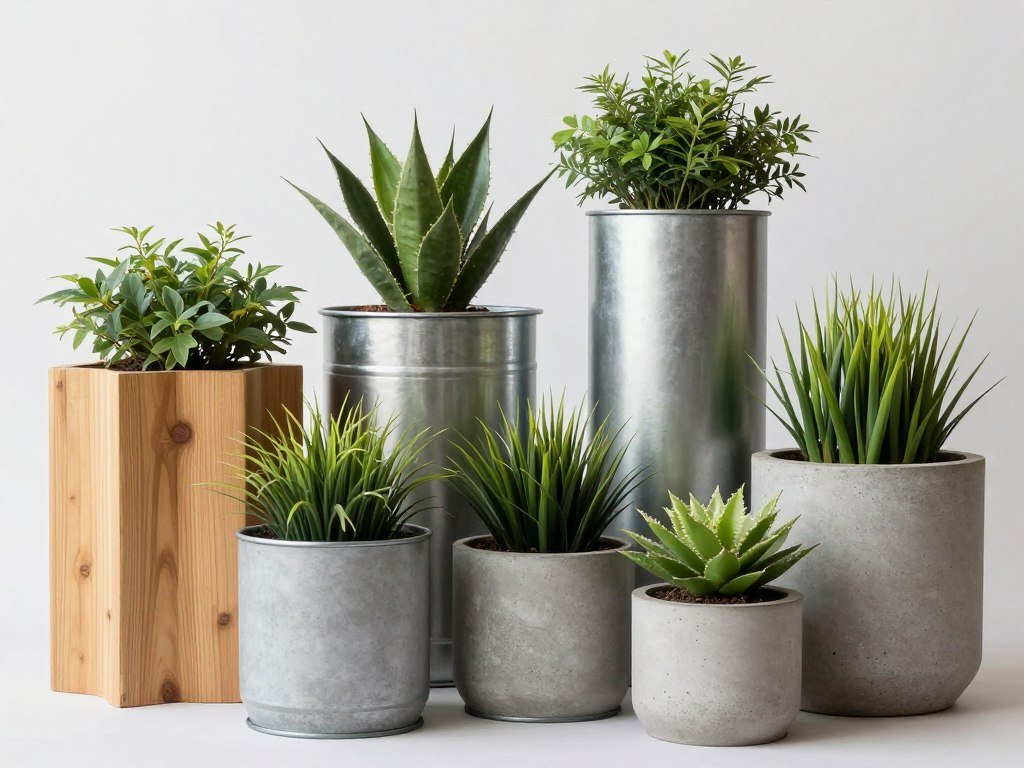
Mixed Materials
Combine planters made from different materials—wood, metal, concrete, and fiberglass—to create a designer look. This approach works particularly well in contemporary settings. Maintain cohesion by choosing planters with similar shapes or colors despite their different materials.
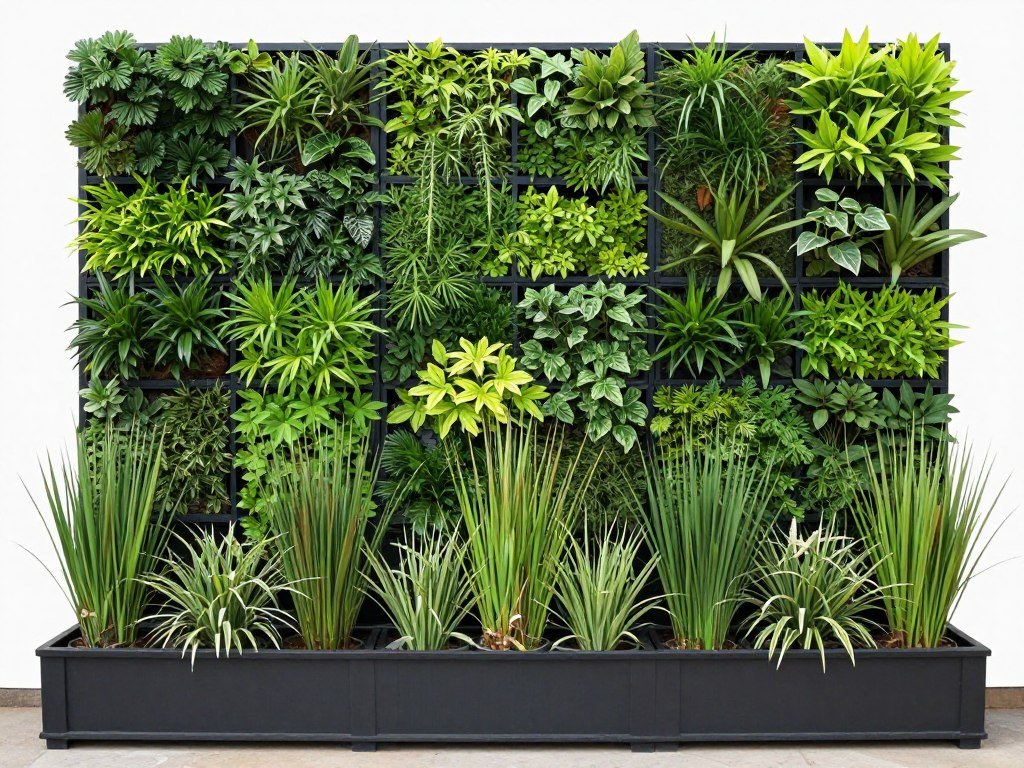
Vertical Garden Integration
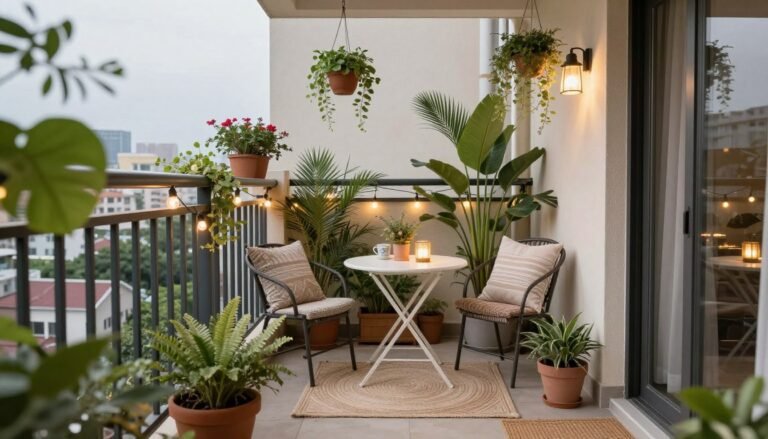
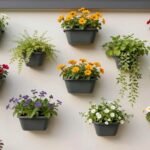
Maximize your privacy screen by incorporating vertical gardening elements into your planter design. Attach trellis panels or living wall systems to create multi-dimensional greenery that provides privacy while using minimal floor space—perfect for balconies and small patios.
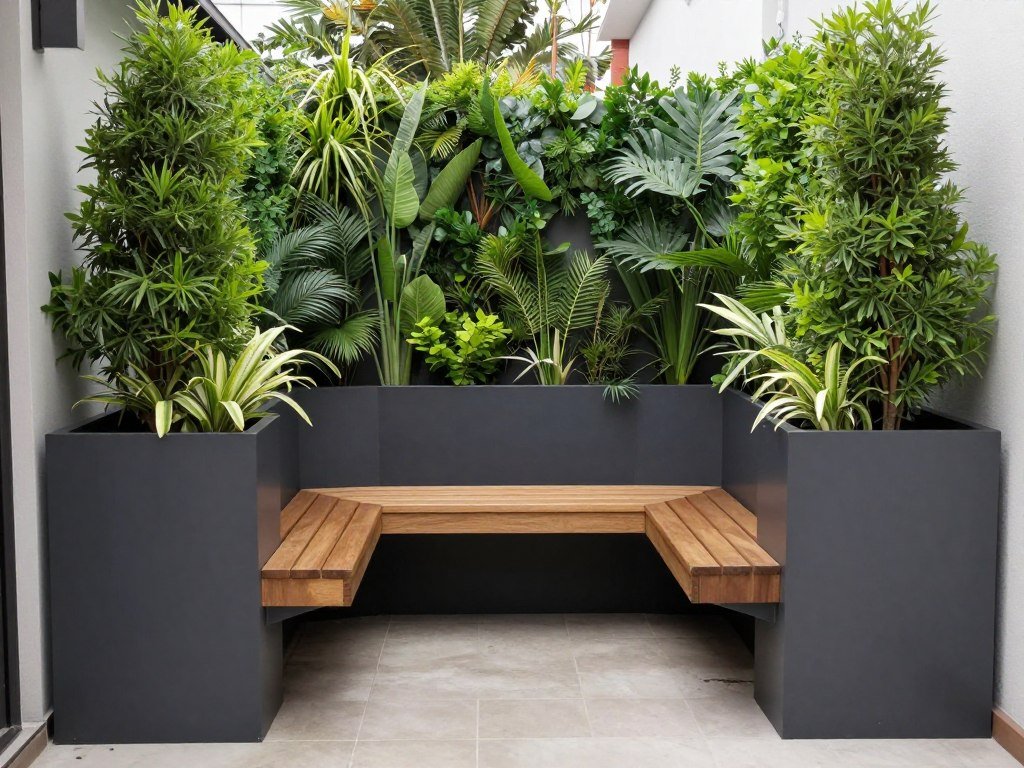
Integrated Seating
Design privacy planters with built-in benches to create cozy, enclosed seating areas. This approach is especially effective for defining conversation nooks within larger spaces. The planters provide the backdrop while the seating invites relaxation in your newly private area.
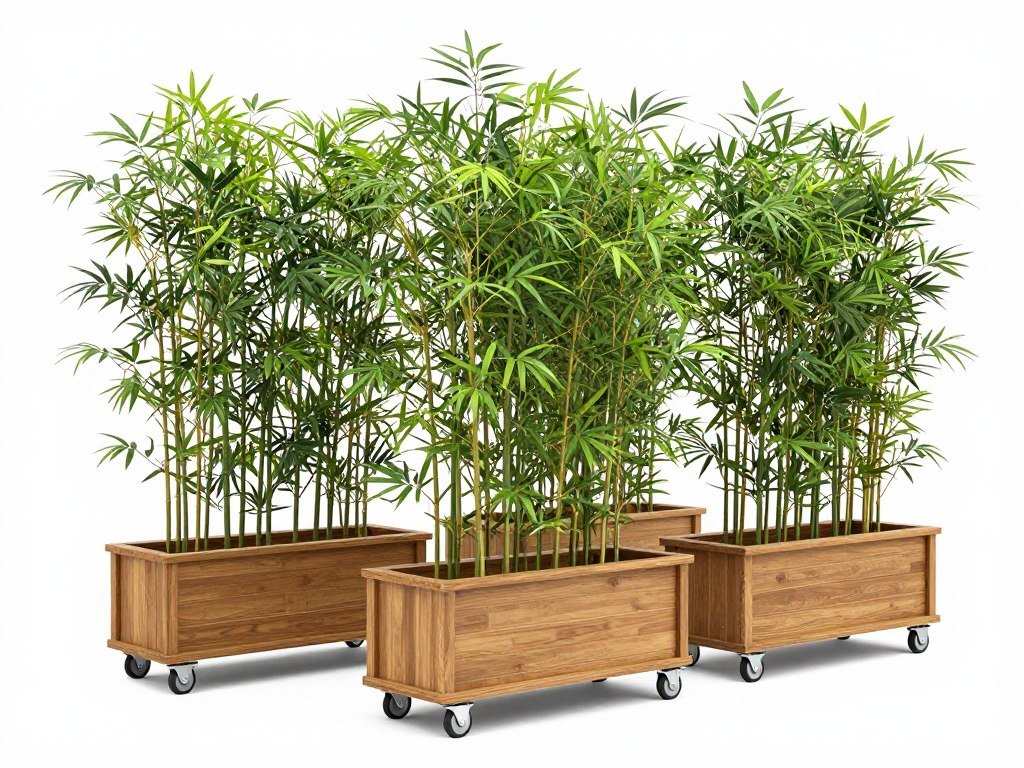
Flexible Arrangements
Mount your privacy planters on quality casters to create movable screens that can be reconfigured as needed. This approach is ideal for rental properties or spaces that serve multiple purposes. Position them to block unwanted views during a gathering, then rearrange for daily use.
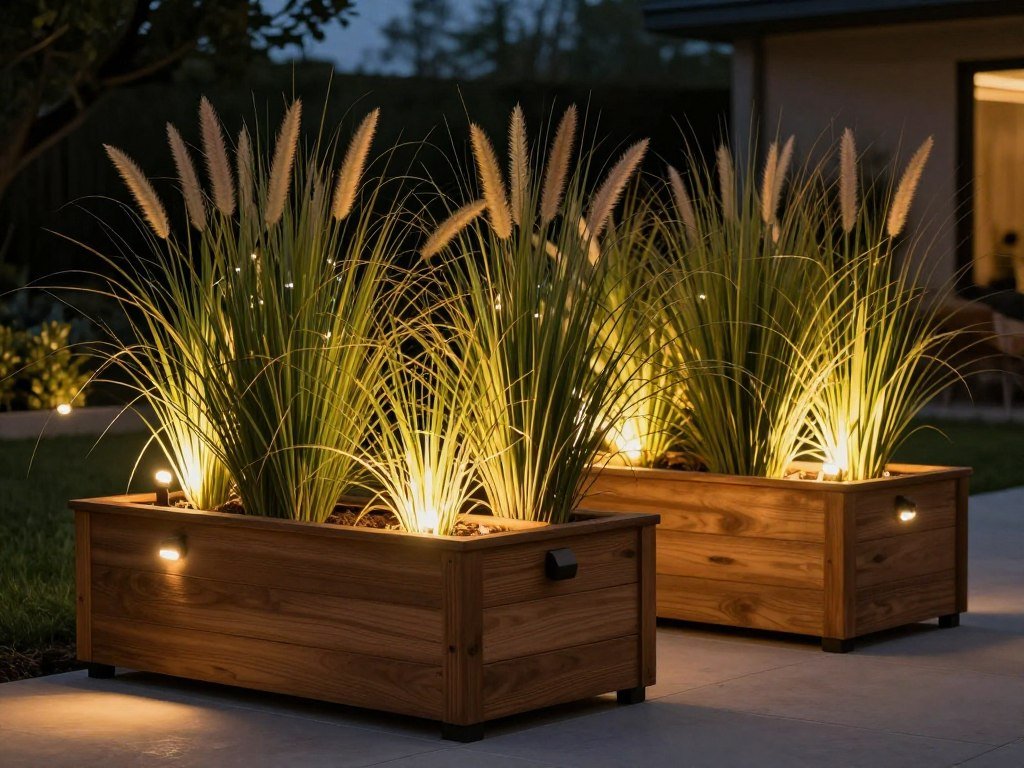
Illuminated Privacy
Incorporate lighting into your privacy planter design for functionality and ambiance after dark. Solar-powered lights can be integrated into the planter structure, or you can use uplighting to highlight the plants themselves, creating beautiful shadow patterns.
Design Tip: Consider the Viewing Angle
When positioning your privacy planters, consider the specific angles you want to block. For example, if you’re screening a second-story neighbor’s view, you’ll need taller plants than if you’re blocking a ground-level sightline. Take photos from the areas you want to screen and use these as reference when planning your planter heights and positions.
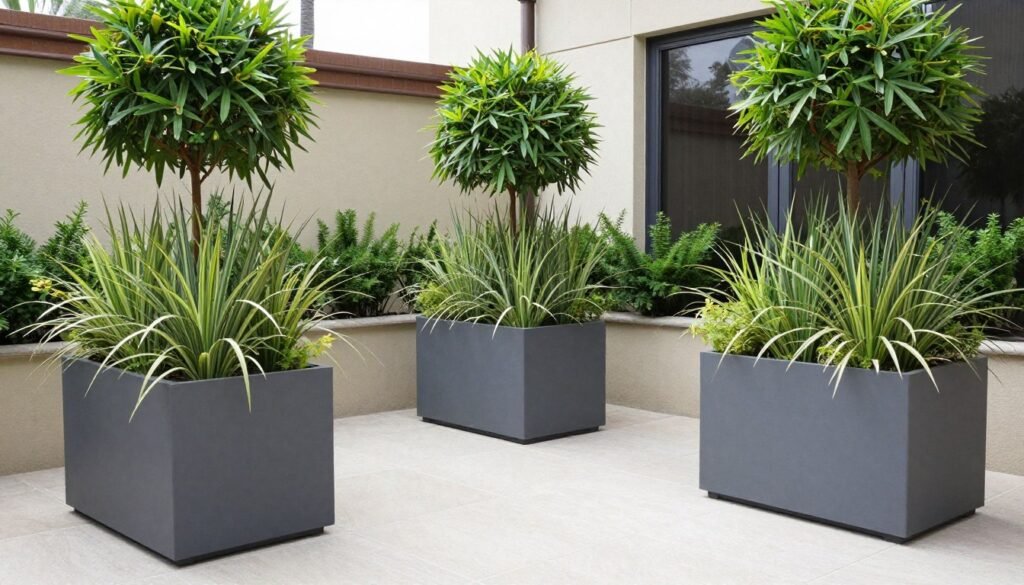
Inspired to Create Your Own Privacy Oasis?
Find everything you need to bring these design ideas to life:
Care and Maintenance Tips for Privacy Planters
Keeping your privacy planters looking their best requires regular maintenance. Follow these essential care tips to ensure your natural screens remain healthy and effective year-round:
Watering Requirements
Plants in containers dry out faster than those in the ground, especially tall varieties used for privacy. Check soil moisture regularly and water thoroughly when the top 1-2 inches feel dry. Consider installing a drip irrigation system with a timer for consistent watering, particularly important for larger privacy planter arrangements.
Seasonal Maintenance
Adjust your care routine with the seasons. In spring, apply slow-release fertilizer and prune any winter damage. Summer requires vigilant watering and occasional feeding. Fall is ideal for light pruning and preparing evergreens for winter. In winter, protect containers from freezing with insulation in cold climates.
Planter Maintenance
Regularly inspect wooden planters for signs of rot or damage, and apply a fresh coat of sealer every 1-2 years. Check drainage holes to ensure they remain clear. For metal planters, watch for rust spots and touch up as needed. All planters should be checked for stability, especially taller ones that may become top-heavy with plant growth.
Long-term Plant Health
Every 2-3 years, consider root pruning and refreshing the soil in your privacy planters. Many container plants become root-bound over time, which can stunt growth and reduce effectiveness as privacy screens. For very large specimens, this might require assistance or special equipment.
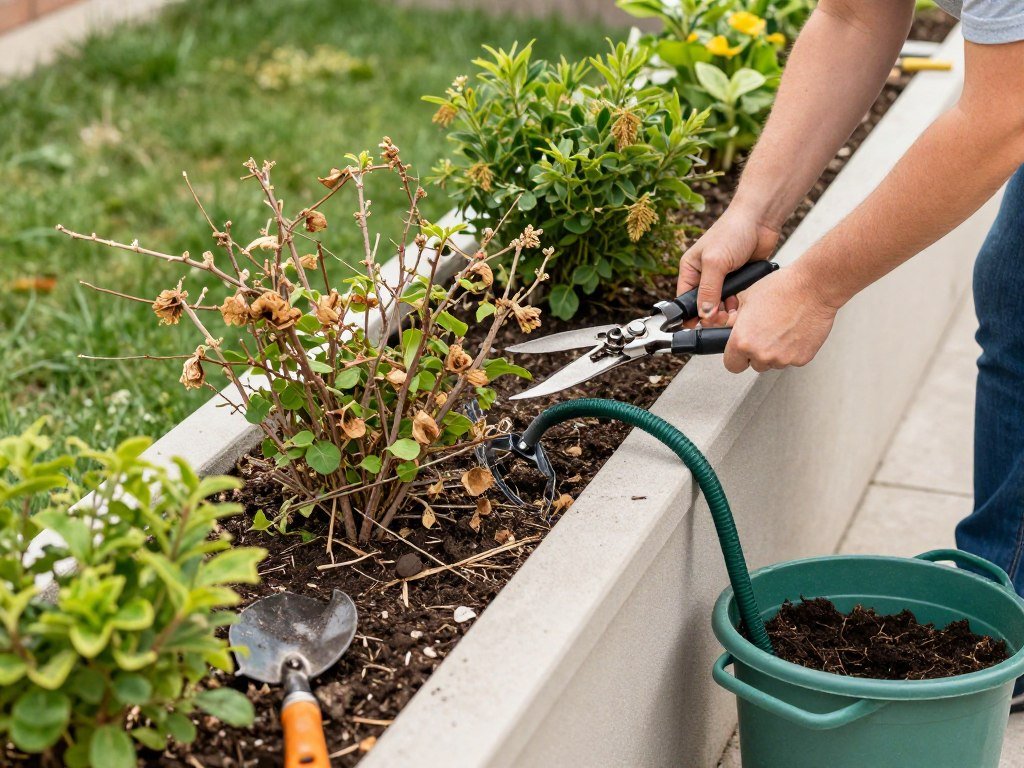
Keep Your Privacy Planters Thriving
Find quality supplies for maintaining your privacy planter garden:
Creating Your Perfect Privacy Planter Solution
Privacy planters offer a versatile, beautiful way to create secluded spaces in any outdoor environment. Whether you choose to build your own custom planters or purchase ready-made solutions, the combination of containers and carefully selected plants can transform your outdoor living areas into private retreats.
Remember that creating effective privacy with planters is a balance of immediate needs and long-term planning. While some fast-growing plants can provide quick screening, a thoughtfully designed arrangement that considers mature plant sizes will create a more sustainable solution that improves with time.
We hope this guide has inspired you to explore the possibilities of privacy planters for your own space. From urban balconies to spacious suburban yards, these versatile solutions can be tailored to any setting, style, and budget. Start small if you’re new to gardening, or create an ambitious design if you’re ready for a transformation—either way, you’ll be rewarded with a more private, peaceful outdoor sanctuary.
Ready to Transform Your Outdoor Space?
Start creating your private outdoor sanctuary today: