31 Stunning Front Porch Planter Ideas to Transform Your Home’s Entrance
Your front porch is the first impression visitors have of your home, and the right planters can transform this space from ordinary to extraordinary. Whether you have a sprawling wraparound porch or just a small stoop by your front door, creative front porch planter ideas can dramatically enhance your home’s curb appeal and create a warm, welcoming entrance. From classic urns overflowing with colorful blooms to modern geometric containers with sculptural plants, we’ve gathered inspiration for every style, season, and space.
In this comprehensive guide, we’ll explore a variety of front porch planter ideas that will help you create a stunning entrance that reflects your personal style while complementing your home’s architecture. We’ll cover everything from container selection and plant combinations to placement strategies and seasonal updates. Get ready to transform your front porch into a vibrant, inviting space that makes a statement and welcomes guests in style!
Classic & Timeless Front Porch Planter Ideas
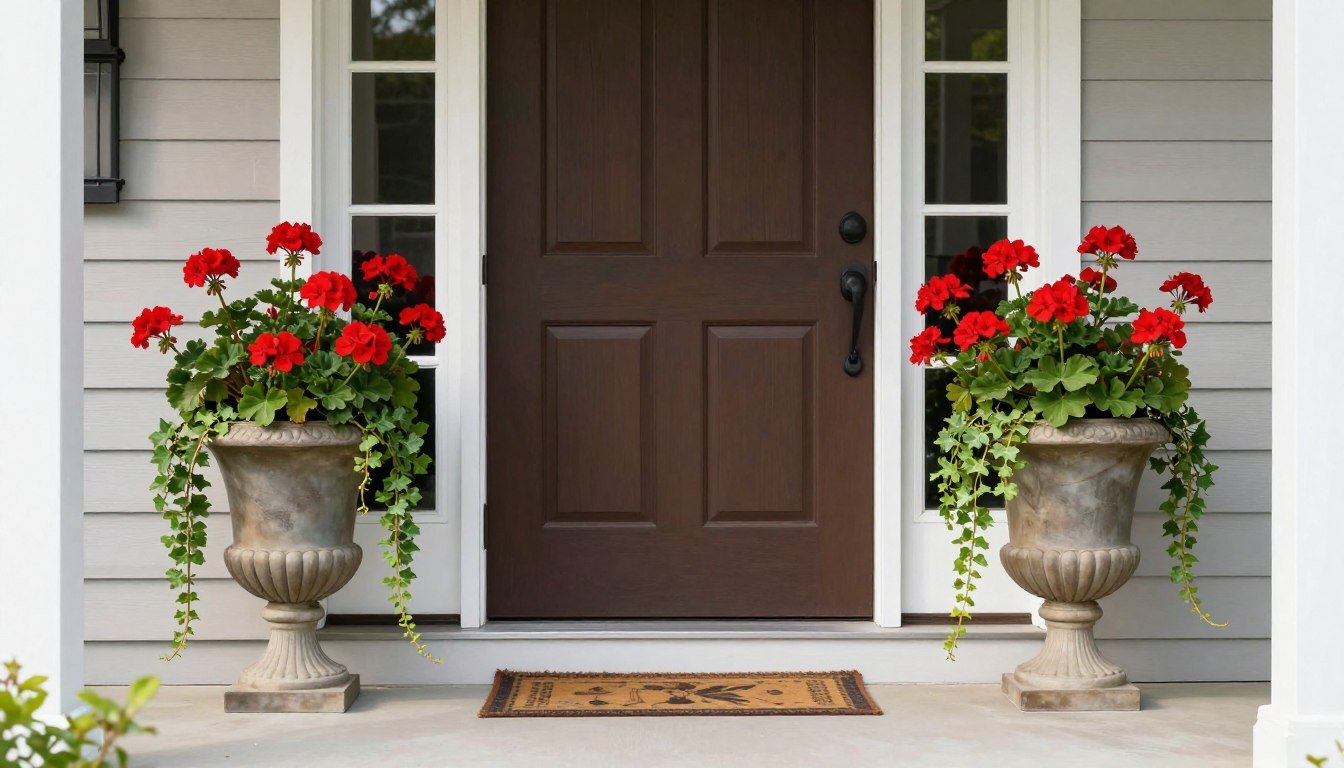
Symmetrical urns with vibrant geraniums create a timeless, elegant entrance that complements traditional architecture
Symmetrical Urns for Traditional Elegance
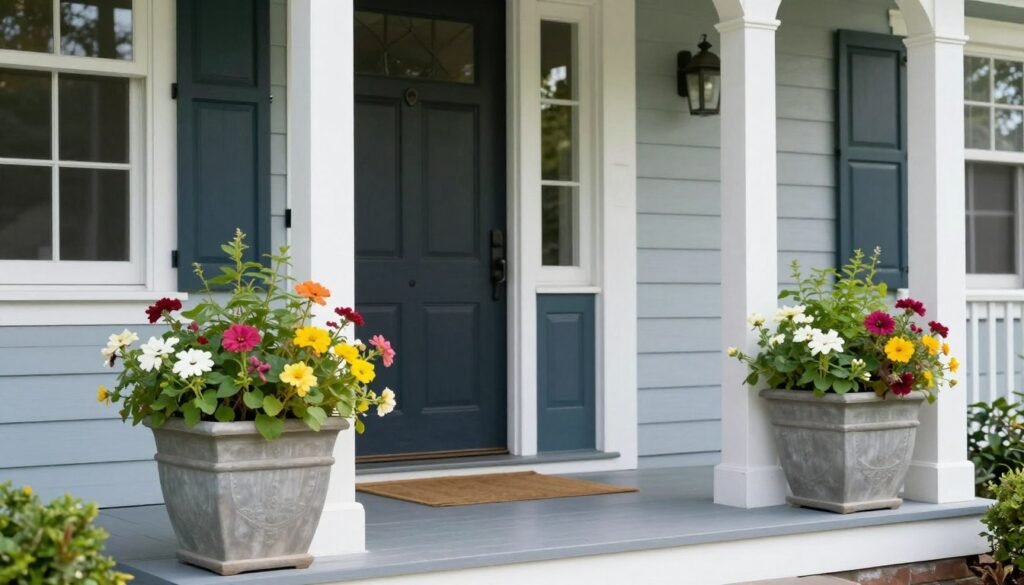
Nothing says classic quite like a pair of matching urns flanking your front door. This symmetrical approach creates balance and formality that perfectly complements traditional architecture. For a timeless look, choose substantial classic urn planters in neutral colors like black, white, or bronze. Fill them with red geraniums for a pop of traditional color, or white petunias for a more subdued elegance.
The key to success with symmetrical planters is consistency—same size, same plants, same soil level. This creates the formal, polished look that’s been adorning fine homes for centuries. For added sophistication, consider raising your urns on decorative pedestals to create more visual impact and bring the flowers closer to eye level.
Window Boxes with Cascading Blooms
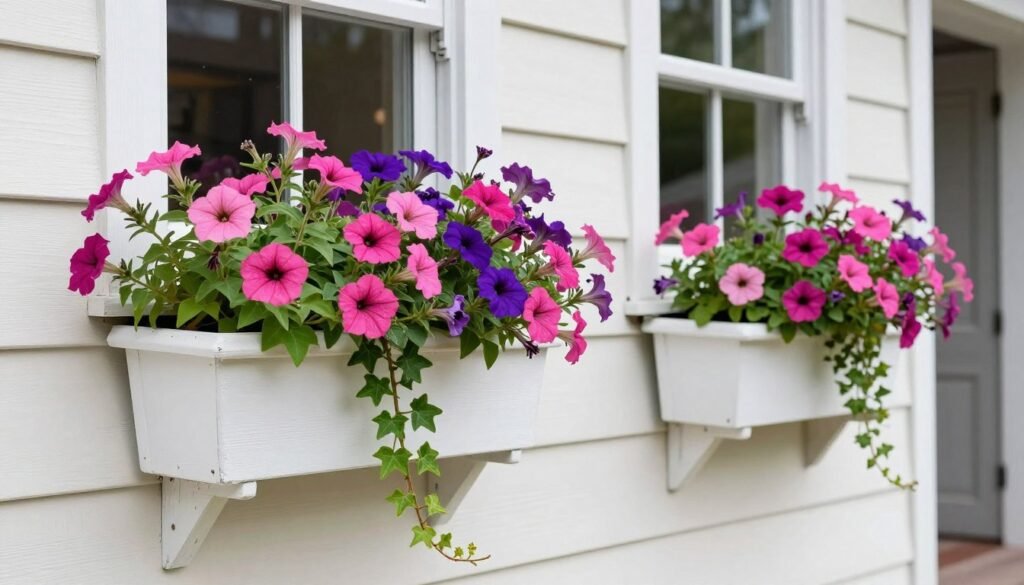
Window boxes add charm and dimension to your home’s facade while showcasing cascading flowers
Window boxes instantly add charm and character to any home front. Mount them beneath windows or along porch railings to create a lush, layered look. Traditional wooden window boxes painted to match your trim create a cohesive look, while wrought iron versions add architectural interest.
For a classic window box display, follow the “thriller, filler, spiller” formula: tall plants in the center or back (thriller), mounding plants to fill the middle space (filler), and trailing plants to cascade over the edges (spiller). Geraniums, petunias, and ivy make a timeless combination that provides continuous color throughout the growing season.
Terra Cotta Pots in Varying Heights
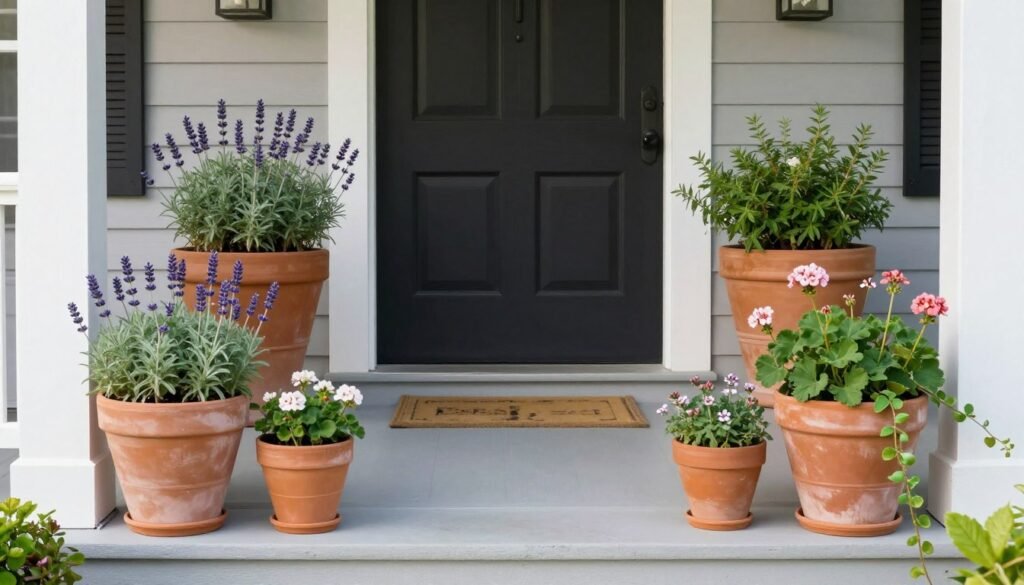
Groupings of terra cotta pots in varying heights create an organic, collected-over-time aesthetic
Terra cotta pots offer warmth and a timeless Mediterranean feel that works with nearly any architectural style. Their natural earthy tone complements both colorful blooms and green foliage beautifully. Create interest by grouping terra cotta pots in varying heights and sizes on your steps or porch.
For a cohesive look with visual variety, plant different specimens in each pot but maintain a color theme throughout. Consider drought-tolerant plants like lavender, rosemary, and succulents which not only look beautiful in terra cotta but also thrive in its porous environment. To prevent your pots from drying out too quickly, consider using pot feet to improve drainage and reduce water staining on your porch.
Modern & Minimalist Front Porch Planter Ideas
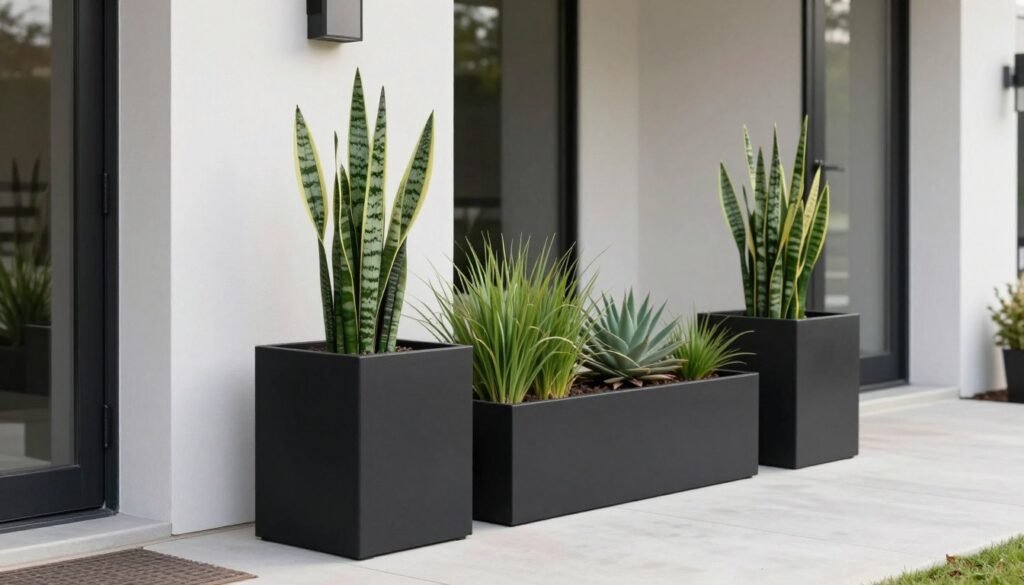
Clean lines and monochromatic planters create a sophisticated modern entrance
Geometric Containers with Architectural Plants
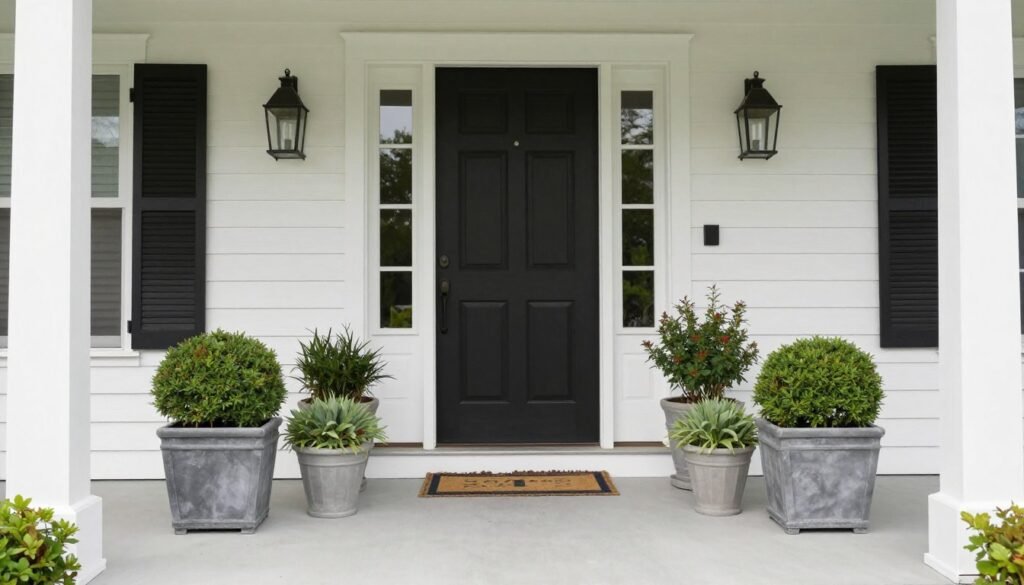
For a contemporary look, opt for planters with clean, geometric shapes. Square or rectangular planters with straight lines complement modern architecture beautifully. Choose containers in monochromatic colors like matte black, white, or concrete gray for a sophisticated, minimalist aesthetic.
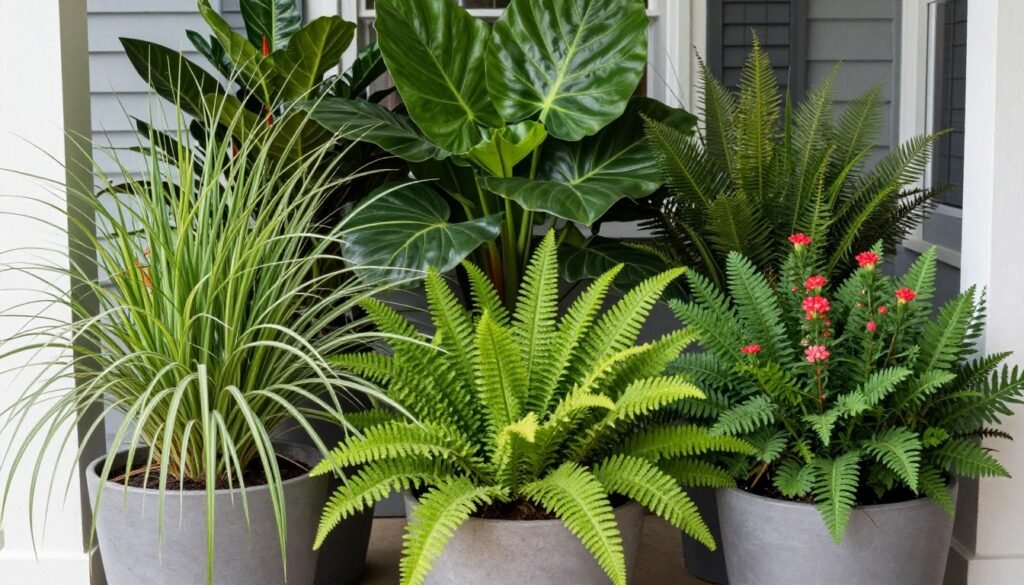
When it comes to plants, focus on architectural varieties with strong shapes and interesting textures rather than abundant flowers. Snake plants, ornamental grasses, succulents, and tropical plants with distinctive leaves make excellent choices. The contrast between the structured containers and the organic plant forms creates visual interest without appearing cluttered.
Monochromatic Color Schemes
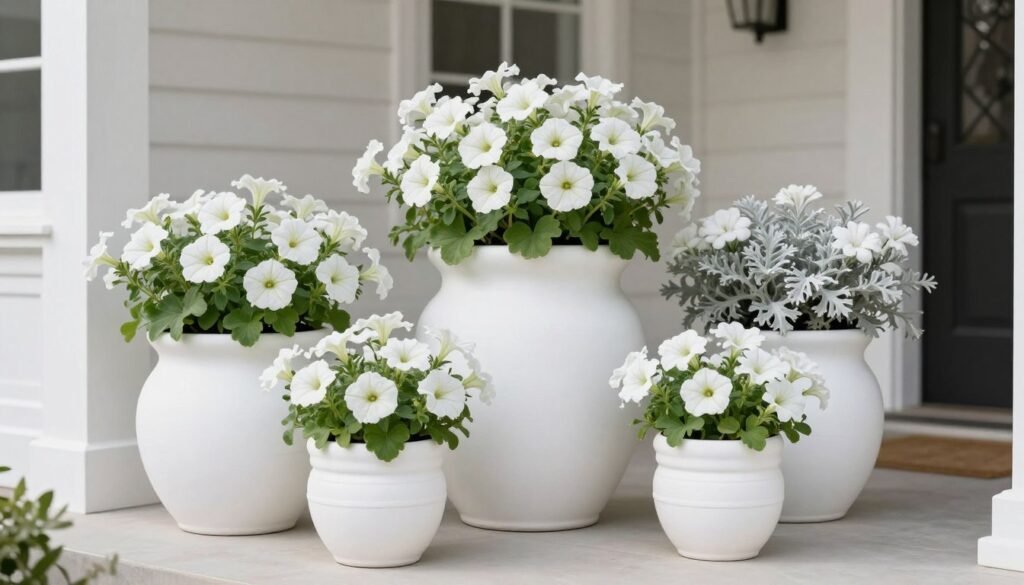
A monochromatic white planter scheme creates a sophisticated, cohesive look
For a truly modern approach, embrace a monochromatic color scheme in your front porch planters. White containers filled with white flowers create a sophisticated, clean look that’s particularly striking against dark exterior walls. Alternatively, black planters with deep green foliage offer dramatic contrast against lighter home exteriors.
To prevent a monochromatic scheme from appearing flat, incorporate plenty of textural variety. Mix smooth-leafed plants with fuzzy ones, broad leaves with fine textures, and different heights and forms. Modern white planters paired with silver-leaved plants like dusty miller, white caladiums, and white petunias create an elegant, cohesive look that feels intentional and designed.
Minimalist Concrete Planters
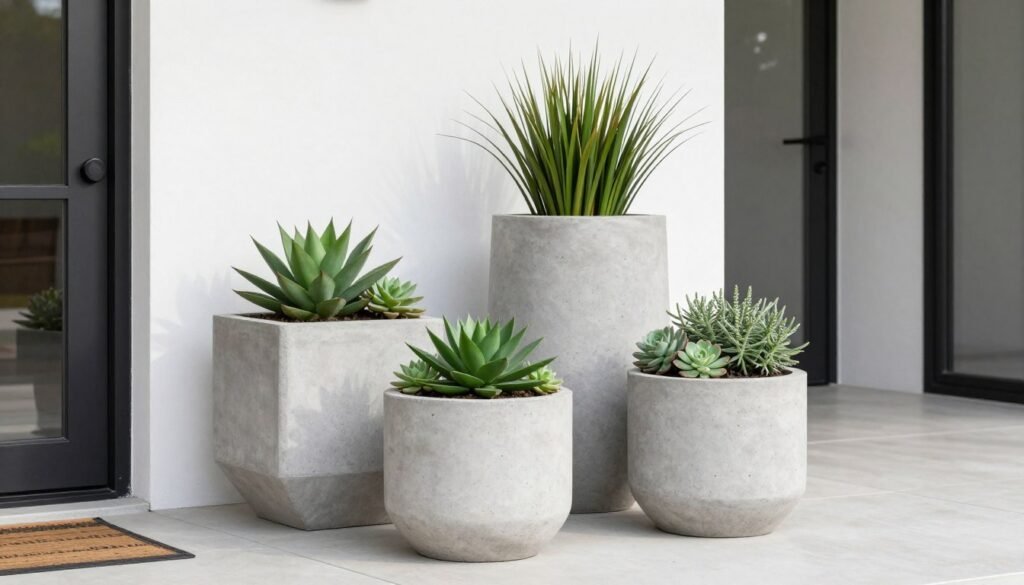
Raw concrete planters with sculptural succulents embody minimalist design principles
Concrete planters offer the perfect blend of industrial chic and organic texture for modern homes. Their neutral gray tone and substantial presence create a grounded, architectural feel. Look for concrete planters with clean lines or interesting geometric shapes to enhance your modern aesthetic.
Pair concrete containers with plants that have a sculptural quality—succulents, agave, and ornamental grasses all work beautifully. The contrast between the raw, industrial finish of the concrete and the organic plant forms creates a compelling visual tension. For a truly minimalist approach, limit yourself to just one or two large statement planters rather than multiple small ones.
Rustic & Natural Front Porch Planter Ideas
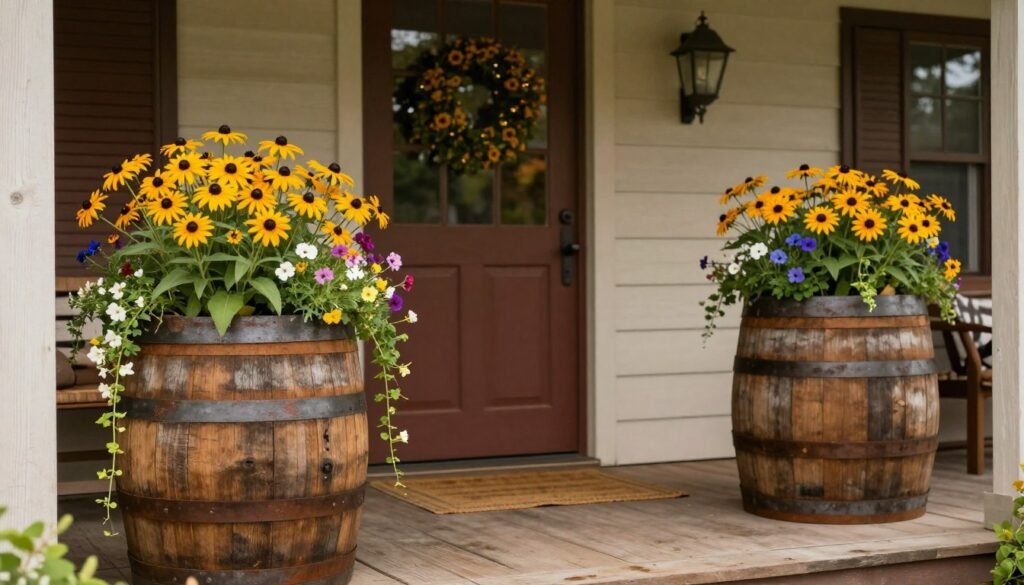
Wooden barrel planters bring farmhouse charm to this welcoming front porch
Whiskey Barrel Planters for Country Charm
Whiskey barrel planters bring instant farmhouse charm to any front porch. Their substantial size makes them perfect for creating dramatic displays, while their weathered wood adds rustic texture. Half whiskey barrels work particularly well on porches with limited space, while full barrels make impressive statements on larger porches.
Fill barrel planters with a mix of colorful annuals for a cottage garden feel. Black-eyed Susans, zinnias, and verbena create a wildflower aesthetic that perfectly complements the rustic container. For a more structured look, plant a small ornamental tree or shrub in the center surrounded by seasonal flowers. The natural aging of the wood over time only enhances the charm of these versatile containers.
Galvanized Metal Tubs and Buckets
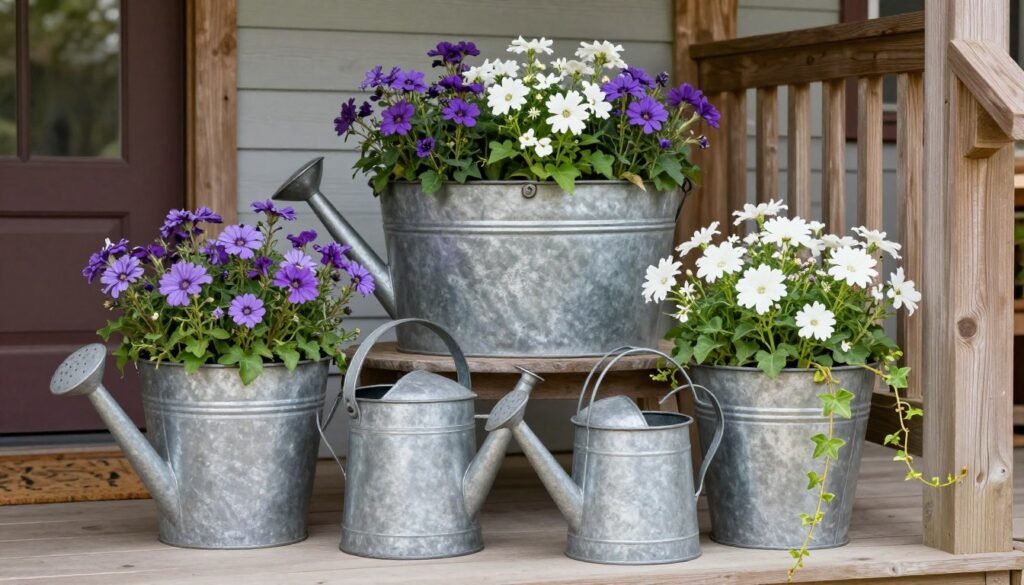
Repurposed galvanized containers add industrial farmhouse flair to this porch display
Galvanized metal containers bring industrial farmhouse flair to your front porch. Whether you choose new galvanized planters or repurpose vintage finds like washtubs, buckets, or watering cans, these containers add character and charm. Their silvery finish provides a beautiful contrast against colorful blooms and green foliage.
When using galvanized containers, be sure to drill drainage holes in the bottom if they don’t already exist. Line the bottom with a layer of small rocks or broken pottery pieces to improve drainage. For an authentic farmhouse look, embrace a bit of asymmetry and variety—mix different sizes and shapes of galvanized containers for a collected-over-time feel that tells a story.
Natural Woven Baskets and Crates
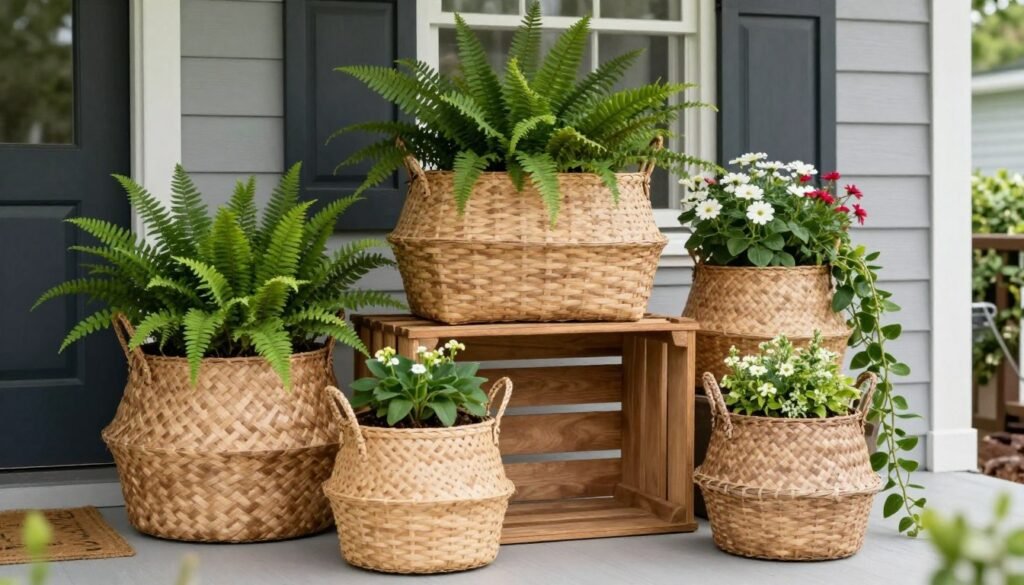
Woven baskets and wooden crates add organic texture and warmth to this porch vignette
For a softer rustic look, incorporate natural woven materials into your front porch planter scheme. Basket planters add wonderful texture and a handcrafted feel that’s both inviting and organic. Similarly, wooden crates can be repurposed into charming planters that bring farmhouse style to your entrance.
When using natural fiber baskets outdoors, look for those specifically designed for exterior use, or line regular baskets with plastic to protect them from moisture. Place potted plants inside rather than planting directly in the basket to extend its lifespan. Ferns, trailing ivy, and flowering plants with a slightly wild growth habit complement the natural aesthetic of these containers beautifully.
Vertical Front Porch Planter Ideas for Small Spaces
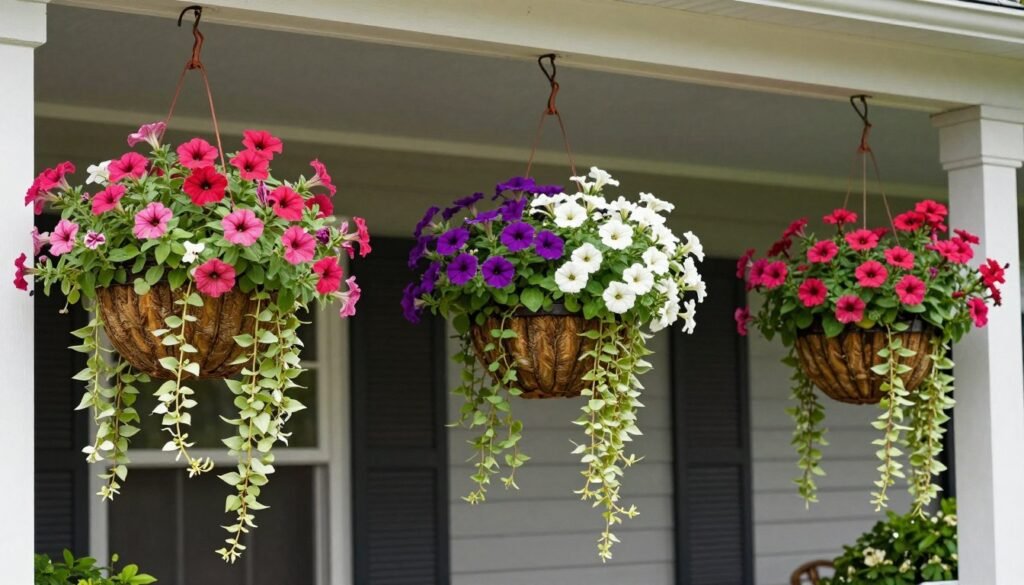
Hanging baskets maximize vertical space while adding vibrant color above eye level
Hanging Baskets for Overhead Impact
Hanging baskets are perfect for small porches where floor space is limited. They draw the eye upward, adding vertical interest while keeping walkways clear. Choose sturdy hanging planters designed for outdoor use with built-in drainage and strong hanging mechanisms.
For maximum impact, select trailing plants that will cascade dramatically from the baskets. Petunias, million bells, fuchsias, and ivy are excellent choices that provide abundant color and movement. Consider the maintenance needs of hanging baskets—they tend to dry out more quickly than ground-level planters and may need daily watering during hot weather. For easier maintenance, look into self-watering hanging baskets that extend the time between waterings.
Wall-Mounted Planters and Pocket Gardens
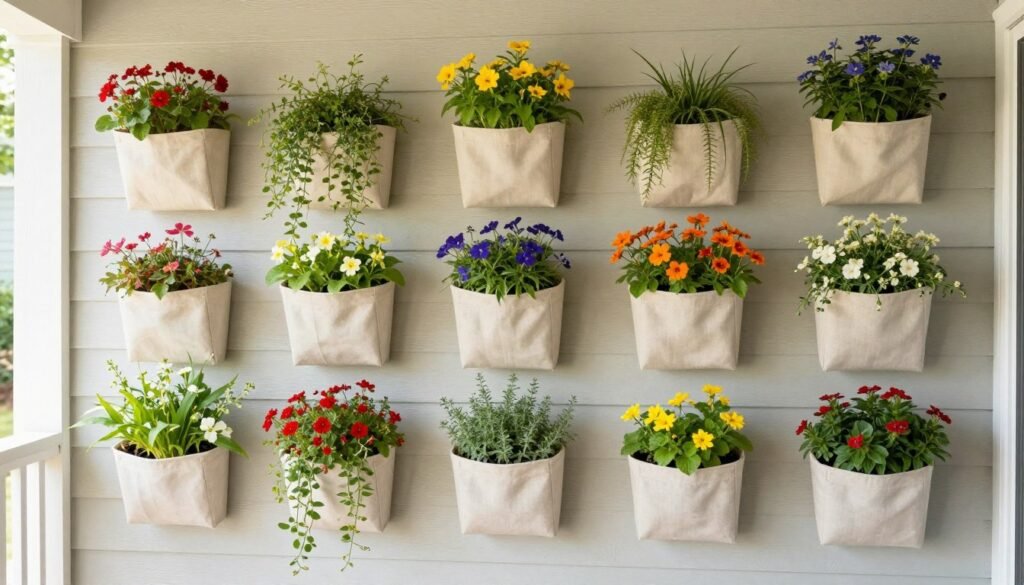
Wall-mounted planters transform unused vertical space into a living garden display
Wall-mounted planters turn unused vertical surfaces into opportunities for greenery. Wall planters come in many styles, from traditional window-box shapes to modern modular systems that create living walls. Look for options that securely attach to your home’s exterior and provide adequate drainage that won’t damage your siding.
Fabric pocket planters offer another vertical solution, creating multiple planting pockets in a small footprint. These are particularly good for herbs, succulents, and small flowering plants. When designing a vertical garden, consider how water will flow through the system—plants at the bottom will receive runoff from those above, so place more drought-tolerant varieties at the top and those that appreciate more moisture toward the bottom.
Tiered Plant Stands for Vertical Display
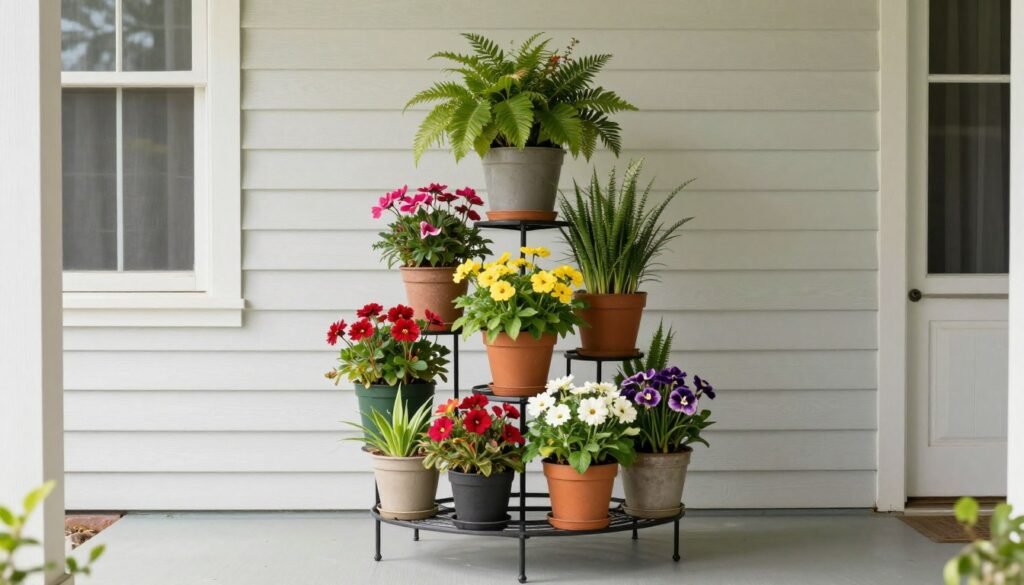
A tiered plant stand transforms a collection of small pots into an impressive vertical display
Tiered plant stands offer an excellent solution for displaying multiple plants in a small footprint. Multi-level plant stands create instant visual interest through varying heights and allow you to showcase a collection of smaller pots that might otherwise look cluttered if placed individually.
When arranging plants on a tiered stand, place taller plants at the back or top level, with shorter or trailing plants toward the front or bottom. This creates a cascading effect that’s visually pleasing. Consider using a cohesive color scheme or container style throughout the display for a more designed, intentional look. Metal stands in black or bronze offer a neutral backdrop that lets your plants take center stage, while wooden stands add warmth and rustic charm.
DIY & Upcycled Front Porch Planter Ideas
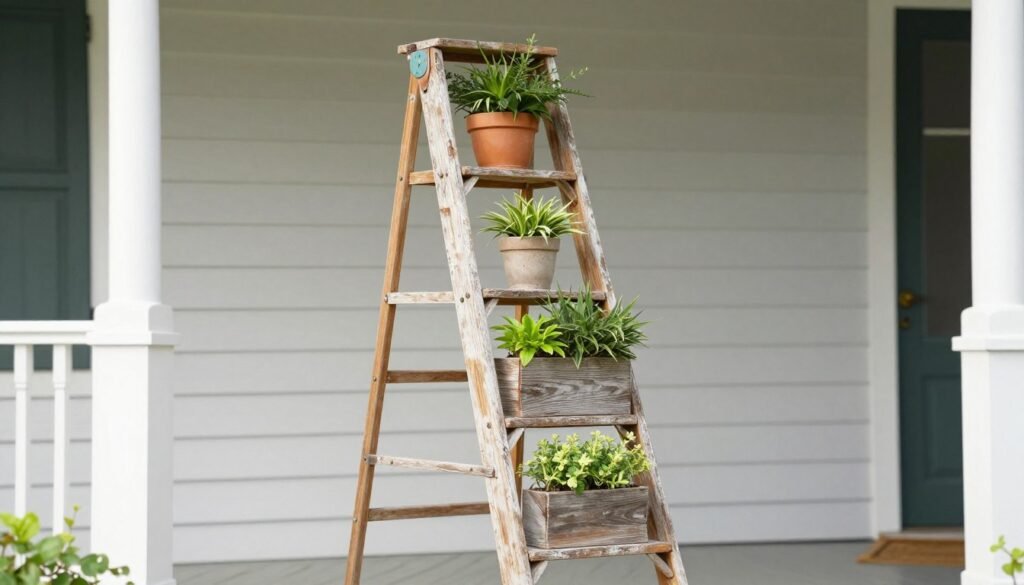
A repurposed vintage ladder creates a charming tiered display for multiple plants
Repurposed Vintage Finds
Breathing new life into vintage items creates planters with character and story. Old wooden toolboxes, antique watering cans, vintage suitcases, and even worn-out boots can become charming vessels for plants. Look for items with natural patina and weathering that adds to their charm rather than detracting from it.
When repurposing non-traditional items as planters, be sure to add drainage holes and consider lining them with plastic if the material might deteriorate with constant moisture. Items like vintage colanders and metal baskets already have built-in drainage, making them perfect candidates for planting. Visit thrift stores, flea markets, or even your own attic to find unique containers that will give your porch one-of-a-kind personality.
Painted Terra Cotta Transformations
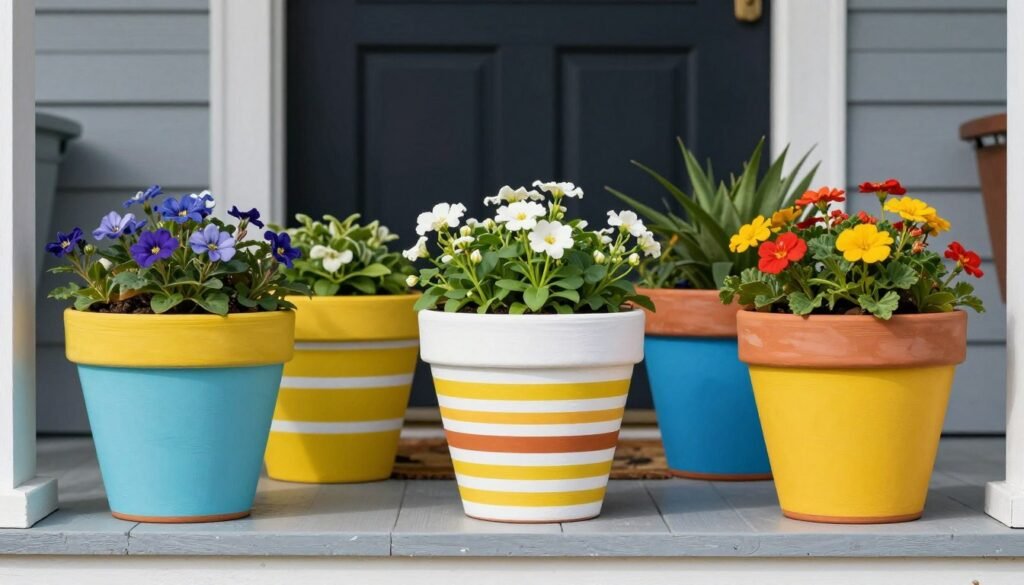
Hand-painted terra cotta pots add personalized color and pattern to this cheerful display
Inexpensive terra cotta pots can be transformed into custom creations with a little paint and creativity. Start with clean, dry terra cotta pots and apply a coat of exterior primer before adding your design. Use exterior acrylic paint for the best durability outdoors.
Consider painting the entire pot in a bold color that complements your home’s exterior, or create patterns like stripes, polka dots, or geometric designs. For a cohesive look, choose a limited color palette and repeat it across multiple pots. After the paint is completely dry, apply a clear outdoor sealer to protect your design from the elements. This simple DIY project allows you to create custom planters that perfectly match your style and color scheme.
Pallet Wood Planter Boxes
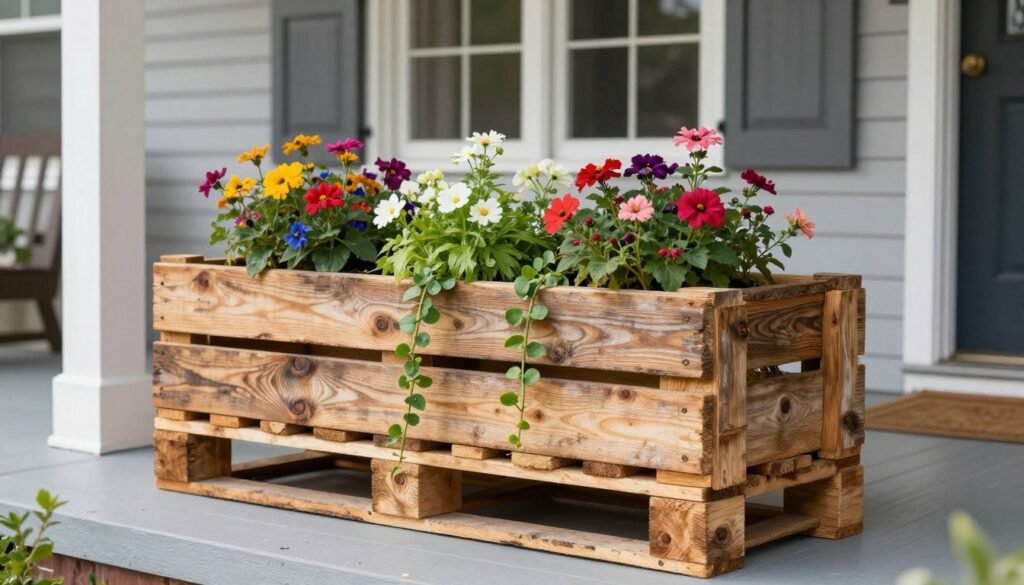
Handcrafted planter boxes made from reclaimed pallet wood add rustic charm and sustainability
Reclaimed pallet wood offers an eco-friendly and budget-conscious material for creating custom planter boxes. With basic tools and some exterior wood screws, you can construct simple rectangular planters that add rustic charm to your front porch. Leave the wood natural for a weathered look, or apply exterior stain or paint to match your home.
When working with pallet wood, be sure to select pallets that are heat-treated (marked with “HT”) rather than chemically treated, especially when using them for plants. Line the inside of your finished planter with landscape fabric before adding soil to help retain moisture and prevent soil from washing out. Add several drainage holes in the bottom, and consider raising the planter slightly off the porch floor with pot feet to allow for proper drainage.
Seasonal & Themed Front Porch Planter Ideas
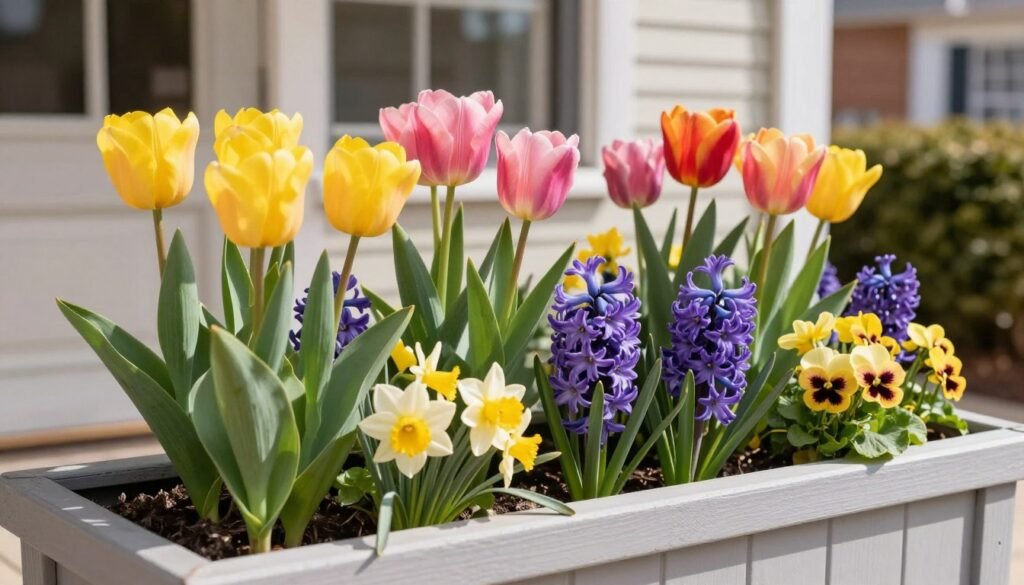
Spring planters bursting with tulips, daffodils and pansies create a cheerful welcome
Spring Awakening Displays
Welcome the end of winter with planters that celebrate spring’s fresh start. Early-blooming bulbs like tulips, daffodils, and hyacinths make perfect additions to spring porch planters. Plant these bulbs in fall in frost-resistant containers that can withstand winter temperatures, or purchase pre-grown potted bulbs in spring to drop into your display.
Complement spring bulbs with cool-weather annuals like pansies, violas, and sweet alyssum that can handle light frosts. Add fresh green accents with herbs like parsley and thyme that also tolerate cooler temperatures. For a cohesive spring look, embrace a pastel color palette of soft pinks, lavenders, yellows, and blues that evoke the season’s gentle awakening.
Summer Abundance Arrangements
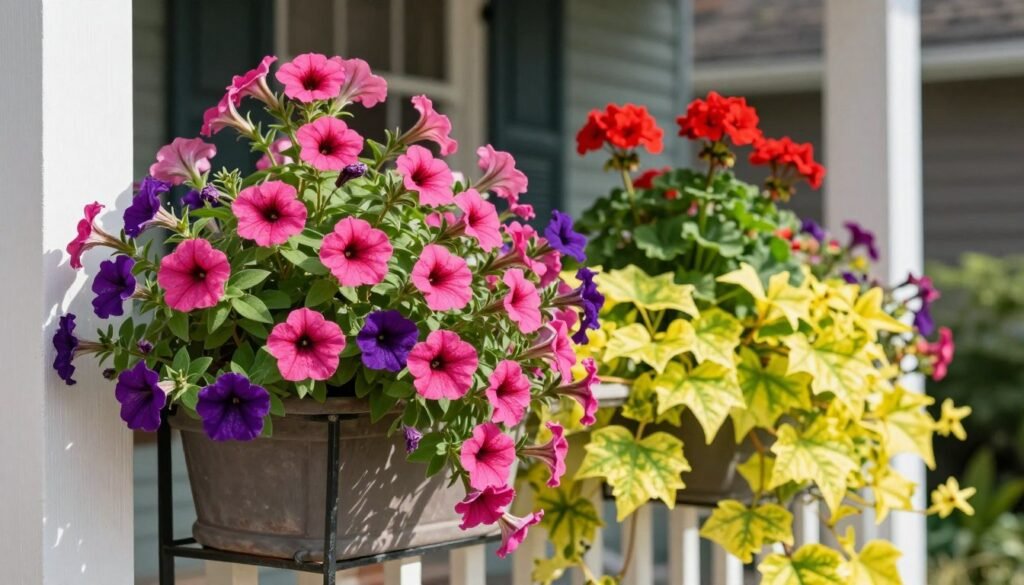
Summer planters showcase abundant blooms in vibrant colors with cascading foliage
Summer is the season of abundance, and your planters should reflect this with lush, overflowing arrangements. Heat-loving annuals like petunias, geraniums, calibrachoa, and verbena provide reliable color all season long. Add dramatic foliage with sweet potato vine, coleus, or ornamental grasses for textural contrast.
During summer’s heat, proper watering becomes crucial. Consider incorporating water-storing crystals into your potting mix to reduce watering frequency, or invest in self-watering planters that maintain consistent moisture levels. For a cohesive summer look, embrace bold, saturated colors that stand up to the bright summer light—think hot pinks, electric blues, sunny yellows, and vibrant oranges.
Fall Harvest Containers
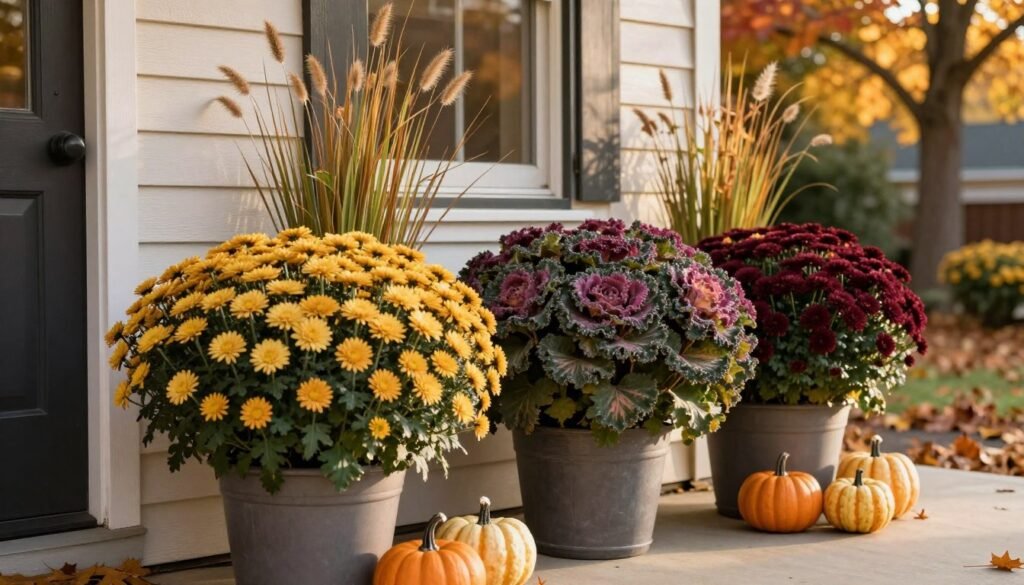
Fall planters combine chrysanthemums, ornamental kale, and decorative pumpkins for seasonal charm
As summer fades, transition your front porch planters to celebrate autumn’s rich palette and textures. Chrysanthemums are the quintessential fall flower, offering dome-shaped blooms in harvest hues of gold, bronze, burgundy, and purple. Complement mums with ornamental kale or cabbage for interesting texture and cool-weather performance.
Enhance your fall planters with natural elements like small pumpkins, gourds, or Indian corn. Ornamental grasses that develop attractive seed heads in fall add height and movement. For a cohesive autumnal look, embrace a warm color palette of amber, rust, burgundy, and deep purple that echoes the changing leaves. Decorative pumpkins placed among your planters complete the seasonal display.
Winter Evergreen Arrangements
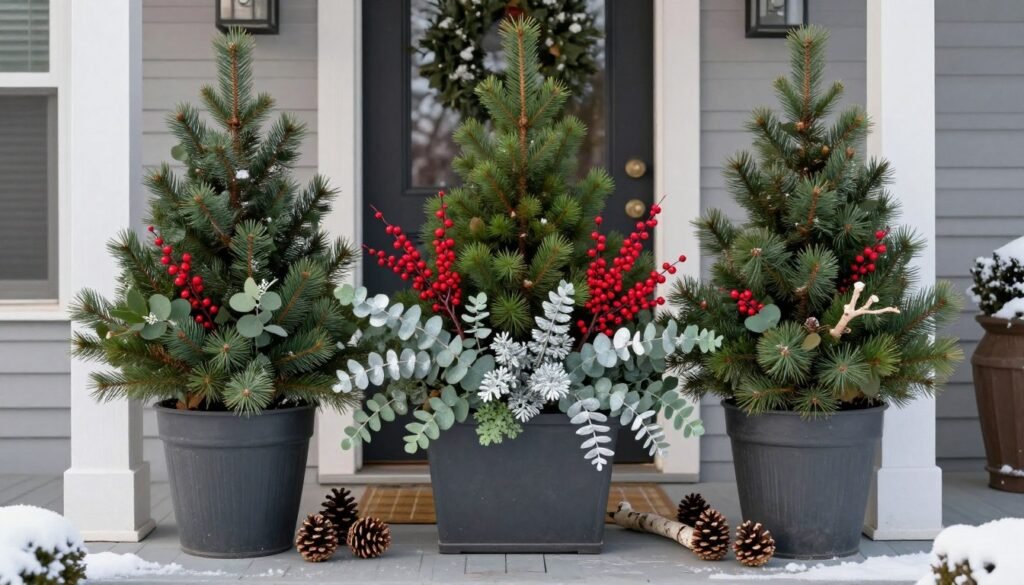
Winter planters combine evergreen boughs, berries, and natural elements for year-round interest
Keep your front porch inviting through winter with planters that showcase evergreen elements and interesting textures. Start with a base of soil in weather-resistant containers, then insert cut branches of spruce, pine, cedar, or boxwood to create a foundation of green. Add visual interest with red-berried branches like winterberry holly or rose hips.
Incorporate natural elements like pinecones, birch branches, or magnolia leaves for additional texture and interest. Consider adding outdoor-rated string lights to your winter containers for a magical evening glow. Battery-operated string lights eliminate the need for cords and outlets. For a cohesive winter look, embrace a palette of deep greens, whites, silvers, and rich reds that stand out against winter’s neutral backdrop.
Pro Tips for Front Porch Planter Success
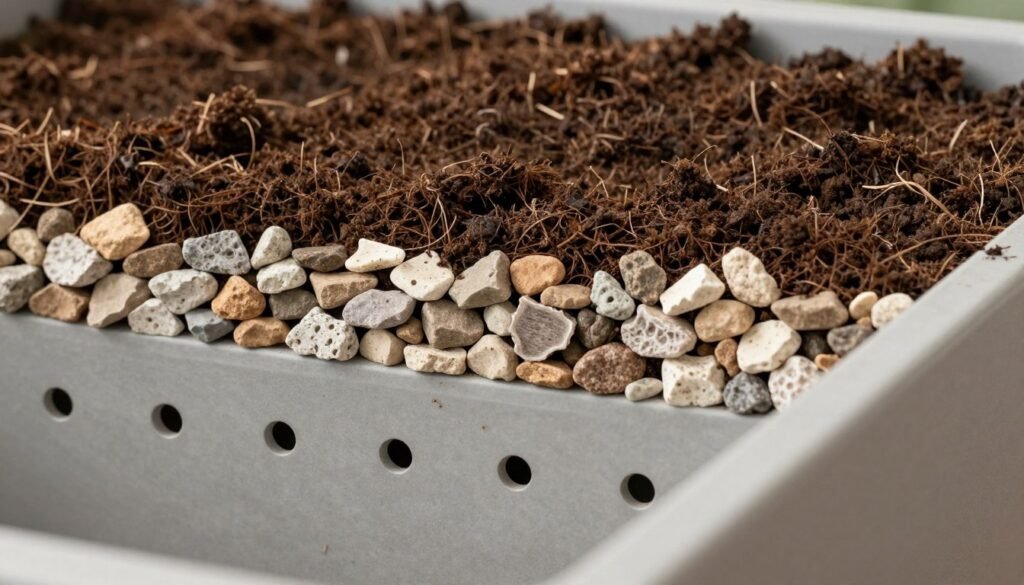
Proper drainage is essential for healthy plants – always include drainage holes and a layer of rocks
Drainage is Key
Proper drainage is perhaps the most important factor in container gardening success. Always ensure your planters have adequate drainage holes in the bottom. If you fall in love with a decorative container that doesn’t have drainage, you can either drill holes yourself (use a special drill bit designed for the material) or use it as a decorative outer pot with a properly draining pot nested inside.
Create a drainage layer at the bottom of your containers by adding an inch or two of small rocks, broken pottery pieces, or horticultural charcoal. This prevents soil from clogging the drainage holes and improves airflow around the roots. For pots placed directly on your porch, use pot feet or risers to elevate them slightly, allowing water to drain freely and preventing water stains on your porch surface.
The “Thriller, Filler, Spiller” Formula
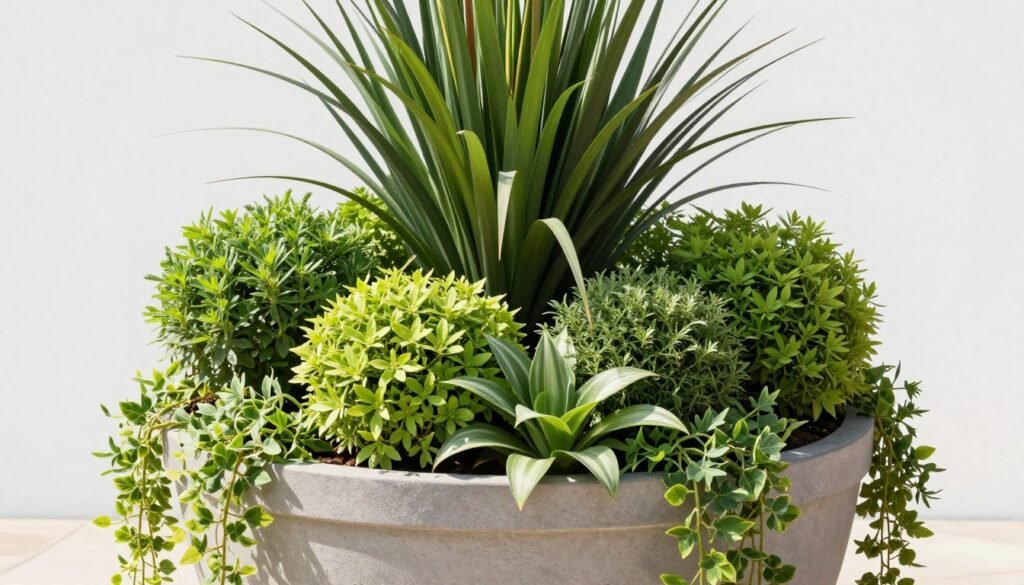
The thriller-filler-spiller approach creates professional-looking container gardens with visual balance
Professional gardeners often use the “thriller, filler, spiller” approach to create well-balanced container gardens. The “thriller” is a tall, attention-grabbing plant placed in the center or back of the container. Good thrillers include ornamental grasses, cannas, or tall flowering plants like salvias or snapdragons.
The “fillers” are medium-height, mounding plants that surround the thriller and add fullness to the arrangement. Geraniums, petunias, and coleus make excellent fillers. Finally, “spillers” are trailing plants that cascade over the edges of the container, softening the arrangement and creating vertical interest. Sweet potato vine, trailing petunias, and ivy are perfect spillers. Using this three-part formula ensures your containers look full and professionally designed from the moment they’re planted.
Scale and Proportion
Properly scaled planters enhance architectural features without overwhelming the space
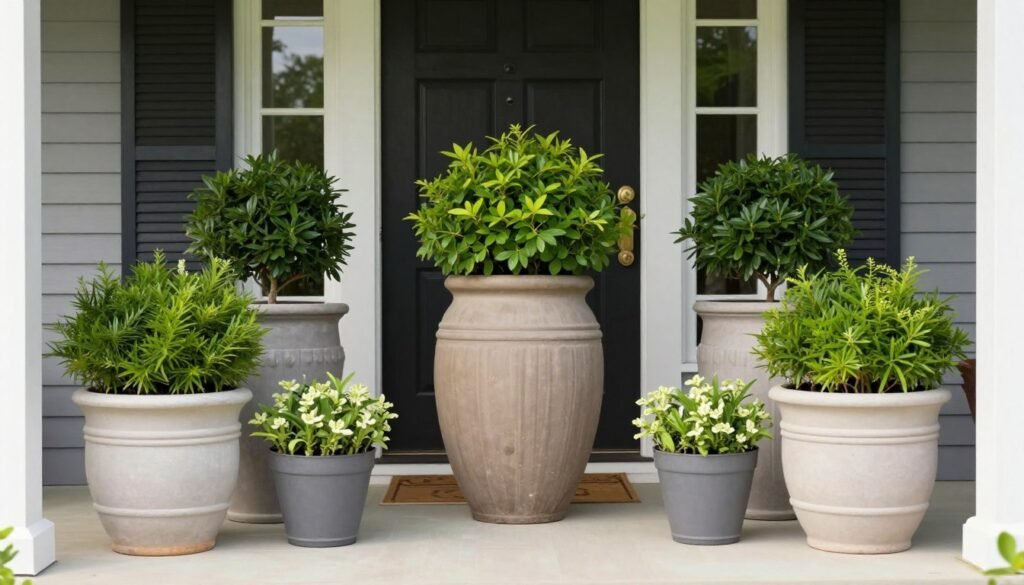
Choosing the right size planters for your space is crucial for a balanced look. As a general rule, larger porches with grand entrances can handle substantial planters, while smaller spaces look best with more moderately sized containers. Your planters should be proportional to your front door and the overall scale of your home.
For a balanced composition, consider using planters that are approximately one-third the height of your door when placed on the ground. If you’re using a pair of planters to flank your entrance, they should be identical in size and style for a formal look. Large statement planters make more impact than multiple small pots, which can look cluttered. Remember that plants will grow and expand beyond the container, so account for their mature size when planning your arrangement.
Soil and Fertilizer Essentials
Quality potting mix and slow-release fertilizer provide the foundation for thriving container plants
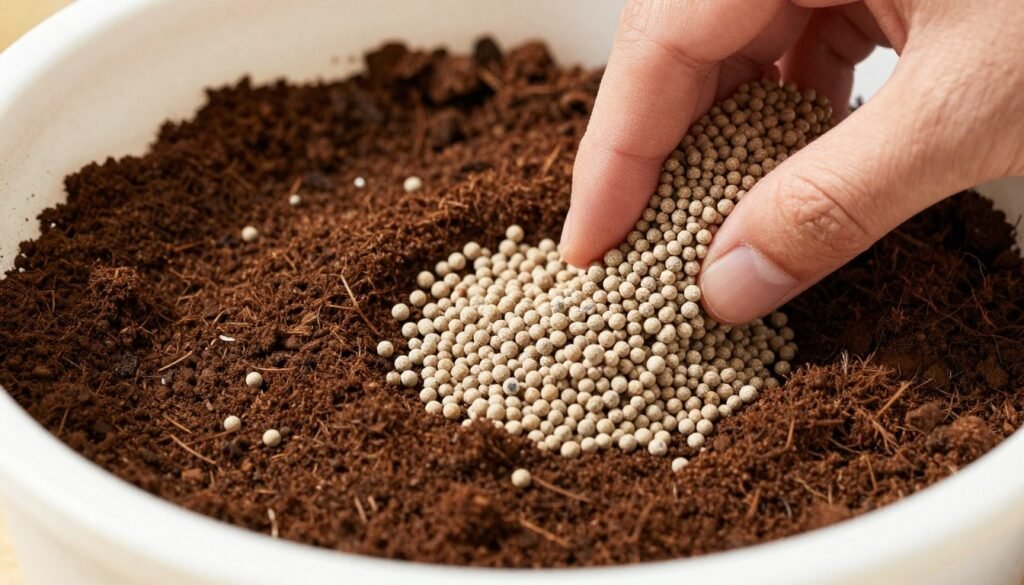
Never use garden soil in containers—it’s too heavy and doesn’t provide the drainage container plants need. Instead, invest in high-quality potting mix specifically formulated for containers. These mixes contain ingredients like peat moss, perlite, and vermiculite that create the ideal balance of moisture retention and drainage.
Container plants deplete nutrients quickly and need regular feeding. Incorporate slow-release fertilizer into your potting mix at planting time to provide a steady supply of nutrients. Supplement this with liquid fertilizer every 2-4 weeks during the growing season, following package directions for dilution rates. Reduce or eliminate fertilizing in fall and winter when plant growth naturally slows.
Styling & Composition Tips for Front Porch Planters
Grouping planters in odd numbers and varying heights creates visual rhythm and interest
The Power of Odd Numbers
Designers often rely on the “rule of odds” when creating visually pleasing arrangements. Groups of three, five, or seven planters tend to look more dynamic and intentional than even-numbered groupings. This odd-number approach creates visual interest and a more natural, less formal appearance.
When grouping containers, vary their heights for additional dimension. Place taller planters behind shorter ones, or use plant stands or risers to elevate some pots. The varying heights create a more layered, professional-looking display. For a cohesive look within your groupings, maintain some element of consistency—either similar container materials, coordinating colors, or complementary plant selections.
Creating Color Harmony
A thoughtful color scheme creates harmony between your planters and home’s exterior
Your planter color scheme should complement your home’s exterior for a cohesive look. Consider pulling colors from your home’s siding, trim, or front door for inspiration. For a fool-proof approach, choose a color wheel strategy: complementary colors (opposite on the color wheel) for high-energy contrast, analogous colors (adjacent on the color wheel) for harmonious flow, or monochromatic schemes (variations of one color) for sophisticated elegance.
Don’t forget to consider how your color choices will appear throughout the day as lighting changes. Some colors, particularly purples and blues, can appear muted in bright sunlight, while whites and yellows tend to pop. For year-round interest, incorporate plants with colorful foliage rather than relying solely on flowers, which have limited blooming periods. Coleus, heuchera, and ornamental sweet potato vine offer vibrant leaves that provide lasting color.
Layering Textures and Forms
Combining different leaf shapes and textures creates rich visual interest even without flowers
A truly sophisticated planter arrangement incorporates variety in plant textures and forms. Combine plants with different leaf shapes—broad and round, narrow and spiky, feathery and fine—to create visual contrast and interest. This textural variety ensures your planters look interesting even when not in bloom.
Consider the visual weight of different plants as well. Plants with large, dark leaves appear heavier than those with small, light-colored foliage. Balance these visual weights throughout your composition. For additional textural interest, incorporate decorative moss, small river rocks, or bark chips as a top dressing on your soil. These finishing touches not only add texture but also help retain soil moisture and give your planters a professionally designed appearance.
Final Checklist for Front Porch Planter Success
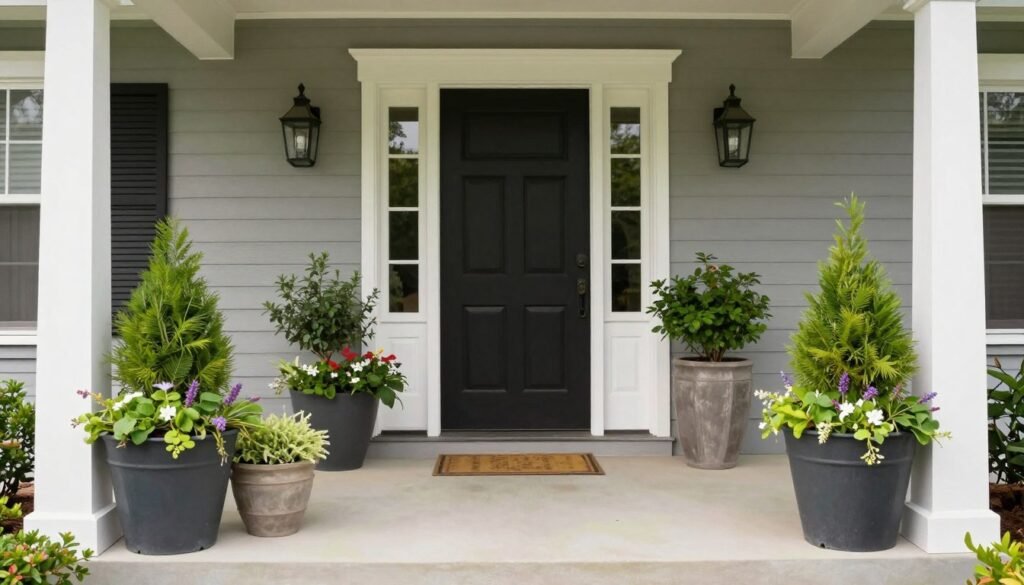
A thoughtfully designed front porch with planters that enhance the home’s architecture and create a welcoming entrance
Choose containers that complement your home’s architectural style
Ensure all planters have adequate drainage holes
Use high-quality potting mix specifically formulated for containers
Select plants appropriate for your porch’s light conditions
Follow the “thriller, filler, spiller” formula for professional-looking arrangements
Group containers in odd numbers for visual interest
Vary heights and sizes while maintaining some element of consistency
Create a color scheme that complements your home’s exterior
Incorporate different textures and leaf forms for year-round interest
Consider seasonal transitions and plan for replacements as needed
Establish a regular watering and fertilizing schedule
Add pot feet under containers to protect your porch surface
Ready to Transform Your Front Porch?
Creating beautiful front porch planters doesn’t have to be complicated or expensive. Start with quality containers, good soil, and plants suited to your conditions. Experiment with different combinations until you find what works best for your space and style. Most importantly, have fun with the process and enjoy the welcoming entrance you create!
Your front porch planters are more than just containers for plants—they’re an expression of your personal style and a warm welcome to everyone who visits your home. Whether you prefer classic elegance, modern minimalism, rustic charm, or seasonal displays, the right combination of containers and plants can dramatically enhance your home’s curb appeal and create a memorable first impression.
Remember that creating beautiful front porch planters is an evolving process. Don’t be afraid to experiment with different combinations, learn from what works (and what doesn’t), and change things up with the seasons. The joy of container gardening is its flexibility—you can always move things around, try new plants, or completely reinvent your look. With the ideas and tips we’ve shared, you’re well-equipped to create front porch planters that will make your home the envy of the neighborhood!
Creating a beautiful outdoor oasis doesn’t have to drain your wallet. With a little creativity and some strategic planning, you can transform your patio into a relaxing retreat that feels both luxurious and personal. Whether you have a tiny apartment balcony or a spacious backyard deck, these budget-friendly patio decorating ideas will help you maximize…
Finding the perfect bridesmaid hair can feel overwhelming with so many beautiful options to choose from. Whether you’re coordinating looks for your entire wedding party or searching for a style that flatters your unique hair texture, the right hairstyle makes all the difference on the big day. This comprehensive guide showcases over fifty bridesmaid hair…
A quinceañera marks a pivotal moment in a young woman’s life—the beautiful transition from childhood to womanhood at age fifteen. This cherished tradition deserves to be celebrated with decorations that capture the essence of this magical milestone. Whether you’re envisioning an elegant fairy tale theme, a vibrant cultural celebration, or a modern glamorous affair, the…
Your wedding day flies by in a beautiful blur of emotions and memories. A wedding scrapbook transforms those fleeting moments into a tangible treasure you can hold and revisit for years to come. Unlike digital photos that sit forgotten on devices, a handcrafted scrapbook album tells your love story through carefully chosen photos, meaningful embellishments,…
Few footwear brands have achieved the iconic status of Converse shoes. From basketball courts to rock concerts, these canvas classics have walked through decades of fashion evolution while maintaining their distinctive charm. Whether you’re a longtime fan or considering your first pair, this guide will walk you through everything you need to know about these…
There’s something undeniably romantic about vintage style engagement rings. These timeless pieces capture the artistry and romance of bygone eras while offering a unique alternative to contemporary designs. Whether you’re drawn to the geometric precision of Art Deco, the ornate details of Victorian craftsmanship, or the delicate beauty of Edwardian pieces, vintage-inspired rings tell a…