DIY Cardboard Cat House: Creative Ideas for Your Feline Friend
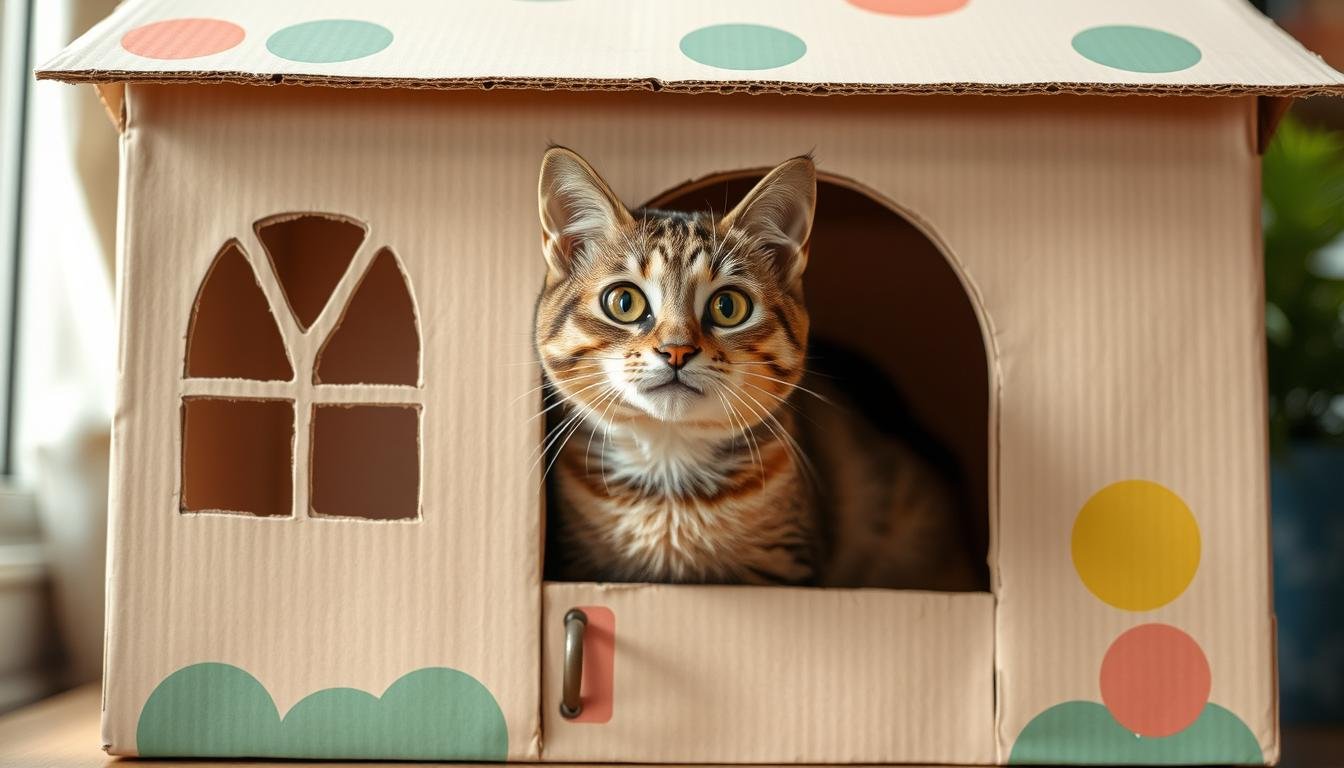
Creating a cardboard cat house is one of the most rewarding DIY projects for cat owners. Not only does it provide your feline friend with a cozy retreat, but it also recycles materials you might otherwise throw away. Cats naturally gravitate toward cardboard boxes—there’s something about these simple structures that appeals to their instincts for security and comfort. In this guide, we’ll explore how to transform ordinary cardboard into extraordinary cat havens that both you and your pet will love.
Why Your Cat Needs a Cardboard Cat House
Before diving into the how-to, let’s understand why cardboard cat houses are so beneficial for our feline companions. Cats are territorial creatures who appreciate having their own space. A dedicated cardboard cat house offers numerous advantages:
Provides a safe retreat when your cat feels stressed or overwhelmed
Satisfies natural instincts to hide and observe surroundings
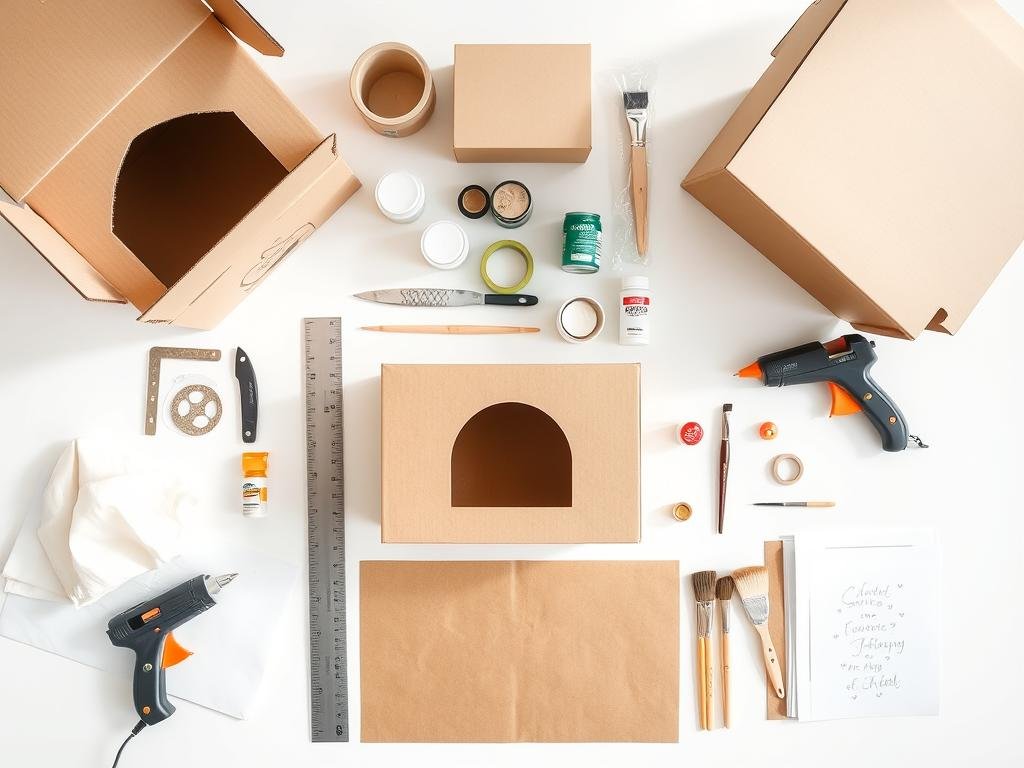
Creating a cardboard cat house doesn’t require expensive materials. Most items you’ll need are probably already in your home or can be obtained for free from local stores. Here’s what you’ll need to get started:
Essential Items
Optional Decorative Items
Tools Needed
Sturdy cardboard boxes (medium to large)
Non-toxic craft paint
Utility knife or box cutter
Additional cardboard sheets for roofing
Colored paper or contact paper
Metal ruler (for clean, safe cuts)
Hot glue gun and glue sticks
Fabric scraps for cushioning
Pencil for marking
Packing tape for reinforcement
Ribbon, washi tape, or stickers
Scissors
Soft blanket or cushion for inside
Cat-safe plants (real or artificial)
Measuring tape
Get Quality Supplies
Using the right tools makes your project easier and more durable!
Step-by-Step Guide to Building a Basic Cardboard Cat House
Let’s start with a simple, functional design that you can later customize to your heart’s content. This basic structure provides a solid foundation for any creative embellishments you might want to add.
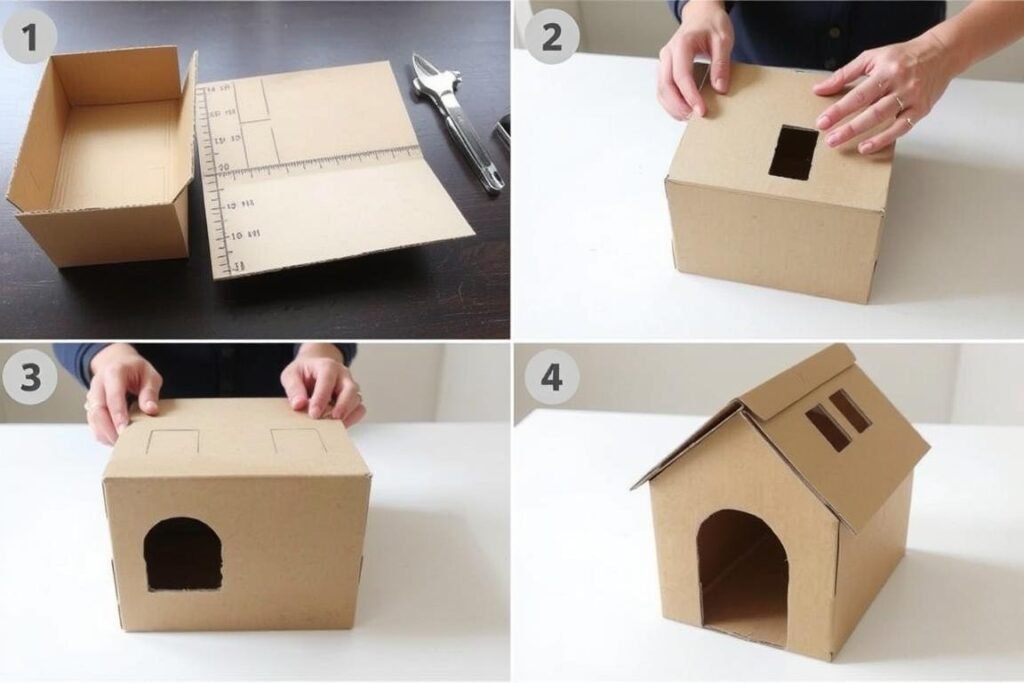
Select Your Box: Choose a sturdy cardboard box large enough for your cat to comfortably sit, stand, and turn around in. For most adult cats, a box approximately 18-24 inches in each dimension works well.
Prepare the Box: Securely tape the bottom of the box closed. If using a box with top flaps, you can either remove them completely or use them to create a peaked roof.
Design the Entrance: Using a pencil, draw a doorway on one side of the box. The opening should be large enough for your cat to enter comfortably—about 6-8 inches wide and 8-10 inches tall. A rounded top adds a decorative touch.
Cut the Entrance: Place a cutting mat inside the box behind your door outline. Using a utility knife and metal ruler, carefully cut along your pencil lines. Always cut away from yourself for safety.
Add Windows (Optional): Draw and cut out 1-2 windows on the sides of the box. These provide ventilation and allow your cat to observe their surroundings while feeling secure.
Create the Roof: If using box flaps, fold them to create a peaked roof and secure with hot glue. Alternatively, cut a separate piece of cardboard slightly larger than the box top and fold it along the center to create a classic house shape.
Secure the Structure: Use hot glue to attach the roof to the main structure. Reinforce any seams with packing tape for added durability.
Add a Soft Base: Place a small blanket, towel, or cat bed inside to make the floor comfortable for your cat.
Safety Tip: Always let hot glue cool completely before allowing your cat near the house. Check for any sharp edges and cover them with tape to prevent injuries.
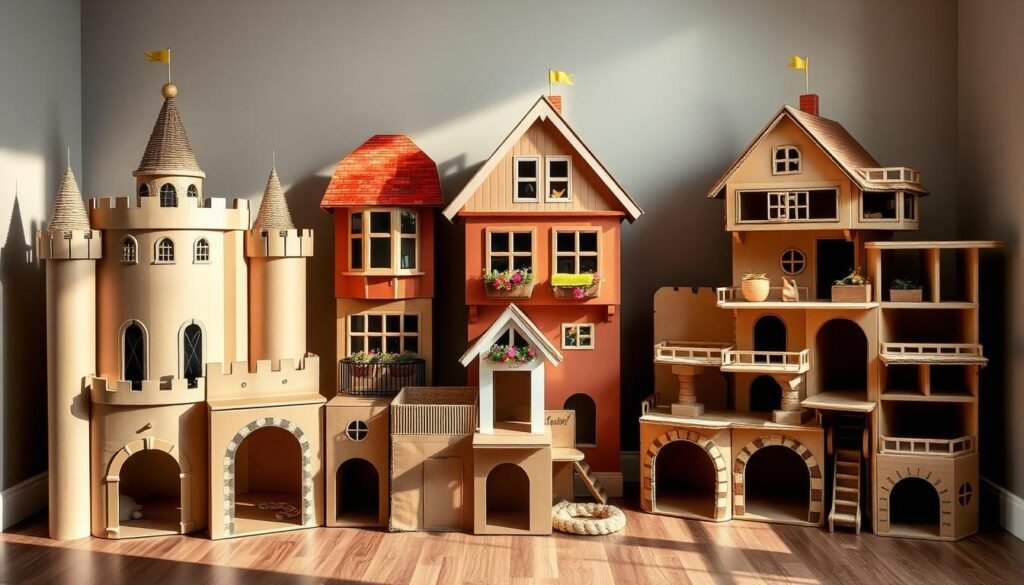
Once you’ve mastered the basic structure, let your creativity shine with these themed designs. Each offers unique features that cats love while adding a decorative element to your home.
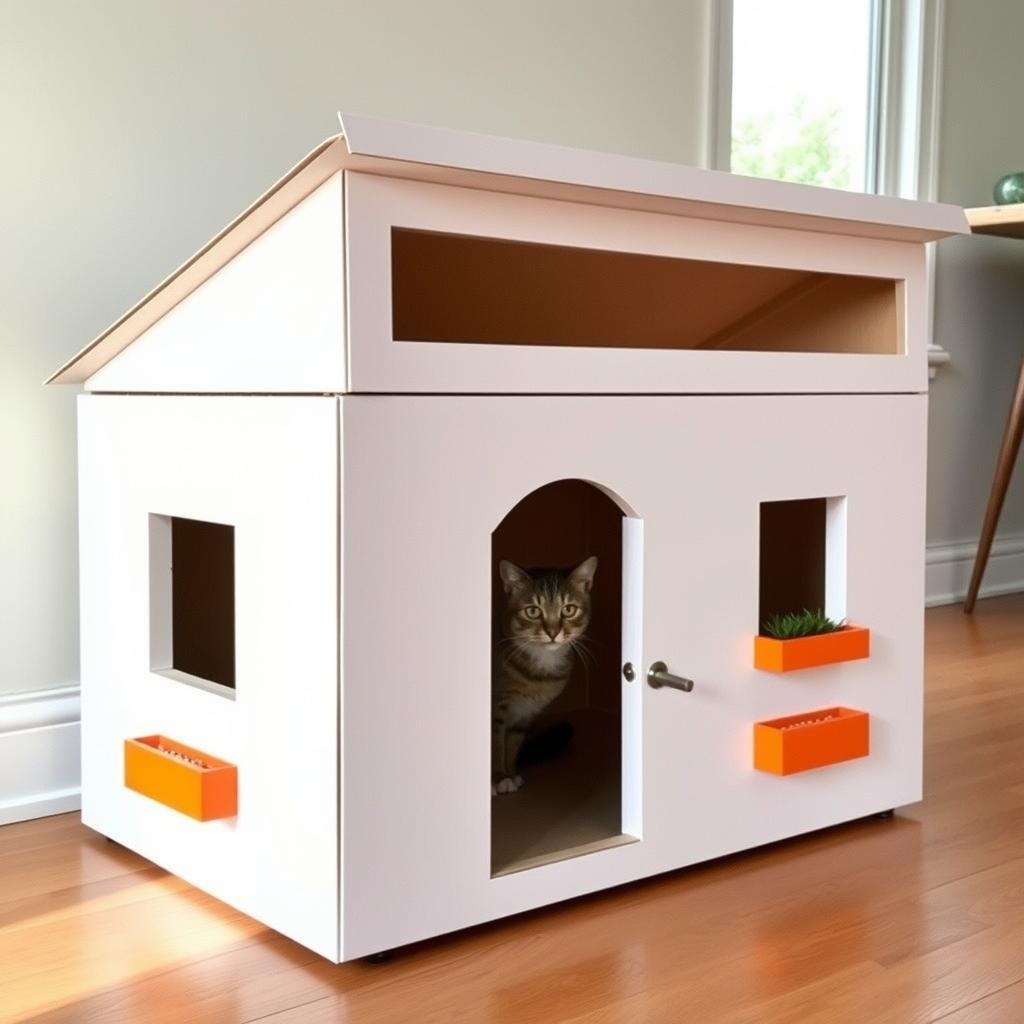
1. Mid-Century Modern “Meow-nor”
Channel your inner architect with a sleek, mid-century inspired design. This stylish cardboard cat house features clean lines, geometric windows, and a flat, slightly angled roof. Paint it white with bright accent colors for that classic mid-century look.
Special Features:
Rectangular windows in geometric patterns
Flat, slightly angled roof
Built-in “planter boxes” using small cardboard sections
Minimalist door design
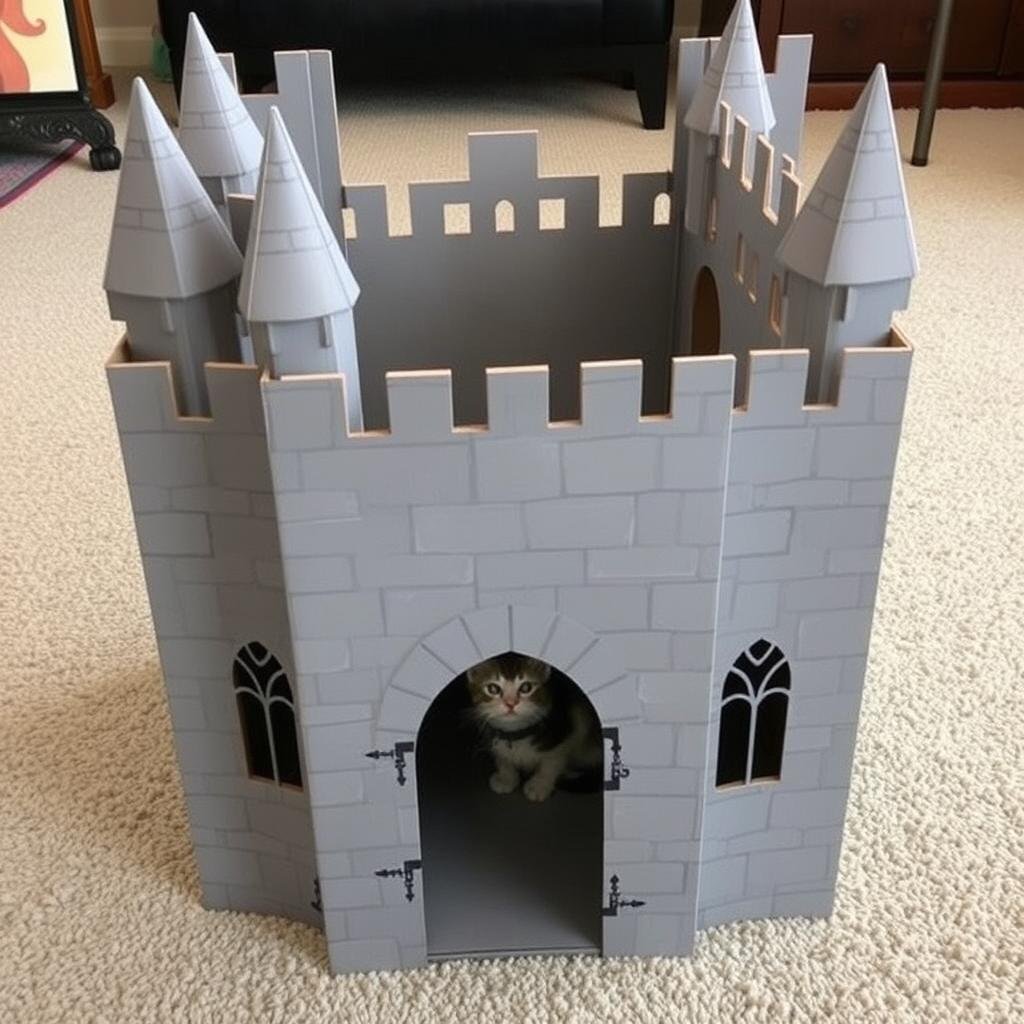
2. Cardboard Castle
Turn your cat into royalty with a medieval castle design. This elaborate structure features turrets, battlements, and a drawbridge entrance that will make your feline feel like the king or queen of the realm.
Special Features:
Cardboard tube turrets at corners
Cut-out battlements along roof edge
Arched doorway and windows
Optional drawbridge entrance
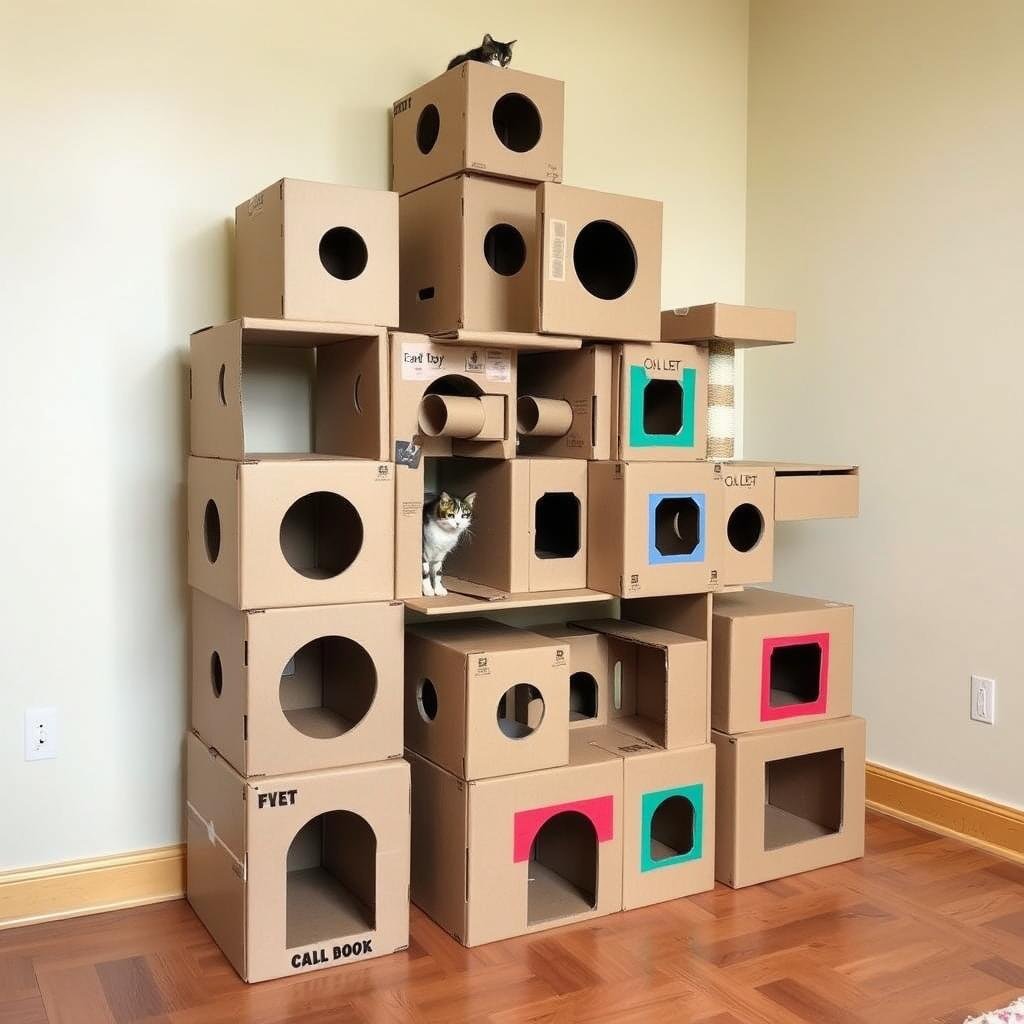
3. Multi-Level Cardboard Condo
For the ambitious DIYer, create a multi-level cat condo using several boxes. This design provides different spaces for playing, sleeping, and observing, satisfying your cat’s need for vertical territory.
Special Features:
Multiple connected boxes creating different rooms
Cardboard tube tunnels between sections
Platforms at different heights for climbing
Multiple entrances and exits
Decorate Your Creation!
Add personality to your cardboard cat house with non-toxic paints and decorations.
Enhancing Your Cardboard Cat House for Maximum Enrichment
A great cardboard cat house goes beyond just providing shelter—it should engage your cat’s natural instincts and provide mental stimulation. Here are some ways to make your creation more enticing for your feline friend:
Scratching Surfaces
Cats need to scratch—it helps them maintain healthy claws and mark territory. Add dedicated scratching areas to your cardboard cat house:
Leave some areas of cardboard exposed (cats love scratching cardboard)
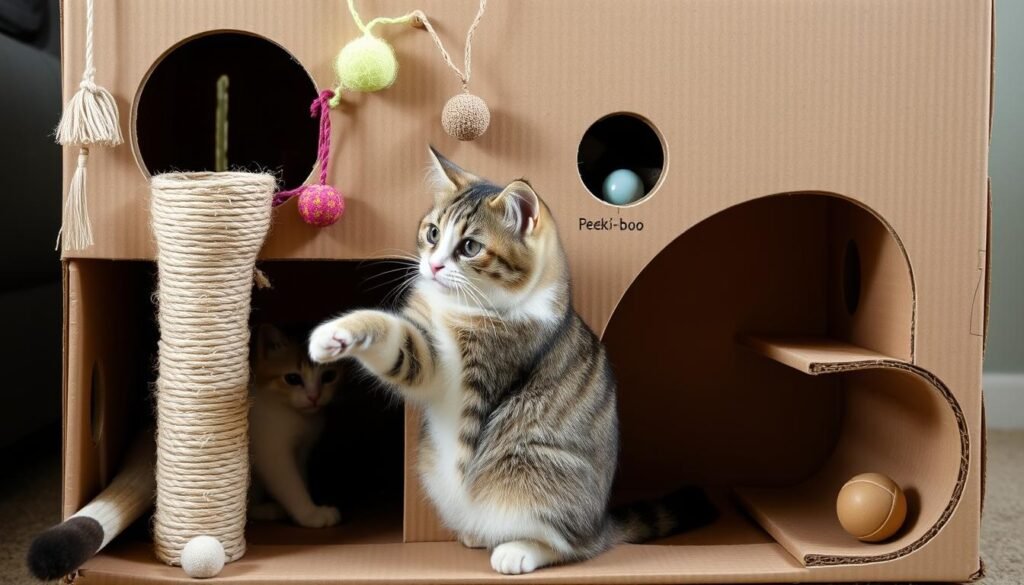
Attach sisal rope around the entrance
Create a separate scratching panel on one side
Interactive Elements
Keep your cat engaged with features that encourage play and exploration:
Hang dangling toys from the ceiling or doorway
Create “peek-a-boo” holes with moving parts
Add a ball track along one side
Install a crinkly tunnel entrance
Comfort Features
Make your cardboard cat house a cozy retreat your cat will love:
Add a self-heating pad for extra warmth
Create a “window seat” for bird watching
Include a small container of cat-safe grass
Sprinkle catnip or silver vine in select areas
“Cats need mental stimulation just as much as physical exercise. An enriched environment helps prevent behavioral problems and keeps your cat happy and healthy.”
— Feline Behavior Specialists
Add Engaging Toys!
Enhance your cardboard cat house with toys that will keep your cat entertained for hours.
Maintaining and Extending the Life of Your Cardboard Cat House
While cardboard cat houses are meant to be somewhat temporary, there are several ways to make them last longer and keep them looking fresh:
Extending Lifespan
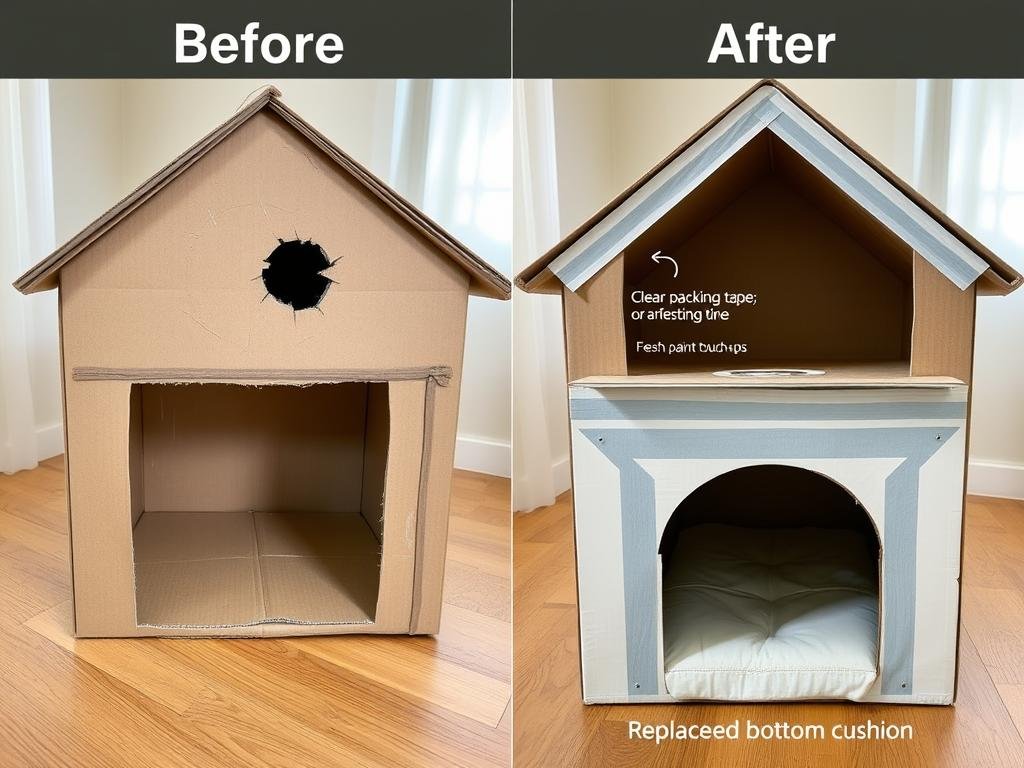
Reinforce edges and corners with clear packing tape
Apply a thin coat of non-toxic sealant to painted surfaces
Place the house on a plastic mat to prevent moisture damage
Repair small tears immediately before they expand
Add cardboard supports inside for structural integrity
When to Replace
Structure becomes unstable or collapses easily
Cardboard develops a musty smell that won’t go away
Extensive scratching has compromised multiple walls
Signs of mold or mildew appear (black or green spots)
Your cat loses interest despite added enrichment
Cleaning Tips
Regular maintenance will keep your cardboard cat house fresh and inviting:
Weekly maintenance: Vacuum the interior and exterior using a brush attachment to remove cat hair and dust
Spot cleaning: Use a slightly damp cloth to gently clean soiled areas, then allow to dry completely
Odor control: Sprinkle baking soda inside, let sit overnight, then vacuum thoroughly
Bedding: Wash any removable bedding weekly or as needed
Sunlight refresh: Occasionally place the house in sunlight for a few hours to naturally disinfect (when weather permits)
Important: Never use chemical cleaners on your cardboard cat house. Cats are sensitive to chemicals and may avoid the house or experience health issues if exposed to cleaning products.
Extend Your Cat House’s Life!
Get supplies to reinforce and maintain your cardboard creation.
Sharing Your Cardboard Cat House Creation on Pinterest
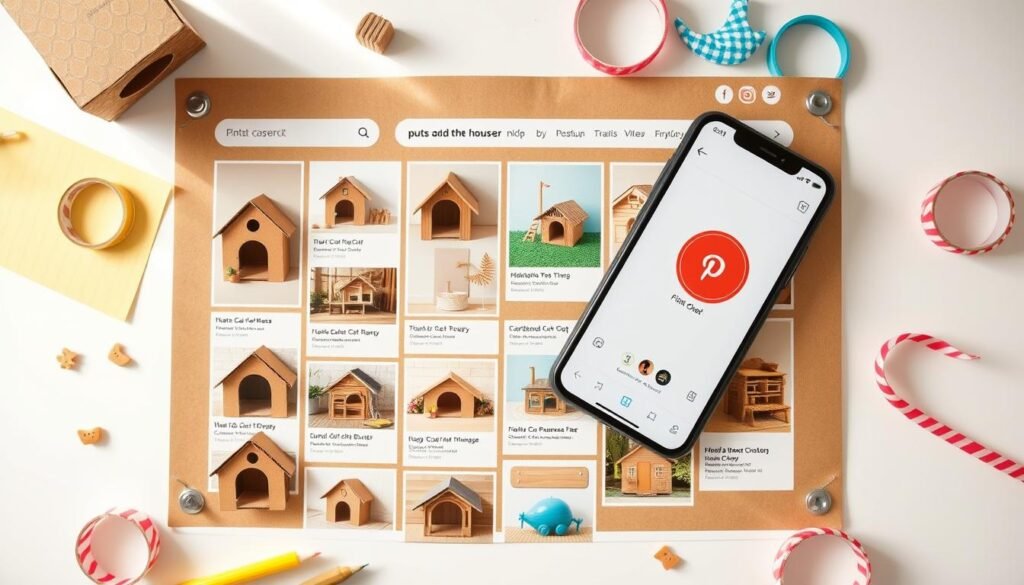
Your creative cardboard cat house deserves to be showcased! Pinterest is the perfect platform to share your DIY success and inspire others. Here’s how to create Pinterest-worthy content from your project:
Photography Tips
Capture your cat house in natural lighting near a window
Take photos from multiple angles, including close-ups of special features
Include before, during, and after shots to show the process
If possible, get pictures of your cat enjoying their new home
Create a clean, uncluttered background for your photos
Effective Pin Descriptions
Use descriptive titles like “DIY Cardboard Cat House with Castle Theme”
Include the main materials used and approximate time needed
Mention any special features or benefits for your cat
Add relevant hashtags like #DIYCatHouse #CardboardCatHouse #CatDIY
Include a brief story about your cat’s reaction to their new home
Pinterest Pro Tip: Create a series of pins showing different stages of your project or various designs you’ve tried. This increases your chances of getting repins and followers interested in your creative process.
Ready to Share Your Creation?
Show off your cardboard cat house and inspire other pet owners!
Conclusion: Why Your Cat Deserves a Cardboard Cat House
Creating a cardboard cat house is more than just a fun DIY project—it’s a way to enrich your cat’s environment, provide them with security and comfort, and strengthen your bond through creative care. The beauty of cardboard cat houses lies in their simplicity, affordability, and endless customization possibilities.
Whether you opt for a basic design or an elaborate multi-level creation, your cat will appreciate having a space to call their own. And when your current cardboard cat house eventually wears out, you’ll have the skills and inspiration to create an even better one!
Remember that the most important feature of any cat house isn’t its appearance but how it makes your cat feel. Observe which elements your cat enjoys most and incorporate more of those into future designs. Happy crafting, and may your feline friend enjoy many cozy hours in their custom cardboard kingdom!
Start Creating Today!
Your cat will thank you for their new favorite hideaway.
Frequently Asked Questions About Cardboard Cat Houses
How long does a cardboard cat house typically last?
With regular use, a basic cardboard cat house typically lasts 2-3 months before showing significant wear. However, with proper reinforcement and maintenance as outlined in our guide, you can extend its life to 6 months or more. Factors affecting longevity include your cat’s activity level, how aggressively they scratch, and the environmental conditions in your home.
Is it safe for my cat to chew on cardboard?
Most cats can safely chew on plain, unprinted cardboard in small amounts. However, avoid using cardboard with glossy printing, as the inks may contain harmful chemicals. If your cat consistently eats large amounts of cardboard rather than just chewing, consult your veterinarian, as this could indicate a nutritional deficiency or other health issue.
What if my cat isn’t interested in the cardboard house?
If your cat seems uninterested, try these tactics: place the house in a location where your cat already likes to spend time; add catnip or silver vine to make it more attractive; place familiar bedding inside that already has your cat’s scent; or try making the entrance larger if your cat seems hesitant to enter. Sometimes cats need time to adjust to new items—don’t give up too quickly!
Can I make a cardboard cat house waterproof?
While you can’t make cardboard completely waterproof, you can increase its water resistance by applying a thin layer of non-toxic sealant designed for paper crafts. However, keep in mind that this will only provide limited protection against minor spills or humidity. For outdoor use or in areas prone to moisture, consider other materials like plastic storage bins modified into cat houses instead.
What size should I make the entrance to the cat house?
The ideal entrance size depends on your cat’s size. As a general rule, make the opening at least 1.5 times the width of your cat at their widest point (usually the shoulders). For most adult cats, an opening about 6-8 inches wide and 8-10 inches tall works well. If you’re unsure, err on the side of making it larger—cats typically prefer an entrance they can easily move through without squeezing.
Planter boxes are the versatile heroes of modern gardening, offering endless possibilities for both seasoned gardeners and beginners alike. Whether you’re working with a spacious backyard or a tiny apartment balcony, the right planter box can transform your space into a thriving garden oasis. These practical containers allow you to grow flowers, herbs, vegetables, and…
Planning a wedding with a smaller guest list opens doors to creativity and personal touches that larger events simply cannot achieve. Intimate weddings transform your celebration into something truly meaningful where every detail reflects your unique love story. These smaller gatherings create space for genuine connections with your closest friends and family members. The beauty…
Gone are the days when tennis shoes were reserved solely for the gym or casual errands. Today’s fashion landscape embraces the versatility of sneakers, allowing you to create stylish outfits with tennis shoes for virtually any occasion. The perfect pair of sneakers can transform your wardrobe, offering both comfort and style without compromise. Whether you’re…
Adidas shoes have evolved from sports essentials to fashion must-haves. Their versatility makes them perfect for creating countless stylish looks. Whether you’re drawn to the classic Sambas, sleek Stan Smiths, or bold Superstars, there’s an Adidas shoe that can elevate any outfit. In this guide, we’ll explore creative ways to style your favorite Adidas kicks…
Let’s face it – trash cans are necessary but unsightly additions to our outdoor spaces. They can be eyesores that detract from your carefully designed landscape, attract pests, and sometimes create unpleasant odors. But what if you could effectively hide these essential bins while maintaining easy access and even enhancing your yard’s appearance? That’s where…
Your wedding day deserves footwear that’s as beautiful as it is comfortable. Low heel bridal shoes offer the perfect balance of elegance and practicality, ensuring you can dance the night away without painful feet. Whether you’re walking down a grassy aisle, navigating historic cobblestones, or simply prioritizing comfort, these stylish options prove you don’t need…