25 Creative Wheelbarrow Planter Ideas to Transform Your Garden
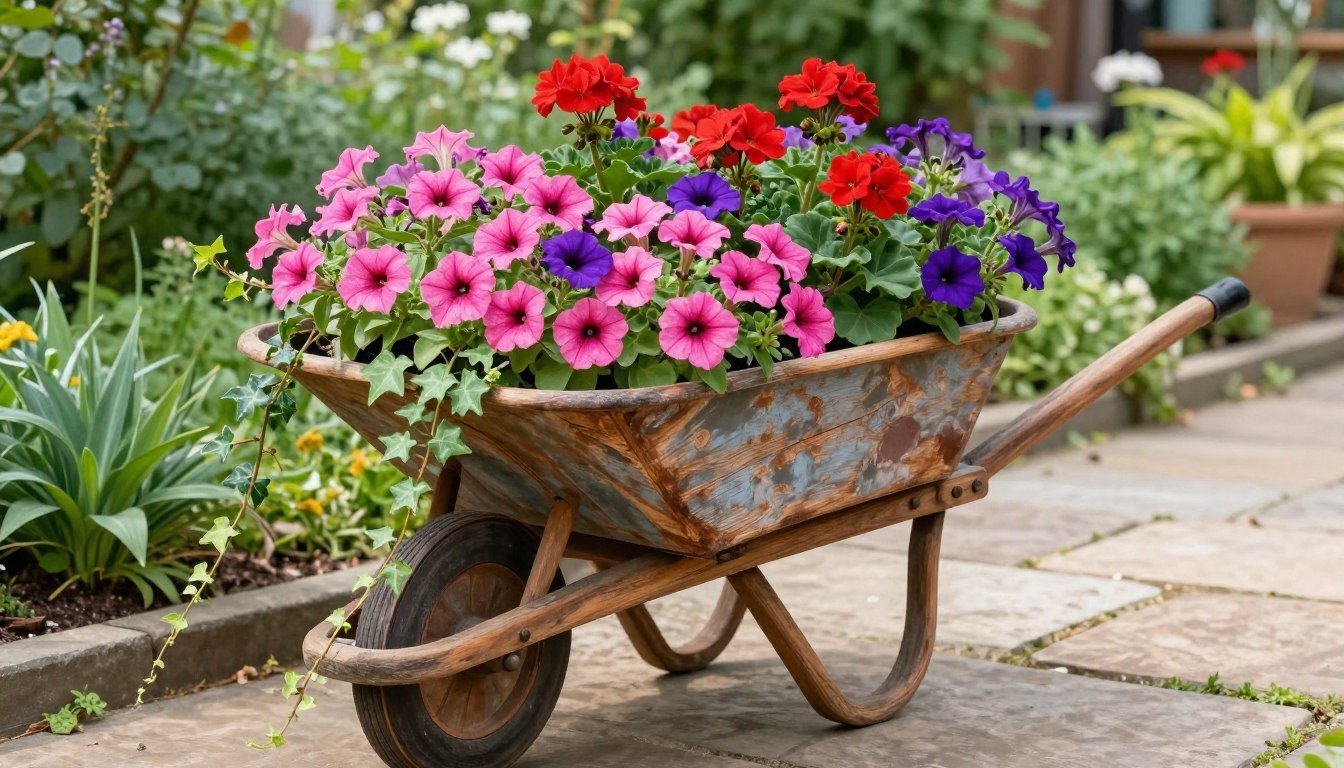
There’s something undeniably charming about a weathered wheelbarrow overflowing with vibrant blooms. These rustic garden features combine the appeal of vintage charm with practical container gardening, creating a focal point that tells a story in your outdoor space.
This Website contains affiliate links. That means I may earn a small commission if you purchase through my links, at no extra cost to you.
Whether you’ve discovered an old wheelbarrow gathering dust in your shed or you’re hunting for one at yard sales, these versatile vessels offer endless possibilities for creative garden displays. From cascading flowers to themed herb gardens, we’ve gathered 25 inspiring wheelbarrow planter ideas to help you transform your garden into a personalized outdoor retreat.
Getting Started: Wheelbarrow Planter Basics
Before diving into specific design ideas, let’s cover the essentials of creating a successful wheelbarrow planter:
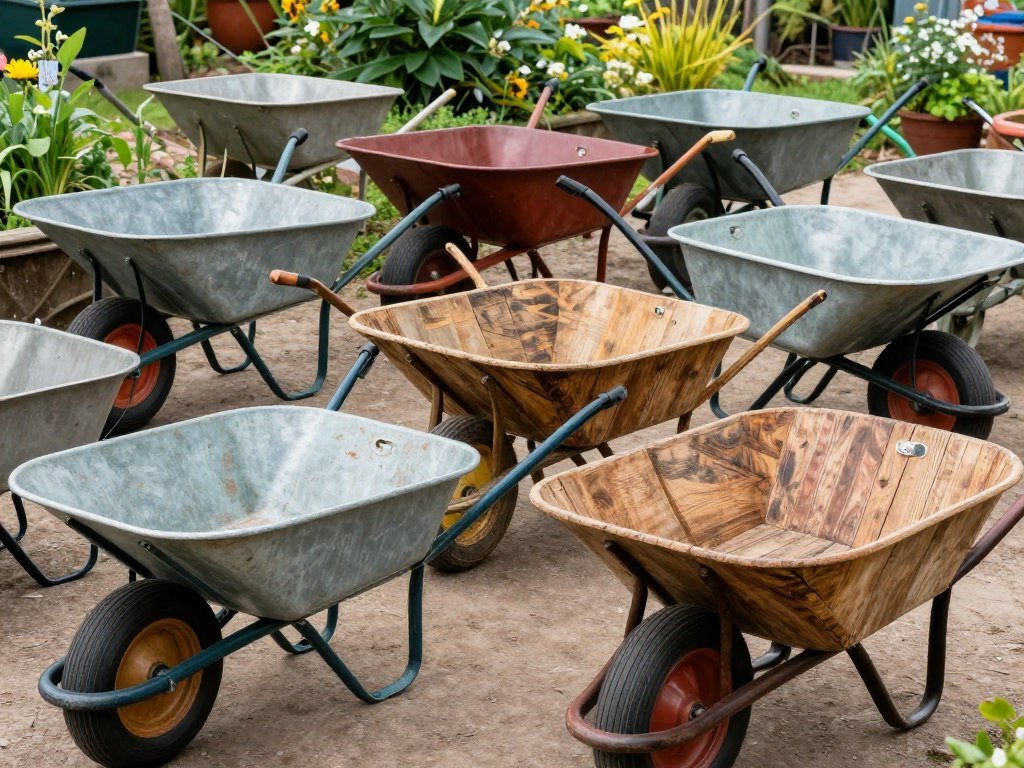
When selecting a wheelbarrow for your planter project, consider these factors:
Look for sturdy construction that can support soil weight
Metal wheelbarrows offer durability but may need rust protection
Wooden wheelbarrows provide rustic charm but require sealing against moisture
Check for stability – a wobbly wheelbarrow can be reinforced with rocks or bricks
Consider size based on your available space and planting ambitions
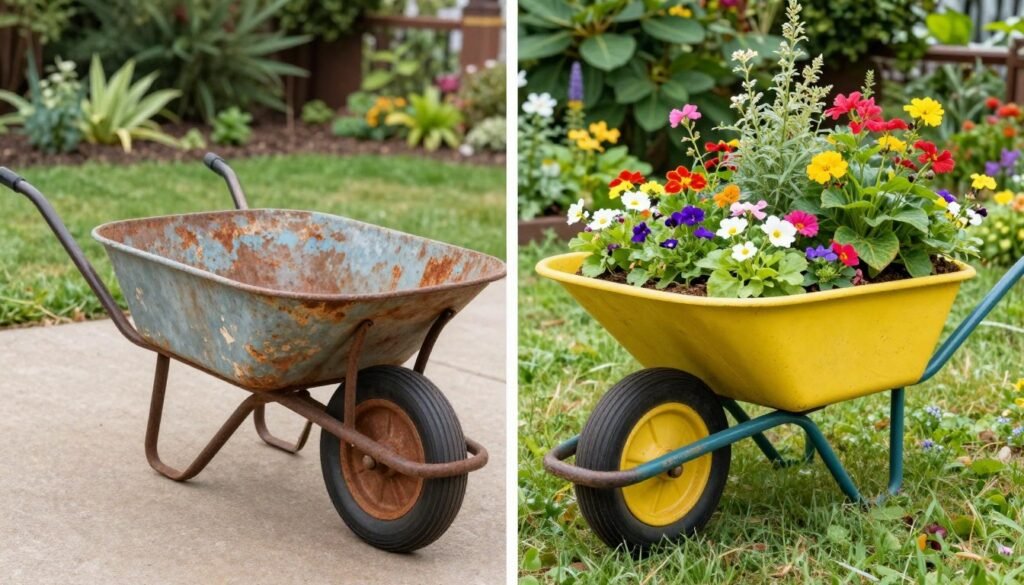
Don’t worry if your wheelbarrow isn’t perfect – dents, rust spots, and weathering often add to the charm! You can find vintage wheelbarrows at thrift stores, yard sales, or online marketplaces like Amazon.
Preparing Your Wheelbarrow
Before planting, you’ll need to prepare your wheelbarrow:
Clean thoroughly, removing dirt, rust, and debris
Repair any major holes or cracks (small ones are fine for drainage)
Line metal wheelbarrows with landscape fabric to prevent soil from falling through and protect metal from corrosion
Drill drainage holes if needed (4-6 holes, approximately ¾-inch diameter)
Apply wood sealer to wooden parts to extend their life
For optimal plant health, use a high-quality potting mix rather than garden soil, which can become compacted in containers.
The Cascading Flower Waterfall
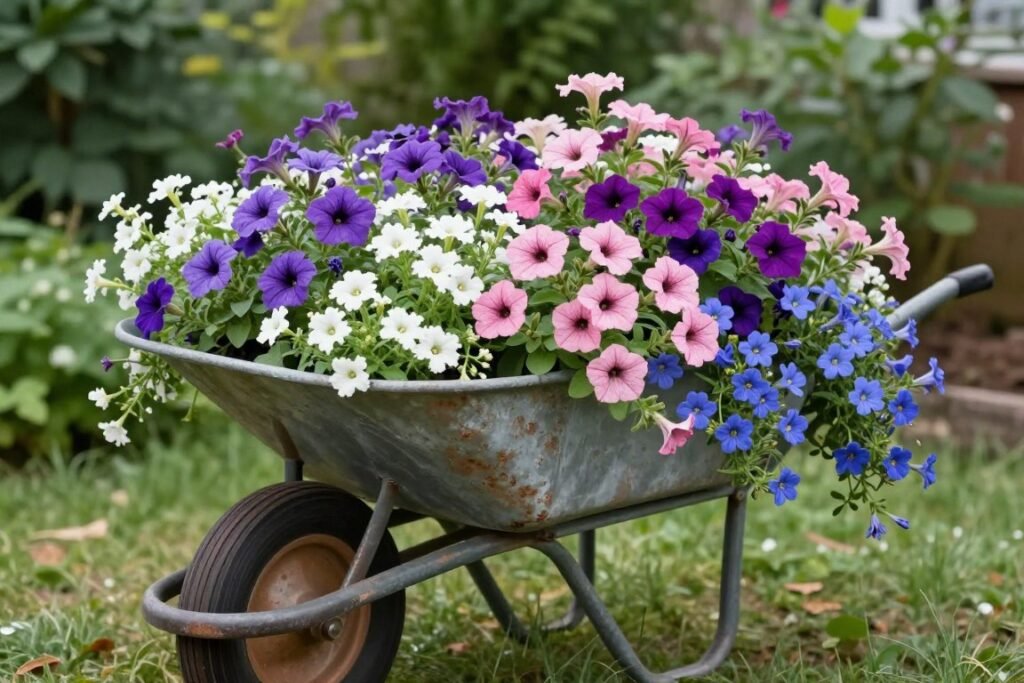
This stunning design creates the illusion of flowers spilling from your wheelbarrow like a colorful waterfall. The key is selecting plants with trailing habits that will cascade over the edges, creating movement and visual interest.
How to Create This Look
Position your wheelbarrow at a slight angle to enhance the waterfall effect
Fill with well-draining potting soil, creating a mounded shape
Plant taller flowers at the back/highest point
Add medium-height plants in the middle section
Position trailing varieties along the edges to spill over dramatically
Water thoroughly and add a layer of mulch to retain moisture
For the most dramatic effect, combine plants with different textures and complementary colors. Try purple and white trailing petunias, blue lobelia, and white sweet alyssum for a cool-toned cascade, or mix orange calibrachoa, red verbena, and yellow bidens for a fiery display.
Design Tip: Position your cascading wheelbarrow planter near a pathway or entrance where its dramatic overflow can be fully appreciated. The slight elevation creates a “floating” effect that draws the eye.
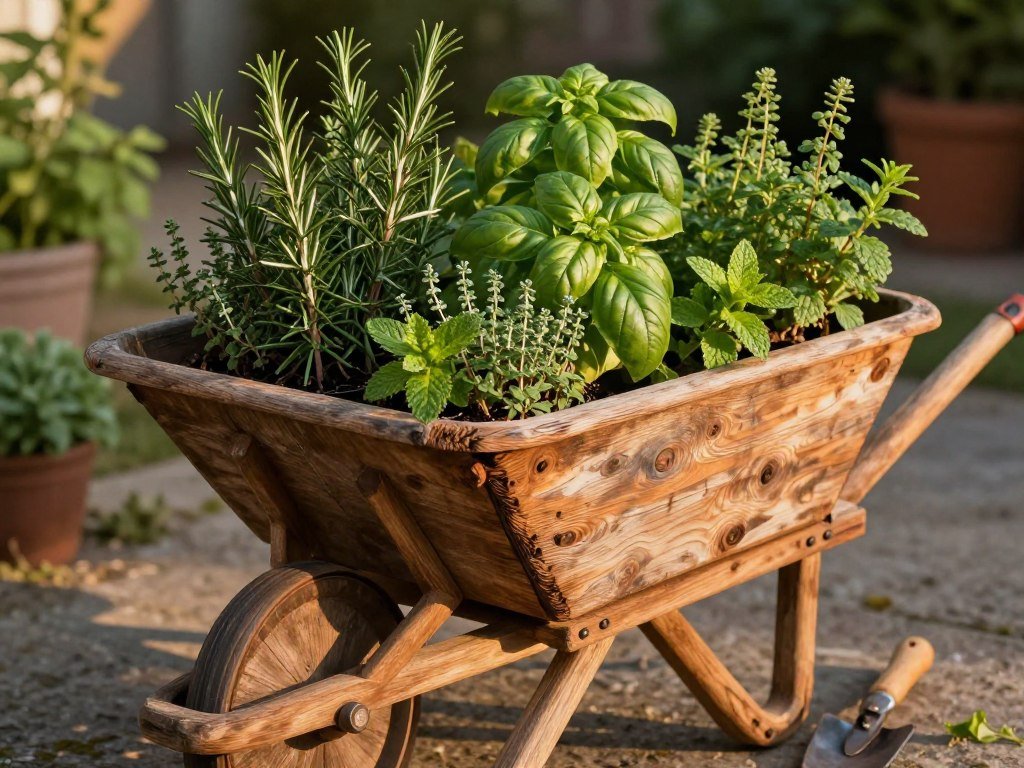
The Rustic Herb Garden
Transform your wheelbarrow into a practical herb garden that’s as beautiful as it is useful. This idea combines functionality with rustic charm, creating an accessible kitchen garden that can be positioned near your cooking space.
How to Create This Look
Choose a location that receives 6-8 hours of sunlight daily
Fill your wheelbarrow with herb-specific potting soil
Arrange herbs based on height and growth habits (taller in back/center)
Group herbs with similar water needs together
Add plant markers made from painted stones or wooden stakes
Include a small watering can or garden tools as decorative elements
Popular herb combinations include Mediterranean herbs (rosemary, thyme, oregano, sage) which share similar growing conditions, or kitchen basics (basil, parsley, chives, mint). Consider your cooking preferences when selecting varieties.
Design Tip: Wooden wheelbarrows work particularly well for herb gardens, as their rustic appearance complements the natural, kitchen-garden aesthetic. Add a small sign identifying your “Herb Garden” for extra charm.
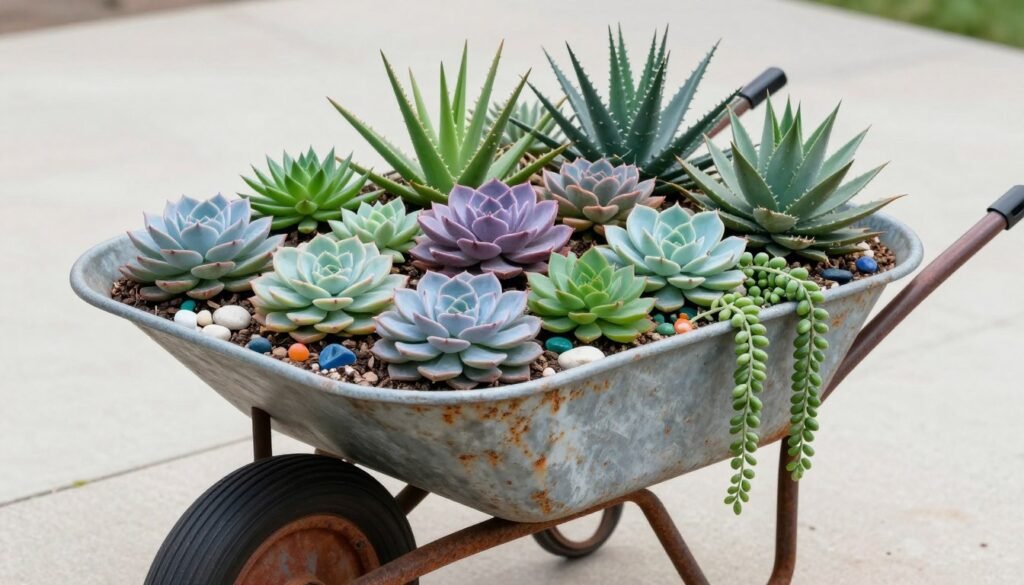
The Succulent Showcase
For low-maintenance beauty, transform your wheelbarrow into a succulent showcase. These drought-tolerant plants offer fascinating textures and colors while requiring minimal care, making them perfect for busy gardeners.
How to Create This Look
Ensure excellent drainage by adding a layer of gravel at the bottom
Create a landscape with varying heights and textures
Add decorative elements like smooth stones or driftwood
Position in a spot that receives at least 6 hours of sunlight
Water sparingly, allowing soil to dry completely between waterings
For visual interest, combine different succulent types: rosette-shaped echeverias, spiky aloes, trailing string of pearls, and architectural agaves. The contrasting forms create a miniature desert landscape that evolves as plants grow and change.
Design Tip: Metal wheelbarrows work particularly well for succulent displays, as the contrast between industrial metal and organic plant forms creates visual tension. The rustic patina of aged metal also complements the earthy tones of succulents.
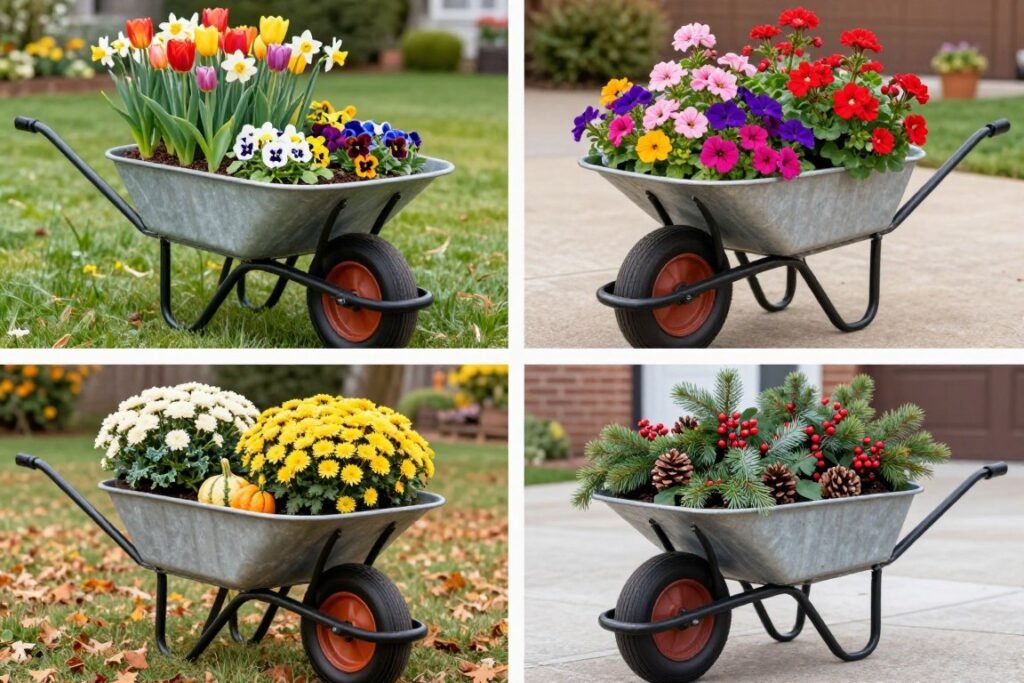
The Seasonal Color Rotation
Keep your garden fresh and interesting year-round by using your wheelbarrow as a seasonal display that changes with the calendar. This approach gives you the joy of regularly refreshing your garden’s look while showcasing seasonal blooms at their peak.
How to Create This Look
Adapt your wheelbarrow planter for each season:
Spring
Plant bulbs in fall for spring emergence (tulips, daffodils)
Add cold-tolerant annuals like pansies and violas
Incorporate spring-flowering perennials
Use pastel colors that signal renewal
Summer
Switch to heat-loving annuals (petunias, geraniums)
Include drought-tolerant plants for hot periods
Use bold, vibrant colors that stand up to bright sunlight
Add trailing varieties for lush overflow
Fall
Transition to chrysanthemums and asters
Add ornamental kale and cabbage for texture
Incorporate small pumpkins or gourds
Use warm autumn colors (orange, yellow, burgundy)
Winter
Fill with evergreen boughs and branches
Add berries, pinecones, and seed heads
Include cold-hardy plants like hellebores
Use holiday decorations during festive seasons
Keep a garden journal to track successful combinations and timing for your climate zone. This helps you refine your seasonal displays each year.
Design Tip: Take photos of each seasonal display to create a visual record of your wheelbarrow’s transformations throughout the year. This becomes a wonderful timeline of your garden’s evolution.
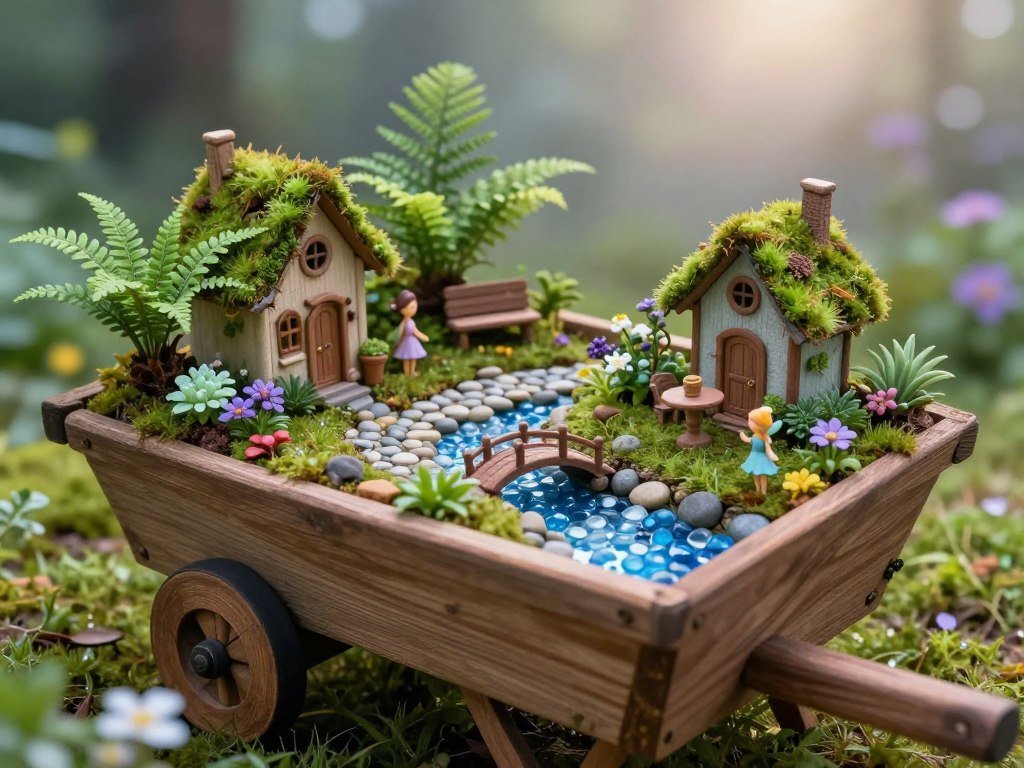
The Fairy Garden Wheelbarrow
Create a magical miniature world by transforming your wheelbarrow into an enchanted fairy garden. This whimsical approach delights children and adults alike, bringing a touch of fantasy to your outdoor space.
How to Create This Look
Start with a smaller wheelbarrow for proper scale
Fill with lightweight potting soil, creating hills and valleys
Plant miniature or dwarf plants that resemble trees and shrubs
Create paths using small pebbles or crushed shells
Include small decorative elements like miniature fences, bridges, or ponds
Ideal plants for fairy gardens include: Irish moss (resembles a green carpet), dwarf varieties of thyme, miniature ferns, baby tears plant, and small-flowering plants like dwarf daisies or violets.
Design Tip: Create a narrative within your fairy garden by arranging elements to tell a story. Perhaps a pathway leads to a fairy house, or a tiny garden with miniature vegetables suggests the fairies are growing their own food.
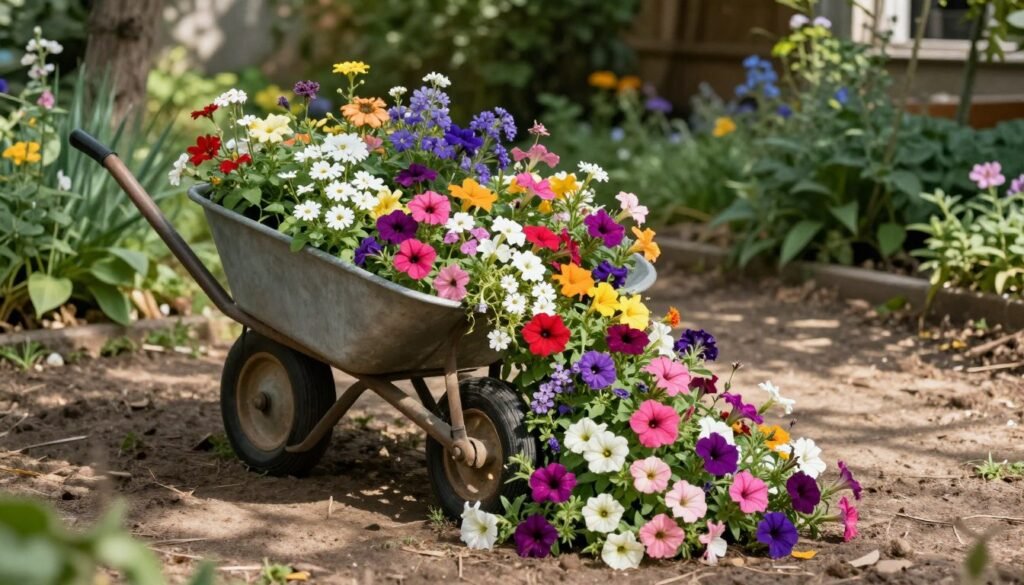
The Tipped Wheelbarrow Spill
Create the illusion of flowers spilling from a tipped-over wheelbarrow for a playful, seemingly accidental garden feature. This design mimics the appearance of a wheelbarrow that has tipped, with plants “spilling” onto the surrounding ground.
How to Create This Look
Position your wheelbarrow at a 45-degree angle, partially buried at the base for stability
Fill with soil, allowing some to spill out onto the ground
Plant the interior of the wheelbarrow densely with flowers
Continue the same plant varieties in the soil outside the wheelbarrow
Use plants with similar colors and textures for a seamless transition
Add mulch both inside and outside to unify the display
This design works best with flowering annuals in complementary colors. Try combinations like purple petunias with white alyssum, or red salvias with yellow marigolds. The key is creating a natural-looking “spill” that appears unplanned.
Design Tip: For the most natural look, partially bury the lower edge of the wheelbarrow and allow some soil to spill out before planting. This creates the illusion that the wheelbarrow has been in this position for some time.
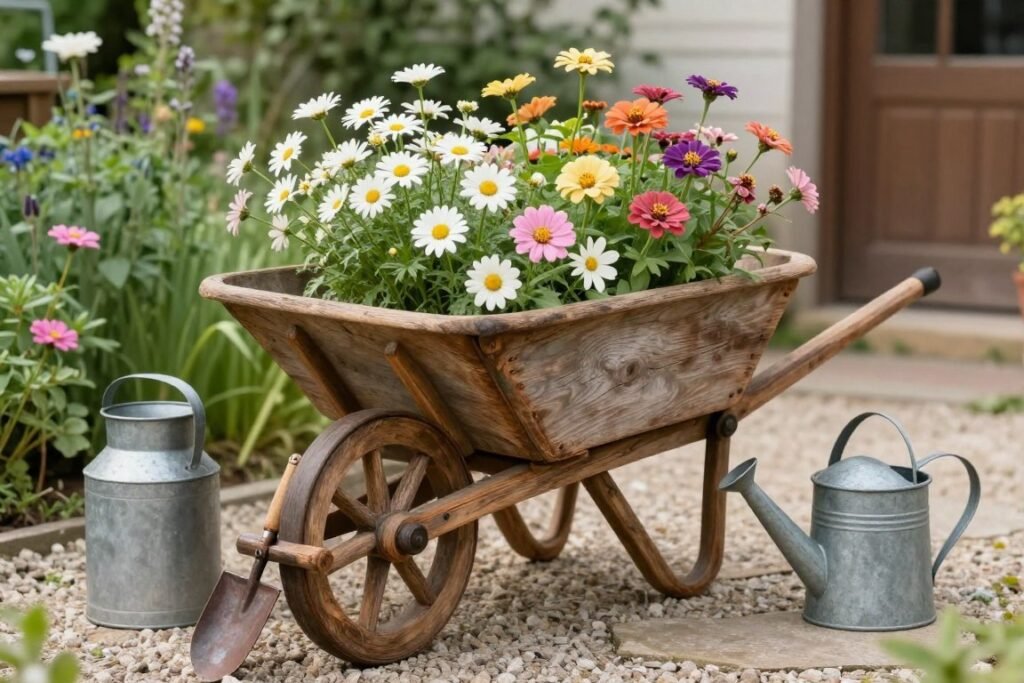
The Vintage Farmhouse Wheelbarrow
Embrace farmhouse charm by styling your wheelbarrow with vintage elements and country flowers. This design celebrates rural aesthetics and pairs perfectly with cottage gardens and country-inspired outdoor spaces.
How to Create This Look
Choose a wooden wheelbarrow or paint a metal one in muted colors
Fill with cottage garden flowers like daisies, cosmos, and zinnias
Add farmhouse-inspired accessories around the base
Incorporate galvanized metal elements for authentic country style
Position vintage garden tools nearby as decorative elements
Add a hand-lettered sign with a country saying or farm name
Enhance the farmhouse feel with accessories like small milk cans, galvanized watering cans, vintage seed packets, or antique garden tools. These elements tell a story of rural life and gardening heritage.
Design Tip: For authentic farmhouse style, embrace imperfection. Allow some asymmetry in your planting, and don’t worry if your wheelbarrow shows signs of age—these details add to its character and charm.
Start Your Wheelbarrow Garden Adventure
Wheelbarrow planters offer endless possibilities for creative expression in your garden. Whether you prefer cascading flowers, practical herbs, whimsical fairy gardens, or seasonal displays, there’s a wheelbarrow planter idea perfect for your outdoor space.
The beauty of these projects lies in their accessibility—you don’t need to be a master gardener to create something spectacular. With some basic supplies, a bit of creativity, and the ideas we’ve shared, you can transform an ordinary wheelbarrow into an extraordinary garden feature.
Ready to Start Your Wheelbarrow Planter?
Gather your supplies, find that perfect wheelbarrow, and let your creativity bloom! Remember to share your creations on Pinterest to inspire others on their gardening journey.
We’d love to see how you’ve transformed wheelbarrows in your garden! Each unique creation adds character and charm to outdoor spaces while giving new life to old garden tools. Happy planting!
Dreaming of a bathroom makeover but worried about the cost? You’re not alone. The average bathroom remodel runs upwards of $10,000, but here’s the good news: you don’t need to spend thousands to transform your space. With some creativity, a few strategic purchases, and a weekend of your time, you can create a bathroom that…
Babydoll dress nightwear represents the perfect marriage of comfort and elegance. These flirty, feminine pieces have evolved from their vintage origins to become a modern sleepwear staple. Whether you’re seeking something special for a romantic evening or comfortable yet stylish everyday sleepwear, babydoll nightwear offers versatility that few other styles can match. In this comprehensive…
A moody romantic wedding decor transforms an ordinary venue into an enchanting realm where love stories unfold in dramatic splendor. This aesthetic combines rich, deep colors with soft, intimate lighting and luxurious textures to create an atmosphere that feels both mysterious and deeply romantic. Unlike traditional light and airy wedding styles, a moody wedding embraces…
The right landscape lighting can transform an ordinary yard into a magical nighttime retreat. Beyond basic illumination, thoughtful lighting design adds depth, drama, and dimension to your outdoor spaces while enhancing safety and security. Whether you’re looking to highlight architectural features, create ambient gathering areas, or simply make your garden pathways safer to navigate after…
Pink shoes add a perfect pop of color and personality to any outfit. Whether you’re drawn to soft blush flats, vibrant fuchsia heels, or playful pastel sneakers, pink footwear can transform your look from basic to brilliant. This comprehensive guide will show you how to create stunning pink shoes outfits for every occasion, season, and…
Your wedding aisle is more than just a pathway—it’s the stage for one of life’s most meaningful moments. As all eyes watch you make that momentous walk toward your future, the right wedding aisle decorations can transform an ordinary space into something magical. Whether you’re dreaming of a lush garden-inspired walkway lined with fresh blooms,…