12 Creative Balcony Garden Ideas to Transform Your Urban Space
Even with limited outdoor space, you can create a thriving garden oasis on your balcony. Whether you dream of growing fresh herbs, colorful flowers, or creating a peaceful retreat, these balcony garden ideas will help you maximize your small space and bring nature closer to home. From vertical gardens to clever container solutions, we’ll explore how to transform even the tiniest balcony into a lush, green sanctuary that reflects your personal style.
This Website contains affiliate links. That means I may earn a small commission if you purchase through my links, at no extra cost to you.
Vertical Garden Solutions for Small Balconies
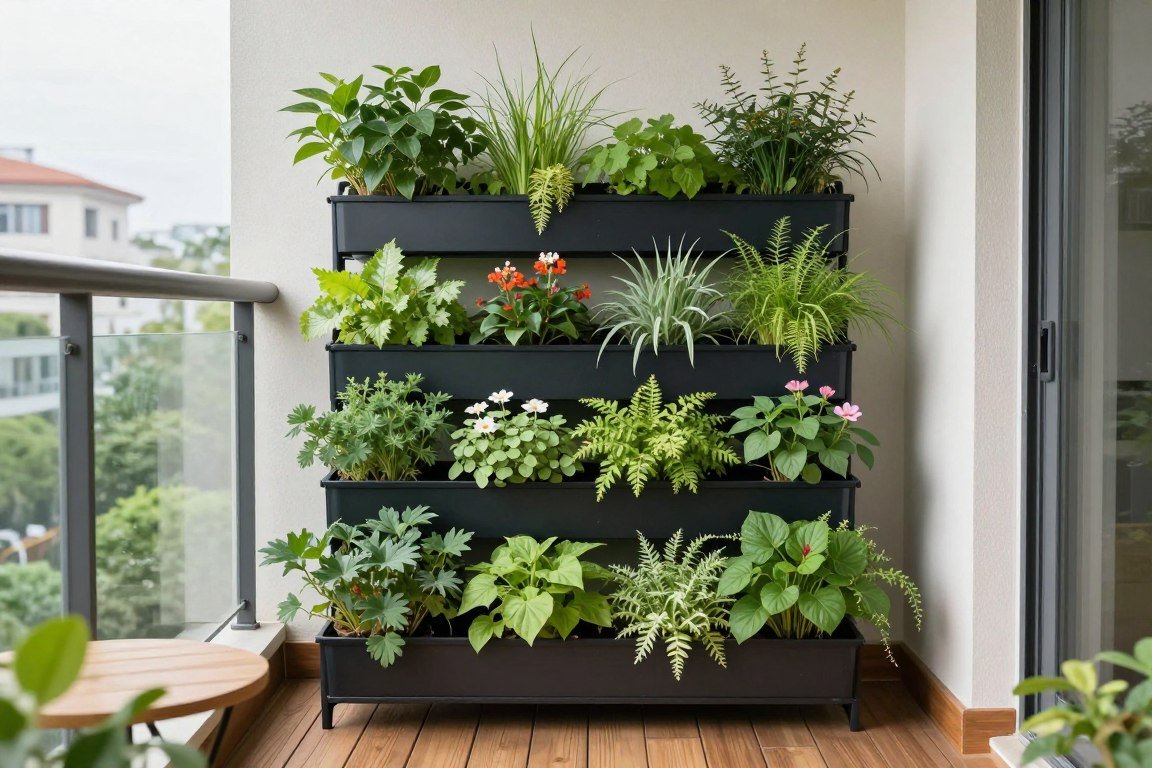
When floor space is limited, the only way to go is up! Vertical gardening is one of the most effective balcony garden ideas for maximizing your growing area. By utilizing walls and railings, you can create a lush garden without sacrificing precious floor space.
Wall-Mounted Planters
Transform a blank wall into a living tapestry by installing wall-mounted planters. These come in various designs, from pocket planters to modular systems that allow you to create custom arrangements. Look for planters with flat backs that mount flush against the wall to conserve space.
For a cohesive look, arrange plants with varying textures and heights. Consider mixing trailing plants like ivy or string of pearls with more upright varieties. This creates visual interest while maximizing your growing potential.
Ready to start your vertical garden? Explore wall-mounted planter options to find the perfect fit for your balcony.
Railing Planters
Balcony railings offer prime real estate for growing plants without taking up floor space. Specialized railing planters are designed to securely attach to standard railings, with adjustable brackets to fit various widths.
Some designs even straddle the railing, allowing you to grow plants both inside and outside the balcony perimeter. This effectively doubles your growing space while creating a beautiful green border around your balcony.
Choose colorful annuals like petunias or geraniums for a vibrant display, or grow practical herbs that you can easily harvest while enjoying your outdoor space.
Create a Hanging Garden Paradise
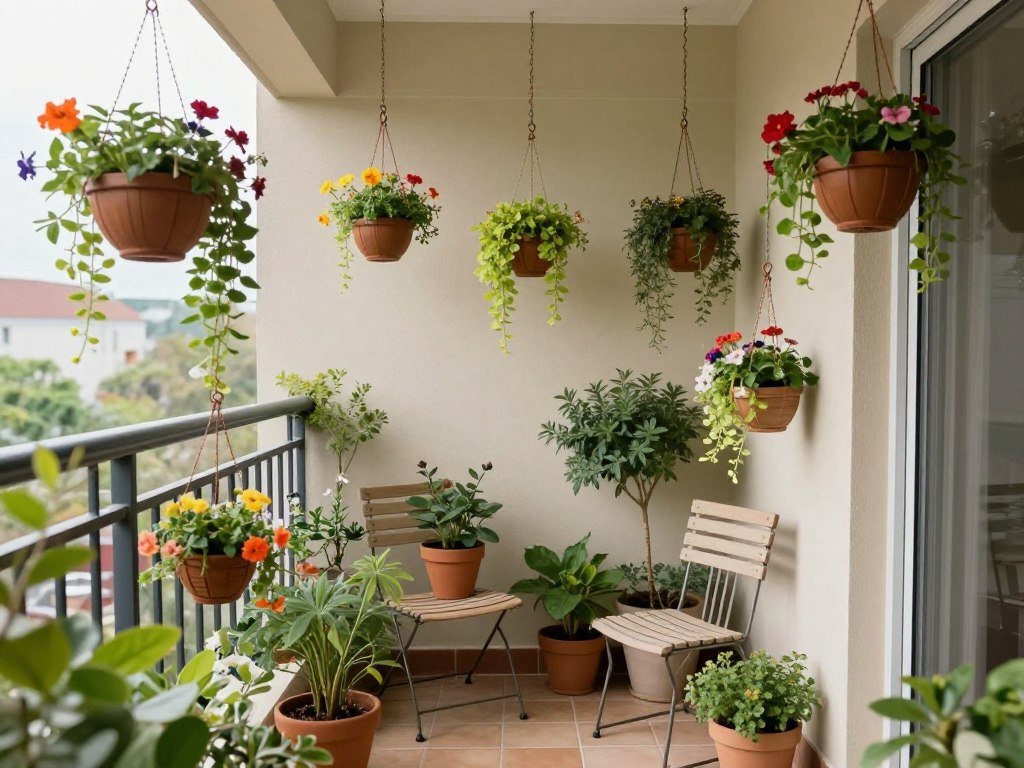
Hanging planters are another excellent way to maximize your balcony garden space. By suspending plants from the ceiling or overhead structures, you create a lush, immersive environment without cluttering the floor.
Traditional Hanging Baskets
Classic hanging baskets are perfect for displaying cascading flowers and trailing plants. Choose lightweight, weather-resistant materials like coconut coir or plastic to make them easier to manage. Line baskets with moss or a moisture-retaining liner to help keep soil from drying out too quickly.
For a stunning display, combine plants with different growth habits in each basket. Try a thriller (upright, eye-catching plant), a filler (mounding plant), and a spiller (trailing plant) in each container for maximum visual impact.
Think beyond traditional baskets! Repurposed items like colanders, tea tins, or even old birdcages can become unique hanging planters that add personality to your balcony garden. Just ensure they have proper drainage and are securely hung.
Macramé plant hangers offer another stylish option, adding texture and bohemian charm to your space. These adjustable hangers can accommodate different pot sizes and can be hung at varying heights to create a dynamic display.
Tiered Planters for Vertical Interest
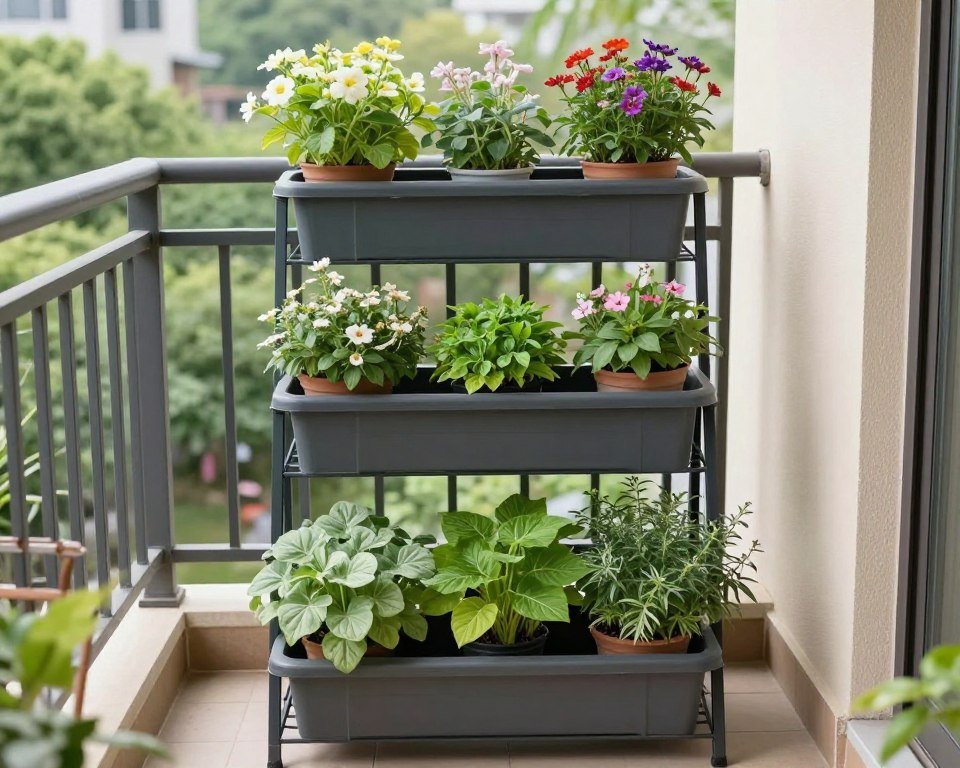
Tiered planters are space-saving marvels that allow you to grow multiple plants in a small footprint. By stacking plants vertically, you create dimension and can grow more varieties in less space.
Corner Plant Stands
Make use of often-neglected corner spaces with a tiered corner plant stand. These triangular or quarter-circle designs fit snugly into corners, turning dead space into a flourishing garden display. Arrange plants with the tallest at the back and cascading varieties at the front for a natural, layered look.
Corner stands work particularly well for herb gardens, allowing you to grow multiple culinary herbs in a compact space. Group herbs with similar water and light requirements together for easier maintenance.
Step Ladder Displays
An old wooden step ladder can be repurposed into a charming plant display. Each step becomes a shelf for potted plants, creating a rustic, cottage-garden feel. For a more modern look, consider a metal or bamboo plant ladder specifically designed for displaying plants.
Arrange plants in order of height, with taller plants at the bottom and smaller ones at the top. This creates a balanced display and ensures all plants receive adequate light.
Browse tiered plant stands to find the perfect option for your balcony garden.
Creative Container Garden Ideas
Container gardening is the foundation of any successful balcony garden. With the right selection of pots and planters, you can create a personalized garden that suits your style and the specific conditions of your balcony.
Choosing the Right Containers
When selecting containers for your balcony garden, consider weight, durability, and drainage. Lightweight materials like fiberglass or plastic are ideal for balconies with weight restrictions. For windy balconies, heavier ceramic or concrete pots provide stability but should be used sparingly.
Ensure all containers have adequate drainage holes to prevent waterlogging. Place saucers underneath to catch excess water and protect your balcony surface. Self-watering containers are excellent options for busy gardeners or hot, windy conditions.
Get creative with repurposed items as planters! Old wooden crates, metal buckets, or even unused kitchen items can become unique containers that add character to your balcony garden. Just make sure to add drainage holes and consider lining metal containers to prevent them from heating up too much in direct sun.
For an eco-friendly approach, look for biodegradable grow bags or pots made from sustainable materials. These lightweight options are perfect for balconies and can be composted at the end of their life cycle.
Practical Herb Garden for Culinary Enthusiasts
A herb garden is one of the most rewarding balcony garden ideas, providing fresh flavors for your cooking while requiring minimal space. Most herbs thrive in containers and many are quite ornamental, adding beauty as well as function to your balcony.
Sun-Loving Herbs
If your balcony receives at least 6 hours of direct sunlight daily, you can grow Mediterranean herbs like rosemary, thyme, sage, and lavender. These drought-tolerant herbs prefer well-draining soil and actually perform better with some neglect rather than overwatering.
Plant these sun-lovers in terracotta pots, which allow excess moisture to evaporate through their porous walls. Group herbs with similar water requirements together to simplify maintenance.
Shade-Tolerant Herbs
For balconies with less direct sunlight, focus on herbs that tolerate partial shade. Mint, parsley, cilantro, and chives will grow happily with just 3-4 hours of sun per day. These herbs generally prefer more consistent moisture than their Mediterranean counterparts.
Consider a dedicated herb planter with multiple compartments to keep aggressive spreaders like mint contained while allowing you to grow several varieties in one container.
Start your herb garden with herb garden kits designed for outdoor growing.
Grow Your Own Food in a Balcony Vegetable Garden
Yes, you can grow vegetables on your balcony! With the right containers and plant selection, even a small balcony can produce a surprising amount of fresh produce. Focus on high-yield, compact varieties specifically bred for container growing.
Container-Friendly Vegetables
Some vegetables are particularly well-suited to container growing on balconies. Cherry tomatoes, lettuce, spinach, radishes, and bush varieties of beans and cucumbers all perform well in pots. Look for varieties labeled “dwarf,” “bush,” “patio,” or “container” for best results.
For tomatoes and other tall plants, choose deep containers (at least 12 inches) and provide support with stakes or cages. Leafy greens can thrive in shallower containers and can be harvested continuously using the “cut and come again” method.
Vertical Vegetable Growing
Maximize your vegetable production by growing vertically. Install trellises against walls for vining crops like peas or cucumbers. Hanging baskets can support trailing cherry tomatoes or strawberries, while tiered planters work well for herbs and leafy greens.
Consider self-watering containers for vegetables, as they have higher water requirements than many ornamental plants. These containers help maintain consistent moisture levels, which is crucial for vegetable production.
For busy gardeners or those with hot, sunny balconies, succulents offer an ideal low-maintenance option. These water-wise plants come in an astonishing variety of shapes, colors, and textures, allowing you to create a visually striking garden that requires minimal care.
Succulent Container Arrangements
Create eye-catching arrangements by combining different succulent varieties in shallow, wide containers. Mix plants with contrasting forms—rosette shapes like Echeveria, trailing varieties like String of Pearls, and upright types like Haworthia—for visual interest.
Use well-draining cactus or succulent soil mix and containers with drainage holes. Terracotta pots are excellent choices as they help prevent overwatering by allowing excess moisture to evaporate through their porous walls.
Succulent Wall Art
Take your succulent garden vertical with living wall art. Special frames designed for succulents allow you to create stunning living pictures that serve as focal points on your balcony. These can be hung on walls or leaned against railings, adding a unique decorative element while saving floor space.
Succulents in vertical gardens require less frequent watering than traditional arrangements, making them even more low-maintenance. Simply mist occasionally during hot weather.
Start your succulent collection with succulent variety packs perfect for creating diverse arrangements.
Create a Tropical Retreat
Transform your balcony into a lush tropical paradise with large-leafed plants that create a sense of escape. A tropical-themed balcony garden can provide privacy and shade while creating a relaxing oasis reminiscent of an exotic vacation.
Tropical Plants for Containers
Many tropical plants adapt well to container growing on balconies. Consider dwarf banana plants, bird of paradise, elephant ears, or peace lilies for dramatic foliage. Add colorful accents with tropical flowering plants like hibiscus, bromeliads, or orchids.
Most tropical plants prefer humid conditions, so group them together to create a microclimate. Use saucers under pots filled with water and pebbles to increase humidity around the plants without making the soil soggy.
Creating a Tropical Atmosphere
Enhance the tropical feel with appropriate accessories. Add a small water feature for ambient sound, incorporate natural materials like bamboo or rattan in your furniture choices, and use colorful cushions or outdoor rugs with tropical patterns.
Layer plants at different heights to create a jungle-like atmosphere. Place taller plants at the back, medium-sized plants in the middle, and trailing varieties at the edges to create depth and lushness.
Create a peaceful retreat with a minimalist Zen-inspired balcony garden. This style emphasizes simplicity, natural elements, and thoughtful arrangement to create a space that calms the mind and invites contemplation.
Key Elements of a Balcony Zen Garden
Incorporate traditional Japanese garden elements scaled for balcony living. A small container of fine gravel with a miniature rake allows for meditative sand patterns. Carefully placed rocks or stones create focal points, while a small water feature adds soothing sound.
Choose plants with simple, clean lines like bamboo, Japanese maples, or bonsai trees. Limit your plant palette to just a few varieties and focus on foliage rather than flowers for a more serene atmosphere.
Creating Balance and Harmony
Arrange elements asymmetrically but with intention, following the Japanese concept of “ma” or negative space. Empty space is as important as the objects themselves in creating a balanced composition.
Use a restrained color palette of greens, browns, and grays, with perhaps one accent color. Choose containers with simple designs in natural materials like ceramic, stone, or wood to maintain the peaceful aesthetic.
Keep your balcony garden looking fresh and vibrant throughout the year by embracing seasonal changes. With thoughtful planning, you can enjoy different plants as the seasons shift, creating a garden that evolves and surprises.
Planning for Seasonal Transitions
Include a mix of perennials, annuals, and even some small shrubs to provide structure and interest in different seasons. Evergreen plants like boxwood or dwarf conifers offer year-round structure, while flowering perennials provide seasonal highlights.
Keep a few empty containers ready for seasonal displays—spring bulbs, summer annuals, fall chrysanthemums, or winter pansies. This allows you to refresh your garden’s look without completely redesigning it.
Seasonal Highlights
Spring: Force bulbs like tulips, daffodils, and hyacinths for early color. Add primroses and forget-me-nots for additional spring charm.
Summer: Incorporate heat-loving annuals like petunias, geraniums, and verbena. Add tropical plants that can be brought indoors when temperatures drop.
Fall: Transition to chrysanthemums, ornamental kale, and grasses with attractive seed heads. Consider plants with autumn foliage color.
Winter: Focus on evergreens, winter-flowering pansies, and plants with interesting bark or structure. Add fairy lights for evening ambiance during shorter days.
Find seasonal flower bulbs to keep your balcony garden changing throughout the year.
Evening Balcony Garden for Nighttime Enjoyment
Design a balcony garden specifically for evening enjoyment, perfect for those who work during the day or want to extend their outdoor time into the night. With the right plants and lighting, your balcony can become a magical retreat after sunset.
Night-Blooming and Fragrant Plants
Include plants that release their fragrance in the evening, such as jasmine, nicotiana, evening primrose, or night-blooming jasmine. These plants will perfume your balcony just when you’re there to enjoy it.
Choose flowers in white or light colors that reflect moonlight and remain visible after dark. Plants with silver or variegated foliage also stand out beautifully in low light conditions.
Lighting for Ambiance
Layer different types of lighting to create depth and atmosphere. String lights overhead create a starry canopy, while solar-powered stake lights can highlight specific plants or pathways. Battery-operated candles in hurricane lanterns add a warm, flickering glow without fire risk.
Consider lighting that serves multiple purposes, such as a solar lamp that charges during the day and provides both ambient light and insect protection in the evening.
Beyond the creative ideas, there are several practical considerations that will help your balcony garden thrive. These tips address the unique challenges of container gardening in a limited space.
Assessing Your Balcony Conditions
Before purchasing plants, observe your balcony throughout the day to determine sun exposure. Most balconies fall into one of these categories:
Full sun: 6+ hours of direct sunlight daily
Partial sun/shade: 3-6 hours of direct sunlight
Full shade: Less than 3 hours of direct sunlight
Also note wind exposure, as balconies can create wind tunnel effects that dry out plants quickly. For windy balconies, choose wind-tolerant plants and consider installing screens or barriers for protection.
Watering Solutions
Consistent watering is crucial for container plants, especially on hot or windy balconies. Consider these solutions:
Self-watering containers that include water reservoirs
Drip irrigation systems that can be connected to indoor faucets
Water-retaining crystals or gels mixed into potting soil
Grouping plants with similar water needs together
Place saucers under containers to catch excess water, but don’t let plants sit in standing water for extended periods.
Container and Soil Selection
Choose high-quality potting mix specifically formulated for containers, not garden soil which can become compacted. Look for mixes containing perlite or vermiculite for improved drainage and aeration.
For container size, remember that larger pots require less frequent watering and provide more stable growing conditions. However, balance this against weight considerations for your balcony’s structural limitations.
With these balcony garden ideas, you can create a thriving outdoor space regardless of size limitations. Whether you prefer a practical herb garden, a lush tropical retreat, or a minimalist zen space, there’s a balcony garden style that will suit your preferences and conditions.
Remember that successful balcony gardening is about working with your specific environment—considering light, wind, and weight restrictions—while expressing your personal style. Start small, learn as you go, and watch as your balcony transforms into a beautiful extension of your living space.
The joy of gardening isn’t limited to those with sprawling yards. With creativity and these balcony garden ideas, your small outdoor space can become a verdant sanctuary that brings nature’s beauty and benefits right to your doorstep.
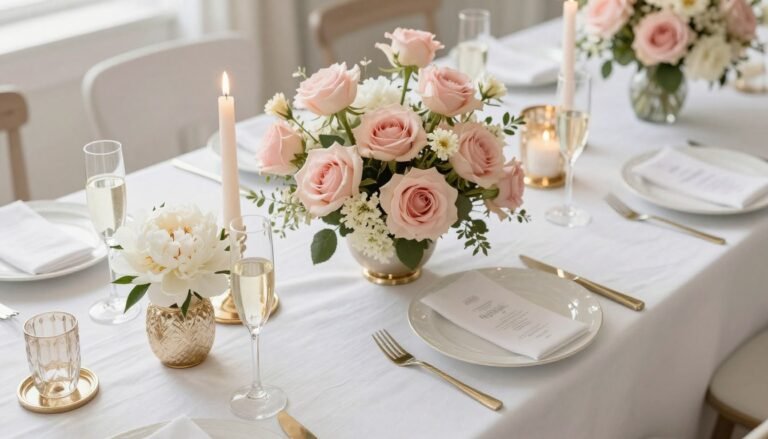
Planning the perfect bridal shower means creating a space where love and celebration come together. The decorations you choose set the entire mood for this special day. Whether you’re envisioning a garden party with flowing florals or a chic modern celebration with clean lines, the right decor transforms any venue into a magical setting. Your…
Whimsical, flirty, and effortlessly feminine—the babydoll silhouette has captivated fashion enthusiasts for decades. With its signature empire waist, shortened length, and flowing fabric, this iconic style strikes the perfect balance between comfort and charm. Whether you’re drawn to its romantic aesthetic or its versatile wearability, the babydoll has earned its place as a timeless wardrobe…
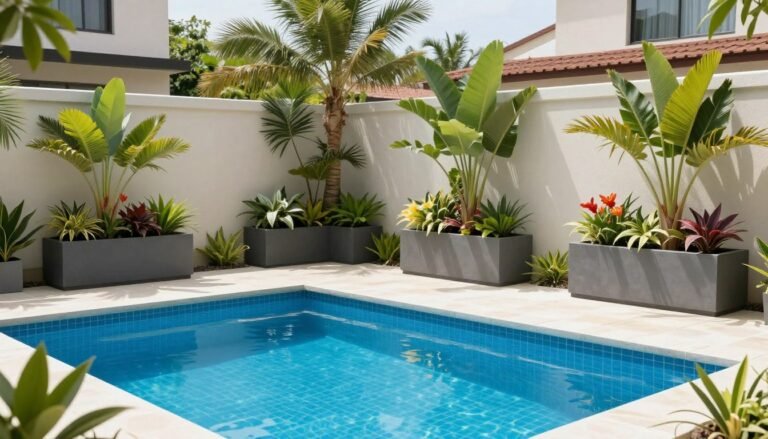
Transform your ordinary pool area into a luxurious retreat with strategically placed planters around your pool. The right combination of containers and plants can add color, create privacy, define spaces, and bring that coveted resort feel to your backyard oasis. Whether you have an expansive inground pool or a modest above-ground setup, incorporating planters is…
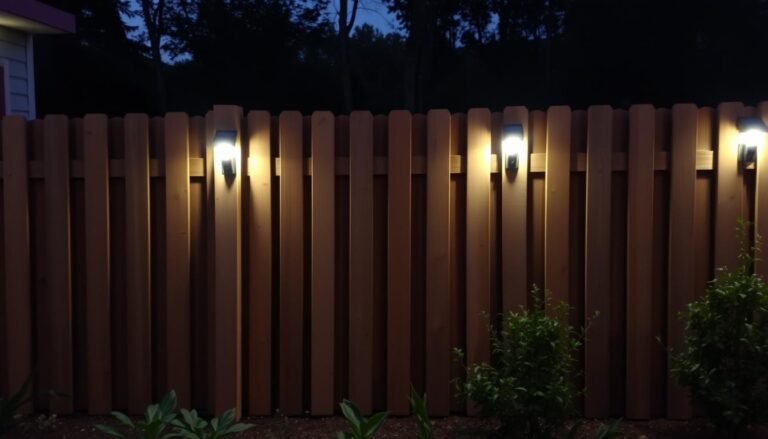
Your fence does more than just mark property boundaries—it’s an opportunity to create ambiance, enhance security, and showcase your landscaping after dark. The right fence lighting ideas can transform an ordinary yard into a magical nighttime retreat while adding practical benefits like improved visibility and safety. Whether you’re looking for subtle illumination or statement-making designs,…
Creating a beautiful backyard patio doesn’t have to drain your bank account. With some creativity, smart material choices, and strategic design, you can transform your outdoor space into a stunning retreat without spending a fortune. Whether you have a tiny urban balcony or a spacious backyard, these budget-friendly patio ideas will help you maximize your…
Solar lights have revolutionized outdoor lighting, offering an eco-friendly way to illuminate your garden, patio, and walkways without increasing your energy bills. These versatile lights harness the power of the sun during the day and automatically illuminate your outdoor space at night, creating a magical ambiance that enhances both the beauty and functionality of your…